
Tech
Nearly Half of Europeans Support Banning Social Media Platform X Over EU Rule Breaches

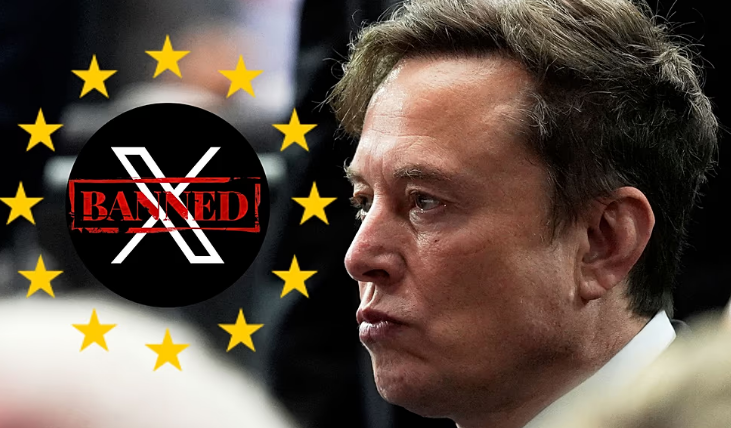
A new survey across Germany, France, Spain, Italy, and Poland shows that nearly half of Europeans would support banning social media platform X from the European Union if it continues to break EU rules. Conducted by YouGov, the polling highlights rising frustration among EU citizens over what they perceive as the platform’s failure to comply with European digital regulations.
The survey found that between 60 and 78 percent of respondents in each country believe the EU should take stronger action against X if it does not address breaches identified by the European Commission last year. Of those in favour of further measures, a majority—ranging from 62 to 73 percent—said the platform should be banned if it refuses to comply. Overall, 47 percent of respondents backed a potential ban.
The European Commission fined X €120 million in December under the Digital Services Act (DSA) for failing to meet transparency obligations. Central to the investigation is the blue checkmark system, previously free to verify official accounts but now sold for €7 a month, which could mislead users about account authenticity. The Commission also found the platform did not meet transparency requirements for advertising, raising concerns that users could be exposed to financial scams. X has 90 working days to respond to the Commission’s findings.
Since the fine, the platform and its built-in AI assistant, Grok, have faced additional scrutiny. Critics argue that X amplifies harmful content, including deepfake pornography and child sexual abuse material. French prosecutors recently raided X’s Paris office as part of an ongoing investigation into child abuse content.
The YouGov survey indicates strong public support for tougher enforcement against large tech platforms. If X fails to comply with the Commission’s ruling, 70 percent of respondents said they would support consequences. Among these, 17 to 28 percent favoured further fines, 23 to 29 percent supported banning the platform outright, and the largest group—40 to 52 percent—wanted a combination of fines and a ban.
Ava Lee, executive director of People vs Big Tech, said the data shows Europeans are “done with empty warnings.” She added that X could set a precedent for how the EU enforces its rules on major technology companies.
Despite public support for tougher measures, banning a major social media platform would be considered an extreme step under EU law. The Commission has not indicated that it is currently considering such a move.
The survey comes amid wider debates in Europe over social media regulation. Several countries, including Spain, France, Italy, Germany, and the United Kingdom, are considering restrictions or outright bans on social media for minors, citing concerns over illegal or harmful content. Australia has already implemented strict rules for users under 16, but experts caution that enforcement challenges mean it is too early to judge the effectiveness of such bans.
Professor Kathryn Modecki from the University of Western Australia noted that many children continue to access banned apps through simple workarounds, suggesting policymakers should monitor results carefully before expanding similar restrictions elsewhere.












Journalist Peter Vandermeersch, who worked with Dutch publisher Mediahuis, reportedly fabricated expert quotes into 15 of 53 articles written for them. Vandermeersch, a senior European journalist, has been temporarily suspended after an investigation revealed he published quotes generated by artificial intelligence (AI) as if they were genuine.
The Dutch newspaper NRC reported that Vandermeersch inserted “dozens” of fabricated quotes into articles published on two Mediahuis websites. Some of the statements attributed to experts could not be found in the sources Vandermeersch cited, including news articles and scientific studies. Seven of the individuals whose quotes were used confirmed they had never made the statements attributed to them.
Vandermeersch served as chief executive of Mediahuis Ireland from 2022 to 2025 before taking on a fellowship role in journalism and society at Mediahuis. He confirmed his temporary suspension on his blog, saying he relied on AI tools including ChatGPT, Perplexity, and Google’s Notebook to summarise lengthy reports, trusting the outputs to be accurate.
Instead, the systems generated fabricated quotes that “put words into people’s mouths,” Vandermeersch admitted. “That was not just careless, it was wrong,” he wrote. “It is particularly painful that I made precisely the mistake I have repeatedly warned colleagues about: these language models are so good that they produce irresistible quotes you are tempted to use as an author.”
Vandermeersch said he first discovered the issue last year, when two of his articles were found to contain AI-generated quotes. He did not correct the errors at the time, which allowed the problem to persist. “When I realised this a few months ago, my enthusiasm diminished, as did my use of AI,” he said.
He explained that he continues to use AI for tasks such as translation, generating ideas, creating headlines, and developing story angles, but with “far less naive trust than before.” Mediahuis has yet to announce any further disciplinary measures or whether it will retract the affected articles.
The case has raised fresh concerns about the use of AI in journalism, highlighting the risks of relying on automated systems to generate content without verification. Industry experts warn that while AI tools can be valuable for research and drafting, uncritical use can lead to serious ethical breaches, including the misrepresentation of sources.
Mediahuis said it takes the matter seriously and is reviewing editorial procedures to prevent similar incidents in the future. The scandal has sparked a wider discussion in European media about the ethical boundaries of AI in reporting, particularly when it comes to quoting real people.
The incident underscores the growing tension between technological convenience and journalistic integrity, as newsrooms across Europe experiment with AI tools while balancing accuracy and accountability.

State-linked and hacktivist groups have claimed a series of cyberattacks against the United States and Israel since the war with Iran began, marking a significant escalation in the digital dimension of the conflict.
One of the most notable incidents involved Stryker, which confirmed on March 11 that a cyberattack had disrupted its global network. According to reports, employees encountered the logo of Handala, an إيران-linked hacking group, on login pages across the company’s systems. The breach reportedly targeted the firm’s Microsoft-based infrastructure, though the full extent of the disruption remains unclear.
Handala has claimed responsibility for the attack, stating it exploited cloud management systems to remotely wipe large numbers of devices worldwide. The group said the operation was carried out in retaliation for a missile strike in Iran. Independent verification of these claims is still pending.
Cybersecurity analysts say the attack is part of a broader campaign by groups linked to Iran’s security apparatus. According to findings from CloudSek, organisations associated with the Islamic Revolutionary Guard Corps have targeted US critical infrastructure. These include CyberAv3ngers, APT33 and APT55, which are accused of attempting to infiltrate industrial systems such as power grids and water facilities.
Experts say some of these groups use simple methods, including default passwords, to access systems, while others deploy malware aimed at disrupting operations or gathering intelligence. Additional networks linked to Iran’s Ministry of Intelligence have also been active, targeting telecommunications, energy companies and government organisations.
At the same time, the United States and Israel are conducting their own cyber operations. General Dan Caine said US Cyber Command played a key role early in the conflict, disrupting Iranian communications and sensor networks. Defence Secretary Pete Hegseth confirmed that artificial intelligence and cyber tools are being used alongside conventional military operations.
Israeli intelligence has also reportedly relied on hacked data to support military planning, highlighting the growing role of cyber capabilities in modern warfare.
Hacktivist activity has surged as well. More than 60 groups formed a loose coalition known as the Cyber Islamic Resistance, coordinating attacks through online platforms. These groups have claimed hundreds of operations, including attempts to disrupt Israeli infrastructure and private sector systems. Analysts warn that such actors are often less restrained and may pose risks to civilian networks.
The conflict has also drawn in groups from outside the region, including actors based in Iraq, Russia and other parts of the Middle East. Some have targeted government websites and transport infrastructure, while pro-Israeli groups have carried out retaliatory attacks against Iranian entities.
Security experts say the growing scale and coordination of cyber operations reflect a shift in how modern conflicts are fought, with digital attacks now running parallel to military action on the ground.


Europe Struggles to Meet Tuberculosis Targets Amid Rising Drug Resistance

US to Pay $1 Billion to TotalEnergies to Exit Offshore Wind Projects, Sparking Criticism

Eurozone Faces Sharp Stagflation Risk as Iran Conflict Drives Costs Higher

European Journalist Suspended for Using AI-Generated Fake Quotes

London Ambulances Targeted in Suspected Antisemitic Arson Attack

Kent Meningitis B Outbreak Cases Drop to 29, UKHSA Confirms

Airbrush Tanning Solution Sun Labs for Smooth, Even Bronze Color

Iran Executes Three Men Over January Protests Amid Rising War Tensions

ECB Holds Interest Rates as Energy Prices Surge Amid Middle East Tensions

Ships Continue Passing Through Strait of Hormuz Despite Ongoing Conflict

Meta Acquires Tilda Swinton VR Doc ‘Impulse: Playing With Reality’

Saudi Arabia’s Model for Sustainable Aviation Practices

Recent Developments in Small Business Taxes

Effective Drain Cleaning: A Key to a Healthy Plumbing System

Who was Ebrahim Raisi and his status in Iranian Politics?

Carrectly: Revolutionizing Car Care in Chicago

Keely Hodgkinson Wins Britain’s First Athletics Gold at Paris Olympics in 800m

Saudi Arabia: Foreign Direct Investment Rises by 5.6% in Q1

Chinese Hackers Infiltrate Major U.S. Telecom Firms in Possible National Security Breach

Nobel Laureate Muhammad Yunus Proposed as Head of Bangladesh’s Interim Government Following Hasina’s Resignation

Sony WF-10XM4: Headphones Are Our Absolute Favorite

10 Places You Can’t Miss If It’s Your First Time in European

New Census Data Will Shake Up Alabama Politics

16 Top of Our Favorite Outdoor Clothing Brands

Fashionable Summer Accessories to Dress Up Your Travel Look

How Sleeping Less than 7 Hours a Night Can Lead to Weight Gain
-
 Entertainment2 years ago
Meta Acquires Tilda Swinton VR Doc ‘Impulse: Playing With Reality’
-
 Business2 years ago
Saudi Arabia’s Model for Sustainable Aviation Practices
-
 Business2 years ago
Recent Developments in Small Business Taxes
-
 Home Improvement1 year ago
Effective Drain Cleaning: A Key to a Healthy Plumbing System
-
 Politics2 years ago
Who was Ebrahim Raisi and his status in Iranian Politics?
-
 Business2 years ago
Carrectly: Revolutionizing Car Care in Chicago
-
 Sports2 years ago
Keely Hodgkinson Wins Britain’s First Athletics Gold at Paris Olympics in 800m
-
 Business2 years ago
Saudi Arabia: Foreign Direct Investment Rises by 5.6% in Q1