
Health
How Sleeping Less than 7 Hours a Night Can Lead to Weight Gain


Good web design has visual weight, is optimized for various devices, and has content that is prioritized for the medium. The most important elements of a web page should have more visual weight to “naturally attract” a visitor’s attention.
Good design is making something intelligible and memorable. Great design is making something memorable and meaningful.
Dieter Rams
Most users search for something interesting (or useful) and clickable; as soon as some promising candidates are found, users click. If the new page doesn’t meet users’ expectations, the back button is clicked and the search process is continued.
A good website should be easy to navigate
Not all websites are made equal. Some websites are simple, logical, and easy to use. Others are a messy hodgepodge of pages and links.

Without website navigation, your visitors can’t figure out how to find your blog, your email signup page, your product listings, pricing, contact information, or help docs.
[ruby_related heading=”More Read” total=5 layout=1 offset=5]Quick and easy access to the content they’re after is more important for your website users than a… visually-stunning design.
Creating visual rhythms in your layouts
In design, rhythm is created by simply repeating elements in predictable patterns. This repetition is a natural thing that occurs everywhere in our world. As people, we are driven everyday by predictable, timed events.

One of the best ways to use repetition and rhythm in web design is in the site’s navigation menu. A consistent, easy-to-follow pattern—in color, layout, etc. Gives users an intuitive roadmap to everything you want to share on your site.
- Direct the Eye With Leading Lines
- Balance Out Your Elements
- Use Elements That Complement Each Other
- Be clear about your “focal points” and where you place them
Diving into UX and UI design
UX and UI: Two terms that are often used interchangeably, but actually mean very different things. So what exactly is the difference?
Styles come and go. Good design is a language, not a style.
Massimo Vignelli
UX design refers to the term “user experience design”, while UI stands for “user interface design”. Both elements are crucial to a product and work closely together. But despite their relationship, the roles themselves are quite different.
Breaking down the barriers
Design is not the end-all solution to all of the worlds problems — but with the right thinking and application, it can definitely be a good beginning to start tackling them.












The European Trade Union Confederation (ETUC) is calling for menopause to be formally recognised in European Union workplace legislation, arguing that inadequate support is costing women earnings, career progression and pension income.
The confederation, which represents 45 million members across 41 European countries, wants employers to provide better workplace adjustments and protections for women experiencing menopause symptoms.
“Women’s work-related health risks remain largely ignored by the law, which remains orientated around male-dominated jobs,” said ETUC Deputy General Secretary Isabelle Schömann.
“It’s high time that the law caught up with the reality of the whole workforce today and the risks facing them,” she added.
The campaign comes as the European Parliament examines a report urging the EU to treat menopause as an economic, employment and social issue. The European Commission has acknowledged menopause in its wider gender equality agenda but has stopped short of proposing dedicated legislation or a separate EU strategy.
Menopause typically occurs between the ages of 45 and 55 and can affect women’s ability to work. Around 85% of women experience at least one symptom, while approximately 30% report symptoms that affect their capacity to work. These can include fatigue, sleep disruption, hot flushes, joint pain, anxiety and difficulty concentrating.
Research cited by the ETUC found that women’s earnings in Norway fell by 7.4% by the fourth year after a menopause diagnosis. Reduced working hours, sick leave and missed promotions contributed to the decline.
“Loss of pay, lost promotions, and lower pensions is the price being paid by millions of women for the failure to adapt work to the menopause,” Schömann said.
EU institutions face pressure to act
The European Commission’s Gender Equality Strategy 2026-2030, published in March, includes commitments to exchange national best practices on menstrual and menopause poverty. It also plans a study for 2028 examining the economic and social benefits of closing the women’s health gap, including menopause.
However, in November 2025, Equality Commissioner Hadja Lahbib said the Commission was not planning a dedicated menopause strategy, pointing instead to research supported through Horizon 2020 and Horizon Europe.
Spanish Socialist MEP Lina Gálvez is leading a draft European Parliament report titled Menopause beyond a health issue: turning menopause into an economic, working and social priority.
The report calls for a dedicated EU strategy, expanded research, public campaigns to challenge stigma, stronger workplace support and better access to healthcare. It is expected to receive further discussion in Parliament next year and has not yet become adopted EU policy.
Unions seek practical workplace changes
The ETUC wants workplace risk assessments to cover factors such as temperature, ventilation and facilities. It is also calling for flexible working hours, remote working options, management training and physical adjustments, including temperature controls and ergonomic equipment.
The confederation wants menopause policies to be negotiated with trade unions, implemented and monitored. It is also seeking free menstrual and menopause products in workplaces.
Schömann said the way work is organised can significantly affect women’s experience of menopause, adding that unions are already negotiating collective agreements covering workplace adjustments and flexible arrangements.
The campaign highlights growing pressure on EU institutions and employers to address menopause as a workplace issue, rather than treating it solely as a private medical concern.

Artificial intelligence is helping health authorities respond more quickly to the Ebola outbreak in the Democratic Republic of Congo (DRC), cutting the time needed to prepare a situation report from a full working day to about an hour. However, experts warn that concerns over transparency, reliability and accountability must be addressed before the technology becomes more widely used in healthcare.
Since May, health workers in the DRC have been responding to an outbreak of the Bundibugyo strain of the Ebola virus. Teams visit communities, provide advice, record deaths and recoveries, and refer people with suspected symptoms to medical facilities.
Information collected by these workers has been digitised and analysed using Anthropic’s Claude artificial intelligence model. The initiative involved the Coalition for Epidemic Preparedness Innovations (CEPI), the World Health Organization’s Regional Office for Africa and the country’s National Institute of Biomedical Research (INRB).
The system helps identify people who may have been exposed to the virus, trace contacts and locate potential outbreak hotspots. This information allows authorities to prepare medical supplies and position resources in areas considered at higher risk.
Marie Roseline Darnycka Belizaire, director for emergency preparedness and response at the WHO Regional Office for Africa, said the technology had reduced the time required to produce situation reports to around one hour.
Speaking at the World Health Summit, she said AI could help health authorities assess the spread of an outbreak more quickly and direct medical assistance where it was needed most.
Supporting overstretched healthcare systems
Thomas Zapata, director of the WHO Academy in Lyon, said AI could help address growing demand for healthcare amid persistent shortages of medical staff and resources.
However, he cautioned against treating the technology as a solution in itself, arguing that it must be integrated into existing health systems and support the work of healthcare professionals.
AI could reduce administrative workloads, improve diagnostic processes and assist clinical decision-making, allowing medical staff to spend more time examining patients, listening to their concerns and arranging appropriate treatment.
Cecilia Mbaka, a senior technical adviser for health and emergencies at aid organisation CARE, said the technology could be particularly useful for repetitive tasks and information processing. She stressed that its value should be measured by whether it improves care and gives medical professionals more time to attend to patients.
In the DRC, however, shortages of equipment and limited public confidence in healthcare facilities remain major challenges. Epidemiologist Maximilian Gertler has estimated that around half of deaths in villages occur outside medical facilities, highlighting difficulties in accessing formal care.
Germany recently increased its assistance to the country by €21 million.
Questions over transparency and reliability
Despite the potential benefits, experts warn that many AI systems cannot clearly explain how they reach particular results.
Thomas Thesen, a professor of medical education and informatics at Dartmouth University’s Geisel School of Medicine, said AI models were highly effective at identifying patterns but often struggled to explain what those patterns meant.
This creates concerns when AI systems offer diagnoses or treatment recommendations. Medical professionals need to assess whether a recommendation is appropriate for an individual patient and understand its limitations. Questions also remain over who should be held responsible when an AI-generated recommendation is wrong.
AI should not replace medical education
Experts also warn that excessive reliance on AI could weaken the training of future healthcare professionals.
Thesen cited research suggesting that students who used AI chatbots to find information developed more superficial knowledge than those who relied on conventional search methods.
He said independent learning and mental effort were essential to retaining information, particularly in medicine, where professionals must make decisions even when technological assistance is unavailable.
The Ebola response demonstrates how AI can help process information quickly during emergencies. Experts say its wider use in healthcare will depend on maintaining human oversight, protecting patients and ensuring that technology strengthens, rather than replaces, professional judgement.
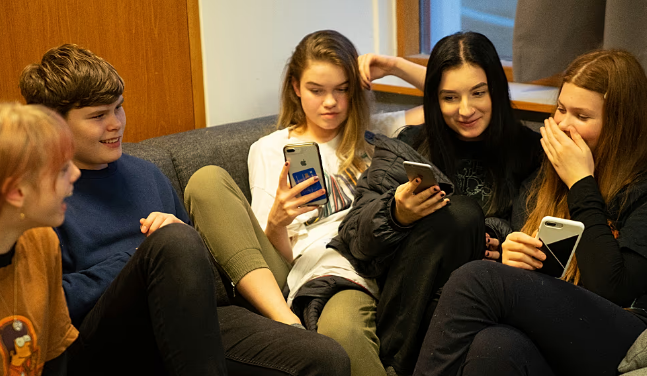
Portuguese teenagers are reporting lower levels of alcohol and drug use and fewer problems linked to addictive behaviours, but risks are becoming increasingly concentrated among young people facing multiple personal and social difficulties, according to a new study.
The findings come from the 2024 Study on Alcohol, Tobacco, Drugs and Other Addictive Behaviours (ECATD-CAD), conducted by the Institute for Addictive Behaviours and Dependencies (ICAD). The research examines addictive behaviours among pupils aged 13 to 18 attending state schools across Portugal.
Compared with the previous study in 2019, the latest results show a consistent decline in reported problems, including violence, accidents, hospitalisations, risky sexual behaviour and other incidents with potentially serious consequences.
Researchers linked the broader improvement to several protective factors. Students reported better academic performance, closer parental supervision and fewer nights out, suggesting that changes in family and school environments may be helping reduce risky behaviour.
However, ICAD warned that the overall decline does not mean the problem has disappeared. The most serious behaviours are increasingly concentrated in a relatively small group of adolescents who face greater individual and social vulnerabilities.
Recent alcohol consumption and, particularly, illicit drug use remain strongly associated with problematic situations. Young people who use psychoactive substances report higher rates of risky sexual behaviour, violence between individuals, accidents and trouble with the police.
The report noted that these problems do not necessarily occur immediately after substance use, but the association remains significant.
Combining alcohol with illicit drugs appears to carry additional risks. Adolescents who reported recent use of both substances experienced higher levels of accidents, police-related problems, cyberbullying and risky sexual behaviour than those who consumed alcohol alone.
Alcohol use also raises concerns about why some teenagers drink. While pleasure, entertainment and socialising remain the main motivations, a significant proportion said they consumed alcohol to forget their problems. ICAD identified this as a warning sign associated with potentially harmful drinking patterns and dependence.
Cannabis use presented a mixed picture. Although most users showed no indicators of dependency risk, the proportion classified as being at high risk increased, alongside growth in the group with no identified risk.
Social media remained the main concern among behaviours not involving substances. A significant number of young people acknowledged spending excessive time on these platforms. Indicators of problematic electronic gaming remained broadly stable, while gambling for money became more prevalent among adolescents, despite a slight decline in some indicators of problematic gambling.
The study also identified differences between boys and girls. Boys were more likely to report problems with the police, risky gaming and gambling. Girls reported higher levels of problematic social media use and were more likely to use alcohol to cope with emotional difficulties.
Family circumstances and wellbeing were also important. Low academic achievement, limited parental supervision, frequent nights out and poorer physical and emotional health were associated with greater risk. Better school performance, stronger parental involvement and improved wellbeing appeared protective.
Regional differences were also evident. Alentejo recorded the highest concentration of unfavourable indicators, followed by the Azores. Lisbon, which showed the greatest vulnerability in the 2019 study, no longer held that position.
ICAD’s findings point to the need for targeted support for vulnerable adolescents, even as overall patterns of substance use and related problems improve.

UAE Residents Express Strong Confidence in Disaster Preparedness, Survey Finds

European Stocks Fall as French Riots and Political Uncertainty Rattle Markets

Oil Prices Fall From Five-Month High as US Eases Russia Sanctions

Around 46 Million EU Residents Cannot Afford Regular Leisure Activities

Looting Across France Leaves Shops Damaged as More Than 2,000 Arrested

Uber Plans European Robotaxi Expansion After Driverless Taxi Trials in Zagreb

Iran Says Oil Super Tanker Catches Fire After Hitting Mine in Strait of Hormuz

European Trade Unions Push for Menopause Protections in EU Workplace Law

Ukraine War Strikes Raise Questions Over Security of Europe’s AI Data Centres

Europe Develops 348-Satellite Network to Reduce Dependence on Starlink

Meta Acquires Tilda Swinton VR Doc ‘Impulse: Playing With Reality’

China’s Historic Olympic Victory Sparks National Pride Amid Controversy

Saudi Arabia’s Model for Sustainable Aviation Practices

Recent Developments in Small Business Taxes

Effective Drain Cleaning: A Key to a Healthy Plumbing System

Who was Ebrahim Raisi and his status in Iranian Politics?

Keely Hodgkinson Wins Britain’s First Athletics Gold at Paris Olympics in 800m

Carrectly: Revolutionizing Car Care in Chicago

Nobel Laureate Muhammad Yunus Proposed as Head of Bangladesh’s Interim Government Following Hasina’s Resignation

Chinese Hackers Infiltrate Major U.S. Telecom Firms in Possible National Security Breach

Sony WF-10XM4: Headphones Are Our Absolute Favorite

10 Places You Can’t Miss If It’s Your First Time in European

New Census Data Will Shake Up Alabama Politics

16 Top of Our Favorite Outdoor Clothing Brands

Fashionable Summer Accessories to Dress Up Your Travel Look
How Sleeping Less than 7 Hours a Night Can Lead to Weight Gain
-
 Entertainment2 years ago
Meta Acquires Tilda Swinton VR Doc ‘Impulse: Playing With Reality’
-
 Sports2 years ago
China’s Historic Olympic Victory Sparks National Pride Amid Controversy
-
 Business2 years ago
Saudi Arabia’s Model for Sustainable Aviation Practices
-
 Business2 years ago
Recent Developments in Small Business Taxes
-
 Home Improvement2 years ago
Effective Drain Cleaning: A Key to a Healthy Plumbing System
-
 Politics2 years ago
Who was Ebrahim Raisi and his status in Iranian Politics?
-
 Sports2 years ago
Keely Hodgkinson Wins Britain’s First Athletics Gold at Paris Olympics in 800m
-
 Business2 years ago
Carrectly: Revolutionizing Car Care in Chicago