
Business
Eurozone Opens Race to Replace ECB President Christine Lagarde

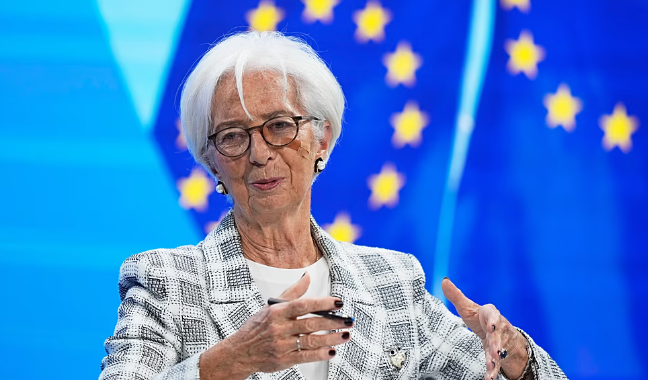
Eurozone governments have until Friday, 6 November, to nominate candidates to succeed European Central Bank (ECB) President Christine Lagarde, with finance ministers scheduled to review the submissions at a meeting on 9 November.
The appointment process began after Lagarde informed European Council President António Costa last week that she intended to leave the post on 7 February 2027, almost nine months before the end of her eight-year term.
A Eurogroup spokesperson told Euronews that the Council of the European Union had initiated the procedure to appoint her successor. The ECB Executive Board is appointed by the European Council, which makes its decision based on a recommendation from the Council of the EU.
Eurogroup President and Greek Finance Minister Kyriakos Pierrakakis has asked eurozone members to submit nominations by Friday. The Eurogroup will then assess the candidates at its 9 November meeting.
A nominee must secure support from at least 16 of the 21 eurozone countries, representing at least 65 per cent of the bloc’s population. EU leaders will make the final appointment after receiving opinions from the European Parliament and the ECB’s Governing Council.
Lagarde announced her early departure last Thursday, saying she wanted greater freedom to speak about issues beyond monetary policy.
“I don’t think that I can remain neutral,” she told reporters in Frankfurt. “I’m interested in the truth, and I see the truth being very often damaged, contradicted by misrepresentation.”
She did not say whether she would support a candidate in France’s presidential election in April 2027. Her decision to leave early has fuelled speculation about the timing of the succession, allowing French President Emmanuel Macron and German Chancellor Friedrich Merz to influence the appointment before the election.
Lagarde has promised continuity at the central bank and is expected to chair two more interest-rate meetings, in December and February. The ECB kept its deposit rate at 2.5 per cent at its latest meeting.
Two candidates have emerged as leading contenders. Spain has backed Pablo Hernández de Cos, general manager of the Bank for International Settlements and former governor of the Bank of Spain. Prime Minister Pedro Sánchez publicly endorsed him in September, while opposition leader Alberto Núñez Feijóo has also expressed support.
The Netherlands has backed former central bank governor Klaas Knot, who led the institution for 14 years until 2025. Prime Minister Rob Jetten described him as a “perfect fit” for many countries.
Other names mentioned in the race include former Bank of France governor François Villeroy de Galhau and Bundesbank President Joachim Nagel.
The negotiations are expected to extend beyond the presidency. ECB Executive Board positions held by Germany’s Isabel Schnabel and Ireland’s chief economist Philip Lane are also due to become vacant in the coming months. With several senior posts changing hands, governments are expected to negotiate over the appointments as part of a wider package.
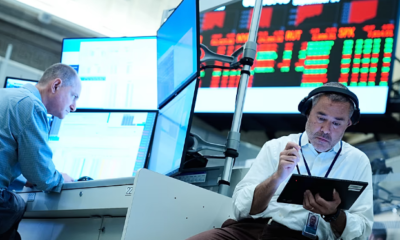
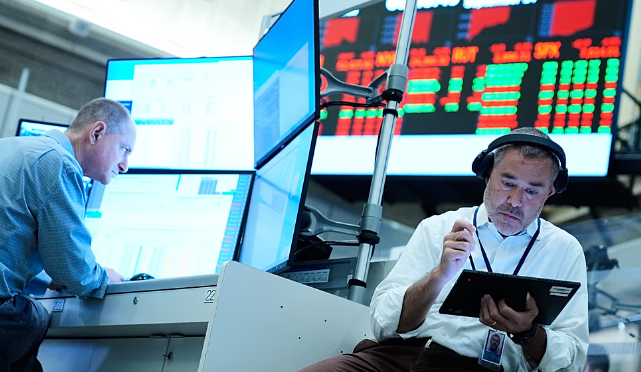
Asian stock markets rose on Thursday as technology shares regained ground following several sessions of sharp losses, while investors showed a muted reaction to new US tariff proposals targeting 14 economies.
The recovery followed a late-session rally on Wall Street on Wednesday, when investors bought shares that had fallen sharply earlier in the day. US markets ended only slightly lower ahead of the Thanksgiving holiday.
Technology companies led gains across Asia, particularly in South Korea, Japan and Taiwan, which have experienced significant volatility this week amid concerns about the sustainability of the artificial intelligence boom.
Japanese chipmaker Kioxia and investment group SoftBank were among the strongest performers, with both recording double-digit gains. South Korean technology giants SK hynix and Samsung Electronics also advanced.
The Nikkei 225 in Tokyo, South Korea’s Kospi and Taiwan’s Taiex each gained more than 1 per cent. Hong Kong’s Hang Seng Index also rose by over 1 per cent, while markets in Sydney, Shanghai and Singapore recorded gains. Wellington and Manila moved lower.
Global markets have experienced sharp swings throughout the week. News that Nvidia chief executive Jensen Huang had been reinstated initially lifted sentiment in Asian markets on Tuesday, but a renewed sell-off followed on Wednesday as investors reassessed the outlook for technology stocks.
The latest weakness comes after a strong start to the year. Selling pressure over the past five months has been driven by concerns about the enormous spending required to develop AI infrastructure and uncertainty over when those investments will generate returns. Expectations of higher interest rates and the prospect of tighter AI regulation under a new Democrat-led US Congress have added to investor caution.
Some market observers believe the recent decline could be approaching its final stages. However, Michael Boutros of Forex.com said investors needed to show that buying demand was sustainable rather than the result of temporary recoveries.
“The focus heading into December is on whether semiconductor shares can regain traction and support a broader recovery or whether the recent deterioration signals further downside,” he said.
Expectations of a possible Federal Reserve rate increase next month strengthened on Wednesday after US data showed inflation had reached a three-year high in the previous month. Figures also showed that economic growth in the third quarter had been revised upwards.
Investors also assessed Washington’s proposed tariffs on 14 economies following a months-long investigation into alleged excess production. The proposed duties, which could reach 20 per cent, will undergo a public consultation process before any implementation.
The targeted economies include major US trading partners such as the European Union, India, Japan and South Korea. China faces a proposed 20 per cent tariff, among the highest rates announced.
US Trade Representative Jamieson Greer said the measures were consistent with existing trade negotiations with Beijing. China urged Washington to avoid escalating tensions, warning against “tariff wars and trade wars”.
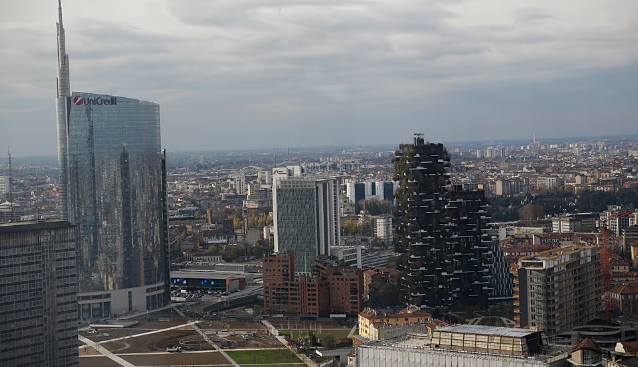
UniCredit has received the final regulatory clearance required to proceed with its public takeover and share exchange offer for Germany’s Commerzbank, after Poland’s financial supervisory authority approved the transaction on 26 November.
The Polish Financial Supervision Authority (KNF) authorised the indirect change of control of Commerzbank’s Polish operations, including mBank, in which the German lender holds a 69.1 per cent stake. The approval completes the regulatory process following clearances from the European Commission and the US Federal Reserve.
mBank is one of Poland’s major financial institutions, serving approximately 5.9 million customers. Its activities include mortgages, investment services and payments. The KNF’s approval was necessary because UniCredit’s acquisition of Commerzbank would also give it indirect control over the German bank’s subsidiaries in Poland.
The European Commission cleared the transaction unconditionally on 16 November after assessing its potential impact on competition, including the integration of Commerzbank and UniCredit’s German subsidiary, HypoVereinsbank (HVB).
The regulatory progress follows an agreement reached in mid-November between UniCredit chief executive Andrea Orcel and the German government. The Italian banking group made eight binding commitments intended to address Berlin’s concerns about the future of Commerzbank, its workforce and its role in Germany’s financial sector.
Under the commitments, Frankfurt will remain the centre of Commerzbank’s German operations, while the bank will retain its stock market listing and legal status as a German joint-stock company. UniCredit has also promised appropriate representation for Commerzbank and HVB on its executive committee.
The group will propose German nationals for positions on its board of directors when it is renewed in 2027. Other pledges include support for German small and medium-sized businesses through UniCredit’s international network, sufficient capital allocation for German operations and protection of their decision-making autonomy.
UniCredit also plans to invest in training, digital technologies and artificial intelligence in Frankfurt. It has committed to maintaining dialogue with trade unions and respecting existing employee agreements.
However, the German state’s 13.3 per cent holding in Commerzbank remains an unresolved issue. The government owns the stake through the SoFFin stabilisation fund and announced in June that it would not tender its shares in UniCredit’s offer. Berlin has not indicated plans for an immediate sale.
With regulatory approvals secured, the transaction can move towards implementation. The new shares are scheduled to be credited to custodian banks by 7 December 2026.
UniCredit has also asked Commerzbank to convene an extraordinary general meeting to elect a new board, a step towards determining the German bank’s future governance structure.
The acquisition is expected to absorb between 200 and 225 basis points of UniCredit’s Common Equity Tier 1 capital, a key measure of financial strength. The group expects the transaction to make a significant contribution to its profits.
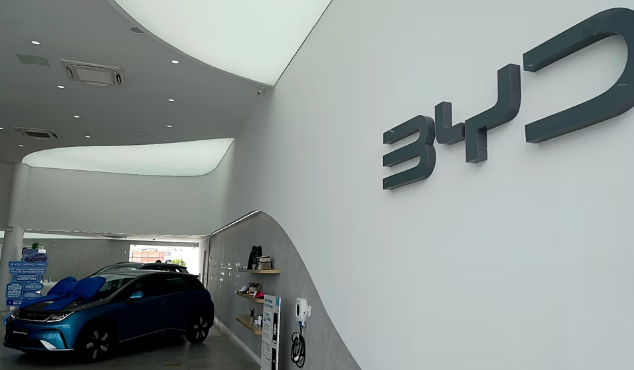
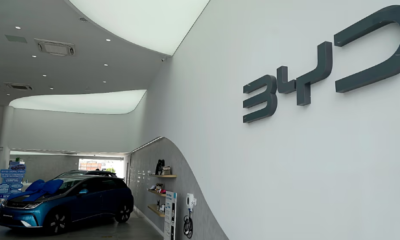
Chinese electric vehicle manufacturer BYD has entered exclusive negotiations to acquire Ineos Automotive’s manufacturing plant in Hambach, northeastern France, in a move that could strengthen its European production network and expand its presence in the region.
The proposed acquisition involves the factory in Moselle, close to the German border. The site was opened in the late 1990s to produce small Smart cars before being acquired by British industrial group Ineos in 2020. It currently manufactures the Ineos Grenadier four-wheel-drive vehicle.
The transaction remains subject to consultations with employee representatives, with no final agreement yet announced.
BYD, which overtook Tesla in 2025 to become the world’s largest electric vehicle manufacturer, sold 4.6 million vehicles across all powertrain categories last year. The company has been accelerating its international expansion as it seeks to increase sales and establish manufacturing operations closer to major overseas markets.
Acquiring the Hambach facility would give the Chinese manufacturer an established industrial base in Europe. Local production could also help the company reduce the impact of European Union tariffs on electric vehicles imported from China and prepare for potential future regulations favouring vehicles manufactured within the bloc.
BYD has said it wants to supply European customers with vehicles produced in France. The company’s executive vice-president, Stella Li, said the group was committed to securing the long-term future of the Hambach site, protecting existing employment and creating additional opportunities for workers and regional suppliers.
The announcement received a positive response from French President Emmanuel Macron, who viewed the potential investment as evidence that France’s efforts to attract international manufacturers were producing results. The government has also been encouraging carmakers to establish and expand production facilities within Europe.
Industry Minister Sébastien Martin said the proposed deal could provide greater certainty for employees and support the development of France’s automotive manufacturing sector.
However, BYD’s arrival could create additional competition for established French carmakers, including Renault and Stellantis, which owns brands such as Peugeot and Citroën.
The Chinese manufacturer has gained ground in international markets through competitively priced electric vehicles offering advanced technology and features. Its expansion into France could increase pressure on European manufacturers already facing intense competition in the electric vehicle market.
The potential acquisition therefore presents both opportunities and challenges for France. While the investment could preserve jobs, attract industrial activity and strengthen the country’s manufacturing base, it would also give a major Chinese competitor a stronger position in a market traditionally dominated by European automotive brands.
The outcome of the negotiations will determine whether Hambach becomes another important production centre in BYD’s growing European operations.

Asian Stocks Rebound as Technology Shares Recover from Heavy Selling

Greece to Open 20 New Day Centres for People with Dementia

UniCredit Secures Final Regulatory Approval for Commerzbank Takeover

BYD in Exclusive Talks to Acquire Ineos Automotive Plant in France

Belgium Opens Europe’s Largest Satellite Factory to Boost Space Independence

UK Households Face £443 Annual Energy Bill Increase as EU Market Talks Continue

Jensen Huang’s Remarkable Rise at Nvidia Overshadowed by Controversial CEO Comeback

Guterres Urges Nations to Agree Global AI Safety Framework Within a Year

Hungary Records 31 Foetal and Newborn Deaths as Syphilis Cases Surge

Trump Calls on Nvidia Board to Reinstate Jensen Huang as CEO

China’s Historic Olympic Victory Sparks National Pride Amid Controversy

Meta Acquires Tilda Swinton VR Doc ‘Impulse: Playing With Reality’

Saudi Arabia’s Model for Sustainable Aviation Practices

Recent Developments in Small Business Taxes

Effective Drain Cleaning: A Key to a Healthy Plumbing System

Who was Ebrahim Raisi and his status in Iranian Politics?

Keely Hodgkinson Wins Britain’s First Athletics Gold at Paris Olympics in 800m

Carrectly: Revolutionizing Car Care in Chicago

Nobel Laureate Muhammad Yunus Proposed as Head of Bangladesh’s Interim Government Following Hasina’s Resignation

Chinese Hackers Infiltrate Major U.S. Telecom Firms in Possible National Security Breach

Sony WF-10XM4: Headphones Are Our Absolute Favorite

10 Places You Can’t Miss If It’s Your First Time in European

New Census Data Will Shake Up Alabama Politics

16 Top of Our Favorite Outdoor Clothing Brands

Fashionable Summer Accessories to Dress Up Your Travel Look

How Sleeping Less than 7 Hours a Night Can Lead to Weight Gain
-
 Sports2 years ago
China’s Historic Olympic Victory Sparks National Pride Amid Controversy
-
 Entertainment2 years ago
Meta Acquires Tilda Swinton VR Doc ‘Impulse: Playing With Reality’
-
 Business3 years ago
Saudi Arabia’s Model for Sustainable Aviation Practices
-
 Business3 years ago
Recent Developments in Small Business Taxes
-
 Home Improvement2 years ago
Effective Drain Cleaning: A Key to a Healthy Plumbing System
-
 Politics3 years ago
Who was Ebrahim Raisi and his status in Iranian Politics?
-
 Sports2 years ago
Keely Hodgkinson Wins Britain’s First Athletics Gold at Paris Olympics in 800m
-
 Business2 years ago
Carrectly: Revolutionizing Car Care in Chicago