
Travel
10 Places You Can’t Miss If It’s Your First Time in European


Good web design has visual weight, is optimized for various devices, and has content that is prioritized for the medium. The most important elements of a web page should have more visual weight to “naturally attract” a visitor’s attention.
Good design is making something intelligible and memorable. Great design is making something memorable and meaningful.
Dieter Rams
Most users search for something interesting (or useful) and clickable; as soon as some promising candidates are found, users click. If the new page doesn’t meet users’ expectations, the back button is clicked and the search process is continued.
A good website should be easy to navigate
Not all websites are made equal. Some websites are simple, logical, and easy to use. Others are a messy hodgepodge of pages and links.

Without website navigation, your visitors can’t figure out how to find your blog, your email signup page, your product listings, pricing, contact information, or help docs.
[ruby_related heading=”More Read” total=5 layout=1 offset=5]Quick and easy access to the content they’re after is more important for your website users than a… visually-stunning design.
Creating visual rhythms in your layouts
In design, rhythm is created by simply repeating elements in predictable patterns. This repetition is a natural thing that occurs everywhere in our world. As people, we are driven everyday by predictable, timed events.

One of the best ways to use repetition and rhythm in web design is in the site’s navigation menu. A consistent, easy-to-follow pattern—in color, layout, etc. Gives users an intuitive roadmap to everything you want to share on your site.
- Direct the Eye With Leading Lines
- Balance Out Your Elements
- Use Elements That Complement Each Other
- Be clear about your “focal points” and where you place them
Diving into UX and UI design
UX and UI: Two terms that are often used interchangeably, but actually mean very different things. So what exactly is the difference?
Styles come and go. Good design is a language, not a style.
Massimo Vignelli
UX design refers to the term “user experience design”, while UI stands for “user interface design”. Both elements are crucial to a product and work closely together. But despite their relationship, the roles themselves are quite different.
Breaking down the barriers
Design is not the end-all solution to all of the worlds problems — but with the right thinking and application, it can definitely be a good beginning to start tackling them.

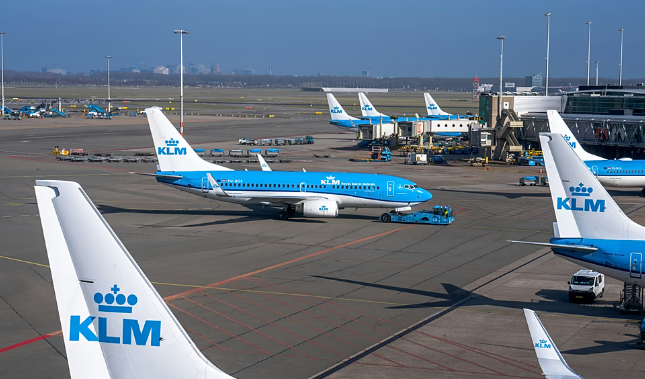
European skies recorded their busiest summer on record in 2026, with airlines operating more flights during the peak July and August holiday period despite disruption linked to the Middle East war.
Data from Eurocontrol, Europe’s aviation safety and air traffic management organisation, showed that the continent handled an average of 35,959 flights per day during the two-month period. That was 2.4% higher than the same period in 2025.
The busiest day came on Friday, July 10, when 37,640 flights were recorded across Europe, marking a new daily traffic record.
Despite the increase in air traffic and disruption caused by the conflict, punctuality also improved. Eurocontrol said 72.6% of flights arrived on time, an increase of 1.2 percentage points compared with 2025.
France continued to account for the largest share of delays linked to air traffic control management problems, representing 32% of all such delays across Europe.
Eurocontrol said the US-Iran war had influenced travel patterns during the 2026 tourist season. The conflict also encouraged some Europeans to choose holiday destinations within the continent, as travellers looked for locations perceived to be closer and safer amid wider regional uncertainty.
Southern and southeastern European countries benefited from the change in travel patterns. Eurocontrol reported lower traffic in Bulgaria, Hungary and Türkiye, while Albania, Croatia, Cyprus, Greece, Montenegro, North Macedonia, Serbia and Slovenia recorded significant increases.
The report also pointed to continued growth in southwestern Europe, highlighting a shift in demand toward destinations that remained accessible despite geopolitical tensions.
Greece experienced particularly strong demand, with record passenger numbers at its airports placing considerable pressure on the country’s air traffic control system during the busiest part of the summer season.
Fourteen countries recorded their highest-ever daily traffic for arrivals and departures during the summer. They included Albania, Armenia, Georgia, Greece, Ireland, Italy, Moldova, North Macedonia, Montenegro, Portugal, Serbia, Slovakia, Spain and Türkiye.
Airlines also experienced exceptionally high levels of activity. Several carriers and airline groups reported record traffic during the period, including Aegean, Air Serbia, easyJet, Jet2.com, Pegasus, Royal Air Maroc, Ryanair, Sky Express, SunExpress, Turkish Airlines and Wizz Air.
The figures indicate that Europe’s aviation sector remained resilient despite geopolitical disruption and changing tourist preferences. While the conflict affected traffic patterns in parts of eastern and southeastern Europe, demand for flights to other European destinations helped push overall summer traffic to unprecedented levels.

Wizz Air has been ranked the least expensive airline in Europe, while British Airways was identified as the costliest major national carrier, according to research comparing passenger revenue generated across 23 European airlines.
The analysis by flight and baggage compensation company AirAdvisor used revenue per available seat kilometre, or RASK, to compare how much airlines earn from passengers for each kilometre flown per available seat.
RASK provides an indication of how much travellers pay relative to distance and available capacity. The measure also reflects additional passenger charges, including fees for baggage and seat selection, rather than relying only on advertised ticket prices.
AirAdvisor said smaller airlines often have higher costs because they operate fewer routes, smaller fleets and services to remote or lower-demand destinations. With fewer seats available and less competition on some routes, fares can be higher.
However, the company said the pattern does not apply universally and travellers should compare prices for individual routes before booking.
The research also found that airline costs generally fell between 2024 and 2025. Among the 14 carriers for which AirAdvisor had year-on-year RASK figures, only five recorded increases, while nine saw their RASK decline.
Norway’s Widerøe topped the overall cost ranking with a RASK of €0.32. The regional airline operates many routes connecting smaller Norwegian airports with larger centres and also serves destinations including Aberdeen, Hamburg and London Southend.
Among major airlines, British Airways ranked as Europe’s most expensive national carrier, with a 2025 RASK of €0.0888. Its figure increased by €0.0038 from the previous year.
Air France and Austrian Airlines shared the next position among the most expensive major carriers, both recording a RASK of €0.0850.
At the other end of the ranking, Hungary-based Wizz Air had the lowest RASK at €0.0433, making it the least expensive airline in AirAdvisor’s comparison.
The company estimated that choosing Wizz Air instead of Air France could save travellers up to €50 on an average European flight distance, although actual savings depend on the route and additional fees.
easyJet ranked second among the least expensive airlines, with its RASK falling from €0.0770 in 2024 to €0.0521 in 2025.
Ryanair took third place, with RASK declining from €0.0843 to €0.0556 over the same period.
Among the 11 major national airlines included in the study, Finnair was ranked the least expensive.
The findings suggest that airline pricing can vary significantly even among national carriers, while the cost differences between airlines become more noticeable when viewed across typical travel distances.
AirAdvisor advised passengers to use such comparisons as a guide rather than a guarantee of the final fare, as route-specific pricing, luggage charges, seat fees and other extras can significantly affect the total cost of a journey.


Europe Develops 348-Satellite Network to Reduce Dependence on Starlink

US Military Builds Up Forces in Arabian Sea as Iran Warns of Possible War

OpenAI Donates $5 Million to Mathematics Foundation After Research Dispute

AI Speeds Up Ebola Response in Congo, but Experts Warn of Healthcare Risks

Asian Stocks Plunge as Technology Sell-Off Deepens on Inflation Concerns

Eurozone Faces Record Bond Sales in 2027 as Borrowing Costs Reach Two-Decade High

European Household Energy Costs Rise as Gas Prices Near Four-Year High

Oil and European Gas Prices Rise as Hormuz Attacks Heighten Supply Fears

ASML Reports Record €11.7 Billion Quarterly Sales as AI Chip Demand Outstrips Supply

Young Uzbek Engineers Showcase Medical, Communication and Industrial Innovations

Meta Acquires Tilda Swinton VR Doc ‘Impulse: Playing With Reality’

China’s Historic Olympic Victory Sparks National Pride Amid Controversy

Saudi Arabia’s Model for Sustainable Aviation Practices

Recent Developments in Small Business Taxes

Effective Drain Cleaning: A Key to a Healthy Plumbing System

Who was Ebrahim Raisi and his status in Iranian Politics?

Keely Hodgkinson Wins Britain’s First Athletics Gold at Paris Olympics in 800m

Carrectly: Revolutionizing Car Care in Chicago

Nobel Laureate Muhammad Yunus Proposed as Head of Bangladesh’s Interim Government Following Hasina’s Resignation

Chinese Hackers Infiltrate Major U.S. Telecom Firms in Possible National Security Breach

Sony WF-10XM4: Headphones Are Our Absolute Favorite
10 Places You Can’t Miss If It’s Your First Time in European

New Census Data Will Shake Up Alabama Politics

16 Top of Our Favorite Outdoor Clothing Brands

Fashionable Summer Accessories to Dress Up Your Travel Look

How Sleeping Less than 7 Hours a Night Can Lead to Weight Gain
-
 Entertainment2 years ago
Meta Acquires Tilda Swinton VR Doc ‘Impulse: Playing With Reality’
-
 Sports2 years ago
China’s Historic Olympic Victory Sparks National Pride Amid Controversy
-
 Business2 years ago
Saudi Arabia’s Model for Sustainable Aviation Practices
-
 Business2 years ago
Recent Developments in Small Business Taxes
-
 Home Improvement2 years ago
Effective Drain Cleaning: A Key to a Healthy Plumbing System
-
 Politics2 years ago
Who was Ebrahim Raisi and his status in Iranian Politics?
-
 Sports2 years ago
Keely Hodgkinson Wins Britain’s First Athletics Gold at Paris Olympics in 800m
-
 Business2 years ago
Carrectly: Revolutionizing Car Care in Chicago