
News
Thousands Protest Cost of Living and Meloni Government Across Italy

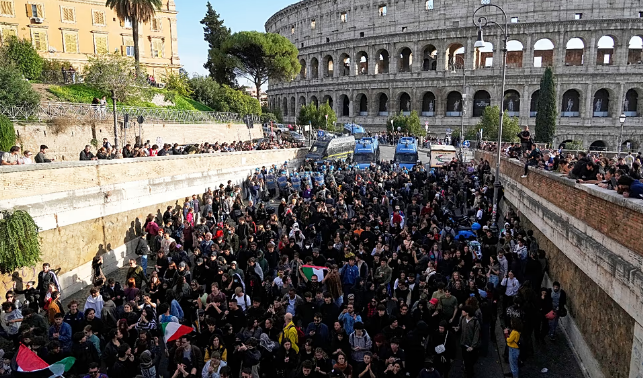
Thousands of people took to the streets in Italy’s major cities on Saturday to protest rising living costs, Prime Minister Giorgia Meloni’s government and conflicts in the Middle East. The demonstrations were largely peaceful, although confrontations with security forces occurred in several cities and nine people were arrested nationwide.
Tensions were reported towards the evening in Turin, Florence, Bologna and Rome. Authorities deployed additional security personnel following violence during demonstrations the previous weekend, with police officers and soldiers patrolling city centres.
In Milan, around 500 soldiers were deployed in response to attacks on shops during the earlier protests.
Demonstrators in Florence, Turin, Milan and Rome gathered in smaller groups rather than organising a single main march. Protesters attempted to reach central areas but were blocked by security forces in several locations.
In Rome, a group broke away from the main demonstration on Via Cavour and headed towards the Colosseum. The protesters entered the historic Flavian Amphitheatre, chanting slogans and displaying placards before authorities escorted them out of the site.
Later, a young demonstrator stood in front of a police water cannon vehicle as it moved forward for a short distance. Videos circulating on social media appeared to show officers forcibly pulling him away from the vehicle.
In Florence, tensions rose when protesters attempted to cross the Santa Trìnita bridge. Police maintained a security cordon and used batons as demonstrators pushed towards the barrier.
In Bologna, authorities prevented a march from proceeding towards Via Marconi and Via Reno. Some demonstrators threw bottles and other objects at security forces, who responded with water cannon and tear gas.
Milan experienced a calmer day overall, with at least three marches joining together and moving through streets around the city centre. Verbal confrontations were reported between demonstrators and some far-right activists.
According to the Department of Public Security, nine people were arrested and 87 were reported to the authorities by the end of the day. Police also took 371 people to stations for checks, including 110 minors and 69 foreign nationals.
In Milan, 30-year-old Youssef Siher was detained and placed under investigation on suspicion of aggravated incitement to commit a crime. He was alleged to have been behind the “17 October Movement”, a group through which thousands of people reportedly shared information about participating in the previous weekend’s demonstrations. The allegations had not been established in court.
Meloni praised the security operation in a social media post on Saturday evening, saying the right to demonstrate must be protected alongside public safety.
“Safety must be guaranteed for everyone,” she said, referring to peaceful protesters, people going to work and residents who want to live in their cities without fear. She added that authorities should not allow those seeking confrontation and violence to dominate public spaces.
The demonstrations reflected public discontent over living costs and government policies, while the incidents highlighted the challenge facing authorities in maintaining order without restricting peaceful protest.





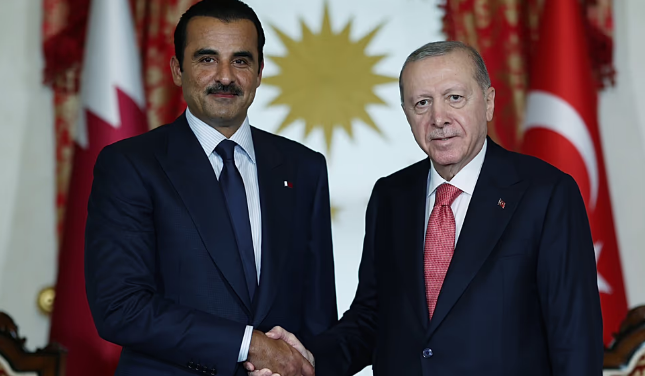
Turkey and Qatar have signed a mutual defence agreement to strengthen military cooperation and prepare for potential external attacks, as the Iran war accelerates changes in security arrangements across the Gulf and wider Middle East.
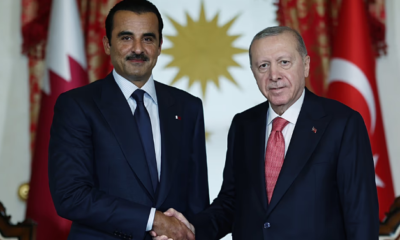
Turkish President Recep Tayyip Erdogan and Qatar’s Emir Sheikh Tamim bin Hamad Al Thani signed the agreement during a meeting in Istanbul on Friday, where they co-chaired the Supreme Strategic Committee between the two countries. The meeting also produced agreements covering trade, energy, diplomacy, education and culture.
A joint statement said the defence pact was intended to strengthen collective security, support regional stability and establish a common response to an external armed attack against either country or both.
The two sides agreed to consult on security threats and expand cooperation through joint military exercises, defence industry projects and exchanges of military personnel for training.
Erdogan said Turkey and Qatar would continue working to prevent another outbreak of conflict in the Gulf and promote dialogue and peace. His office described the agreement as a new stage in the countries’ close relationship and said it would expand cooperation in defence production.
The leaders also discussed Israel’s attacks on Gaza and the humanitarian situation in the Palestinian territory, efforts to normalise relations in Syria and developments in Libya.
Regional defence partnerships expand
The agreement comes amid a wider reassessment of security arrangements following the war involving Iran. While Gulf governments continue to regard the United States’ military presence as central to their security, Washington’s signals of a broader strategic realignment have encouraged regional countries to strengthen other defence partnerships.
Turkey, Qatar, Saudi Arabia, Pakistan and Indonesia have all taken steps towards closer military or defence industry cooperation in recent months.
In August, Turkey, Pakistan and Saudi Arabia signed the Mecca Joint Defence Agreement, under which the three countries agreed to support one another if any came under attack. The pact was ratified by the Turkish parliament last week, bringing together NATO member Turkey, Pakistan, which possesses the Muslim world’s only nuclear arsenal, and Saudi Arabia, a major regional military and economic power.
Turkey has said the agreement is not directed against any country and remains open to additional participants, including Egypt.
Pakistan and Kuwait also signed a joint defence and military cooperation agreement in August.
In October, Qatar, Turkey, Pakistan and Indonesia signed the Badr multilateral memorandum of understanding, focusing on cooperation in the defence industry.
The latest Turkey-Qatar agreement adds another layer to these emerging arrangements. Its emphasis on consultations, military exercises and defence production reflects efforts by regional governments to strengthen their ability to respond to security threats while maintaining existing international partnerships.
The developments point to a more varied regional security network, with countries pursuing closer bilateral and multilateral ties as uncertainty continues over the Gulf’s future security environment.
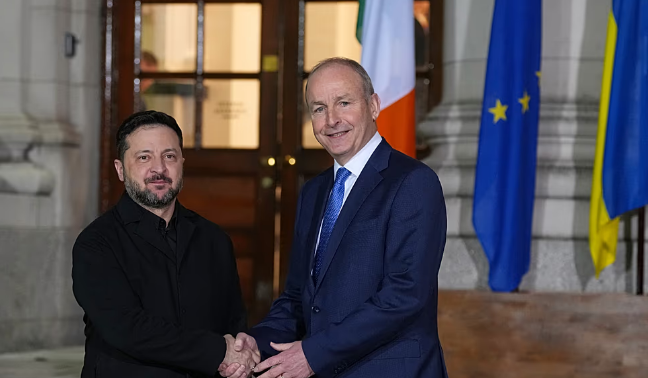
Ukrainian President Volodymyr Zelenskyy is expected to meet US envoys Steve Witkoff and Jared Kushner in Dublin on Thursday as diplomatic efforts to end the war with Russia continue.
The meeting is scheduled on the sidelines of the ninth European Political Community (EPC) summit, hosted by Ireland, where leaders from more than 45 countries are gathering to discuss security and other strategic issues.
Witkoff and Kushner are expected to arrive from Moscow after meeting Russian President Vladimir Putin. They will brief Zelenskyy on the latest developments in negotiations, following two days of discussions in Abu Dhabi.
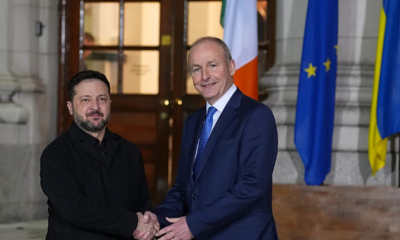
Zelenskyy arrived in Dublin on Wednesday evening and met Irish Taoiseach Micheál Martin, who expressed solidarity with Ukraine and condemned Russia’s continuing attacks.
Martin described the attacks as “barbarous” and “vile”, praising the Ukrainian people for their courage and resilience.
Zelenskyy thanked European representatives for their involvement in the Abu Dhabi discussions but insisted that Europe must have a direct role in negotiations concerning the continent’s future security arrangements.
“This war is in Ukraine, and ending this war without Europe’s participation would be unjust, and it would be impossible,” he said.
He called on European leaders to agree on a single representative to participate in future negotiations, arguing that a coordinated position was necessary as diplomatic discussions continue in November.
Kushner said in Abu Dhabi on Wednesday that he would seek Putin’s “blessing” for direct European involvement in the talks.
Zelenskyy is also expected to hold bilateral meetings and attend plenary sessions and a Friends of Ukraine gathering co-chaired by Martin and UK Prime Minister Andy Burnham.
Security tightened across Dublin
The summit is taking place under heightened security following a series of threats targeting schools, airlines and media organisations. Hoax bomb threats were sent to hundreds of schools in Ireland, the United Kingdom and Italy on Wednesday.
Garda Commissioner Justin Kelly said Irish police were prepared for all eventualities, citing their equipment, training and operational plans.
Several protests are also planned along routes leading to Dublin’s Convention Centre, where the summit is being held. Kelly said police would facilitate peaceful demonstrations but act swiftly if criminal activity occurred.
The EPC was established in 2022 following Russia’s invasion of Ukraine. It provides a forum for European leaders, including countries outside the European Union, to discuss shared political and security challenges.
Canadian Prime Minister Mark Carney is attending for the first time, alongside Norwegian Prime Minister Jonas Gahr Støre and Swiss President Guy Parmelin. Carney’s participation has been described by an EU official as a sign of Canada’s interest in closer security cooperation with Europe.
This year’s summit, themed “Europe: Strong, Secure and Connected”, will focus on competitiveness, energy security and connectivity. Migration is also expected to feature in discussions, with a joint statement anticipated from Italy, Denmark and the UK.
The meeting will be followed on Friday by an informal gathering of EU leaders, where divisions over Europe’s approach to Ukraine are expected to feature prominently.
Italian Prime Minister Giorgia Meloni recently criticised the lack of coordination among European countries, urging European Council President António Costa to make Ukraine a priority. She warned that multiple diplomatic initiatives and competing voices risk undermining Europe’s credibility in negotiations with Russia.
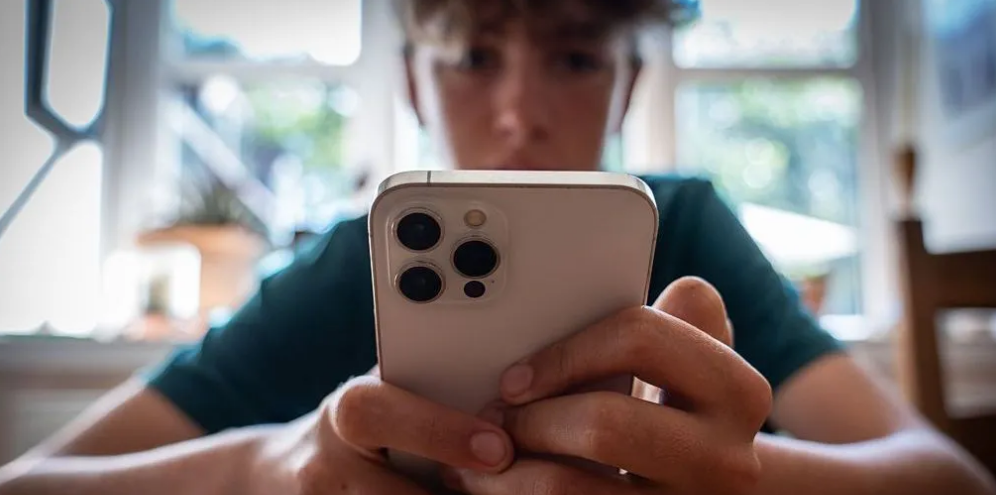
The UK government is considering extending its planned social media restrictions for under-16s to online marketplaces eBay and Vinted, amid concerns that their messaging features could expose children to online grooming.
Culture Secretary Lisa Nandy said ministers were examining whether the resale platforms should be included in the ban, which is scheduled to take effect in March next year.
Asked on the BBC’s Sunday with Laura Kuenssberg whether the government intended to prevent under-16s from using the websites, Nandy said: “We are looking seriously at doing so in order to keep children safe.”
The move follows a report by The Sunday Times that the government was considering adding eBay, Vinted, Depop and Facebook Marketplace to the list of restricted platforms. The newspaper cited concerns that private messaging could allow strangers to contact and groom children.
An eBay spokesperson said the company was committed to providing a safe marketplace for its customers and wanted to understand more about the proposed legislation.
“While the details of the proposed legislation are not yet clear, we look forward to understanding more and continuing to work constructively with the government,” the spokesperson said.
Vinted had not responded to requests for comment.
Both eBay and Vinted already require users to be at least 18. eBay says membership involves entering into a contract, while Vinted’s platform is primarily used to buy and sell second-hand clothing and other fashion items. The company has grown to around 17 million users in the UK.
Scope of the proposed restrictions
The government announced the under-16 social media ban in June, initially identifying 10 major platforms that would be affected. YouTube is also expected to be restricted, although YouTube Kids, its child-focused service, will remain available.
Ministers have not yet published the complete list of affected services. The proposed rules are intended to cover platforms designed to enable social interaction and allow users to post material.
Restrictions could also apply to services offering livestreaming or features through which strangers can contact children, including some gaming platforms. Roblox, popular among children aged eight to 12, is not expected to face a complete ban, although features such as its chat function could be restricted.
The UK is following Australia’s introduction of similar restrictions last year. Although some children there have found ways to bypass the rules, British ministers have said they intend to adopt a tougher enforcement approach.

Turkey and Qatar Sign Mutual Defence Pact as Gulf Security Alliances Shift

Microsoft Outage Renews Calls for Europe to Reduce Reliance on US Cloud Providers

Regular Coffee Consumption Linked to Changes in Gut Activity and Bacterial Diversity

MOL Targets End to Russian Oil Imports by 2027, Seeks EU Funding for Energy Shift

Smoking Linked to Higher Dementia Risk, with Heavy Smokers Facing Greater Threat

Global Markets Slide as Nvidia Leadership Shake-Up and Iran Tensions Weigh on Investors

Regular Park Visits Linked to Better Mental Health and Social Skills in Children

Reports of Second Alleged Affair Add to Pressure on Nvidia CEO Jensen Huang

Zelenskyy to Meet Trump Envoys in Dublin as Europe Seeks Role in Ukraine Peace Talks

Anthropic Targets Up to $64 Billion in IPO at Valuation of $1.4 Trillion

Meta Acquires Tilda Swinton VR Doc ‘Impulse: Playing With Reality’

China’s Historic Olympic Victory Sparks National Pride Amid Controversy

Saudi Arabia’s Model for Sustainable Aviation Practices

Recent Developments in Small Business Taxes

Effective Drain Cleaning: A Key to a Healthy Plumbing System

Who was Ebrahim Raisi and his status in Iranian Politics?

Keely Hodgkinson Wins Britain’s First Athletics Gold at Paris Olympics in 800m

Carrectly: Revolutionizing Car Care in Chicago

Nobel Laureate Muhammad Yunus Proposed as Head of Bangladesh’s Interim Government Following Hasina’s Resignation

Chinese Hackers Infiltrate Major U.S. Telecom Firms in Possible National Security Breach

Sony WF-10XM4: Headphones Are Our Absolute Favorite

10 Places You Can’t Miss If It’s Your First Time in European

New Census Data Will Shake Up Alabama Politics

16 Top of Our Favorite Outdoor Clothing Brands

Fashionable Summer Accessories to Dress Up Your Travel Look

How Sleeping Less than 7 Hours a Night Can Lead to Weight Gain
-
 Entertainment2 years ago
Meta Acquires Tilda Swinton VR Doc ‘Impulse: Playing With Reality’
-
 Sports2 years ago
China’s Historic Olympic Victory Sparks National Pride Amid Controversy
-
 Business2 years ago
Saudi Arabia’s Model for Sustainable Aviation Practices
-
 Business2 years ago
Recent Developments in Small Business Taxes
-
 Home Improvement2 years ago
Effective Drain Cleaning: A Key to a Healthy Plumbing System
-
 Politics2 years ago
Who was Ebrahim Raisi and his status in Iranian Politics?
-
 Sports2 years ago
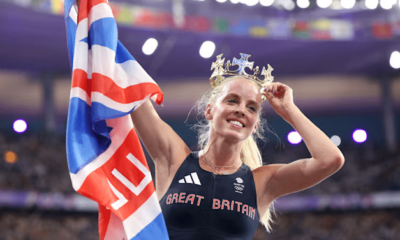
Keely Hodgkinson Wins Britain’s First Athletics Gold at Paris Olympics in 800m
-
 Business2 years ago
Carrectly: Revolutionizing Car Care in Chicago