
News
US Offers $20 Million Reward for Information on Iran’s Nuclear Programme


The United States is offering a reward of up to $20 million, along with possible relocation, for information about Iran’s nuclear programme, as concerns over the country’s nuclear activities remain a central issue in efforts to end the war.
The offer was announced by the US military and is being administered through the State Department’s Rewards for Justice programme. US Central Command said the reward was available to people providing information about Iranian nuclear facilities, equipment and associated personnel, including members of the scientific community, as well as the movement of relevant materials and individuals.
The programme, established in 1984, offers financial incentives for information that could help protect US national security.
In a statement explaining the decision, the State Department said Iran’s failure to meet its safeguards obligations to the International Atomic Energy Agency (IAEA) had affected the agency’s ability to monitor the country’s nuclear activities.
“The regime’s lack of compliance with the IAEA on safeguards obligations has led to the agency’s loss of ‘continuity of knowledge’ regarding Iran’s production and inventory of key components like centrifuges,” the department said.
The loss of continuity of knowledge refers to gaps in the agency’s ability to maintain a complete record of nuclear materials and related equipment. Centrifuges are used to enrich uranium, a process that can produce material for civilian nuclear energy or, at higher enrichment levels, for nuclear weapons.
US President Donald Trump has repeatedly claimed that American military strikes destroyed Iran’s nuclear facilities. Speaking at the Kennedy Space Center in Florida on Friday, he said Washington was determined to prevent Tehran from acquiring a nuclear weapon.
“We’re also ensuring that Iran will never have a nuclear weapon,” Trump said. “They will never have it. Not even close. They’re not close.”
He also referred to an earlier US operation involving B-2 stealth bombers, arguing that the strikes had prevented Iran from obtaining a nuclear weapon.
“If they did have it, if we didn’t go in with those beautiful B2 bombers a little more than a year ago, if I allowed them to have it today, there would be no Israel,” he added.
Iran’s nuclear programme has been a major point of contention in diplomatic efforts to end the conflict, which began in late February following US and Israeli strikes on the country.
Iranian President Masoud Pezeshkian has confirmed that his government continues to pursue a diplomatic solution through dialogue. The reward announcement comes as Washington and Tehran remain at odds over Iran’s nuclear activities and the future of the conflict.









A Pakistani astronaut is set to become the first foreign national to visit China’s Tiangong space station, joining the country’s next crewed mission into orbit, the China Manned Space Agency (CMSA) announced on Saturday.
The astronaut will travel aboard the Shenzhou-24 spacecraft as a payload specialist, marking a new stage in space cooperation between Pakistan and China. The CMSA said the crew member would take part in a short-term orbital mission before returning to Earth aboard the Shenzhou-23 spacecraft.
The agency did not disclose the astronaut’s identity or give a confirmed launch date. However, the mission is expected to take place by the end of 2026.
The announcement follows an agreement signed by Pakistan and China in February 2025 to establish a training programme for Pakistani astronauts. Under the arrangement, selected candidates would undergo training in China before taking part in missions alongside Chinese astronauts.
In April, the CMSA announced that Muhammad Zeeshan Ali and Khurram Daud had been selected to begin astronaut training in China. The agency has not yet confirmed which of the two will take part in the upcoming mission.
According to the CMSA, the Pakistani astronaut will return aboard Shenzhou-23, which docked with the Tiangong space station in May. The arrangement will allow the visitor to carry out a short orbital assignment with the Chinese crew.
China and Pakistan have maintained close diplomatic and strategic relations for decades, with both governments frequently describing their partnership as an “all-weather” friendship. China is Pakistan’s largest trading partner and a major source of foreign investment.
The astronaut agreement is part of broader cooperation between the two countries in science and technology. China’s state news agency Xinhua reported in February 2025 that Pakistani astronauts would undertake short-duration space missions with Chinese counterparts over the following years after completing their training.
China has expanded its space programme significantly in recent years as it seeks to strengthen its position alongside the United States in space exploration. The country operates the Tiangong station independently and has continued developing its crewed flight and lunar exploration capabilities.
Beijing has set a target of sending astronauts to the Moon by 2030, making human spaceflight a central part of its long-term space ambitions.
The planned Pakistani mission would represent the first time a foreign astronaut has visited Tiangong, giving Pakistan a direct role in China’s crewed space programme and opening the way for further joint missions.
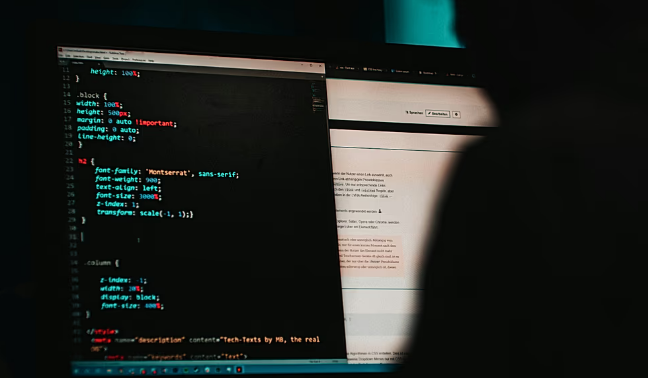
Belgium’s Federal Public Service Finance has temporarily taken its online tax portal and several other digital services offline following a cyberattack, as officials work to secure government systems and assess the extent of the disruption.
The agency, known as FOD Financiën, confirmed on Wednesday that the attack had affected its digital services. MyMinfin, the country’s online tax portal, was among the platforms taken offline as a precaution while technical teams investigate the incident.
MyMinfin allows individuals and businesses to manage tax returns, access financial documents and handle other tax-related administrative tasks. The temporary suspension could therefore affect taxpayers who rely on the platform to submit documents or complete pending procedures.
FOD Financiën said it would extend certain upcoming tax filing deadlines affected by the disruption. The revised deadlines will be announced at a later date, giving taxpayers more time to complete their obligations if they are unable to access the relevant online services.
The agency has not yet provided details about the origin of the cyberattack, the systems targeted or how long the affected services are expected to remain unavailable.
Officials said there was currently no indication that personal data had been breached or compromised. However, the investigation remains ongoing, and the possibility of unauthorised access has not been definitively ruled out.
Taking the services offline is intended to give officials time to examine the affected systems and implement measures to protect them. The move also reflects the need to establish whether the attack was limited to service disruption or involved attempts to access sensitive information.
The incident highlights the challenges government agencies face in maintaining essential public services during cyberattacks. Tax portals hold sensitive financial information and are widely used by residents and businesses, making their availability important, particularly around filing deadlines.
For taxpayers, the immediate concern is the temporary loss of access to MyMinfin and other affected platforms. The planned extension of certain deadlines is expected to provide some relief to those whose submissions are delayed by the outage.
FOD Financiën has not announced the full scope of the disruption or confirmed when normal service will resume. The agency is continuing its investigation and security work, while further information about revised filing dates is expected to follow.
Until the investigation establishes the extent of the incident, the status of personal information and the full impact on government services remains uncertain.
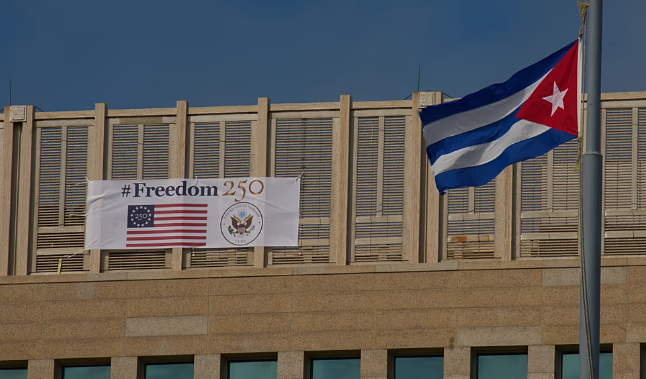
The United Nations General Assembly has renewed its call for the United States to end its economic, trade and financial embargo on Cuba, although support for the resolution fell to its lowest level in more than three decades amid renewed tensions between Washington and Havana.
The resolution, which has been introduced almost every year since 1992, received 130 votes in favour, 17 against and 25 abstentions. The level of support was the lowest since 1995. Last year, more than 160 countries backed the measure.
Germany, Italy and Latvia abstained for the first time in 34 years, while Colombia, Costa Rica, Ecuador, Morocco, Slovenia and Bosnia were among the countries that voted against the resolution, several doing so for the first time.
Although the resolution is not legally binding, it serves as an indication of international opinion on the long-running dispute. The vote comes as the administration of US President Donald Trump intensifies pressure on Cuba through sanctions and restrictions affecting its access to oil supplies.
The US embargo dates to 1960, following Fidel Castro’s revolution and the nationalisation of US-owned property. Washington maintains that Cuba’s economic difficulties stem from its government’s policies, while Havana argues that American restrictions have caused significant damage to the country’s economy.
Speaking shortly before the vote in New York, US Ambassador to the United Nations Mike Waltz rejected the description of the measures as a blockade.
“The plight of the Cuban people is exclusively the fault of this corrupt communist regime,” Waltz said.
Cuba’s government has accused Washington of conducting a diplomatic campaign to persuade countries to withdraw their support for the resolution. Foreign Minister Bruno Rodríguez accused the United States of attempting to “determine the nation’s destiny” and “seize” its wealth.
The debate also featured a heated confrontation between Rodríguez and Waltz. Rodríguez approached the US ambassador and accused him of lying, prompting Waltz to shout for him to back away.
During the session, Waltz accused senior Cuban officials of enjoying luxury lifestyles while ordinary citizens faced shortages. He displayed photographs of Cuban leaders, including President Miguel Díaz-Canel, wearing luxury watches. Members of the Cuban delegation responded by repeatedly banging on their desks.
Díaz-Canel later criticised Washington on the social media platform X, accusing it of “gangster-like coercion”. He said the international community had again opposed the embargo despite what he described as American pressure and blackmail.
In January, Trump threatened to impose tariffs on countries supplying oil to Cuba. The move has sharply reduced fuel deliveries, contributing to widespread power cuts and disruptions to water, internet and telephone services.
Cuba continues to face severe economic hardship, with shortages of fuel and other essential goods affecting daily life. The latest UN vote highlights the continuing international debate over US policy towards the island, even as the level of support for the annual resolution declines.

US Offers $20 Million Reward for Information on Iran’s Nuclear Programme

Pakistani Astronaut Set to Make History as First Foreign Visitor to China’s Space Station

Global Stock Sell-Off Deepens as AI Data Centre Concerns Hit Chipmakers

Big Tech Firms and Environmental Groups Join Forces to Set Data Centre Guidelines

Parents Sue Google Over AI Search After Teen Allegedly Used It to Plan Suicide

Experts Call for Stricter Fireworks Rules as Injuries Rise Across Europe

European Campaigners Demand Pause on Large Data Centre Projects Amid Growing Local Opposition

One in Four Teenagers Worldwide Does No Weekly Exercise, Study Finds

US Midterm Results Put Data Centre Expansion Under Pressure as Democrats Win Key States

BMW Profits Fall as Chinese Competition Forces Deeper Cost Cuts

Meta Acquires Tilda Swinton VR Doc ‘Impulse: Playing With Reality’

China’s Historic Olympic Victory Sparks National Pride Amid Controversy

Saudi Arabia’s Model for Sustainable Aviation Practices

Recent Developments in Small Business Taxes

Effective Drain Cleaning: A Key to a Healthy Plumbing System

Who was Ebrahim Raisi and his status in Iranian Politics?

Keely Hodgkinson Wins Britain’s First Athletics Gold at Paris Olympics in 800m

Carrectly: Revolutionizing Car Care in Chicago

Nobel Laureate Muhammad Yunus Proposed as Head of Bangladesh’s Interim Government Following Hasina’s Resignation

Chinese Hackers Infiltrate Major U.S. Telecom Firms in Possible National Security Breach

Sony WF-10XM4: Headphones Are Our Absolute Favorite

10 Places You Can’t Miss If It’s Your First Time in European

New Census Data Will Shake Up Alabama Politics

16 Top of Our Favorite Outdoor Clothing Brands

Fashionable Summer Accessories to Dress Up Your Travel Look

How Sleeping Less than 7 Hours a Night Can Lead to Weight Gain
-
 Entertainment2 years ago
Meta Acquires Tilda Swinton VR Doc ‘Impulse: Playing With Reality’
-
 Sports2 years ago
China’s Historic Olympic Victory Sparks National Pride Amid Controversy
-
 Business2 years ago
Saudi Arabia’s Model for Sustainable Aviation Practices
-
 Business2 years ago
Recent Developments in Small Business Taxes
-
 Home Improvement2 years ago
Effective Drain Cleaning: A Key to a Healthy Plumbing System
-
 Politics2 years ago
Who was Ebrahim Raisi and his status in Iranian Politics?
-
 Sports2 years ago
Keely Hodgkinson Wins Britain’s First Athletics Gold at Paris Olympics in 800m
-
 Business2 years ago
Carrectly: Revolutionizing Car Care in Chicago
You must be logged in to post a comment Login