
Tech
Experts Question Impact of Australia’s New Social Media Ban for Children Under 16

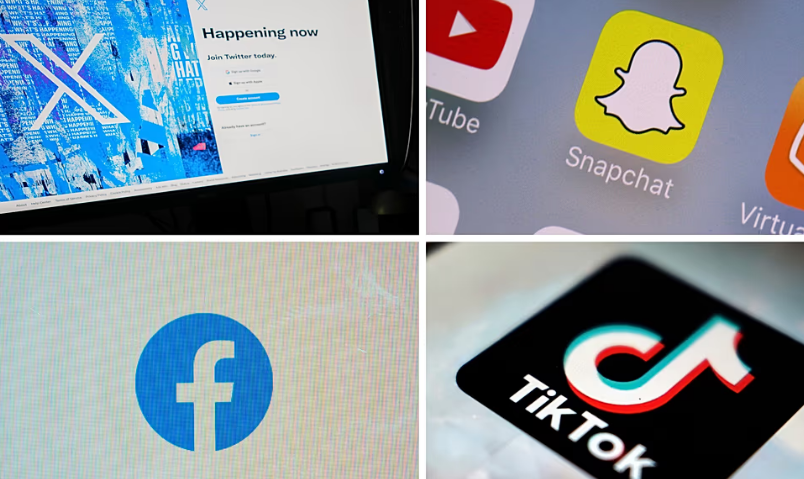
Australia has introduced sweeping restrictions that prevent children under 16 from creating or maintaining accounts on major social media platforms, but experts warn the measures may not significantly change young people’s online behaviour. The restrictions, which took effect on December 10, apply to platforms including Facebook, Instagram, TikTok, Snapchat, YouTube, Twitch, Reddit and X.
Under the new rules, children cannot open accounts, yet they can still access most platforms without logging in—raising questions about how effective the regulations will be in shaping online habits. The eSafety Commissioner says the reforms are intended to shield children from online pressures, addictive design features and content that may harm their health and wellbeing.
Social media companies are required to block underage users through age-assurance tools that rely on facial-age estimation, ID uploads or parental consent. Ahead of the rollout, authorities tested 60 verification systems across 28,500 facial recognition assessments. The results showed that while many tools could distinguish children from adults, accuracy declined among users aged 16 and 17, girls and non-Caucasian users, where estimates could be off by two years or more. Experts say the limitations mean many teenagers may still find ways around the rules.
“How do they know who is 14 or 15 when the kids have all signed up as being 75?” asked Sonia Livingstone, a social psychology professor at the London School of Economics. She warned that misclassifications will be common as platforms attempt to enforce the regulations.
Meta acknowledged the challenge, saying complete accuracy is unlikely without requiring every user to present government ID—something the company argues would raise privacy and security concerns. Users over 16 who lose access by mistake are allowed to appeal.
Several platforms have criticised the ban, arguing that it removes teenagers from safer, controlled environments. Meta and Google representatives told Australian lawmakers that logged-in teenage accounts already come with protections that limit contact from unknown users, filter sensitive subjects and disable personalised advertising. Experts say these protections are not always effective, citing studies where new YouTube and TikTok accounts quickly received misogynistic or self-harm-related content.
Analysts expect many teenagers to shift to smaller or lesser-regulated platforms. Apps such as Lemon8, Coverstar and Tango have surged into Australia’s top downloads since the start of December. Messaging apps like WhatsApp, Telegram and Signal—exempt from the ban—have also seen a spike in downloads. Livingstone said teenagers will simply “find alternative spaces,” noting that previous bans in other countries pushed young users to new platforms within days.
Researchers caution that gaming platforms such as Discord and Roblox, also outside the scope of the ban, may become new gathering points for young Australians. Studies will be conducted to assess the long-term impact on mental health and whether the restrictions support or complicate parents’ efforts to regulate screen time.
Experts say it may take several years to determine whether the ban delivers meaningful improvements to children’s wellbeing.








Meta has unveiled its first major AI model in nine months, following a $14.3 billion (€12.24 billion) investment spree and executive hiring push to rival OpenAI and Google. The American tech company introduced the model, called Muse Spark, on Wednesday, claiming it is faster and smarter than its previous technologies.
The company, founded by Mark Zuckerberg, invested $14.3 billion in Scale AI in June 2025 and recruited its CEO and co-founder, Alexandr Wang, to oversee Meta Superintelligence Labs, which houses teams working on foundational AI models. Zuckerberg also embarked on a hiring campaign, bringing in executives from competitors including OpenAI, Anthropic, and Google.
In a blog post, Meta said, “Over the last nine months, Meta Superintelligence Labs rebuilt our AI stack from the ground up, moving faster than any development cycle we have run before. This initial model is small and fast by design, yet capable enough to reason through complex questions in science, math, and health. It is a powerful foundation, and the next generation is already in development.”
Muse Spark is positioned as a significant upgrade over Meta’s last major release, Llama 4, launched in April 2025. The company highlighted that the model excels in advanced reasoning, particularly in scientific, mathematical, and medical queries. To improve its health advice capabilities, Meta worked with over 1,000 physicians to curate training data, aiming for more accurate and comprehensive responses.
The AI model will power the company’s digital assistant in the Meta AI app and website, with planned integration across Facebook, Instagram, WhatsApp, Messenger, and the Ray-Ban Meta AI glasses. A “contemplating mode” will gradually roll out, allowing multiple AI agents to reason in parallel on complex tasks. Meta’s technical blog noted this feature is designed to compete with high-level reasoning in models such as Gemini Deep Think and GPT Pro.
Zuckerberg emphasized on social media that Meta aims to build AI products that “don’t just answer your questions but act as agents that do things for you.” Unlike conventional chatbots, these AI agents operate autonomously, gathering information based on user preferences to assist without direct human commands.
One notable shift for Meta is the move away from open-source AI models. Unlike earlier releases, Muse Spark is not available for public download, meaning access to the technology is currently restricted. The company said the model is initially available only in the United States.
Muse Spark underscores Meta’s aggressive push into the competitive AI market, combining extensive investment, executive recruitment, and technical innovation to challenge the dominance of established players like OpenAI and Google.
OpenAI has called on governments to rethink the foundations of the economy, warning that artificial intelligence (AI) could soon surpass human intelligence and drastically change how people work, live, and pay taxes. The company outlined its initial policy ideas on Monday, aimed at mitigating the economic disruption caused by rapid AI adoption in the United States and worldwide.
One key proposal is the creation of a public wealth fund that would give citizens a direct stake in AI-driven economic growth. According to the policy document, the fund could invest in diversified, long-term assets, including AI companies and broader firms adopting AI technologies, with returns distributed to all citizens.
The company also suggested that governments encourage businesses to launch four-day workweek pilot programs without any reduction in pay. This approach aims to balance the productivity gains provided by AI with the well-being of workers. Lawmakers are also urged to modernize tax systems by increasing taxation on corporate income and capital gains instead of labor income, which could be affected by AI-related job losses. The report proposes additional measures, such as taxing companies that replace human labor with automation.
OpenAI recommends that social benefits, including retirement pensions and healthcare, be provided through portable accounts that follow individuals across different jobs, industries, and entrepreneurial ventures. This model would help ensure continuity of support in a labor market increasingly influenced by AI.
These recommendations echo broader discussions among AI leaders about the future of work. OpenAI CEO Sam Altman and xAI’s Elon Musk have previously highlighted universal basic income as a potential necessity as traditional employment declines. Other tech leaders, including Nvidia’s Jensen Huang and Zoom’s Eric Yuan, have advocated shorter workweeks to distribute productivity gains from AI more evenly.
Concerns about AI’s long-term impact extend beyond economics. In January, Anthropic CEO Dario Amodei warned that superintelligent AI, capable of outpacing human decision-making, poses “existential danger.” He suggested tighter controls on the export of key technologies, such as semiconductor chips used to train large language models, as one way to manage the risk. Amodei also called for transparency laws requiring AI companies to disclose how they guide their models’ behavior.
OpenAI’s policy document represents an early step in urging governments to address the structural changes AI may bring. The proposals highlight the need to rethink traditional concepts of work, taxation, and social support as the technology continues to advance rapidly.
As AI continues to reshape global economies, policymakers and industry leaders face increasing pressure to develop strategies that protect citizens while fostering innovation and sustainable growth.
Uzbekistan has signed an agreement with South Korea’s ROBOTIS to launch humanoid robot production, marking a major step in its high-tech ambitions. At the same time, students across the country are learning robotics and programming, gaining skills that could prepare them for careers in the emerging industry.
The agreement, signed between the UzElTechSanoat Association and ROBOTIS, sets out plans to establish humanoid robot production within Uzbekistan, develop manufacturing infrastructure, and train specialists for the growing robotics sector. ROBOTIS, known for its humanoid platforms and smart robotic actuators, will support the creation of technological foundations and help prepare a workforce capable of designing and operating advanced robotic systems.
The initiative forms part of Uzbekistan’s broader push to build a domestic innovation ecosystem, combining industrial cooperation with education. Early exposure to robotics and programming is at the heart of this strategy.
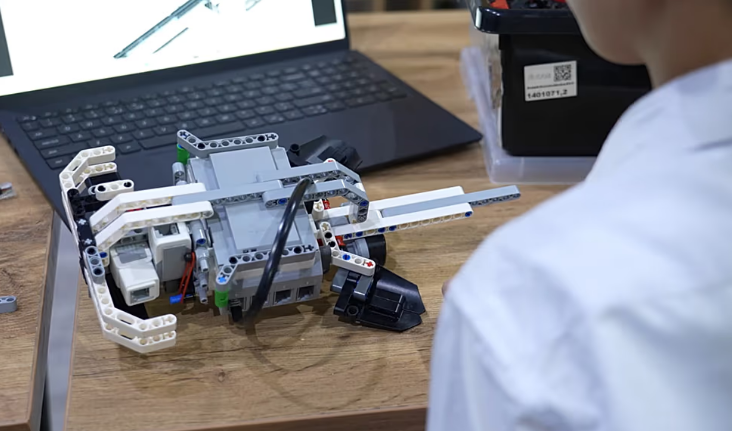
In a robotics classroom, 12-year-old Mirkomil Shodiev demonstrates the impact of these programs. Using an EVO-3 educational robotics kit, he assembles and programs his own robot, controlling its movements through lines of code. “This was created by me,” he says. “You connect it to a computer, write code, and it performs tasks using the motor.”
Mirkomil began IT classes four months ago, learning Scratch and now studying Python, a programming language widely used in web development, automation, and robotics. He hopes to build websites and earn money in the future, reflecting the growing importance of digital skills in Uzbekistan’s economy.
The government’s Digital Uzbekistan-2030 strategy is expanding nationwide training in programming and digital skills. IT education centres and specialised academies are growing to meet rising demand for technology careers. At the Robot Academy, where Mirkomil studies, students aged eight to fifteen gain hands-on experience in programming, robotics, and engineering. “Our students create scientific projects, develop games, and build Telegram bots,” says teacher Navruz Shaydullayev. “Programming helps develop their thinking, logic, and intellectual abilities.”
Classroom projects emphasize translating digital commands into physical movement, a key principle behind robotics and industrial automation. Students learn to design, assemble, and control machines independently, building skills that can directly feed into the country’s industrial ambitions.
The partnership with ROBOTIS will extend these educational initiatives into the workforce, providing training for engineers, programmers, and technicians in humanoid robotics. Officials hope the program will strengthen Uzbekistan’s technological competitiveness and create highly skilled jobs in a fast-growing global sector.
For students like Mirkomil, the future is already taking shape. “In the future, I want to continue in this field,” he says. “After finishing the courses, I would like to study in Tashkent as well.” As Uzbekistan prepares to manufacture humanoid robots, classrooms across the country are quietly training the people who may one day build them.

Genetic Differences May Shape Effectiveness of Popular Weight-Loss Drugs, Study Finds

Seven-Day Meditation Retreat Linked to Measurable Changes in Brain and Body, Study Finds

Fuel Prices Surge Across Europe as Middle East Crisis Pushes Oil Above $100

Oil Prices Surge as Strait of Hormuz Closure Shakes Markets

Britain and Norway Step Up Naval Patrols to Protect Undersea Infrastructure from Russia

Meta Launches Muse Spark, Its First Major AI Model in Nine Months

Fresh Attacks Reported Across Gulf Despite US-Iran Ceasefire Announcement

Sweden Accuses Iran of Using Criminal Gangs to Target Dissidents as Teenagers Face Trial

US-Iran Ceasefire Eases Tensions as Europe Reacts; US Politics Spill Into Hungary Vote

ENI and Egypt Announce Major Gas Discovery Amid Rising Energy Costs

Meta Acquires Tilda Swinton VR Doc ‘Impulse: Playing With Reality’

Saudi Arabia’s Model for Sustainable Aviation Practices

Recent Developments in Small Business Taxes

Effective Drain Cleaning: A Key to a Healthy Plumbing System

Who was Ebrahim Raisi and his status in Iranian Politics?

China’s Historic Olympic Victory Sparks National Pride Amid Controversy

Carrectly: Revolutionizing Car Care in Chicago

Keely Hodgkinson Wins Britain’s First Athletics Gold at Paris Olympics in 800m

Saudi Arabia: Foreign Direct Investment Rises by 5.6% in Q1

Chinese Hackers Infiltrate Major U.S. Telecom Firms in Possible National Security Breach

Sony WF-10XM4: Headphones Are Our Absolute Favorite

10 Places You Can’t Miss If It’s Your First Time in European

New Census Data Will Shake Up Alabama Politics

16 Top of Our Favorite Outdoor Clothing Brands

Fashionable Summer Accessories to Dress Up Your Travel Look

How Sleeping Less than 7 Hours a Night Can Lead to Weight Gain
-
 Entertainment2 years ago
Meta Acquires Tilda Swinton VR Doc ‘Impulse: Playing With Reality’
-
 Business2 years ago
Saudi Arabia’s Model for Sustainable Aviation Practices
-
 Business2 years ago
Recent Developments in Small Business Taxes
-
 Home Improvement1 year ago
Effective Drain Cleaning: A Key to a Healthy Plumbing System
-
 Politics2 years ago
Who was Ebrahim Raisi and his status in Iranian Politics?
-
 Sports2 years ago
China’s Historic Olympic Victory Sparks National Pride Amid Controversy
-
 Business2 years ago
Carrectly: Revolutionizing Car Care in Chicago
-
 Sports2 years ago
Keely Hodgkinson Wins Britain’s First Athletics Gold at Paris Olympics in 800m