
Travel
China Braces for Record 9.5 Billion Trips During Lunar New Year Travel Rush


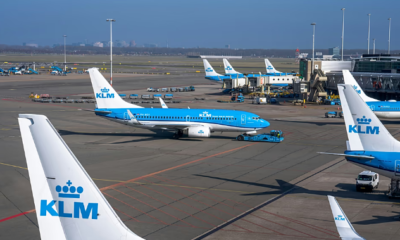





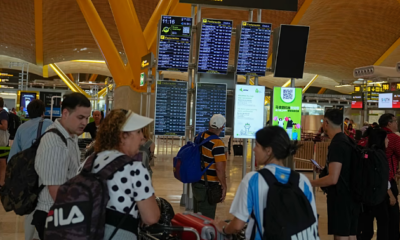

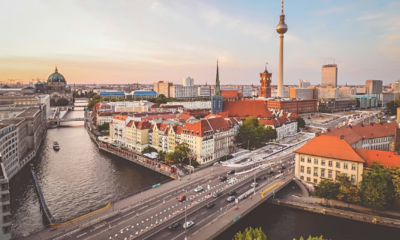



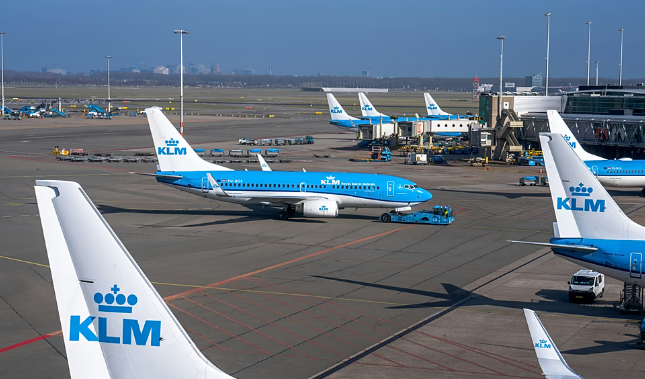
European skies recorded their busiest summer on record in 2026, with airlines operating more flights during the peak July and August holiday period despite disruption linked to the Middle East war.
Data from Eurocontrol, Europe’s aviation safety and air traffic management organisation, showed that the continent handled an average of 35,959 flights per day during the two-month period. That was 2.4% higher than the same period in 2025.
The busiest day came on Friday, July 10, when 37,640 flights were recorded across Europe, marking a new daily traffic record.
Despite the increase in air traffic and disruption caused by the conflict, punctuality also improved. Eurocontrol said 72.6% of flights arrived on time, an increase of 1.2 percentage points compared with 2025.
France continued to account for the largest share of delays linked to air traffic control management problems, representing 32% of all such delays across Europe.
Eurocontrol said the US-Iran war had influenced travel patterns during the 2026 tourist season. The conflict also encouraged some Europeans to choose holiday destinations within the continent, as travellers looked for locations perceived to be closer and safer amid wider regional uncertainty.
Southern and southeastern European countries benefited from the change in travel patterns. Eurocontrol reported lower traffic in Bulgaria, Hungary and Türkiye, while Albania, Croatia, Cyprus, Greece, Montenegro, North Macedonia, Serbia and Slovenia recorded significant increases.
The report also pointed to continued growth in southwestern Europe, highlighting a shift in demand toward destinations that remained accessible despite geopolitical tensions.
Greece experienced particularly strong demand, with record passenger numbers at its airports placing considerable pressure on the country’s air traffic control system during the busiest part of the summer season.
Fourteen countries recorded their highest-ever daily traffic for arrivals and departures during the summer. They included Albania, Armenia, Georgia, Greece, Ireland, Italy, Moldova, North Macedonia, Montenegro, Portugal, Serbia, Slovakia, Spain and Türkiye.
Airlines also experienced exceptionally high levels of activity. Several carriers and airline groups reported record traffic during the period, including Aegean, Air Serbia, easyJet, Jet2.com, Pegasus, Royal Air Maroc, Ryanair, Sky Express, SunExpress, Turkish Airlines and Wizz Air.
The figures indicate that Europe’s aviation sector remained resilient despite geopolitical disruption and changing tourist preferences. While the conflict affected traffic patterns in parts of eastern and southeastern Europe, demand for flights to other European destinations helped push overall summer traffic to unprecedented levels.

Wizz Air has been ranked the least expensive airline in Europe, while British Airways was identified as the costliest major national carrier, according to research comparing passenger revenue generated across 23 European airlines.
The analysis by flight and baggage compensation company AirAdvisor used revenue per available seat kilometre, or RASK, to compare how much airlines earn from passengers for each kilometre flown per available seat.
RASK provides an indication of how much travellers pay relative to distance and available capacity. The measure also reflects additional passenger charges, including fees for baggage and seat selection, rather than relying only on advertised ticket prices.
AirAdvisor said smaller airlines often have higher costs because they operate fewer routes, smaller fleets and services to remote or lower-demand destinations. With fewer seats available and less competition on some routes, fares can be higher.
However, the company said the pattern does not apply universally and travellers should compare prices for individual routes before booking.
The research also found that airline costs generally fell between 2024 and 2025. Among the 14 carriers for which AirAdvisor had year-on-year RASK figures, only five recorded increases, while nine saw their RASK decline.
Norway’s Widerøe topped the overall cost ranking with a RASK of €0.32. The regional airline operates many routes connecting smaller Norwegian airports with larger centres and also serves destinations including Aberdeen, Hamburg and London Southend.
Among major airlines, British Airways ranked as Europe’s most expensive national carrier, with a 2025 RASK of €0.0888. Its figure increased by €0.0038 from the previous year.
Air France and Austrian Airlines shared the next position among the most expensive major carriers, both recording a RASK of €0.0850.
At the other end of the ranking, Hungary-based Wizz Air had the lowest RASK at €0.0433, making it the least expensive airline in AirAdvisor’s comparison.
The company estimated that choosing Wizz Air instead of Air France could save travellers up to €50 on an average European flight distance, although actual savings depend on the route and additional fees.
easyJet ranked second among the least expensive airlines, with its RASK falling from €0.0770 in 2024 to €0.0521 in 2025.
Ryanair took third place, with RASK declining from €0.0843 to €0.0556 over the same period.
Among the 11 major national airlines included in the study, Finnair was ranked the least expensive.
The findings suggest that airline pricing can vary significantly even among national carriers, while the cost differences between airlines become more noticeable when viewed across typical travel distances.
AirAdvisor advised passengers to use such comparisons as a guide rather than a guarantee of the final fare, as route-specific pricing, luggage charges, seat fees and other extras can significantly affect the total cost of a journey.


France Considers Exit Tax on Crypto Gains and €10,000 Fine for Undeclared Wallets

Portuguese Teenagers Report Lower Drug and Alcohol Use, but High-Risk Behaviour Persists

Lancet Study Warns AI Misuse and Nuclear War Could Threaten Humanity by 2100

Spanish Police Clear Ceuta’s Last Migrant Camp Ahead of Royal Visit

Macron to Push ‘Made in Europe’ Agenda at Final Paris Motor Show Visit

Scientists Warn of Possible Major Rockslide at Germany-Austria Border Mountain

EU May Need to Cut Gas Consumption by 7% This Winter as Reserves Hit Record Low

Russian Escalation Raises Questions Over EU’s €90 Billion Ukraine Support Plan

Teacher Salaries Across Europe: Germany Leads as Major Pay Gaps Persist

Etihad Airways and flydubai Cancel Saudi Flights After Riyadh Airport Attacks

Meta Acquires Tilda Swinton VR Doc ‘Impulse: Playing With Reality’

China’s Historic Olympic Victory Sparks National Pride Amid Controversy

Saudi Arabia’s Model for Sustainable Aviation Practices

Recent Developments in Small Business Taxes

Effective Drain Cleaning: A Key to a Healthy Plumbing System

Who was Ebrahim Raisi and his status in Iranian Politics?

Keely Hodgkinson Wins Britain’s First Athletics Gold at Paris Olympics in 800m

Carrectly: Revolutionizing Car Care in Chicago

Nobel Laureate Muhammad Yunus Proposed as Head of Bangladesh’s Interim Government Following Hasina’s Resignation

Chinese Hackers Infiltrate Major U.S. Telecom Firms in Possible National Security Breach

Sony WF-10XM4: Headphones Are Our Absolute Favorite

10 Places You Can’t Miss If It’s Your First Time in European

New Census Data Will Shake Up Alabama Politics

16 Top of Our Favorite Outdoor Clothing Brands

Fashionable Summer Accessories to Dress Up Your Travel Look

How Sleeping Less than 7 Hours a Night Can Lead to Weight Gain
-
 Entertainment2 years ago
Meta Acquires Tilda Swinton VR Doc ‘Impulse: Playing With Reality’
-
 Sports2 years ago
China’s Historic Olympic Victory Sparks National Pride Amid Controversy
-
 Business2 years ago
Saudi Arabia’s Model for Sustainable Aviation Practices
-
 Business2 years ago
Recent Developments in Small Business Taxes
-
 Home Improvement2 years ago
Effective Drain Cleaning: A Key to a Healthy Plumbing System
-
 Politics2 years ago
Who was Ebrahim Raisi and his status in Iranian Politics?
-
 Sports2 years ago
Keely Hodgkinson Wins Britain’s First Athletics Gold at Paris Olympics in 800m
-
 Business2 years ago
Carrectly: Revolutionizing Car Care in Chicago