
Tech
JPMorgan Chase, Visa and Mastercard Customer Data Exposed in Third-Party Cyberattack


Customer names, email addresses, phone numbers and, in some cases, JPMorgan Chase account identification details were exposed in a ransomware attack targeting a third-party service provider used by major financial companies.
The hacking group behind the incident, identified as n0n, reportedly gave the companies 48 hours to pay a ransom before publishing stolen customer information on the dark web. JPMorgan Chase, Visa and Mastercard confirmed on Thursday that the breach had occurred, but said customers’ financial and payment card details had not been compromised.
JPMorgan Chase said the attackers targeted external companies providing services to the bank rather than its own systems.
“We have learned that third parties who provide services to the firm were the target of a cyber-attack,” the US bank said in a statement posted on social media platform X.
The bank said its investigation indicated that the attackers had accessed marketing information held by the suppliers, which could include some customer names and email addresses.
JPMorgan Chase stressed that its services were not affected and that the incident was unrelated to technical problems experienced by customers earlier in the week.
The disclosure came after several major organisations, including JPMorgan Chase, United Airlines and the US National Security Agency, experienced computer system outages over the previous week. No link between those disruptions and the data breach was reported.
Cybersecurity firm SOCRadar told AFP that the hacking group n0n had claimed responsibility for the attack on the bank’s subcontractor. The group also published documents that it said supported its claims.
According to SOCRadar, the hackers launched a 48-hour ransom countdown before releasing the stolen marketing files. However, the cybersecurity company said it had not independently verified the authenticity of the group’s claims.
The firm said n0n emerged in September and was believed to originate from Russia. The group claims to have targeted nearly 200 companies worldwide.
Visa said it was aware of the allegations and confirmed that the incident involved a supplier based in the Asia-Pacific region.
“Visa’s systems were not involved and were not impacted. No payments data such as card numbers were affected,” the company said.
Mastercard also confirmed that some customer information had been exposed, although it described the incident as limited in scope.
The company said the breach involved non-payment information belonging to a subset of cardholders enrolled in a specific benefits programme. It added that its teams were working with the service provider to assist affected customers where necessary.
The incident highlights the risks financial institutions face through external suppliers, as customer information can be exposed even when a company’s own systems and payment networks remain secure.










The Trump administration has removed Sean Cairncross from his position as the US national cyber director, with Defence Department Chief Information Officer Kirsten Davies expected to take over the role on an interim basis.
A source close to the White House confirmed Cairncross’s dismissal to the AFP news agency on Thursday. The move comes amid a series of technology disruptions affecting several key sectors across the United States, including travel, communications and banking.
Davies, who currently serves as the Pentagon’s chief information officer, will temporarily assume responsibility for the national cyber director’s office, according to the source.
US Secretary of State Marco Rubio welcomed her appointment in a social media post, expressing support for efforts to improve the country’s cybersecurity.
“Congratulations to the new National Cyber Director Kirsten Davies, look forward to working together to strengthen America’s cybersecurity,” Rubio wrote.
Davies has held a senior position at the Department of Defence, where she has served as the principal adviser to Defence Secretary Pete Hegseth on information management, information technology, cybersecurity and information assurance.
Her appointment comes at a time of heightened concern over the security and reliability of US digital infrastructure. Recent outages have disrupted services in the travel, telecommunications and banking industries. An internal system used by the National Security Agency has also experienced technical problems in recent weeks.
The national cyber director plays a central role in shaping the federal government’s approach to cybersecurity. The office advises the president on national cyber policy and strategy, covering information security, data protection and measures to deter malicious cyber activity.
The director is also responsible for coordinating cybersecurity policies and initiatives across federal government departments and agencies. The position was established in 2021 to strengthen coordination and provide the White House with dedicated advice on cyber threats.
In March, the Trump administration published a seven-page document outlining its national cybersecurity strategy. The policy pledged to take faster and more proactive action against cyber threats while strengthening the country’s digital defences.
The strategy outlined plans to simplify cybersecurity regulations, modernise federal information systems, improve the protection of critical infrastructure and maintain US leadership in artificial intelligence.
It also committed the administration to acting swiftly and proactively to disable cyber threats, reflecting growing concerns about attacks targeting government networks, businesses and essential services.
Cairncross’s departure marks a leadership change at a time when cybersecurity has become an increasingly important issue for the US government, particularly as disruptions and digital threats continue to expose vulnerabilities in critical systems.
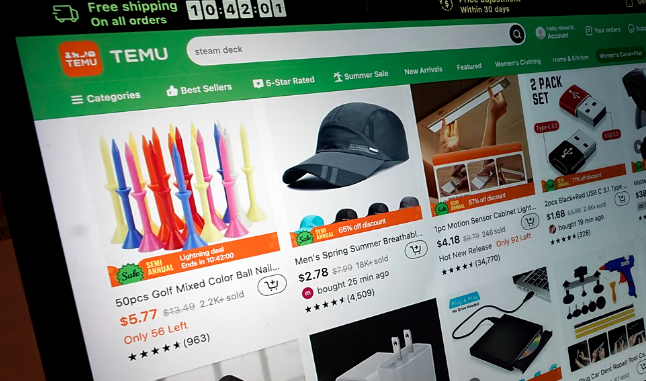
The European Commission has accused Chinese online marketplace Temu of failing to adequately prevent illegal and unsafe products from being sold through its platform, warning that the company could face a fine of up to 6% of its annual global turnover.
The preliminary findings identify weaknesses in product safety checks, content moderation and the system used to penalise sellers who repeatedly breach marketplace rules.
The investigation follows a €200 million fine imposed on Temu by the Commission in May 2026 over the sale of illegal goods, including dangerous baby toys and faulty chargers. Regulators said at the time that the company had failed to carry out adequate assessments of risks associated with products offered to European consumers.
Temu was subsequently required to prepare an action plan addressing breaches of the EU’s Digital Services Act (DSA). The Commission approved the plan in October, but investigators say significant problems remain.
Weak product safety checks
The Commission found that Temu does not consistently require sellers to provide safety test reports. Even when documentation is submitted, the company does not always verify it.
Investigators also raised concerns about the handling of high-risk products, particularly electronics and cosmetics. Safety checks in these categories were not given sufficient priority, while findings from random inspections were not consistently followed up.
Content moderation concerns
The investigation also identified shortcomings in Temu’s content moderation system, which regulators said had failed to prevent illegal goods from appearing on the marketplace.
According to the preliminary findings, the system focuses largely on information supplied with product listings rather than assessing whether the goods themselves meet safety requirements.
The Commission also questioned the platform’s approach to comparing products, saying it did not adequately prioritise safety when consumers searched for alternatives to previously identified non-compliant items.
The number of human moderators had also failed to keep pace with the growing range of products listed on the platform, investigators said.
Seller sanctions under scrutiny
The Commission described Temu’s system for penalising sellers as fragmented and ineffective. One concern was that restrictions were applied to individual online stores rather than the traders operating them.
This could allow sellers whose stores had been suspended to continue trading through other accounts. Investigators also found that Temu was too slow to act against businesses repeatedly violating its rules.
Temu rejected the preliminary findings, saying it invests heavily in compliance systems and specialist staff. The company argued that its existing controls effectively reduce the risk of illegal products appearing on the platform.
It said it would examine the Commission’s assessment, respond to the concerns and continue discussions with regulators. Temu also expressed confidence that an agreement could be reached.
The company can now review the findings and submit its defence before the Commission reaches a final decision. If regulators conclude that Temu has failed to meet its obligations under the Digital Services Act, it could face a penalty of up to 6% of its annual global turnover.

A global Microsoft outage that disrupted Outlook and Teams services across 74 countries has renewed calls for Europe to reduce its dependence on American technology companies and strengthen its own cloud computing industry.
The disruption, which began on Thursday afternoon European time, left users unable to access emails and online meetings. Some doctors’ surgeries in the UK asked patients to telephone them with urgent enquiries. Microsoft said it had found no evidence of a cyberattack, but had not identified the root cause. Services were gradually restored on Friday.
The incident has added urgency to concerns about Europe’s reliance on a small number of US providers. Tommaso Valletti, professor of economics at Imperial College Business School and a former chief competition economist at the European Commission, said the outage highlighted the risks of depending heavily on a handful of large technology companies.
Amazon, Microsoft and Google control around 70% of the European cloud market, according to Synergy Research Group. European providers account for approximately 15%, down from 29% in 2017. Germany’s SAP and Deutsche Telekom are among the largest local players, but each holds only about 2% of the market.
The figures reflect a wider dependence on foreign technology, with around 80% of Europe’s digital infrastructure and technology coming from outside the European Union. A recent Eurobarometer survey found strong public support for digital infrastructure controlled within Europe, particularly in Sweden, Finland and Denmark.
Brussels pushes for European alternatives
The debate gained momentum on Wednesday when members of the European Parliament presented a draft report on the European Commission’s proposed Cloud and AI Development Act. The report calls for public authorities to purchase more cloud services from European companies.
Dutch Green MEP Reinier van Lanschot warned that dependence on foreign technology could leave critical systems vulnerable to decisions made outside Europe.
Concerns about access to technology increased in June when US company Anthropic suspended access to its Claude Fable 5 and Mythos 5 AI models to comply with American export controls. Access was restored on 1 July.
The European Commission also plans to triple the bloc’s data centre capacity over the next five to seven years. Bidding for up to seven EU-backed artificial intelligence gigafactories closed on Thursday.
European companies seek a larger role
Europe has several companies operating in different parts of the technology industry, although none currently matches the scale of the American giants.
French AI developer Mistral AI was valued at €21 billion following a €3 billion funding round led by Samsung in September. In cloud computing, Germany’s STACKIT is developing an €11 billion AI data centre in Brandenburg. It has joined OVHcloud, Scaleway and Mistral in securing places on an EU sovereign cloud contract worth up to €180 million.
Germany’s Infineon is also seen as a potential beneficiary of growing demand for AI infrastructure through its production of power-management chips.
However, persuading businesses to switch providers remains difficult. A Bitkom survey found that 85% of German companies considered the country too dependent on US cloud services, yet 71% continued to use them. Research by IDC found that only 4% of European organisations planned to rely exclusively on local providers.
The European Parliament’s committees are due to discuss the draft legislation on 1 December. A committee vote is provisionally scheduled for March 2027, followed by a parliamentary vote in April. Microsoft has promised to publish a report explaining the outage once all services have been restored.

Denmark Has Europe’s Widest Urban-Rural House Price Gap, OECD Data Shows

Trump Administration Fires US National Cyber Director Sean Cairncross

JPMorgan Chase, Visa and Mastercard Customer Data Exposed in Third-Party Cyberattack

Canada and China Agree to Ease Tariffs on Pork, Seafood and Metals

Germany Ranks Last in Business Start-up Bureaucracy Study, Requiring Nearly 4,000 Hours

UK Inflation Rises to 3.6% in October as Record Diesel Prices Push Up Costs

EU Accuses Temu of Failing to Prevent Illegal Products, Risking Heavy Fine

Measles Cases Decline Across Europe in 2026, but Outbreaks Persist in Several Countries

Renault Plans 2,000 New Jobs in France While Cutting 1,000 Administrative Roles

Global Stocks Slide as Nvidia Leadership Uncertainty Puts AI Trade Under Pressure

China’s Historic Olympic Victory Sparks National Pride Amid Controversy

Meta Acquires Tilda Swinton VR Doc ‘Impulse: Playing With Reality’

Saudi Arabia’s Model for Sustainable Aviation Practices

Recent Developments in Small Business Taxes

Effective Drain Cleaning: A Key to a Healthy Plumbing System

Who was Ebrahim Raisi and his status in Iranian Politics?

Keely Hodgkinson Wins Britain’s First Athletics Gold at Paris Olympics in 800m

Carrectly: Revolutionizing Car Care in Chicago

Nobel Laureate Muhammad Yunus Proposed as Head of Bangladesh’s Interim Government Following Hasina’s Resignation

Chinese Hackers Infiltrate Major U.S. Telecom Firms in Possible National Security Breach

Sony WF-10XM4: Headphones Are Our Absolute Favorite

10 Places You Can’t Miss If It’s Your First Time in European

New Census Data Will Shake Up Alabama Politics

16 Top of Our Favorite Outdoor Clothing Brands

Fashionable Summer Accessories to Dress Up Your Travel Look

How Sleeping Less than 7 Hours a Night Can Lead to Weight Gain
-
 Sports2 years ago
China’s Historic Olympic Victory Sparks National Pride Amid Controversy
-
 Entertainment2 years ago
Meta Acquires Tilda Swinton VR Doc ‘Impulse: Playing With Reality’
-
 Business2 years ago
Saudi Arabia’s Model for Sustainable Aviation Practices
-
 Business2 years ago
Recent Developments in Small Business Taxes
-
 Home Improvement2 years ago
Effective Drain Cleaning: A Key to a Healthy Plumbing System
-
 Politics2 years ago
Who was Ebrahim Raisi and his status in Iranian Politics?
-
 Sports2 years ago
Keely Hodgkinson Wins Britain’s First Athletics Gold at Paris Olympics in 800m
-
 Business2 years ago
Carrectly: Revolutionizing Car Care in Chicago
You must be logged in to post a comment Login