
Tech
Ukraine War Strikes Raise Questions Over Security of Europe’s AI Data Centres


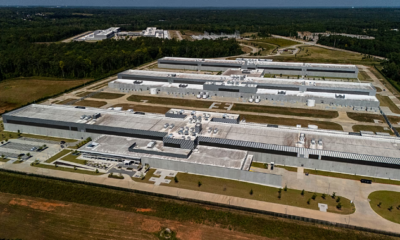
Attacks on data centres in Ukraine, Russia and the Middle East are raising concerns over the security of artificial intelligence infrastructure, prompting calls for European governments to rethink where and how they build major computing facilities.
Mehdi Paryavi, an adviser to the United Nations and founder of the International Data Center Authority, said recent strikes demonstrated how vulnerable data centres had become as military targets and warned that damage to critical facilities could disrupt entire economies.
“When you hit enough important targets, you can take down the entire economy,” Paryavi told Euronews Next.
He said attacks on data centres could affect essential services, including banking, healthcare and military operations, as countries become increasingly dependent on digital systems.
Russia has struck data centres in Kyiv, while Ukrainian drones have targeted multiple facilities in Russia in recent weeks. Kyiv has described some of its attacks as targeting infrastructure that generates revenue for Moscow’s war effort.
Data centres house servers and store the information needed to run digital services. They are also essential to the development of AI because they provide the computing capacity and energy required to train and operate advanced systems.
Their strategic importance has increased as Ukraine uses artificial intelligence for drone targeting and other military applications.
Paryavi said traditional approaches to choosing data centre locations and keeping them discreet might no longer provide sufficient protection. He suggested that countries may need to consider underground facilities, reinforced bunkers and air defence systems.
“The days that you would just build data centres in random locations are over,” he said.
However, he acknowledged that governments and the technology industry had yet to find a clear solution that would improve security without slowing the expansion of AI computing capacity.
European AI expansion faces security questions
Asked whether the attacks would prompt European governments to reconsider plans for large-scale AI facilities, known as AI gigafactories, Paryavi said they would.
The European Commission told Euronews Next that a tender had been launched to establish up to seven AI gigafactories across Europe. The application process was scheduled to close on November 12, after which proposals would be evaluated and decisions made.
The Commission did not specifically address whether attacks on data centres would affect its plans.
Paryavi warned that the financial consequences of a major attack could be severe. Individual data centres can cost as much as $25 billion to build and take up to three years to complete, making destroyed facilities expensive and difficult to replace.
“Europe cannot afford to finance hundreds of billions of dollars of assets and then somebody takes them out,” he said, adding that the pace of construction might need to slow.
He urged European countries to coordinate their approach rather than develop infrastructure independently. Shared planning, he argued, could help address security threats alongside energy shortages and a lack of skilled workers.
Paryavi also suggested concentrating data centres in designated digital hubs instead of scattering facilities across multiple locations. Such clusters could make it easier to establish coordinated protection systems, including air defence.
The debate highlights a growing challenge for governments seeking to expand AI capacity while protecting the infrastructure on which digital economies increasingly depend.











A global Microsoft outage that disrupted Outlook and Teams services across 74 countries has renewed calls for Europe to reduce its dependence on American technology companies and strengthen its own cloud computing industry.
The disruption, which began on Thursday afternoon European time, left users unable to access emails and online meetings. Some doctors’ surgeries in the UK asked patients to telephone them with urgent enquiries. Microsoft said it had found no evidence of a cyberattack, but had not identified the root cause. Services were gradually restored on Friday.
The incident has added urgency to concerns about Europe’s reliance on a small number of US providers. Tommaso Valletti, professor of economics at Imperial College Business School and a former chief competition economist at the European Commission, said the outage highlighted the risks of depending heavily on a handful of large technology companies.
Amazon, Microsoft and Google control around 70% of the European cloud market, according to Synergy Research Group. European providers account for approximately 15%, down from 29% in 2017. Germany’s SAP and Deutsche Telekom are among the largest local players, but each holds only about 2% of the market.
The figures reflect a wider dependence on foreign technology, with around 80% of Europe’s digital infrastructure and technology coming from outside the European Union. A recent Eurobarometer survey found strong public support for digital infrastructure controlled within Europe, particularly in Sweden, Finland and Denmark.
Brussels pushes for European alternatives
The debate gained momentum on Wednesday when members of the European Parliament presented a draft report on the European Commission’s proposed Cloud and AI Development Act. The report calls for public authorities to purchase more cloud services from European companies.
Dutch Green MEP Reinier van Lanschot warned that dependence on foreign technology could leave critical systems vulnerable to decisions made outside Europe.
Concerns about access to technology increased in June when US company Anthropic suspended access to its Claude Fable 5 and Mythos 5 AI models to comply with American export controls. Access was restored on 1 July.
The European Commission also plans to triple the bloc’s data centre capacity over the next five to seven years. Bidding for up to seven EU-backed artificial intelligence gigafactories closed on Thursday.
European companies seek a larger role
Europe has several companies operating in different parts of the technology industry, although none currently matches the scale of the American giants.
French AI developer Mistral AI was valued at €21 billion following a €3 billion funding round led by Samsung in September. In cloud computing, Germany’s STACKIT is developing an €11 billion AI data centre in Brandenburg. It has joined OVHcloud, Scaleway and Mistral in securing places on an EU sovereign cloud contract worth up to €180 million.
Germany’s Infineon is also seen as a potential beneficiary of growing demand for AI infrastructure through its production of power-management chips.
However, persuading businesses to switch providers remains difficult. A Bitkom survey found that 85% of German companies considered the country too dependent on US cloud services, yet 71% continued to use them. Research by IDC found that only 4% of European organisations planned to rely exclusively on local providers.
The European Parliament’s committees are due to discuss the draft legislation on 1 December. A committee vote is provisionally scheduled for March 2027, followed by a parliamentary vote in April. Microsoft has promised to publish a report explaining the outage once all services have been restored.

Web Summit technology conference in Lisbon has cancelled its second day after the Portuguese government warned of serious risks from Storm Charles, which is expected to bring strong winds, coastal flooding and widespread disruption to public transport.
OrganiserThe s confirmed on Tuesday that Wednesday’s programme would not go ahead, following consultations with the government, the National Emergency and Civil Protection Authority (ANEPC) and the Public Security Police (PSP).
In an email to attendees, Web Summit said the government had formally advised against holding the event because of the potential dangers posed by the storm.
The warning cited the risk of tidal flooding, severe disruption to public transport and high winds that could affect external structures at the conference venue.
“Web Summit will of course respect the Government’s direction, and accordingly, Day 2 (Wednesday, November 11th) will not take place,” the organisers said, adding that the safety of attendees, staff and contractors remained their priority.
The conference is scheduled to resume on Thursday, subject to conditions and further official guidance.
The decision came after Portugal declared a state of emergency in response to the approaching storm. The government announced that schools and non-essential public services would close across the country on Wednesday as precautionary measures.
Minister of Internal Administration officials outlined the restrictions during a briefing at ANEPC headquarters in Carnaxide. Authorities also prohibited access to coastal areas, riverbanks and other locations considered vulnerable to flooding.
The Ministry of Internal Affairs said the restrictions would apply particularly to areas with a history of flooding and other weather-related hazards.
Lisbon Mayor Carlos Moedas had earlier suggested that the technology conference should be cancelled, although he left the final decision to the central government and the event organisers.
Web Summit is being held at the Feira Internacional de Lisboa (FIL) exhibition centre in Parque das Nações, close to the city’s waterfront. Its location has raised concerns because of the potential impact of coastal flooding and strong winds on surrounding infrastructure.
The event was expected to attract close to 70,000 participants, including around 900 speakers and more than 2,000 start-ups. The gathering brings together technology companies, investors, entrepreneurs and policymakers from across the world.
The cancellation of Wednesday’s programme represents a disruption to one of Europe’s major technology gatherings, although organisers have indicated that activities are expected to continue on Thursday.
Authorities have urged residents and visitors to follow official safety instructions, avoid restricted areas and limit unnecessary travel while Storm Charles affects the country.

Cyberattacks targeting essential services, including supermarket refrigeration systems, blood donation facilities and government networks, are increasing, with cybersecurity experts warning that human error remains one of the main ways criminals gain access to vulnerable systems.
Marco Di Filippo, a cybersecurity specialist at German firm Whitelisthackers, said an unusual concentration of major incidents had occurred within a short period.
“In the past two weeks we have seen an exceptional concentration of spectacular cases of a kind we would previously not have experienced even over the course of an entire year,” he told Euronews.
Recent incidents have included the theft of hundreds of thousands of emails belonging to members of Germany’s far-right Alternative for Germany party, vulnerabilities affecting financial services company Revolut and the PHP programming language, as well as attacks disrupting refrigeration systems.
Germany’s Federal Criminal Police Office recorded economic damage of €202.4 billion from cybercrime in 2025, highlighting the growing financial risks to businesses and public institutions.
One of the most serious recent incidents involved a cyberattack on Berlin’s state network in August 2026. The ransomware group Rhysida demanded 30 bitcoin, worth approximately €2 million, but the Berlin Senate refused to pay. The attackers subsequently published 1.4 million confidential files on the dark web.
Di Filippo said the breach began when an employee was tricked into visiting a malicious website using a technique known as ClickFix. The victim was instructed to confirm they were human by copying and executing a computer command.
By following the instructions, the employee unknowingly gave attackers access to the system. Di Filippo said the incident exposed two weaknesses: insufficient awareness among staff and excessive access privileges that allowed an ordinary user to execute the harmful command.
He estimates that people are involved in allowing security weaknesses to be exploited in between 80% and 95% of cyberattacks.
The expert warned that increasing connectivity was creating new risks. Internet-connected appliances, including supermarket refrigerators, can be controlled remotely, but inadequate security measures may allow criminals to interfere with their operation. Recent attacks on refrigeration systems have also affected blood donation services, with disrupted cooling reportedly rendering some donations unusable.
Cybercriminals can also gain access to private messages through techniques such as WhatsApp ghost pairing. Germany’s Federal Office for Information Security has advised users to examine unexpected messages carefully and activate two-factor authentication.
Di Filippo believes public education should become a central part of cybersecurity policy. He pointed to awareness campaigns in India, where public transport advertisements provide information about cybercrime and reporting hotlines.
His company takes a different approach by testing systems using methods similar to those employed by criminal hackers, but with the permission of clients. Its specialists identify weaknesses and provide detailed reports explaining how they can be fixed.
Whitelisthackers works with around 250 clients annually. Once vulnerabilities are identified, manufacturers and organisations are notified so they can address the problems before criminals exploit them.
Di Filippo said technology alone could not prevent attacks. Improving digital awareness among employees and the public, alongside stronger technical safeguards, was essential to protecting critical infrastructure.

Turkey and Qatar Sign Mutual Defence Pact as Gulf Security Alliances Shift

Microsoft Outage Renews Calls for Europe to Reduce Reliance on US Cloud Providers

Regular Coffee Consumption Linked to Changes in Gut Activity and Bacterial Diversity

MOL Targets End to Russian Oil Imports by 2027, Seeks EU Funding for Energy Shift

Smoking Linked to Higher Dementia Risk, with Heavy Smokers Facing Greater Threat

Global Markets Slide as Nvidia Leadership Shake-Up and Iran Tensions Weigh on Investors

Regular Park Visits Linked to Better Mental Health and Social Skills in Children

Reports of Second Alleged Affair Add to Pressure on Nvidia CEO Jensen Huang

Zelenskyy to Meet Trump Envoys in Dublin as Europe Seeks Role in Ukraine Peace Talks

Anthropic Targets Up to $64 Billion in IPO at Valuation of $1.4 Trillion

Meta Acquires Tilda Swinton VR Doc ‘Impulse: Playing With Reality’

China’s Historic Olympic Victory Sparks National Pride Amid Controversy

Saudi Arabia’s Model for Sustainable Aviation Practices

Recent Developments in Small Business Taxes

Effective Drain Cleaning: A Key to a Healthy Plumbing System

Who was Ebrahim Raisi and his status in Iranian Politics?

Keely Hodgkinson Wins Britain’s First Athletics Gold at Paris Olympics in 800m

Carrectly: Revolutionizing Car Care in Chicago

Nobel Laureate Muhammad Yunus Proposed as Head of Bangladesh’s Interim Government Following Hasina’s Resignation

Chinese Hackers Infiltrate Major U.S. Telecom Firms in Possible National Security Breach

Sony WF-10XM4: Headphones Are Our Absolute Favorite

10 Places You Can’t Miss If It’s Your First Time in European

New Census Data Will Shake Up Alabama Politics

16 Top of Our Favorite Outdoor Clothing Brands

Fashionable Summer Accessories to Dress Up Your Travel Look

How Sleeping Less than 7 Hours a Night Can Lead to Weight Gain
-
 Entertainment2 years ago
Meta Acquires Tilda Swinton VR Doc ‘Impulse: Playing With Reality’
-
 Sports2 years ago
China’s Historic Olympic Victory Sparks National Pride Amid Controversy
-
 Business2 years ago
Saudi Arabia’s Model for Sustainable Aviation Practices
-
 Business2 years ago
Recent Developments in Small Business Taxes
-
 Home Improvement2 years ago
Effective Drain Cleaning: A Key to a Healthy Plumbing System
-
 Politics2 years ago
Who was Ebrahim Raisi and his status in Iranian Politics?
-
 Sports2 years ago
Keely Hodgkinson Wins Britain’s First Athletics Gold at Paris Olympics in 800m
-
 Business2 years ago
Carrectly: Revolutionizing Car Care in Chicago