
Tech
Cyberattacks on Critical Infrastructure Expose Human Errors as a Major Security Risk


Cyberattacks targeting essential services, including supermarket refrigeration systems, blood donation facilities and government networks, are increasing, with cybersecurity experts warning that human error remains one of the main ways criminals gain access to vulnerable systems.
Marco Di Filippo, a cybersecurity specialist at German firm Whitelisthackers, said an unusual concentration of major incidents had occurred within a short period.
“In the past two weeks we have seen an exceptional concentration of spectacular cases of a kind we would previously not have experienced even over the course of an entire year,” he told Euronews.
Recent incidents have included the theft of hundreds of thousands of emails belonging to members of Germany’s far-right Alternative for Germany party, vulnerabilities affecting financial services company Revolut and the PHP programming language, as well as attacks disrupting refrigeration systems.
Germany’s Federal Criminal Police Office recorded economic damage of €202.4 billion from cybercrime in 2025, highlighting the growing financial risks to businesses and public institutions.
One of the most serious recent incidents involved a cyberattack on Berlin’s state network in August 2026. The ransomware group Rhysida demanded 30 bitcoin, worth approximately €2 million, but the Berlin Senate refused to pay. The attackers subsequently published 1.4 million confidential files on the dark web.
Di Filippo said the breach began when an employee was tricked into visiting a malicious website using a technique known as ClickFix. The victim was instructed to confirm they were human by copying and executing a computer command.
By following the instructions, the employee unknowingly gave attackers access to the system. Di Filippo said the incident exposed two weaknesses: insufficient awareness among staff and excessive access privileges that allowed an ordinary user to execute the harmful command.
He estimates that people are involved in allowing security weaknesses to be exploited in between 80% and 95% of cyberattacks.
The expert warned that increasing connectivity was creating new risks. Internet-connected appliances, including supermarket refrigerators, can be controlled remotely, but inadequate security measures may allow criminals to interfere with their operation. Recent attacks on refrigeration systems have also affected blood donation services, with disrupted cooling reportedly rendering some donations unusable.
Cybercriminals can also gain access to private messages through techniques such as WhatsApp ghost pairing. Germany’s Federal Office for Information Security has advised users to examine unexpected messages carefully and activate two-factor authentication.
Di Filippo believes public education should become a central part of cybersecurity policy. He pointed to awareness campaigns in India, where public transport advertisements provide information about cybercrime and reporting hotlines.
His company takes a different approach by testing systems using methods similar to those employed by criminal hackers, but with the permission of clients. Its specialists identify weaknesses and provide detailed reports explaining how they can be fixed.
Whitelisthackers works with around 250 clients annually. Once vulnerabilities are identified, manufacturers and organisations are notified so they can address the problems before criminals exploit them.
Di Filippo said technology alone could not prevent attacks. Improving digital awareness among employees and the public, alongside stronger technical safeguards, was essential to protecting critical infrastructure.










Web Summit technology conference in Lisbon has cancelled its second day after the Portuguese government warned of serious risks from Storm Charles, which is expected to bring strong winds, coastal flooding and widespread disruption to public transport.
OrganiserThe s confirmed on Tuesday that Wednesday’s programme would not go ahead, following consultations with the government, the National Emergency and Civil Protection Authority (ANEPC) and the Public Security Police (PSP).
In an email to attendees, Web Summit said the government had formally advised against holding the event because of the potential dangers posed by the storm.
The warning cited the risk of tidal flooding, severe disruption to public transport and high winds that could affect external structures at the conference venue.
“Web Summit will of course respect the Government’s direction, and accordingly, Day 2 (Wednesday, November 11th) will not take place,” the organisers said, adding that the safety of attendees, staff and contractors remained their priority.
The conference is scheduled to resume on Thursday, subject to conditions and further official guidance.
The decision came after Portugal declared a state of emergency in response to the approaching storm. The government announced that schools and non-essential public services would close across the country on Wednesday as precautionary measures.
Minister of Internal Administration officials outlined the restrictions during a briefing at ANEPC headquarters in Carnaxide. Authorities also prohibited access to coastal areas, riverbanks and other locations considered vulnerable to flooding.
The Ministry of Internal Affairs said the restrictions would apply particularly to areas with a history of flooding and other weather-related hazards.
Lisbon Mayor Carlos Moedas had earlier suggested that the technology conference should be cancelled, although he left the final decision to the central government and the event organisers.
Web Summit is being held at the Feira Internacional de Lisboa (FIL) exhibition centre in Parque das Nações, close to the city’s waterfront. Its location has raised concerns because of the potential impact of coastal flooding and strong winds on surrounding infrastructure.
The event was expected to attract close to 70,000 participants, including around 900 speakers and more than 2,000 start-ups. The gathering brings together technology companies, investors, entrepreneurs and policymakers from across the world.
The cancellation of Wednesday’s programme represents a disruption to one of Europe’s major technology gatherings, although organisers have indicated that activities are expected to continue on Thursday.
Authorities have urged residents and visitors to follow official safety instructions, avoid restricted areas and limit unnecessary travel while Storm Charles affects the country.

Travelling into the future is supported by established physics, but journeys into the past may be impossible in a wide range of theoretical universes, according to research by a physicist at the University of Jinan in China.
Hongsheng Zhang’s study examines the conditions required for time travel under Einstein’s theory of relativity. It argues that, in many possible descriptions of the universe, the structure of spacetime prevents objects from returning to an earlier point in their own history.
The argument is based on the relationship between the direction of light and the movement of objects through spacetime. Light defines boundaries that divide spacetime into layers. Objects moving either slower or faster than light must cross these surfaces in the same direction.
Zhang compares this arrangement to climbing a staircase on which every step leads upwards. If movement is restricted to one direction, returning to a previous step is impossible.
The research does not rely on exotic matter, quantum effects or assumptions about the material making up the universe. Zhang told ScienceAlert that the argument is essentially about keeping track of directions in spacetime.
Two possible ways around the restriction
Physicists describe theoretical journeys into the past as closed timelike curves. These are paths through spacetime that return to the same location and moment from which they began.
Although Einstein’s equations permit such paths in certain mathematical scenarios, Zhang’s research identifies two conditions that could allow them to exist.
The first involves the twisting of light rays. Under certain conditions, light can spiral around itself rather than travelling along parallel paths. This prevents the formation of the surfaces that normally enforce the one-way direction of movement through time.
Such behaviour is associated with the intense gravitational effects near the centre of a spinning black hole. Einstein’s theory predicts that rotating masses drag spacetime around them, an effect known as frame-dragging. NASA’s Gravity Probe B mission measured this phenomenon around Earth in 2011.
Near the centre of a rotating black hole, the effect could become strong enough to create paths that loop back towards their starting point. Physicist Brandon Carter demonstrated the mathematical possibility of such curves inside spinning black holes in 1968.
The second possibility concerns the overall shape of the universe. Even if the local structure of spacetime enforces forward movement, its global geometry could allow a path to circle back to its starting point. Some theoretical time machines, including those based on wormholes, rely on this possibility.
Zhang acknowledged that the research does not establish whether either condition occurs in nature. The study is awaiting peer review.
Travelling into the future
Travel into the future is on firmer scientific ground. Relativity shows that clocks run more slowly for objects moving at very high speeds or experiencing stronger gravity.
Astronauts aboard the International Space Station therefore age slightly more slowly than people on Earth, returning a few thousandths of a second younger than they otherwise would have been, according to the European Space Agency.
The findings do not settle whether travelling into the past is possible in our universe, but they identify the theoretical obstacles such a journey would need to overcome.
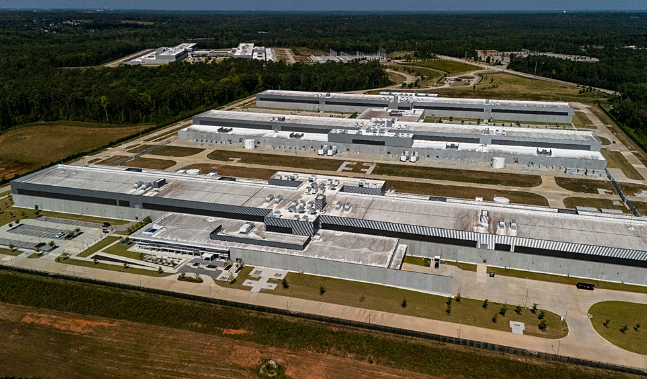
Some of the world’s largest technology companies are working with environmental organisations to develop national guidelines for data centre construction and operation in the United States, as growing opposition to the facilities raises concerns about their impact on local communities.
The group, known as the Responsible Data Center Collaborative, includes Google, Meta, Microsoft, Oracle, Amazon, Nvidia and Anthropic. Environmental organisations taking part include the Natural Resources Defense Council (NRDC), World Wildlife Fund (WWF) and Sierra Club, according to a document seen by AFP on Thursday.
The members began meeting in September and plan to continue discussions until February 2027. The initiative is supported by the Rockefeller Foundation and its affiliated organisation, Invest in Our Future.
The proposed guidelines will address electricity consumption, infrastructure, water resources, community engagement, economic benefits, transparency and accountability. The group also intends to discuss how the standards should be implemented.
The document setting out the framework for the discussions encourages participants to question assumptions, seek clarification and focus on problems rather than individuals. Meetings will follow Chatham House rules, allowing participants to share lessons from the discussions without attributing comments to specific individuals or organisations.
The initiative comes as resistance to data centre expansion grows in the United States and Europe. More than 100 organisations across 15 European countries are organising protests on 6 and 7 November, calling for a pause on large-scale projects until clearer regulations are introduced.
Rising energy and water demands
Data centres provide the computing infrastructure needed to develop and operate artificial intelligence systems, but their growing electricity and water requirements have raised concerns among residents and environmental groups.
A 2026 report by the International Energy Agency found that global electricity consumption by data centres increased by 17 per cent in 2025. Demand is projected to almost double from 485 terawatt-hours to 950 terawatt-hours by 2030, partly because of the expansion of AI.
The increase is placing additional pressure on electricity grids and raising questions about whether existing infrastructure can meet demand. Critics have also linked new power generation projects to higher electricity bills for households.
Other concerns include noise from data centre equipment and the large quantities of municipal water used by cooling systems. Some cooling towers can also produce mist that may carry harmful bacteria.
In an effort to avoid adding pressure to local power supplies, some newer facilities generate their own electricity, often through gas-fired plants that can create additional noise and pollution.
Public opposition has also entered local politics. During the US midterm elections on Tuesday, voters in dozens of cities reportedly approved measures restricting or banning data centre projects.
The collaborative brings technology companies and environmental groups into discussions over how the industry should expand while addressing concerns about energy use, water consumption and the effects on surrounding communities.

Anthropic Targets Up to $64 Billion in IPO at Valuation of $1.4 Trillion

Web Summit Cancels Second Day in Lisbon as Storm Charles Disrupts Portugal

Cyberattacks on Critical Infrastructure Expose Human Errors as a Major Security Risk

Global Markets Rally as AI Stocks Recover and Oil Prices Fall on Iran Peace Hopes

Infineon Forecasts 20% Sales Growth as AI Data Centre Demand Boosts Chip Business

Fear, Hearing Loss and Mobility Problems Among Overlooked Risks of Falls in Older Adults

UK Considers Adding eBay and Vinted to Social Media Ban for Under-16s

Physicist’s Research Suggests Travelling Back in Time May Be Impossible

Egypt Announces Mediterranean Gas Discovery Estimated at 200 Billion Cubic Feet

Spain Rescues 854 Migrants off El Hierro as Canary Islands Face Pressure on Reception Centres

Meta Acquires Tilda Swinton VR Doc ‘Impulse: Playing With Reality’

China’s Historic Olympic Victory Sparks National Pride Amid Controversy

Saudi Arabia’s Model for Sustainable Aviation Practices

Recent Developments in Small Business Taxes

Effective Drain Cleaning: A Key to a Healthy Plumbing System

Who was Ebrahim Raisi and his status in Iranian Politics?

Keely Hodgkinson Wins Britain’s First Athletics Gold at Paris Olympics in 800m

Carrectly: Revolutionizing Car Care in Chicago

Nobel Laureate Muhammad Yunus Proposed as Head of Bangladesh’s Interim Government Following Hasina’s Resignation

Chinese Hackers Infiltrate Major U.S. Telecom Firms in Possible National Security Breach

Sony WF-10XM4: Headphones Are Our Absolute Favorite

10 Places You Can’t Miss If It’s Your First Time in European

New Census Data Will Shake Up Alabama Politics

16 Top of Our Favorite Outdoor Clothing Brands

Fashionable Summer Accessories to Dress Up Your Travel Look

How Sleeping Less than 7 Hours a Night Can Lead to Weight Gain
-
 Entertainment2 years ago
Meta Acquires Tilda Swinton VR Doc ‘Impulse: Playing With Reality’
-
 Sports2 years ago
China’s Historic Olympic Victory Sparks National Pride Amid Controversy
-
 Business2 years ago
Saudi Arabia’s Model for Sustainable Aviation Practices
-
 Business2 years ago
Recent Developments in Small Business Taxes
-
 Home Improvement2 years ago
Effective Drain Cleaning: A Key to a Healthy Plumbing System
-
 Politics2 years ago
Who was Ebrahim Raisi and his status in Iranian Politics?
-
 Sports2 years ago
Keely Hodgkinson Wins Britain’s First Athletics Gold at Paris Olympics in 800m
-
 Business2 years ago
Carrectly: Revolutionizing Car Care in Chicago
You must be logged in to post a comment Login