
Tech
AI Shifts Job Prospects for Young Workers in US — Europe Watches Closely


Early evidence from the United States suggests artificial intelligence (AI) is reshaping the job market for young workers, with entry-level roles in software engineering, customer service, and marketing already showing signs of decline. A Stanford University study, Canaries in the Coal Mine? Six Facts about the Recent Employment Effects of Artificial Intelligence, found that employees aged 22 to 25 are increasingly being displaced from AI-vulnerable positions and turning instead to fields like nursing, retail, and industrial labour.
The report provides “early, large-scale evidence” that the AI revolution is beginning to have a disproportionate impact on younger workers in the American labour market. But experts say it is too soon to draw similar conclusions for Europe.
According to labour market specialists at the European Centre for the Development of Vocational Training (CEDEFOP), Europe still faces a chronic shortage in vocational jobs such as construction and manufacturing, a trend that long predates the rise of AI.
“Cognitive skills, the ability to process social context — these remain human advantages,” said Adam Tsakalidis, a skills intelligence expert at CEDEFOP. His analysis of online job vacancies across the EU shows employers increasingly demand AI skills not only for roles like AI engineering but also for professions at risk of automation, such as writing and translation. Companies, he noted, are searching for “focused experts” who can offer value beyond what machines deliver.
CEDEFOP’s long-term forecasts still predict rising demand for digital roles through 2035, even as automation advances. Employers are also seeking a balance of technical and human capabilities. “Problem-solving, teamwork and communication will remain critical alongside AI competencies,” said CEDEFOP labour market expert Konstantinos Pouliakas.
Yet uncertainty remains. Some professions could become fully automated by the next decade, though which ones are hardest to predict. Ulrich Zierahn-Weilage, associate professor of economics at Utrecht University, said history shows highly skilled workers tend to adapt successfully to technological disruption. “You still need the human that has critical thinking, while the machine helps you get the dirty work done more quickly,” he explained.
A separate CEDEFOP survey this year revealed that four in ten EU workers believe they need AI-related training, but only 15 percent have pursued it. Employers, meanwhile, highlight effective use of AI tools, critical thinking, and cybersecurity as top future skills, according to a Bosch study spanning seven countries.
Efforts to close this gap vary across Europe. Spain has launched a national AI agency, while Poland has partnered with Google to provide vocational AI training in cybersecurity and energy. CEDEFOP expert Anastasia Pouliou said more flexible, industry-specific training courses will be essential. “Never stop learning,” she advised. “With AI, you need to be aware, be informed, and keep on being trained.”











State-linked and hacktivist groups have claimed a series of cyberattacks against the United States and Israel since the war with Iran began, marking a significant escalation in the digital dimension of the conflict.
One of the most notable incidents involved Stryker, which confirmed on March 11 that a cyberattack had disrupted its global network. According to reports, employees encountered the logo of Handala, an إيران-linked hacking group, on login pages across the company’s systems. The breach reportedly targeted the firm’s Microsoft-based infrastructure, though the full extent of the disruption remains unclear.
Handala has claimed responsibility for the attack, stating it exploited cloud management systems to remotely wipe large numbers of devices worldwide. The group said the operation was carried out in retaliation for a missile strike in Iran. Independent verification of these claims is still pending.
Cybersecurity analysts say the attack is part of a broader campaign by groups linked to Iran’s security apparatus. According to findings from CloudSek, organisations associated with the Islamic Revolutionary Guard Corps have targeted US critical infrastructure. These include CyberAv3ngers, APT33 and APT55, which are accused of attempting to infiltrate industrial systems such as power grids and water facilities.
Experts say some of these groups use simple methods, including default passwords, to access systems, while others deploy malware aimed at disrupting operations or gathering intelligence. Additional networks linked to Iran’s Ministry of Intelligence have also been active, targeting telecommunications, energy companies and government organisations.
At the same time, the United States and Israel are conducting their own cyber operations. General Dan Caine said US Cyber Command played a key role early in the conflict, disrupting Iranian communications and sensor networks. Defence Secretary Pete Hegseth confirmed that artificial intelligence and cyber tools are being used alongside conventional military operations.
Israeli intelligence has also reportedly relied on hacked data to support military planning, highlighting the growing role of cyber capabilities in modern warfare.
Hacktivist activity has surged as well. More than 60 groups formed a loose coalition known as the Cyber Islamic Resistance, coordinating attacks through online platforms. These groups have claimed hundreds of operations, including attempts to disrupt Israeli infrastructure and private sector systems. Analysts warn that such actors are often less restrained and may pose risks to civilian networks.
The conflict has also drawn in groups from outside the region, including actors based in Iraq, Russia and other parts of the Middle East. Some have targeted government websites and transport infrastructure, while pro-Israeli groups have carried out retaliatory attacks against Iranian entities.
Security experts say the growing scale and coordination of cyber operations reflect a shift in how modern conflicts are fought, with digital attacks now running parallel to military action on the ground.

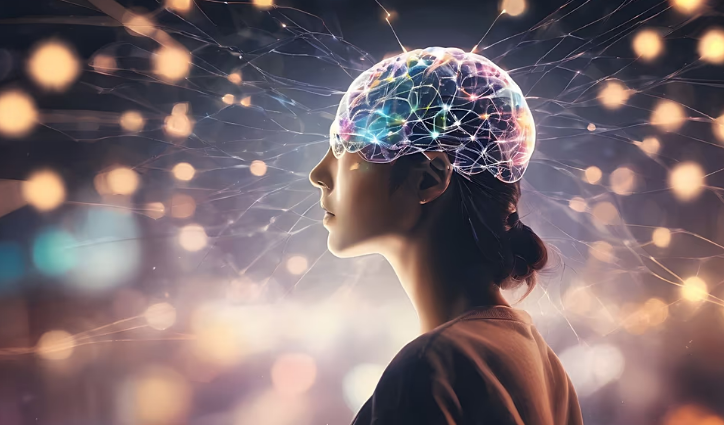
China has granted regulatory approval for the world’s first brain implant intended for commercial use, offering new hope for people with paralysis to regain hand movement. The device, developed by Neuracle Medical Technology, employs a brain-computer interface (BCI) that translates brain signals into physical actions.
BCIs link the nervous system to external devices, allowing users to control technology or prosthetics purely with thought. Neuracle’s system targets individuals whose paralysis stems from severe spinal cord injuries in the neck, which block signals from the brain from reaching the arms and hands.
The implant detects neural signals associated with the intent to move the hand. These signals are interpreted by software and transmitted to a robotic glove worn by the patient. The glove, powered by air-driven mechanisms, enables the hand to open and close, allowing users to grasp objects, according to CGTN.
Eligibility is limited to adults aged 18 to 60 who have experienced paralysis for at least one year and whose condition has remained stable for six months. The device is intended for patients unable to grip objects with their hands but who retain some movement in their upper arms.
China has been ramping up its investment in BCI technology, naming it a national strategic priority and highlighting it as a potential driver of future economic growth. Recent achievements include a successful implant by Shanghai NeuroXess, which allowed a 28-year-old man paralyzed for eight years to control digital devices with his thoughts within five days of receiving the implant.
The Neuracle approval comes as the race to commercialize BCIs intensifies worldwide. US entrepreneur Elon Musk, whose company Neuralink began human trials in 2024, recently announced plans to begin “high-volume production” of Neuralink devices in 2026.
As of September 2025, 12 participants with severe paralysis had received Neuralink implants, enabling them to operate digital and physical tools with thought alone. Musk’s announcement signals the company’s intent to scale access to BCIs beyond initial trials, positioning both China and the US at the forefront of this emerging field.
The development highlights a significant milestone in neurotechnology, potentially transforming the lives of millions living with paralysis. By translating intent into motion, these devices promise to restore independence to those previously constrained by spinal injuries, while also underscoring the global momentum toward commercial BCI applications.
With China now officially approving a commercial implant and Neuralink preparing for mass production, the coming years could see rapid adoption of technologies that bridge the human mind and machine.

Airbrush Tanning Solution Sun Labs for Smooth, Even Bronze Color

Iran Executes Three Men Over January Protests Amid Rising War Tensions

ECB Holds Interest Rates as Energy Prices Surge Amid Middle East Tensions

Ships Continue Passing Through Strait of Hormuz Despite Ongoing Conflict

SAS to Cancel Over 1,000 Flights as Fuel Costs Surge Amid Middle East Conflict

Cyberattacks Intensify as Iran Conflict Spills Into Digital Domain

Iran Raises Minimum Wage by 60% Amid Inflation and Conflict Pressures

Spain Leads EU Growth While Germany Trails, Data Shows

EU Must Simplify Rules to Boost Healthcare Innovation, Commissioner Says

Experts to Debate AI’s Role in Europe’s Healthcare Future at Brussels Summit

Meta Acquires Tilda Swinton VR Doc ‘Impulse: Playing With Reality’

Saudi Arabia’s Model for Sustainable Aviation Practices

Recent Developments in Small Business Taxes

Effective Drain Cleaning: A Key to a Healthy Plumbing System

Who was Ebrahim Raisi and his status in Iranian Politics?

Carrectly: Revolutionizing Car Care in Chicago

Keely Hodgkinson Wins Britain’s First Athletics Gold at Paris Olympics in 800m

Saudi Arabia: Foreign Direct Investment Rises by 5.6% in Q1

Chinese Hackers Infiltrate Major U.S. Telecom Firms in Possible National Security Breach

Nobel Laureate Muhammad Yunus Proposed as Head of Bangladesh’s Interim Government Following Hasina’s Resignation

Sony WF-10XM4: Headphones Are Our Absolute Favorite

10 Places You Can’t Miss If It’s Your First Time in European

New Census Data Will Shake Up Alabama Politics

16 Top of Our Favorite Outdoor Clothing Brands

Fashionable Summer Accessories to Dress Up Your Travel Look

How Sleeping Less than 7 Hours a Night Can Lead to Weight Gain
-
 Entertainment2 years ago
Meta Acquires Tilda Swinton VR Doc ‘Impulse: Playing With Reality’
-
 Business2 years ago
Saudi Arabia’s Model for Sustainable Aviation Practices
-
 Business2 years ago
Recent Developments in Small Business Taxes
-
 Home Improvement1 year ago
Effective Drain Cleaning: A Key to a Healthy Plumbing System
-
 Politics2 years ago
Who was Ebrahim Raisi and his status in Iranian Politics?
-
 Business2 years ago
Carrectly: Revolutionizing Car Care in Chicago
-
 Sports2 years ago
Keely Hodgkinson Wins Britain’s First Athletics Gold at Paris Olympics in 800m
-
 Business2 years ago
Saudi Arabia: Foreign Direct Investment Rises by 5.6% in Q1