Connect with us

Business

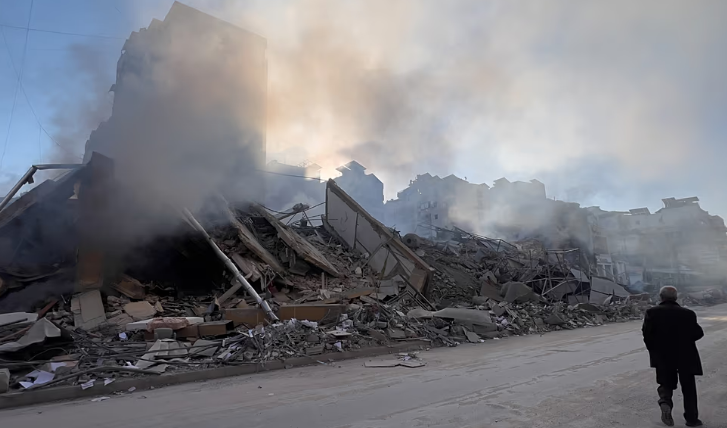
Iran War Sends Shockwaves Through Global Economy, Raising Energy and Food Security Concerns

Published

on

The ongoing conflict involving Iran is sending economic shockwaves across global markets, pushing up energy and fertiliser prices and raising fears of food shortages in vulnerable countries. Economists warn that the disruption is also complicating efforts by central banks to control inflation.

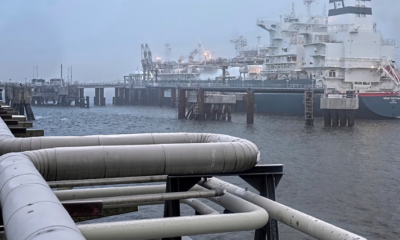
At the center of the crisis is the Strait of Hormuz, a strategic shipping corridor through which roughly one-fifth of the world’s oil supply normally passes. The route has effectively been shut since military strikes by the United States and Israel against Iran began 11 days ago, triggering widespread concern in global energy markets.

Oil prices have surged sharply since the conflict escalated. Crude traded below $70 per barrel in February but climbed to nearly $120 earlier this week before easing to around $90. The rise in crude prices has pushed gasoline costs higher as well. According to the American Automobile Association, the average price of gasoline in the United States jumped to $3.48 per gallon from just under $3 only a week earlier.

Economists say the impact could be even greater in regions that rely heavily on Middle Eastern energy supplies. Countries in Europe and Asia depend more on imported oil and gas from the Gulf than the United States, making them particularly vulnerable to supply disruptions.

Kristalina Georgieva, managing director of the International Monetary Fund, warned that sustained increases in oil prices could have broader economic consequences. She said every 10 percent rise in oil prices that lasts most of the year could push global inflation up by 0.4 percent while reducing worldwide economic output by up to 0.2 percent.

See also  Bitcoin Surges Past $100,000 Amid Regulatory Optimism Under Trump Presidency

Economists stress that reopening the Strait of Hormuz is essential to restoring stability. Simon Johnson of the Massachusetts Institute of Technology said about 20 million barrels of oil pass through the waterway each day. He noted that global producers have little spare capacity to replace that volume if shipments remain blocked.

Despite the shock, some analysts believe the global economy may still manage to absorb the disruption if the conflict proves short-lived. Eswar Prasad, a trade policy professor at Cornell University, said the world economy has previously shown resilience after major shocks such as the Russian invasion of Ukraine and sweeping tariff measures introduced in 2025.

The war is already creating uneven economic effects across countries. Major energy importers including Japan, India, China and several European economies face higher costs as oil prices climb. Oil producers outside the conflict zone such as Norway, Russia and Canada could benefit from higher export revenues.

Some nations face particularly severe challenges. Pakistan imports about 40 percent of its energy and relies heavily on liquefied natural gas shipments from Qatar, supplies that have been disrupted by the conflict.

The crisis is also affecting global agriculture. Researchers at the International Food Policy Research Institute estimate that up to 30 percent of the world’s fertiliser exports pass through the Strait of Hormuz. Disruptions to shipments of products such as urea, ammonia and phosphates are already pushing costs higher for farmers.

Experts warn that higher fertiliser prices may eventually translate into rising food costs worldwide. Low-income countries with fragile agricultural systems are expected to face the greatest risk of shortages if the disruption continues. Central banks are now confronting a difficult choice between raising interest rates to curb inflation or easing policy to support economic growth as the crisis unfolds.

See also  Chinese Automakers Ramp Up Hybrid Exports to Europe Amid Higher EU EV Tariffs

Business

Rising Energy Costs From Iran Conflict Raise Eurozone Inflation Concerns

Published

on

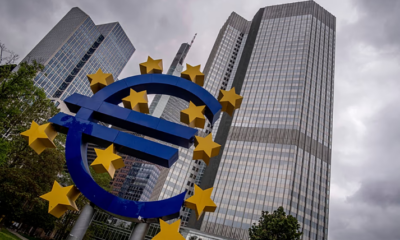
Economists say the surge in global energy prices linked to the conflict with Iran could push inflation higher across the eurozone, increasing the possibility that the European Central Bank may be forced to raise interest rates in 2026.

Oil markets experienced one of their sharpest reversals on record this week after comments from Donald Trump suggested the US-led military campaign against Iran might soon wind down. The statement briefly eased fears of a prolonged disruption to energy supplies moving through the Strait of Hormuz, a critical shipping route for global oil.

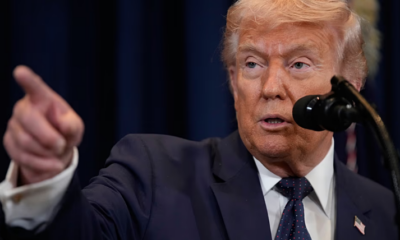
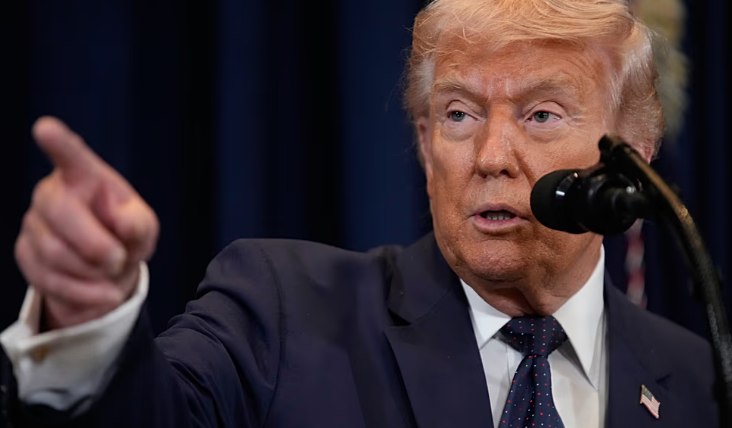
Speaking during a press conference, Trump said the United States and Israel had made rapid progress in military operations against Iran and insisted Washington would act to keep international energy routes open.

“Oil supplies will be dramatically more secure,” Trump said, adding that the US could escort oil tankers through the Strait of Hormuz if necessary. When asked whether the conflict might end soon, he responded that it could be resolved within days.

Energy markets reacted quickly to the remarks. West Texas Intermediate crude, which had climbed to about $119 per barrel during heightened concerns over potential shipping disruptions, fell to below $90 by the end of the trading session, representing a drop of more than $30 in less than a day.

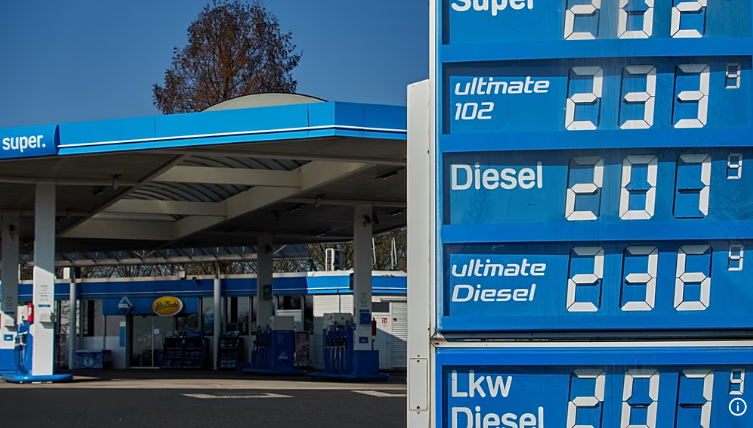
Despite the dramatic fall in crude prices, economists warn that retail fuel costs in Europe have not yet reflected the change. Fuel prices across several major cities remain elevated, highlighting the delay between movements in wholesale oil markets and prices paid by consumers.

See also  France Faces Mounting Debt Risks Amid Political Uncertainty as Bayrou Prepares Confidence Vote

According to data from fuel tracking platform Fuelo, petrol prices remain high across major European cities. In Milan, unleaded fuel is selling for around €1.89 per litre while diesel has climbed to €2.10. In Paris petrol costs about €1.92 per litre and diesel roughly €2.06. Frankfurt currently records the highest prices among the three, with petrol reaching €2.12 per litre and diesel at €2.19.

Economists say the biggest economic channel through which the conflict affects Europe is energy. Sven Jari Stehn, chief European economist at Goldman Sachs, said most European economies rely heavily on imported oil and gas, making them particularly sensitive to price shocks.

The bank estimates that a 10 percent increase in oil prices typically raises eurozone inflation by around 0.3 percent. Analysts caution that the effect could be stronger if natural gas prices also rise, as gas markets often react differently from oil.

Analysts at Bank of America outlined several potential scenarios depending on how long energy prices remain elevated. In a moderate scenario, crude stabilises near $80 per barrel while European gas prices remain elevated for several months. Under that outcome, eurozone inflation could briefly climb to about 2.5 percent before gradually declining later in the year.

A stronger energy shock would have more serious consequences. Economists warn that inflation could exceed 3 percent during the second quarter while economic growth slows.

Michael Saunders, an adviser at Oxford Economics, said central banks can no longer ignore energy-driven inflation in the way they sometimes did in the past. He argued that policymakers are increasingly concerned that rising energy costs could feed into broader inflation expectations across the economy.

See also  Sabadell Approves €3 Billion Sale of TSB to Santander Amid Hostile BBVA Takeover Bid

Financial markets are already adjusting their expectations. Data from prediction platform Polymarket suggests investors now see a significantly higher chance that the European Central Bank may raise interest rates in 2026 if energy prices remain elevated.

Continue Reading

Business

Oil Prices Drop as Trump Signals Possible Easing of Sanctions Amid Middle East Tensions

Published

on

Oil markets experienced a sharp retreat on Monday after US President Donald Trump suggested the conflict with Iran could be short-lived and indicated Washington may ease oil-related sanctions on certain countries to ease pressure on crude prices.

“So in some countries, we’re going to take those sanctions off until this straightens out,” Trump told reporters, without specifying which nations might be affected. The US currently maintains sanctions on Iran, Venezuela, Russia, Syria, and North Korea.

Trump also confirmed that he had spoken with Russian President Vladimir Putin to discuss the war and other international issues. Following his remarks, oil prices fell more than 9% from recent highs, with Brent crude trading just under $90 per barrel and West Texas Intermediate (WTI) at $85.40 during European morning trading. Prices had briefly surged to nearly $120 a barrel earlier, their highest level since 2022, amid concerns over the appointment of Mojtaba Khamenei as Iran’s new supreme leader.

Investors interpreted the leadership change as a signal that Tehran could adopt a hardline stance, fueling fears of prolonged disruptions to global oil supplies. Trump, however, described the US military intervention as a “short-term excursion” aimed at neutralizing threats in the region. He also warned that any action by Iran to block oil flow through the Strait of Hormuz would trigger a response from the United States “twenty times harder than they have been hit thus far.”

In response, Iran’s Revolutionary Guard said that the country would “determine when the war ends,” signaling the potential for continued volatility.

The easing in oil prices sparked a rally in global stock markets. European indices climbed sharply, with London’s FTSE 100 up 1.1%, Paris’ CAC 40 rising 1.9%, Frankfurt’s DAX gaining 2%, and Spain’s IBEX 35 and Italy’s FTSE MIB both up 2.5%. The broader Stoxx 600 index increased 1.7%. Asian markets also rebounded after losses on Monday, with Tokyo’s Nikkei 225 rising 2.9%, South Korea’s Kospi jumping 5.4%, and Australia’s S&P/ASX 200 up 1.1%. Hong Kong’s Hang Seng added 2.1%, while Shanghai’s Composite index rose 0.6%.

See also  France Faces Mounting Debt Risks Amid Political Uncertainty as Bayrou Prepares Confidence Vote

Neil Newman, head of strategy at Astris Advisory Japan, said the recovery reflected market relief following Trump’s comments. “Volatility is going to remain with us, but things are certainly looking a lot brighter today,” he said.

The Strait of Hormuz remains a focal point for global energy markets, as roughly a fifth of the world’s oil passes through the narrow waterway daily. Analysts warn that any prolonged closure could send oil prices soaring above $150 per barrel.

Bond yields and currencies reacted to the market shift. The 10-year US Treasury yield fell to 4.10% from 4.15%, while gold rose 1.7% to $5,191.8 an ounce. Bitcoin led gains in cryptocurrency markets, increasing 2.6% to $70,863.

Investors are closely monitoring both geopolitical developments and potential US policy changes, as energy markets remain highly sensitive to disruptions in the Middle East.

Continue Reading

Business

Oil Prices Surge as Iran War Raises Fears Over Global Energy Supplies

Published

on

Global oil prices jumped sharply on Monday as investors assessed the growing impact of the war in Iran on energy production and shipping routes across the Middle East.

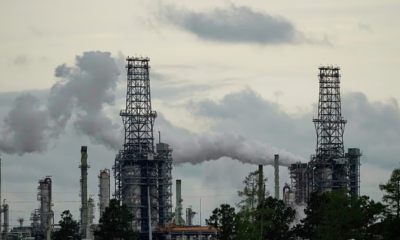
Crude prices rose above $114 per barrel for the first time since 2022 after trading resumed on the Chicago Mercantile Exchange. The sharp increase reflects rising concerns that the conflict could disrupt key oil supply routes and reduce production in one of the world’s most important energy regions.

Brent crude, the international benchmark for oil prices, climbed past $114 a barrel during early trading. The price represented a rise of about 23 per cent compared with its closing level of $92.69 on Friday.

West Texas Intermediate crude, the main oil benchmark in the United States, also approached $114 per barrel. That marked an increase of roughly 25 per cent from its Friday close of $90.90.

The latest surge follows a week of steep gains. US crude prices rose by 36 per cent last week, while Brent crude climbed by about 28 per cent as the conflict entered its second week and expanded across the region.

Investors are closely watching developments in the Persian Gulf, where several countries play a central role in the global energy market. The war has already drawn attention to locations critical for the production and transport of oil and natural gas.

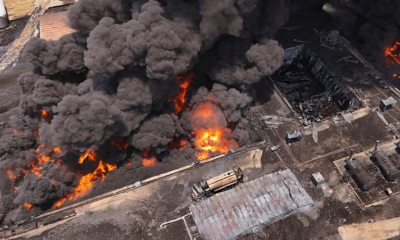
Tensions intensified early Monday after Bahrain accused Iran of striking a desalination facility that supplies drinking water. At the same time, fires were reported at oil depots in Tehran after overnight Israeli strikes.

See also  Bitcoin Surges Past $100,000 Amid Regulatory Optimism Under Trump Presidency

Market anxiety has also been fuelled by risks to shipping routes in the Strait of Hormuz, one of the most important energy corridors in the world. According to energy research firm Rystad Energy, roughly 15 million barrels of crude oil pass through the strait each day. That volume represents about 20 per cent of the world’s total oil supply.

The narrow waterway lies between Iran and Oman and serves as a key route for oil and gas shipments from major producers including Saudi Arabia, Kuwait, Iraq, Qatar, Bahrain and the United Arab Emirates.

The possibility of Iranian missile or drone attacks has sharply reduced tanker traffic through the strait. Shipping companies have reportedly become cautious about sending vessels through the area due to security risks.

The rapid rise in prices has sparked discussions among leading economies about possible steps to stabilise energy markets. The Financial Times reported on Monday that finance ministers from the Group of Seven nations plan to discuss the potential release of oil from emergency reserves.

Any coordinated action would likely involve the International Energy Agency, which oversees strategic petroleum reserves held by several major industrialised countries. These reserves can be released during supply disruptions in order to ease pressure on global markets.

The International Energy Agency has not yet commented publicly on the possibility of a coordinated release. Observers say decisions taken in the coming days could influence oil markets as the conflict continues to unfold.

Continue Reading

Trending