Connect with us

News

Germany Struggles to Retain EU Migrants Despite Labour Shortages

Published

on

Germany is facing growing difficulty in retaining European Union migrants, even as they remain vital to the country’s labour market, according to a new study presented by the Labour Ministry.

For years, skilled migration has helped sustain Europe’s largest economy. However, research by the EU Equal Treatment Office shows that a significant share of EU citizens leave Germany within four years of arrival. The findings raise concerns about the country’s ability to address persistent labour shortages.

“We cannot afford to lose a third of EU citizens due to poor conditions,” said Natalie Pawlik, the Federal Government Commissioner for Integration, as she presented the report in Berlin.

Although Germany continues to record annual immigration inflows of between 400,000 and 700,000 people, it also sees high levels of emigration among EU nationals. The study suggests that work and living conditions are not compelling enough to persuade many migrants to settle long term.

A separate analysis by the German Economic Institute in November 2025 found that more than 260,000 positions remained unfilled across the ten sectors facing the most acute shortages. Healthcare alone accounts for around 46,000 vacancies. Construction and public administration are also struggling to recruit qualified staff.

Valeria Quispe, an expert at the institute, said bottlenecks in healthcare are contributing to longer waiting times for appointments, while staff shortages in construction are slowing residential building projects. She noted that although the economic slowdown has eased labour pressures slightly, structural shortages persist.

EU citizens typically move to Germany for better job prospects, higher wages and legal stability. Romania is the largest source country, followed by Poland and Bulgaria. Italy, Hungary and Spain also contribute sizeable numbers of workers. Almost three quarters of recent EU immigrants have come from countries that gained full freedom of movement within the past 10 to 15 years.

See also  Israel Delays Palestinian Prisoner Release, Putting Ceasefire at Risk

Yet immigration from several key EU countries declined in 2024. Inflows from Croatia, Poland and Bulgaria dropped sharply, and net migration from other EU states fell to just 38,735, down nearly 67 per cent from the previous year.

Interviews conducted for the study highlight why many migrants consider leaving. High living costs, bureaucratic hurdles and limited recognition of qualifications were frequently cited. Nearly 39 per cent of respondents said they did not feel comfortable in Germany, while about half reported experiencing discrimination at work.

The study concluded that stronger labour market integration, better housing access and a more welcoming environment could improve retention. Employment growth in recent years has been driven largely by non-EU nationals, according to the Federal Employment Agency, as Germany’s ageing population sees increasing numbers of baby boomers retire.

News

Merz Records Lowest Approval Among Global Leaders, Survey Finds

Published

on

German Chancellor Friedrich Merz has emerged as the least popular leader among 24 democratically elected heads of government, according to a new international survey by the Morning Consult.

The poll shows that just 19% of respondents in Germany approve of Merz’s performance, while 76% disapprove, placing him at the bottom of the rankings. The findings underline growing dissatisfaction with his leadership both domestically and in comparison with global counterparts.

Close behind him is French President Emmanuel Macron, who recorded an approval rating of 18% and a disapproval rate of 75%. Analysts say the figures reflect broader challenges facing European leaders amid economic pressures and political divisions.

Polling experts in Germany say Merz’s struggles are not new. According to Manfred Güllner, head of the Forsa polling institute, the chancellor has long faced skepticism among voters. He noted that reservations remain particularly strong among women, younger voters and residents of eastern Germany. Güllner added that Merz has failed to ease concerns since taking office, with public sentiment worsening instead of improving.

Hermann Binkert, who leads another polling firm, Insa, pointed to unfulfilled campaign promises and ongoing economic difficulties as key reasons behind the decline in support. He said many Germans feel the country is heading in the wrong direction, and dissatisfaction extends across both conservative and progressive political camps.

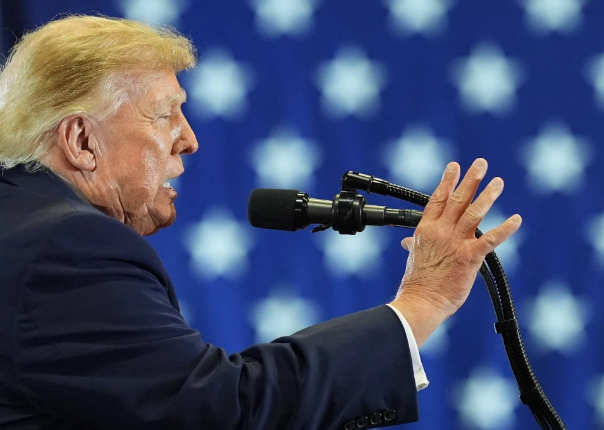
Elsewhere in the rankings, leaders such as Recep Tayyip Erdoğan and Donald Trump sit in the mid-range. Erdoğan received 36% approval and 50% disapproval, while Trump fared slightly better with 38% approval against 57% disapproval. Other leaders with similar ratings include Spain’s Pedro Sánchez and Italy’s Giorgia Meloni.

See also  Nearly 1,000 Migrants Feared Dead in Mediterranean Shipwrecks Since Start of 2026

At the top of the list, Indian Prime Minister Narendra Modi leads with a 70% approval rating. He is followed by South Korea’s Lee Jae-myung at 63% and Czech Prime Minister Andrej Babiš at 55%.

The survey also suggests that dissatisfaction with Merz is not part of a broader pattern of distrust toward leadership in Germany. Previous chancellors, including Konrad Adenauer, Willy Brandt and Gerhard Schröder, all enjoyed significantly higher levels of public support during their time in office.

Even Merz’s predecessor, Olaf Scholz, maintained stronger approval ratings at his lowest point, with 28% backing his leadership.

The Morning Consult tracker is based on rolling seven-day averages of public opinion across multiple countries, offering a snapshot of how political leaders are viewed globally.

Continue Reading

News

France and Portugal Enact Landmark Treaty to Deepen Strategic Ties

Published

on

A new chapter in relations between France and Portugal began on Sunday as a wide-ranging friendship treaty between the two countries officially entered into force, marking a significant step toward closer cooperation across multiple sectors.

The Treaty of Friendship and Cooperation, signed in Porto in February 2025 by Emmanuel Macron and Portuguese Prime Minister Luís Montenegro, is designed to strengthen bilateral ties and reinforce collaboration within Europe.

French officials have described relations with Lisbon as “excellent,” highlighting the agreement as part of a broader effort to build a more self-reliant and competitive Europe. In a message to Portugal’s newly elected president, António José Seguro, Macron pledged to ensure the treaty delivers tangible benefits for both nations.

The agreement covers a wide range of areas, including defence, energy, trade and education. Both countries have committed to enhancing cooperation between their armed forces and defence industries, with a focus on safeguarding critical infrastructure and countering hybrid threats, particularly in cyberspace.

Energy cooperation also features prominently. France and Portugal aim to improve interconnections across the Iberian Peninsula, an issue that gained urgency following a major blackout affecting Spain and Portugal in April 2025. Officials say better integration with European energy networks will help prevent future disruptions and support long-term resilience.

On the economic front, the treaty promotes stronger support for small and medium-sized enterprises and encourages joint efforts in developing a sustainable “blue economy” linked to the Atlantic Ocean. Trade ties between the two countries are already robust, with France ranking as Portugal’s third-largest trading partner in 2025.

Analysts point to growing investment flows in both directions. Portuguese businesses are increasingly establishing a presence in France, while French firms continue to expand operations in Portugal, reflecting deepening economic integration.

See also  Europe’s Housing Crisis Worsens, Young Spaniards Struggle to Enter Market

People-to-people links are another key pillar of the agreement. Around 1.7 million Portuguese nationals live in France, making them one of the largest foreign communities in the country. Meanwhile, tens of thousands of French citizens reside in Portugal.

The treaty also aims to boost educational cooperation, including teacher training and student exchanges. However, some observers have raised concerns about practical challenges, particularly a shortage of Portuguese language teachers in France, which could limit progress in this area.

Implementation of the agreement will be overseen through regular high-level meetings between the two governments, ensuring continued coordination and follow-up on agreed initiatives.

The pact forms part of a wider strategy by France to deepen bilateral ties across Europe, following similar agreements with Germany, Italy and Poland, as Paris seeks to strengthen partnerships within the European Union.

Continue Reading

News

Record Turnout Reported as Hungary’s Parliamentary Election Draws Millions to the Polls

Published

on

Polling stations opened at 6 a.m. across Hungary on Sunday, with voting set to continue until 7 p.m. local time in an election already marked by unusually high participation levels. Authorities estimate that around 7.5 million citizens are eligible to cast ballots in the parliamentary vote, which is being closely watched across Europe.

Early turnout figures indicate a historic level of voter engagement. Within one hour of polls opening, 3.46% of eligible voters had already cast their ballots, nearly double the figure recorded at the same time in the previous election. By 9 a.m., turnout had reached 16.9%, compared with 10.3% four years earlier. By 11 a.m., officials reported that 37.98% of eligible voters had already participated, a morning level of turnout never previously recorded in Hungary.

Election officials and political observers say the early surge suggests the country may be heading toward one of its highest participation rates in decades. Many analysts believe concerns over political tensions and electoral integrity have contributed to the strong turnout.

Prime Minister Viktor Orbán, leader of the governing Fidesz party, cast his vote in Budapest earlier in the day. Speaking afterward, he welcomed the high participation, describing it as a sign of democratic strength. “The more people there are, the better,” he said.

Opposition leader Péter Magyar, head of the Tisza Party, also voted in Budapest during the morning hours. He said a smooth and transparent election process could favor his party, which has emerged as the main challenger to the long-ruling government. Magyar expressed confidence that high turnout, if accompanied by orderly voting conditions, would benefit his movement.

See also  Bulgaria to Hold Referendum on Euro Adoption Amid Political and Economic Debate

The election has been accompanied by widespread public concern about potential irregularities. Some voters and civil groups have voiced fears of electoral fraud, which analysts say may have contributed to the record level of early participation. In response, several civic organizations have mobilized monitoring efforts across the country.

One such group, the DE! Action Community, said it has deployed more than a thousand volunteers to observe polling activity in public spaces. The group stated that its monitors have been assigned to different regions to watch for alleged irregular practices such as voter transport issues and bribery. It also said mobile patrols are tracking transportation routes used during the election process.

Officials confirmed that international attention is also present at the polls. According to the National Election Office, around 900 foreign observers have registered to monitor the parliamentary vote, reflecting heightened scrutiny of the electoral process.

As voting continues into the evening, attention remains focused on whether turnout levels will sustain their early record pace and how the final results will shape Hungary’s political landscape.

Continue Reading

Trending