Connect with us

Business

Intel Faces Security Review Calls in China Amid National Security Allegations

Published

on

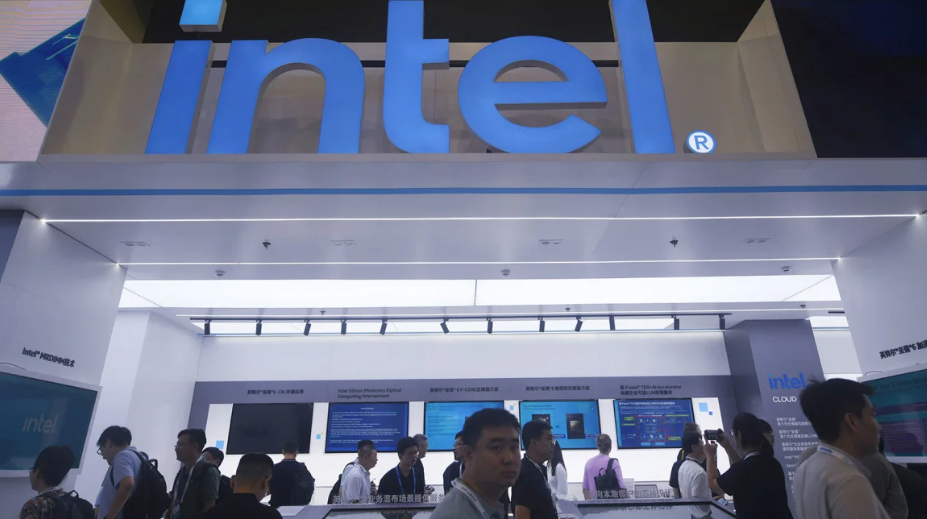
Intel products sold in China should undergo a network security review due to concerns over national security, the Cybersecurity Association of China (CSAC) said on Wednesday. The group, closely tied to the Chinese government, alleged that Intel’s products have “constantly harmed” China’s national security and interests.

While CSAC is not an official government body, its accusations could prompt action from China’s powerful cyberspace regulator, the Cyberspace Administration of China (CAC). The association published its accusations in a lengthy post on its official WeChat account, urging a review of Intel’s products, particularly its Xeon processors, which are widely used for artificial intelligence (AI) tasks.

Intel’s China unit responded on Thursday, stating that the company has always prioritized product safety and quality. “We will maintain communication with the relevant authorities, clarify any concerns, and reaffirm our commitment to product safety and quality,” Intel said in a statement on its official WeChat account. The CAC has not yet commented on the issue.

Shares of Intel dropped 1.5% on Wednesday, partially affected by a broader tech sell-off following a disappointing report from chip equipment maker ASML.

In its statement, CSAC recommended a network security review for Intel products sold in China to safeguard national security and protect consumers. Last year, a similar review by the CAC led to a ban on U.S. memory chipmaker Micron Technology’s products in China, citing security concerns. If Intel faces the same fate, it could severely impact the company’s revenue, as over a quarter of its earnings came from China in 2022.

The timing of these allegations comes as China grapples with U.S. efforts to limit its access to critical chipmaking equipment and components, part of a broader push by Washington to slow China’s military modernization. Dan Coatsworth, an investment analyst at AJ Bell, noted that the tense relationship between the U.S. and China raises the risk of retaliatory trade restrictions.

See also  Stellantis Appoints Antonio Filosa as CEO Amid Profit Slump and Strategic Challenges

CSAC’s post accused Intel’s chips, particularly its AI-focused Xeon processors, of multiple vulnerabilities, including the presence of backdoors allegedly created by the U.S. National Security Agency (NSA). These backdoors, according to the association, pose a significant security risk to critical infrastructure worldwide, including in China. “The use of Intel products poses a serious risk to national security,” CSAC stated.

A potential ban on Intel products could exacerbate the shortage of AI chips in China, which has been struggling to find alternatives to leading products from Nvidia, now banned from export to China. Earlier this year, Intel secured orders for its Xeon processors from several Chinese state-linked agencies for AI applications.

As tensions between the U.S. and China continue to rise, the future of Intel’s business in the region may hinge on the outcome of any potential security reviews.


Business

European Savers Missing Major Wealth-Building Opportunity, EFAMA Chief Says

Published

on

Europeans are missing out on significant long-term wealth by keeping their savings in bank accounts instead of investing in financial markets, according to the head of the European Fund and Asset Management Association.

Tanguy van der Werve, director general of EFAMA, told Euronews that only around 26 per cent of EU households have ever owned investment products such as funds, stocks or bonds, citing data from Eurobarometer 509. In contrast, more than half of US households have reported stock market investments over the past three decades, according to Gallup polling.

He said the gap represents a substantial missed opportunity for European savers. Referencing figures from the European Securities and Markets Authority, van der Werve noted that an average diversified fund portfolio grew by more than 50 per cent between 2014 and 2023, significantly outpacing inflation during that period.

“That is a lot of potential wealth-building Europeans are leaving on the table,” he said.

Van der Werve pointed to several factors behind Europe’s preference for savings over investments. Tax structures, lower levels of financial literacy, differing attitudes toward risk and the design of pension systems all play a role. In some EU countries, limited tax incentives reduce the appeal of investing compared with holding cash.

He also suggested that many Europeans grew up expecting the state to provide for retirement, reducing the perceived need to invest privately. However, he warned that public pensions alone may no longer be sufficient in the long term. Workplace and private pension systems remain underdeveloped in several member states, contributing to low retail participation in capital markets.

See also  Costa Rica Emerges as High-Tech Powerhouse with Sustainable Growth Model

Recent trends show some shifts in behaviour. Exchange-traded funds and diversified index tracker funds have gained popularity, helped by the rise of digital broker platforms that make investing more accessible and less costly. Social media has also influenced younger investors, although van der Werve cautioned that it can steer some toward higher-risk assets such as cryptocurrencies.

He argued that the reluctance to invest is often driven by inertia rather than deliberate choice. Many savers fear making mistakes and losing money, so they leave funds in bank deposits perceived as safe, even if inflation erodes purchasing power over time.

Better financial education, he said, would help people understand the opportunity cost of not investing and the benefits of long-term, diversified portfolios. Cultural reluctance to discuss money within families can also hinder financial awareness.

“Financial education needs to start at home,” van der Werve said, adding that improved literacy could build trust and challenge misconceptions, including the belief that investing is only for the wealthy.

Continue Reading

Business

Big Tech to Spend Over $700 Billion on AI in 2026, Outpacing Entire Economies

Published

on

Big Tech companies are dramatically increasing their investments in artificial intelligence, with projected capital expenditure for 2026 exceeding $700 billion (€590 billion), an increase of roughly 75 percent from 2025. The figure represents more than Sweden’s entire nominal GDP for 2025 and highlights the scale of the technology sector’s AI push.

Recent earnings reports and analyst projections show that Amazon is leading the spending, guiding an estimated $200 billion (€170 billion) in AI infrastructure. Alphabet, Microsoft, and Meta follow with planned investments of $185 billion (€155 billion), $145 billion (€122 billion), and $135 billion (€113 billion), respectively. Oracle, Tesla, and xAI are also scaling up spending, with Tesla aiming for nearly $20 billion (€16.8 billion) to expand its robotaxi fleet and Optimus humanoid projects, while xAI will invest at least $30 billion (€25.2 billion).

The surge in spending reflects a definitive pivot that began in 2025, when Big Tech invested around $400 billion (€337 billion) in AI infrastructure. Hyperscale data centres, AI chip development, and cloud computing expansion are driving the demand, with global chip sales expected to reach $1 trillion (€842 billion) this year for the first time, according to the US Semiconductor Industry Association. Nvidia, a leading AI chip supplier, is set to benefit heavily from this build-out, with CEO Jensen Huang describing the effort as “the largest infrastructure build-out in human history.”

Big Tech is financing much of the expansion through debt, with Morgan Stanley estimating that hyperscalers will borrow approximately $400 billion (€337 billion) in 2026, more than double the amount in 2025. Analysts have raised concerns about the scale and timing of spending, citing potential risks from rapid hardware depreciation and high operational costs, including energy usage. Google CEO Sundar Pichai acknowledged that there are “elements of irrationality in the current spending pace,” while investors like Michael Burry have warned the AI investment boom may resemble a bubble.

See also  ASML Reports Strong Q4 Results Amid Semiconductor Market Turmoil

Europe’s position in the AI race contrasts sharply with the US. Total European spending on sovereign cloud infrastructure is forecast at €10.6 billion in 2026, a fraction of American Big Tech investments. Mistral AI, a French startup, represents one of the few significant European moves, planning a €1.2 billion data centre in Borlänge, Sweden, to provide high-performance computing for AI models and strengthen EU data sovereignty.

While US companies dominate with enormous investments, European firms are relying on regulation and targeted capital projects to carve out a competitive position. Analysts warn that the transatlantic gap underscores Europe’s reliance on American technology and raises questions about its ability to compete in a rapidly expanding global AI market.

As 2026 unfolds, the stakes for Big Tech and global AI leadership are clear. The United States is making unprecedented financial bets on AI dominance, while Europe attempts to balance regulation, sovereign infrastructure, and limited capital to maintain a foothold in the emerging technology landscape.

Continue Reading

Business

AI Anxiety Sparks Major Sell-Off in Global Software Stocks

Published

on

The software sector is facing its steepest market decline since the 2008 financial crisis, driven not by a banking collapse but by fears over artificial intelligence. “AI anxiety is reshaping the software sector’s landscape. What started as a US sell-off has become a reckoning for Europe’s tech giants,” analysts said.

In the United States, the sector fell 14.5% in January, marking its worst monthly performance since October 2008. The decline accelerated in early February, dropping another 10% in less than two weeks. Investor concerns have centered on the possibility that AI tools could not only enhance existing software products but also erode subscription-based business models that have supported growth for over a decade.

High-profile companies have experienced dramatic reversals. Unity Software, Rapid7, and Braze have each lost more than half their market value since the start of the year. Even major players such as Palantir, Salesforce, Intuit, and ServiceNow have fallen around 30% year-to-date. The sell-off was intensified by Anthropic’s January launch of new enterprise plugins for its Claude AI assistant, prompting investors to question whether traditional software platforms remain essential.

The tremors in the U.S. have spread to Europe, where the software sector, valued at roughly €300 billion, is concentrated among a few key companies. Germany’s SAP, the region’s largest software firm with a market capitalisation of about €200 billion, has dropped roughly 20% year-to-date and 40% since its February 2025 peak. The company is heading for its ninth straight month of decline, a streak unseen in over three decades.

France’s Dassault Systèmes, a leader in 3D design software, has fallen 25% since January, approaching its fifth consecutive month of losses, the longest since 2016. British software provider Sage Group has also dropped about 25% year-to-date, including a 17% slide in February, marking its weakest monthly performance since 2002. RELX, a UK information and analytics company, fell 17% in a single session earlier this month, its steepest daily decline since 1988.

See also  Mobile World Congress 2025 Opens in Barcelona, Showcasing Future of Mobile Industry

Mid-sized European firms have faced even sharper declines. Sidetrade, a French AI-based order-to-cash platform, has lost nearly 50% of its value this year. Sweden’s Lime Technologies, Denmark’s cBrain, and Norway’s LINK Mobility Group are down between 32% and 38%, reflecting the sector’s sensitivity to investor sentiment.

Experts are divided on the outlook. Nvidia CEO Jensen Huang dismissed fears that AI will replace software entirely, calling it “the most illogical thing in the world,” and suggesting AI will enhance existing systems. Wedbush Securities and JP Morgan strategists have argued that the market is pricing in worst-case disruption scenarios unlikely to materialise soon.

Yet Goldman Sachs strategist Ben Snider warned of “long-term downside risk,” comparing the sector to industries that underestimated structural change, such as newspapers and tobacco. Veteran investor Ed Yardeni described the shift from “AI-phoria to AI-phobia,” suggesting valuations may now reflect potential slowdowns rather than immediate collapse.

The software sector is not disappearing, but AI is forcing investors to rethink how value is created. Companies that adapt effectively may emerge stronger, while others could see margins and pricing power challenged. The industry’s competitive landscape is likely to look very different in the years ahead.

Continue Reading

Trending