
News
Amnesty Accuses Indian Police of Excessive Force Against Medical Exam Protesters

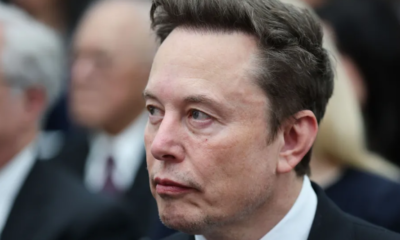




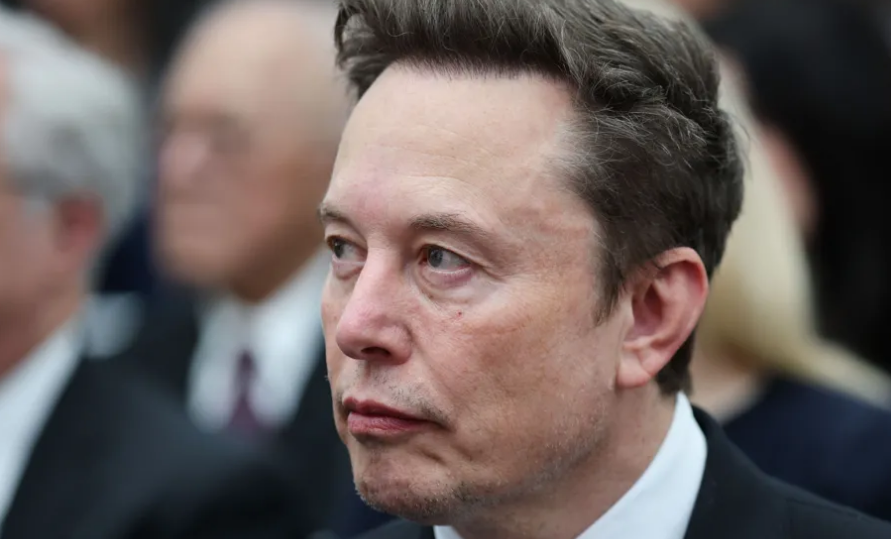
Elon Musk has said SpaceX restricted Ukraine’s use of its Starlink satellite internet service after accusing the country’s military of breaching its terms by using the civilian network for offensive drone strikes. Ukrainian officials have reported that connectivity has stabilised, with military drones once again reaching the speeds required for operations.
Musk’s comments on Saturday followed more than a week of reported connection problems that Ukraine said had disrupted its defensive operations. The issue emerged amid growing tensions between Washington and Kyiv over Ukrainian attacks on Russian oil infrastructure.
“Using Starlink, a civilian commercial service, for offensive drone strikes to kill people has never been allowed, nor should it be,” Musk wrote on X. He said Ukrainian forces had violated the service’s terms and that SpaceX had closed the loophole the previous week.
Musk also rejected suggestions that SpaceX was responsible for problems affecting Starshield, a separate, military-grade satellite communications system controlled by the US government. He said SpaceX had done more to defend Ukraine than any other private company, while stressing that decisions concerning Starshield rested with Washington.
Ukrainian presidential adviser Serhii Beskrestnov questioned Musk’s account, saying the restrictions on Starlink in Ukraine made the claims difficult to understand. He said drones using the commercial service were limited to speeds of around 70 to 90 kilometres per hour and could not operate on Russian territory.
“Therefore, we physically cannot use commercial Starlink for deep strikes and medium-range strikes,” Beskrestnov wrote on Telegram. Ukraine’s defence ministry had not immediately commented on Musk’s latest statements.
Ukraine uses Starlink to maintain communications between military units, particularly in remote battlefield areas. Starshield provides more specialised capabilities, including support for drone operators who need real-time information about targets.
Ukraine’s Defence Minister Yevhenii Khmara said on Saturday that the military was recording a stable connection. Ukrainian President Volodymyr Zelensky also reported that drone speeds had returned to the required levels. Kyiv had previously said connectivity could fail when drones exceeded 161 kilometres per hour.
US President Donald Trump said he had asked Musk to restore the service, although he has repeatedly denied instructing SpaceX to restrict it. Musk did not explain why the company changed the service’s capabilities after years of Ukraine’s military relying on Starlink.
The disruption coincided with a diplomatic dispute over Ukrainian strikes on Russian oil refineries, which Kyiv says are important sources of revenue for Moscow’s war effort. Trump has criticised the attacks, linking them to pressure on global fuel prices. However, the conflict involving Iran has been a major driver of energy market volatility this year.
Meanwhile, fighting continued across Ukraine. Emergency services reported three people killed and 15 injured in attacks in the Dnipropetrovsk region, including an 11-year-old girl. Six others were injured when a Russian drone struck an apartment building in Vinnytsia.
Russia also reported strikes on Ukrainian logistics facilities, while Ukrainian authorities said their forces had attacked a facility operated by a sanctioned heavy machinery manufacturer in the Russian city of Oryol. Russian authorities said three people were killed there.
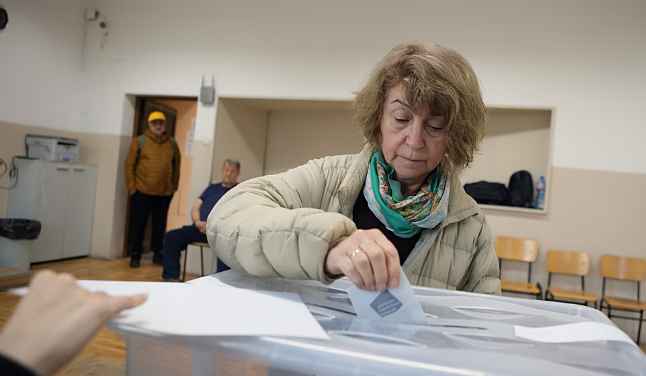
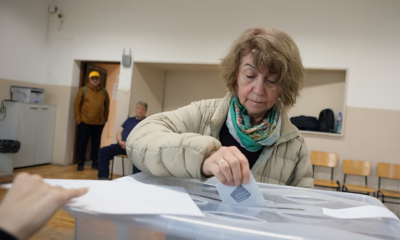
Bulgarians are preparing to vote in a presidential election shaped by concerns over Russia’s war in Ukraine, drone attacks on commercial vessels in the Black Sea, rising energy costs and persistent inflation.
The election is the first major electoral test for Prime Minister Rumen Radev’s Progressive Bulgaria party since its victory in parliamentary elections last April. A record 27 candidates are contesting the presidency, although polling suggests the race could be decided in a second round.
Incumbent President Iliana Yotova, backed by Radev’s party, is polling between 41% and 47%, while former caretaker prime minister Andrey Gyurov is attracting between 28% and 31%, according to projections cited during the campaign. Kostadin Kostadinov, leader of the far-right Vazrazhdane party, is polling between 10% and 13%.
Yotova supports dialogue with Moscow and opposes military assistance to Ukraine, positions that have placed the country’s relationship with Russia at the centre of the campaign. Gyurov, an economist backed by pro-Western opposition parties, has expressed firm support for Kyiv.
Security concerns have intensified following drone attacks on commercial ships off Bulgaria’s Black Sea coast. The incidents have raised fears that Russia’s invasion of Ukraine could create wider risks for the European Union and NATO member, prompting Bulgarian authorities to seek assistance from international partners to strengthen maritime security.
The attacks have also focused attention on the Black Sea’s importance for regional shipping and trade, as governments across Europe assess the potential consequences of the conflict spreading beyond Ukraine.
Economic pressures have been another major issue for voters. Rising energy prices and inflation have increased household expenses, with families in rural communities facing particular difficulties in meeting everyday costs. Candidates have sought to address these concerns as voters weigh the country’s economic prospects alongside national security and foreign policy.
Yotova became president earlier this year after Radev stepped down to contest the parliamentary elections and subsequently became prime minister. She previously served as vice-president alongside Radev after their election victories in 2016 and 2021.
A former journalist and member of the European Parliament, Yotova would become Bulgaria’s first woman elected president if she wins the presidency in her own right.
Her challenger, Gyurov, is a former deputy governor of Bulgaria’s central bank who served as caretaker prime minister during the first months of 2026. During his time in office, he signed a security cooperation agreement with Ukraine, underlining his support for closer ties with Kyiv.
Polling stations are scheduled to close at 8pm local time on Sunday, with initial exit polls expected shortly afterwards and preliminary results due on Monday.
Bulgarian election rules require turnout to exceed 50% and a candidate to secure a majority of votes for a first-round victory. Forecasts put turnout below 40%, making a runoff on November 1 likely. The second round would set up a direct contest between the leading candidates and give voters another opportunity to decide the country’s direction on foreign policy, security and economic issues.
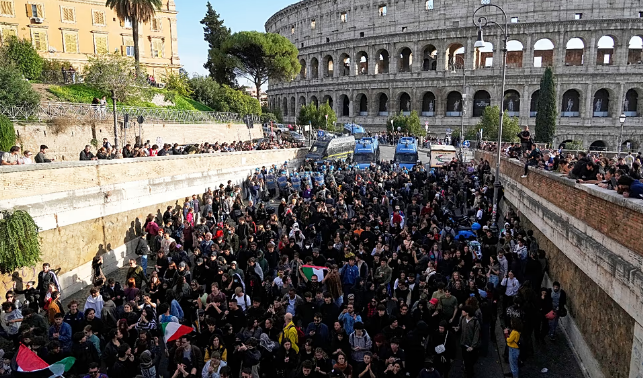
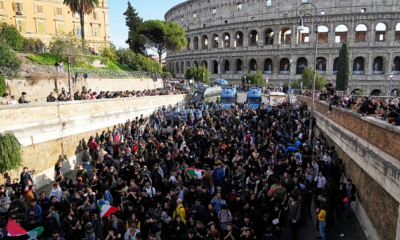
Thousands of people took to the streets in Italy’s major cities on Saturday to protest rising living costs, Prime Minister Giorgia Meloni’s government and conflicts in the Middle East. The demonstrations were largely peaceful, although confrontations with security forces occurred in several cities and nine people were arrested nationwide.
Tensions were reported towards the evening in Turin, Florence, Bologna and Rome. Authorities deployed additional security personnel following violence during demonstrations the previous weekend, with police officers and soldiers patrolling city centres.
In Milan, around 500 soldiers were deployed in response to attacks on shops during the earlier protests.
Demonstrators in Florence, Turin, Milan and Rome gathered in smaller groups rather than organising a single main march. Protesters attempted to reach central areas but were blocked by security forces in several locations.
In Rome, a group broke away from the main demonstration on Via Cavour and headed towards the Colosseum. The protesters entered the historic Flavian Amphitheatre, chanting slogans and displaying placards before authorities escorted them out of the site.
Later, a young demonstrator stood in front of a police water cannon vehicle as it moved forward for a short distance. Videos circulating on social media appeared to show officers forcibly pulling him away from the vehicle.
In Florence, tensions rose when protesters attempted to cross the Santa Trìnita bridge. Police maintained a security cordon and used batons as demonstrators pushed towards the barrier.
In Bologna, authorities prevented a march from proceeding towards Via Marconi and Via Reno. Some demonstrators threw bottles and other objects at security forces, who responded with water cannon and tear gas.
Milan experienced a calmer day overall, with at least three marches joining together and moving through streets around the city centre. Verbal confrontations were reported between demonstrators and some far-right activists.
According to the Department of Public Security, nine people were arrested and 87 were reported to the authorities by the end of the day. Police also took 371 people to stations for checks, including 110 minors and 69 foreign nationals.
In Milan, 30-year-old Youssef Siher was detained and placed under investigation on suspicion of aggravated incitement to commit a crime. He was alleged to have been behind the “17 October Movement”, a group through which thousands of people reportedly shared information about participating in the previous weekend’s demonstrations. The allegations had not been established in court.
Meloni praised the security operation in a social media post on Saturday evening, saying the right to demonstrate must be protected alongside public safety.
“Safety must be guaranteed for everyone,” she said, referring to peaceful protesters, people going to work and residents who want to live in their cities without fear. She added that authorities should not allow those seeking confrontation and violence to dominate public spaces.
The demonstrations reflected public discontent over living costs and government policies, while the incidents highlighted the challenge facing authorities in maintaining order without restricting peaceful protest.

Pilot Fatigue Raises Safety Concerns as Survey Finds Widespread Microsleeps

South Korea Fines Google and Apple €42.7 Million Over App Store Payment Rules

BNP Paribas Beats Third-Quarter Profit Forecasts as Equities Trading Revenue Jumps 50%

South Korea’s Economy Grows 1% as Semiconductor Boom Drives Exports and Investment

Noyb Files Five Complaints Against Scale AI Over Worker Tracking and Biometric Checks

One in Three Young US Adults Uses AI for Drug Information, Study Finds

GMO Internet to Compensate Customers After Cyberattack Triggers Unauthorised Trading

EU Accepts Temu’s Action Plan After €200 Million Fine Over Illegal Products

Musk Says SpaceX Restricted Ukraine’s Starlink Service Over Military Drone Use

Bulgaria Heads to Presidential Poll Amid Black Sea Security Concerns and Economic Pressures

Meta Acquires Tilda Swinton VR Doc ‘Impulse: Playing With Reality’

China’s Historic Olympic Victory Sparks National Pride Amid Controversy

Saudi Arabia’s Model for Sustainable Aviation Practices

Recent Developments in Small Business Taxes

Effective Drain Cleaning: A Key to a Healthy Plumbing System

Who was Ebrahim Raisi and his status in Iranian Politics?

Keely Hodgkinson Wins Britain’s First Athletics Gold at Paris Olympics in 800m

Carrectly: Revolutionizing Car Care in Chicago

Nobel Laureate Muhammad Yunus Proposed as Head of Bangladesh’s Interim Government Following Hasina’s Resignation

Chinese Hackers Infiltrate Major U.S. Telecom Firms in Possible National Security Breach

Sony WF-10XM4: Headphones Are Our Absolute Favorite

10 Places You Can’t Miss If It’s Your First Time in European

New Census Data Will Shake Up Alabama Politics

16 Top of Our Favorite Outdoor Clothing Brands

Fashionable Summer Accessories to Dress Up Your Travel Look

How Sleeping Less than 7 Hours a Night Can Lead to Weight Gain
-
 Entertainment2 years ago
Meta Acquires Tilda Swinton VR Doc ‘Impulse: Playing With Reality’
-
 Sports2 years ago
China’s Historic Olympic Victory Sparks National Pride Amid Controversy
-
 Business2 years ago
Saudi Arabia’s Model for Sustainable Aviation Practices
-
 Business2 years ago
Recent Developments in Small Business Taxes
-
 Home Improvement2 years ago
Effective Drain Cleaning: A Key to a Healthy Plumbing System
-
 Politics2 years ago
Who was Ebrahim Raisi and his status in Iranian Politics?
-
 Sports2 years ago
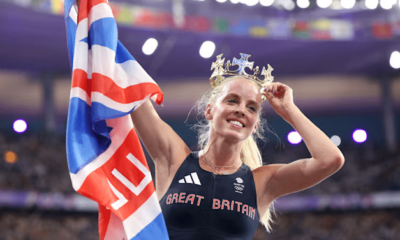
Keely Hodgkinson Wins Britain’s First Athletics Gold at Paris Olympics in 800m
-
 Business2 years ago
Carrectly: Revolutionizing Car Care in Chicago