
News
Iran and Oman Discuss Temporary Shipping Corridor Through Strait of Hormuz





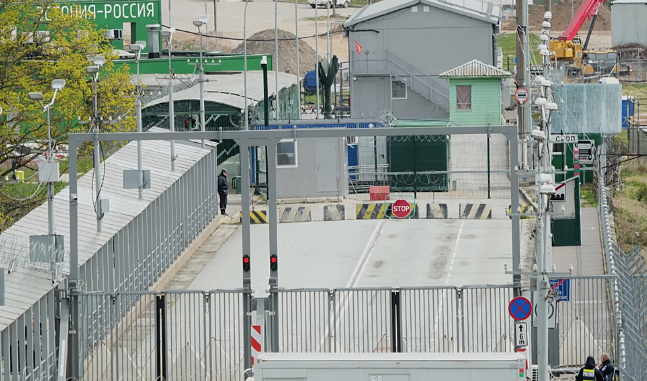
Estonia will close all its border crossing points with Russia from December 1 after authorities foiled an alleged arson attack on a defence company that manufactures military drones, the government announced on Sunday.
Prime Minister Kristen Michal said Russia’s military intelligence agency, the GRU, had ordered an attempted sabotage operation targeting Threod Systems, an Estonian drone manufacturer, on Saturday night. The incident took place in Viimsi, north of the capital Tallinn.
Michal said extensive damage had been prevented by heightened security measures and a rapid response from law enforcement. The attackers had been detained, he added.
Foreign Minister Margus Tsahkna subsequently announced the border closure, citing what he described as clear evidence linking the GRU to the attempted attack.
“Russia must understand that hostile actions against Estonia come with consequences,” Tsahkna wrote on X. He said attempts to intimidate or undermine the country’s security would not go unanswered.
Tsahkna also said he had informed the foreign ministers of Finland, Latvia and Lithuania about the decision.
Chief prosecutor Astrid Asi told journalists that security forces had arrested eight people who live in Latvia. Authorities have not provided further details about the suspects or the alleged operation.
Michal described the incident as part of what he called Russia’s wider hybrid campaign against European countries, aimed at weakening support for Ukraine and increasing pressure on Moscow.
Russia rejected the allegations. Foreign Ministry spokeswoman Maria Zakharova told state news agency TASS that Moscow would check whether Estonia intended to close all crossing points.
“If these are their real plans, then it will be seen as yet another bout of aggressive and unbridled Russophobia,” she said.
Threod Systems manufactures reconnaissance and attack drones for defence and security purposes. The attempted attack follows a similar incident in August, when Tallinn-based defence subcontractor Milrem Robotics was targeted in an attempted arson attack. Latvian nationals were arrested in connection with that case.
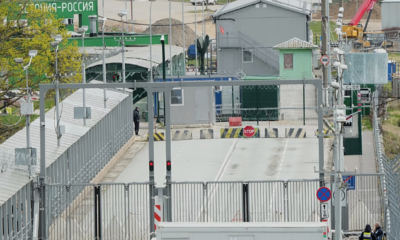
Estonia, a member of both the European Union and NATO, currently operates three border crossings with Russia: Narva in the north, and Luhamaa and Koidula in the south. The crossings allow people and goods to move between the two countries and are among the few remaining operational land links between Russia and the EU.
Vehicle traffic through Narva was suspended by Russia in February 2024, although pedestrians have continued to cross.
The planned closure marks a further deterioration in relations between Tallinn and Moscow, which have been strained since Russia launched its full-scale invasion of Ukraine in February 2022.
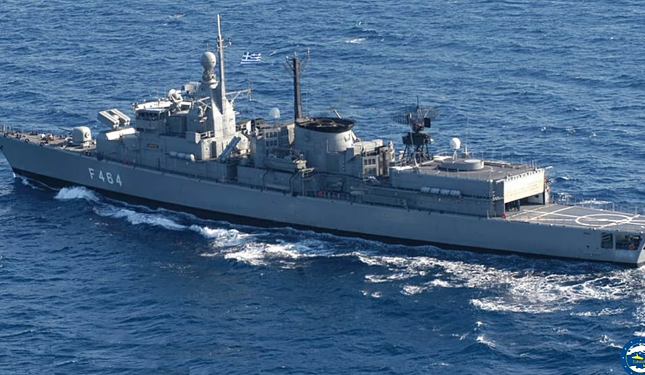
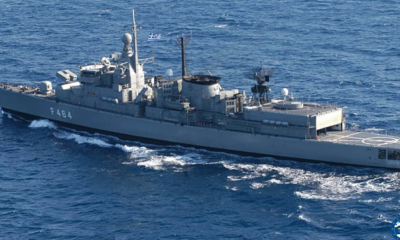
European Union naval forces have boarded a suspected Russian shadow fleet tanker in the Mediterranean Sea and confirmed that it was sailing under a false flag, the bloc’s foreign policy chief Kaja Kallas said on Sunday.
Troops operating under the EU’s Operation Irini boarded the MV Midag on Friday to verify its registration and flag status. Kallas shared images of the operation on social media, saying the EU would continue targeting vessels used by Russia to circumvent Western sanctions.
“The EU will keep disrupting Russia’s shadow fleet at sea and through diplomatic means,” she wrote.
Kallas also said EU foreign ministers were expected to approve additional sanctions against Russia on Monday. The proposed measures would target banks, oil buyers and companies accused of supporting the shadow fleet.
Russia relies on a network of tankers commonly described as its shadow fleet to continue exporting oil despite restrictions imposed by Western governments following its invasion of Ukraine. The vessels often operate through complicated ownership arrangements, use flags of convenience and change registration details to make it harder to identify their links to Russia and establish the origin of their cargoes.
The latest boarding follows similar operations by Operation Irini in recent months. In August, EU forces carried out a flag verification inspection of the oil tanker MV Sun. Another operation earlier that month targeted the MV Toa Payoh.
Operation Irini expands its role
Operation Irini was established in March 2020 to enforce a United Nations arms embargo on Libya during the country’s civil conflict.
Its original responsibilities included monitoring and disrupting illegal arms trafficking, collecting information about oil smuggling networks, helping combat human trafficking and supporting the training of Libyan law enforcement and search-and-rescue institutions.
The mission’s mandate was renewed in October and will now run until March 31, 2029. Its responsibilities have been expanded to include protecting EU interests in the Mediterranean, supporting peace and stability in Libya and helping restrict Russia’s shadow fleet activities.
The EU has identified the Mediterranean as an important transit and transfer route for the vessels, which can move between shipping areas to transfer oil and conceal the origin of cargoes.
The expanded mandate reflects growing European efforts to enforce sanctions beyond financial restrictions and target the maritime networks that help Russia maintain its oil trade.
Kallas’s announcement signals that the bloc intends to continue using inspections, diplomatic pressure and additional sanctions to disrupt those operations. The planned measures against financial institutions, buyers and supporting companies would extend pressure beyond the vessels themselves to businesses involved in moving and purchasing Russian oil.
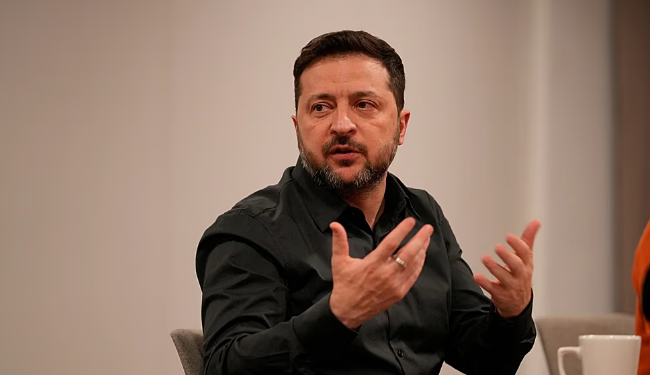
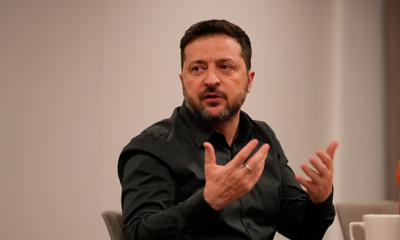
Ukrainian President Volodymyr Zelenskyy has accused SpaceX of failing to provide clear explanations for speed restrictions affecting its Starshield satellite communications network, warning that the limits are disrupting efforts to intercept Russian attack drones.
Zelenskyy said Ukrainian forces had faced restrictions for five days, with Starshield terminals limited to a maximum speed of 161 kilometres per hour in areas occupied by Russian forces.
In comments released on Saturday, he said SpaceX had described the restrictions as a technical issue, but Kyiv was not convinced by that explanation.
“The restrictions have now been in place for five days,” Zelenskyy said. “They say it is some kind of technical issue. We do not believe that is the case.”
The Ukrainian leader raised the issue during an address at the European Political Community summit in Dublin earlier this week. He said the limits were directly affecting Ukraine’s ability to intercept Russian jet-powered attack drones.
“If someone in America is making decisions that basically treat Ukrainian territory as if it is not Ukrainian, then this tells us where things are going,” he told the summit.
On Friday, Zelenskyy said Kyiv had received no clear explanation for the restrictions. He instructed Ukraine’s foreign and defence ministries to intensify discussions with the US Department of State, the Pentagon and SpaceX to clarify the situation and seek a solution.
Starshield, SpaceX’s satellite communications service designed for government and defence users, has become an important part of Ukraine’s military communications infrastructure. It provides internet access and connectivity for Ukrainian forces operating across the battlefield.
The reported restrictions have raised concerns in Kyiv about the reliability of a service that has played a significant role in supporting military operations since Russia launched its full-scale invasion.
Land concessions raised in peace discussions
The dispute comes as Ukraine continues diplomatic discussions with Washington and other Western partners over possible terms for ending the war.
Zelenskyy said the United States had raised the possibility of Ukraine withdrawing from the Donbas region in exchange for NATO membership. He described it as the first time Washington had presented the proposal in those terms.
“The Americans raised a question: ‘What if Ukraine joins NATO? Would Ukraine withdraw from Donbas?’ This was the first time this had been raised,” he told reporters on Friday, according to comments reported by AFP.
The Donbas region in eastern Ukraine has been a major focus of fighting since Russia’s invasion. Moscow has sought control over the territory, while Kyiv has repeatedly rejected demands to surrender land.
Zelenskyy said Ukraine was discussing specific security guarantees with NATO and the European Union. He added that he would consult the Ukrainian public if Western countries formally confirmed the proposed terms.
“I have no right to make that decision on my own,” he said.
The comments underline the challenges facing efforts to accelerate peace negotiations, with questions over territorial concessions, future security arrangements and continued Western military and technological support remaining central to the discussions.

EU Accuses Temu of Failing to Prevent Illegal Products, Risking Heavy Fine

Measles Cases Decline Across Europe in 2026, but Outbreaks Persist in Several Countries

Renault Plans 2,000 New Jobs in France While Cutting 1,000 Administrative Roles

Global Stocks Slide as Nvidia Leadership Uncertainty Puts AI Trade Under Pressure

Estonia to Close Russian Border Crossings After Foiled Attack on Drone Manufacturer

Berkeley Study Reveals How Sleep and Growth Hormone Work Together to Regulate Waking

Australia Beat New Zealand 32-12 to Win Fourth Consecutive Rugby League World Cup

EU Forces Board Suspected Russian Shadow Fleet Tanker in Mediterranean

Zelenskyy Questions SpaceX Over Starshield Restrictions Affecting Ukraine’s Drone Defences

Turkey and Qatar Sign Mutual Defence Pact as Gulf Security Alliances Shift

Meta Acquires Tilda Swinton VR Doc ‘Impulse: Playing With Reality’

China’s Historic Olympic Victory Sparks National Pride Amid Controversy

Saudi Arabia’s Model for Sustainable Aviation Practices

Recent Developments in Small Business Taxes

Effective Drain Cleaning: A Key to a Healthy Plumbing System

Who was Ebrahim Raisi and his status in Iranian Politics?

Keely Hodgkinson Wins Britain’s First Athletics Gold at Paris Olympics in 800m

Carrectly: Revolutionizing Car Care in Chicago

Nobel Laureate Muhammad Yunus Proposed as Head of Bangladesh’s Interim Government Following Hasina’s Resignation

Chinese Hackers Infiltrate Major U.S. Telecom Firms in Possible National Security Breach

Sony WF-10XM4: Headphones Are Our Absolute Favorite

10 Places You Can’t Miss If It’s Your First Time in European

New Census Data Will Shake Up Alabama Politics

16 Top of Our Favorite Outdoor Clothing Brands

Fashionable Summer Accessories to Dress Up Your Travel Look

How Sleeping Less than 7 Hours a Night Can Lead to Weight Gain
-
 Entertainment2 years ago
Meta Acquires Tilda Swinton VR Doc ‘Impulse: Playing With Reality’
-
 Sports2 years ago
China’s Historic Olympic Victory Sparks National Pride Amid Controversy
-
 Business2 years ago
Saudi Arabia’s Model for Sustainable Aviation Practices
-
 Business2 years ago
Recent Developments in Small Business Taxes
-
 Home Improvement2 years ago
Effective Drain Cleaning: A Key to a Healthy Plumbing System
-
 Politics2 years ago
Who was Ebrahim Raisi and his status in Iranian Politics?
-
 Sports2 years ago
Keely Hodgkinson Wins Britain’s First Athletics Gold at Paris Olympics in 800m
-
 Business2 years ago
Carrectly: Revolutionizing Car Care in Chicago