
Business
South Korea Fines Google and Apple €42.7 Million Over App Store Payment Rules


South Korea has fined Google and Apple a combined 63.7 billion won (€42.7 million) for allegedly pressuring app developers to use their payment systems and delaying app reviews, adding to regulatory challenges facing the US technology companies over their app store practices.
The Korea Media and Communications Commission (KMCC) announced the penalties on Wednesday following an investigation launched in August 2022. Google was fined 42.9 billion won (€28.7 million), while Apple received a penalty of 20.8 billion won (€13.9 million).
The regulator found that both companies had violated a 2021 South Korean law prohibiting app store operators from forcing developers to use specific payment systems. South Korea was the first country to introduce such a rule.
Although Google and Apple allowed developers to offer alternative payment options within their apps, the commission said the companies charged a 26% commission on those transactions, only slightly below the 30% charged for payments through their own systems. The regulator also found that restrictions on certain features limited developers’ ability to use alternative payment services effectively.
Payments made through external websites were blocked altogether, according to the commission.
The investigation also found that both companies delayed app reviews without providing developers with adequate explanations or clear information about when the reviews would resume.
Apple was separately found to have charged South Korean developers more than developers in other markets between 2015 and January 2023. The commission said Apple calculated its commissions using prices that included value-added tax, increasing the amounts charged to local developers.
Under the latest ruling, both companies must allow South Korean developers to include links to external payment options in their apps and improve their app review procedures. They have one month to submit compliance plans and three months to implement the required changes.
Commission chairman Kim Jong-cheol said he hoped the sanctions would bring meaningful changes to the market. He added that South Korean law would be enforced equally against domestic and foreign companies.
Neither Google nor Apple had publicly commented on the decision at the time of the announcement.
The penalties follow similar regulatory action in the European Union, where the Digital Markets Act (DMA) restricts major online platforms from preventing developers from directing customers towards alternative purchasing options.
In April 2025, the European Commission fined Apple €500 million for breaching the DMA by restricting developers from steering users to cheaper offers outside its App Store. Apple appealed the decision.
The company subsequently announced revised terms for its European operations, effective October 1, reducing its standard commission on in-app purchases to 26% from 30% and introducing a 15% rate for purchases completed elsewhere after users were directed outside the app.
Google also faced a €890 million fine from Brussels in July, including €430 million linked to restrictions on developers using Google Play to direct customers towards cheaper purchasing options. Google has appealed the penalties and revised some of its fees and terms, which the European Commission is still assessing.
The South Korean decision underscores growing international scrutiny of app store business models, particularly the fees and restrictions imposed on developers seeking alternatives to platform-owned payment services.
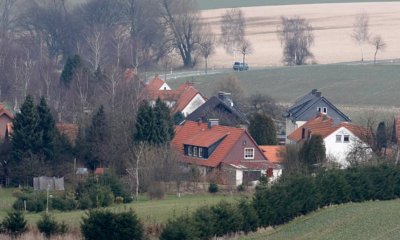



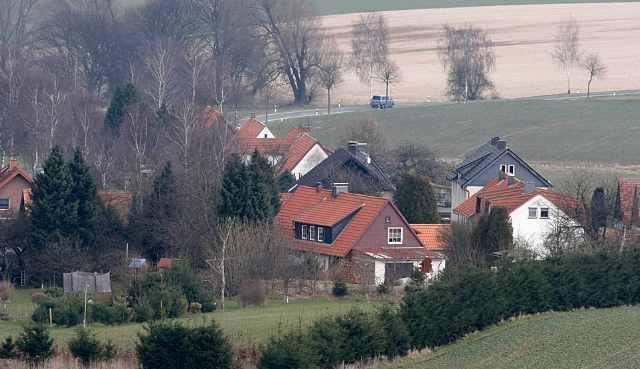
House prices in European cities are significantly higher than in rural areas, but the difference varies considerably between countries, reflecting disparities in employment opportunities, investment and housing supply.
Urban homes cost an average of 31% more than the national average across 16 European countries, according to Euronews Business calculations based on the OECD’s Regions and Cities at a Glance 2026 report. By comparison, properties in commuting zones are 11% cheaper than the national average, while homes outside cities and their surrounding commuting areas cost 30% less.
The OECD attributes much of the difference to the concentration of jobs, investment and innovation in capital regions and major cities. As economic opportunities become concentrated in these locations, demand for housing rises, pushing property prices higher.
Denmark records the largest urban-rural price difference among the countries examined. Homes in its urban centres cost 64% above the national average, while properties outside cities and commuting zones are 51% below it. This means urban homes are approximately 3.4 times more expensive per square metre than those in less populated areas.
Hungary has the second-largest gap, with urban property prices 57% above the national average and rural prices 45% below it. Finland follows, with city homes costing 55% more than the national average and properties outside urban areas 44% less.
Sweden, Ireland and Portugal also report substantial differences, with urban prices respectively 46%, 43% and 38% above their national averages.
Gabriel M. Ahlfeldt, a professor at Humboldt University in Berlin, said the Nordic countries’ differences reflected strong housing demand in a limited number of urban employment centres, compared with weaker demand in sparsely populated regions.
In Hungary, speculative investment has also contributed to rising prices. József Hegedüs, a senior housing policy researcher at Budapest’s Metropolitan Research Institute, said speculative demand accounted for a significant part of the property boom in Budapest.
The Netherlands and the UK have the smallest urban-rural price differences in the comparison. Dutch city prices are just 1% above the national average, while properties outside cities are 9% cheaper. In the UK, urban prices are 4% above the national average, against 9% below it outside cities.
However, smaller price differences do not necessarily indicate affordable housing. Ahlfeldt said cities benefit from access to employment, universities, public services and cultural facilities, while restrictions on construction can limit supply and push prices higher.
Germany also illustrates the substantial differences between metropolitan areas within a single country. According to the OECD, purchasing a home in Munich requires the equivalent of about 17 additional years of disposable income compared with buying one in Chemnitz.
Young people, first-time buyers and renters are among those most affected by rising housing costs, particularly those without family wealth to help finance a purchase. Lower-paid workers in major cities also face difficult choices between housing expenses, living space and commuting distances.
The figures highlight how housing affordability across Europe depends not only on national property prices but also on regional incomes, employment opportunities and the availability of homes.

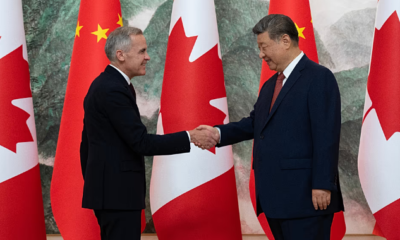
Canada and China have agreed to reduce trade barriers on several goods, offering relief to Canadian pork and seafood exporters while extending exemptions for Chinese steel and aluminium products. The agreement comes as Ottawa seeks to diversify its trading relationships amid pressure from US tariffs.
The measures were announced after Canadian Prime Minister Mark Carney met Chinese President Xi Jinping in Shenzhen on Tuesday, ahead of the Asia-Pacific Economic Cooperation summit.
China will suspend additional tariffs of 25% on most frozen pork cuts and selected seafood products from January 1, 2027, until December 31, 2028, according to the Canadian prime minister’s office.
The affected exports were worth approximately C$400 million (€254 million) in 2024, before the additional duties were introduced. Eligible seafood products include certain frozen cold-water shrimp and prawns, molluscs, sea cucumbers and Greenland halibut.
In return, Canada will maintain existing tariff exemptions for selected Chinese steel and aluminium products until the end of 2028. Ottawa will also introduce full or partial exemptions for 32 additional product categories where domestic supplies are insufficient or unavailable.
The latest agreement builds on trade measures announced earlier this month, when China extended tariff relief on Canadian canola meal, peas, lobster and crab through 2028. Canada also confirmed an extension of existing exemptions covering Chinese metals.
Ottawa seeks to diversify trade
Carney has been working to expand Canada’s overseas trade as tariffs imposed by US President Donald Trump affect industries that rely heavily on access to the American market.
Foreign Minister Anita Anand said on Wednesday that Canada was taking a gradual approach to restoring economic relations with China while reducing its dependence on a single trading partner.
Speaking in Shenzhen, Carney said Canadian exports to China had increased by more than a third this year. However, he stressed that negotiations with Washington remained a priority.
“The United States fundamentally changed its trade objectives, and we are focused on getting the right deal for Canadians,” he told reporters.
The prime minister said earlier this week that Canada could consider working with Chinese carmakers if discussions with the United States failed to protect the closely connected North American automotive industry. He maintained that securing an agreement with Washington remained his preferred option.
Previous steps towards closer trade ties
Canada and China began easing trade restrictions following an agreement reached during Carney’s visit to Beijing in January.
Under that arrangement, Ottawa agreed to initially allow up to 49,000 Chinese electric vehicles into Canada each year at a reduced tariff rate of 6.1%. Beijing, in return, agreed to lower duties on Canadian agricultural products, including canola.
Carney has also announced plans for a Canadian trade mission to China in 2027 and a joint initiative to help smaller Canadian businesses reach Chinese consumers through online shopping platforms.
The latest measures reflect efforts by both countries to restore commercial ties, while Canada continues to negotiate with its largest trading partner, the United States.

Entrepreneurs in Germany need almost 4,000 hours to complete the administrative procedures required to open a small business, making it the slowest country in a new international ranking covering 27 nations across Europe, Latin America and the Caribbean.
The Index of Bureaucracy 2026 estimates that setting up a business in Germany takes 3,942 hours, equivalent to almost 500 eight-hour working days. The figure is nearly 18 times higher than France, which ranked first with just 223 hours, or around 28 working days.
Compiled by the Adam Smith Center for Economic Freedom at Florida International University, the index measures the time required to register a company, obtain permits and complete other legal requirements, including waiting for official approvals.
The study covers 20 countries in Latin America and the Caribbean, five EU member states, Germany, France, Italy, Portugal and Spain, as well as the United Kingdom and Ukraine. It is not a ranking of all EU countries. The average across the 27 nations was 1,638 hours.
Germany, Europe’s largest economy, ranked behind every Latin American and Caribbean country included in the assessment. Venezuela required 2,738 hours, while Peru took 3,853 hours.
According to the report, municipal permits and business registration account for approximately 2,400 hours of the German total. Identification and registry procedures add another 1,440 hours.
Sary Levy-Carciente, the index’s lead author, told Euronews that Germany’s administrative burden was concentrated in complex local procedures. She pointed to the involvement of multiple municipal departments, separate paperwork requirements, mandatory notarisation for certain company structures and delays in electronic processing at local courts.
The study’s German estimate is based on three sample businesses weighted according to their contribution to the economy. A farm producing pigs and grain or a machine-tool manufacturer could require as many as 8,633 hours, partly because of environmental permitting requirements. A car dealership and repair business would need around 2,056 hours.
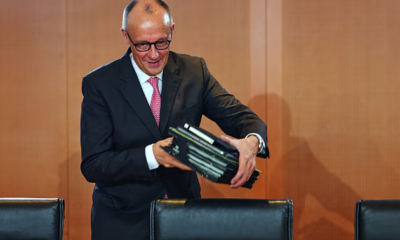
The findings come as Chancellor Friedrich Merz’s government seeks to reduce bureaucracy and improve conditions for businesses. Its coalition agreement pledged to introduce a digital one-stop service allowing companies to be established within 24 hours. More than 100 founders and business managers also supported a similar demand from the German Startup Association in June.
France’s 223 hours placed it first, followed by Italy at 303 hours and Brazil in third place. Portugal ranked fourth at 335 hours, while Spain required 707 hours. Ukraine recorded 603 hours, whereas the UK took 1,873 hours, above the overall average.
Levy-Carciente said the main difference between faster and slower countries was the efficiency of local registration systems. Municipal permits and registration take about one hour in France and 24 hours in Italy, compared with approximately 2,400 hours in Germany.
The report found no clear link between a country’s wealth and the time required to establish a business. It warned that excessive procedures can discourage entrepreneurship and push businesses into the informal economy.
The European Commission has proposed an optional company structure, EU Inc, designed to allow online registration across the bloc within 48 hours for up to €100.

Denmark Has Europe’s Widest Urban-Rural House Price Gap, OECD Data Shows

Trump Administration Fires US National Cyber Director Sean Cairncross

JPMorgan Chase, Visa and Mastercard Customer Data Exposed in Third-Party Cyberattack

Canada and China Agree to Ease Tariffs on Pork, Seafood and Metals

Germany Ranks Last in Business Start-up Bureaucracy Study, Requiring Nearly 4,000 Hours

UK Inflation Rises to 3.6% in October as Record Diesel Prices Push Up Costs

EU Accuses Temu of Failing to Prevent Illegal Products, Risking Heavy Fine

Measles Cases Decline Across Europe in 2026, but Outbreaks Persist in Several Countries

Renault Plans 2,000 New Jobs in France While Cutting 1,000 Administrative Roles

Global Stocks Slide as Nvidia Leadership Uncertainty Puts AI Trade Under Pressure

China’s Historic Olympic Victory Sparks National Pride Amid Controversy

Meta Acquires Tilda Swinton VR Doc ‘Impulse: Playing With Reality’

Saudi Arabia’s Model for Sustainable Aviation Practices

Recent Developments in Small Business Taxes

Effective Drain Cleaning: A Key to a Healthy Plumbing System

Who was Ebrahim Raisi and his status in Iranian Politics?

Keely Hodgkinson Wins Britain’s First Athletics Gold at Paris Olympics in 800m

Carrectly: Revolutionizing Car Care in Chicago

Nobel Laureate Muhammad Yunus Proposed as Head of Bangladesh’s Interim Government Following Hasina’s Resignation

Chinese Hackers Infiltrate Major U.S. Telecom Firms in Possible National Security Breach

Sony WF-10XM4: Headphones Are Our Absolute Favorite

10 Places You Can’t Miss If It’s Your First Time in European

New Census Data Will Shake Up Alabama Politics

16 Top of Our Favorite Outdoor Clothing Brands

Fashionable Summer Accessories to Dress Up Your Travel Look

How Sleeping Less than 7 Hours a Night Can Lead to Weight Gain
-
 Sports2 years ago
China’s Historic Olympic Victory Sparks National Pride Amid Controversy
-
 Entertainment2 years ago
Meta Acquires Tilda Swinton VR Doc ‘Impulse: Playing With Reality’
-
 Business2 years ago
Saudi Arabia’s Model for Sustainable Aviation Practices
-
 Business2 years ago
Recent Developments in Small Business Taxes
-
 Home Improvement2 years ago
Effective Drain Cleaning: A Key to a Healthy Plumbing System
-
 Politics2 years ago
Who was Ebrahim Raisi and his status in Iranian Politics?
-
 Sports2 years ago
Keely Hodgkinson Wins Britain’s First Athletics Gold at Paris Olympics in 800m
-
 Business2 years ago
Carrectly: Revolutionizing Car Care in Chicago