
Business
BNP Paribas Beats Third-Quarter Profit Forecasts as Equities Trading Revenue Jumps 50%

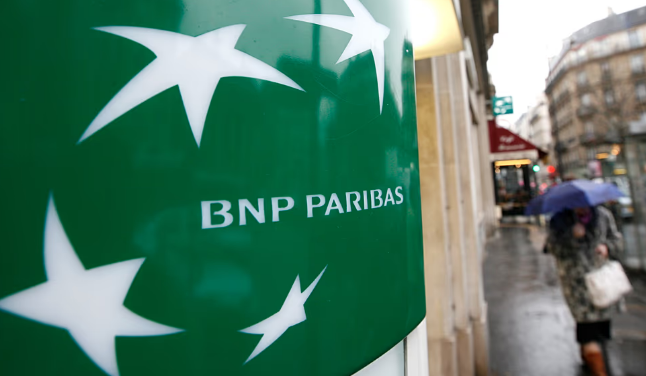
BNP Paribas, France’s largest bank, reported stronger-than-expected third-quarter profits on Wednesday as a sharp increase in equities trading revenue boosted earnings, prompting the lender to announce a €1.3 billion share buyback while playing down its exposure to French government debt.
Net income rose 13.5% from a year earlier to €3.46 billion, exceeding the average analyst forecast of €3.23 billion, according to estimates compiled by the bank. Revenue increased 9.5% to €13.76 billion.
The strongest performance came from corporate and institutional banking, where revenue climbed 16.6% to €5.2 billion. Within that division, global markets revenue rose 21.9% to €2.67 billion, approaching the record level recorded in the first quarter.
Equity and prime services revenue surged 50% to €1.46 billion, reflecting stronger activity in share trading and services provided to hedge funds, including lending and clearing. Revenue from fixed income, currencies and commodities trading remained broadly unchanged at €1.22 billion, as growth in Asia and foreign exchange offset weaker performance in credit and interest rate markets.
“The Group achieved a very strong third quarter driven by the operating performance across all three divisions,” chief executive Jean-Laurent Bonnafé said.
Revenue from commercial and personal banking and services, which serves households and businesses, increased 3.6%, supported by interest rate conditions and higher fees.
However, the bank’s car leasing operations faced pressure. Revenue at Arval and Leasing Solutions fell 29.1% as used-car prices declined.
BNP Paribas set aside €964 million for potential loan losses during the quarter, equivalent to 39 basis points of customer loans. That remained within its 2026 target of keeping the cost of risk below 40 basis points.
The bank’s Common Equity Tier 1 capital ratio, a key measure of financial resilience, stood at 12.9% at the end of September. BNP expects the ratio to exceed 13% by year-end, supported by the sale of its Moroccan subsidiary BMCI.
The €1.3 billion buyback, approved by the European Central Bank, is scheduled to begin in November ahead of the distribution of profits for 2026.
BNP reaffirmed its financial targets through 2028, including a return on tangible equity of 12% this year and more than 13% in 2028. It plans to present a new strategic plan covering the period to 2030 on February 2. Its shares were down about 1.5% at the opening in Paris on Wednesday.
The results came amid concerns over France’s public finances and political uncertainty. BNP said it held approximately €19 billion in French government bonds, with about €16 billion accounted for at amortised cost, limiting the effect of market price fluctuations on capital.
The bank estimated that a further 0.5-percentage-point widening in the yield spread between French and German government bonds would reduce its capital ratio by only around 0.02 percentage points.
France accounted for less than 10% of BNP Paribas’ pre-tax income in 2025, compared with roughly half that proportion in 2016, reflecting the bank’s broader international diversification.







South Korea has fined Google and Apple a combined 63.7 billion won (€42.7 million) for allegedly pressuring app developers to use their payment systems and delaying app reviews, adding to regulatory challenges facing the US technology companies over their app store practices.
The Korea Media and Communications Commission (KMCC) announced the penalties on Wednesday following an investigation launched in August 2022. Google was fined 42.9 billion won (€28.7 million), while Apple received a penalty of 20.8 billion won (€13.9 million).
The regulator found that both companies had violated a 2021 South Korean law prohibiting app store operators from forcing developers to use specific payment systems. South Korea was the first country to introduce such a rule.
Although Google and Apple allowed developers to offer alternative payment options within their apps, the commission said the companies charged a 26% commission on those transactions, only slightly below the 30% charged for payments through their own systems. The regulator also found that restrictions on certain features limited developers’ ability to use alternative payment services effectively.
Payments made through external websites were blocked altogether, according to the commission.
The investigation also found that both companies delayed app reviews without providing developers with adequate explanations or clear information about when the reviews would resume.
Apple was separately found to have charged South Korean developers more than developers in other markets between 2015 and January 2023. The commission said Apple calculated its commissions using prices that included value-added tax, increasing the amounts charged to local developers.
Under the latest ruling, both companies must allow South Korean developers to include links to external payment options in their apps and improve their app review procedures. They have one month to submit compliance plans and three months to implement the required changes.
Commission chairman Kim Jong-cheol said he hoped the sanctions would bring meaningful changes to the market. He added that South Korean law would be enforced equally against domestic and foreign companies.
Neither Google nor Apple had publicly commented on the decision at the time of the announcement.
The penalties follow similar regulatory action in the European Union, where the Digital Markets Act (DMA) restricts major online platforms from preventing developers from directing customers towards alternative purchasing options.
In April 2025, the European Commission fined Apple €500 million for breaching the DMA by restricting developers from steering users to cheaper offers outside its App Store. Apple appealed the decision.
The company subsequently announced revised terms for its European operations, effective October 1, reducing its standard commission on in-app purchases to 26% from 30% and introducing a 15% rate for purchases completed elsewhere after users were directed outside the app.
Google also faced a €890 million fine from Brussels in July, including €430 million linked to restrictions on developers using Google Play to direct customers towards cheaper purchasing options. Google has appealed the penalties and revised some of its fees and terms, which the European Commission is still assessing.
The South Korean decision underscores growing international scrutiny of app store business models, particularly the fees and restrictions imposed on developers seeking alternatives to platform-owned payment services.
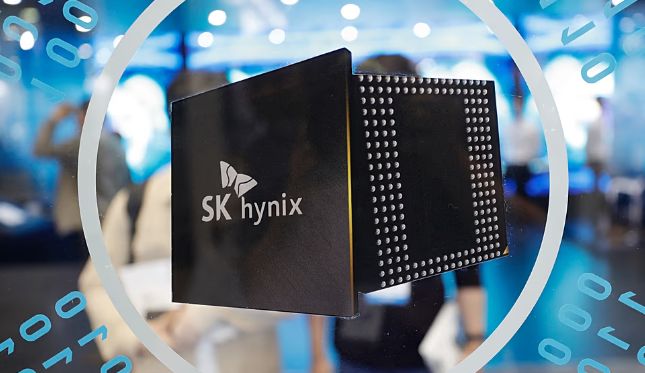
South Korea’s economy grew faster than expected in the third quarter, supported by strong semiconductor demand and increased investment in production equipment, although economists warned that the country’s dependence on the chip industry leaves it exposed to a potential slowdown in global artificial intelligence spending.
Gross domestic product rose by 1.0% between July and September compared with the previous quarter, according to preliminary figures released by the Bank of Korea on Tuesday. The expansion was more than three times the central bank’s August forecast of 0.3%.
Exports increased by 2.3% during the quarter, driven by semiconductors, machinery and electrical equipment, the Bank of Korea said. Investment in facilities climbed by 4.1%, largely reflecting spending on machinery used in semiconductor manufacturing.
The figures support the central bank’s assessment that strong demand for chips is sustaining export performance and business investment, according to Kwon Hyo-sung of Bloomberg Economics.
South Korea’s semiconductor exports reached $148 billion (€127 billion) in the third quarter, marking a 218.7% increase from the same period a year earlier, government figures showed. Rising chip demand has provided a significant boost to the country’s trade performance and broader economic activity.
On an annual basis, South Korea’s economy expanded by 3.4% in the third quarter, compared with 3.7% growth in the previous three months.
Real gross domestic income, a measure of the purchasing power generated by economic activity, increased by 18.8% year-on-year. The rise was the strongest in nearly 49 years and was supported by higher semiconductor prices.
The latest figures follow a strong start to the year. South Korea’s economy expanded by 1.7% quarter-on-quarter in the first three months of the year, its fastest growth in more than five years, as demand for semiconductors strengthened.
However, economists warned that the recovery remains concentrated in one major industry, creating risks if demand weakens.
“The risk is that growth stays heavily concentrated in the semiconductor sector, leaving South Korea exposed to a slowdown in global AI spending,” said John Bromhead, a senior economist at Moody’s Analytics.
The warning reflects concerns that the current wave of investment in AI infrastructure may not continue at the same pace. A reduction in spending by technology companies could weaken demand for advanced chips, affecting South Korea’s exports, manufacturing investment and economic growth.
The semiconductor boom has also helped strengthen the country’s external finances. South Korea recorded a current account surplus of $116.6 billion (€100 billion) in the second quarter, reaching a record high.
While robust chip exports have supported growth and income, the latest data highlights the challenge facing policymakers as they seek to sustain economic momentum while limiting exposure to shifts in the global technology market.

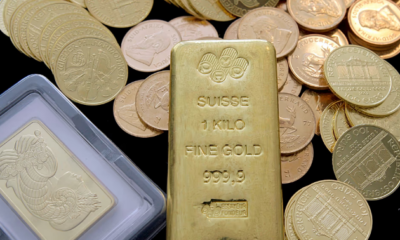
Russia and Kazakhstan are reducing their gold holdings while Poland continues to expand its reserves, highlighting differing strategies among central banks as gold prices remain elevated. Analysts say the sales are unlikely to trigger a major decline in global prices, although they raise questions about whether other countries could follow the same path.
Russia has been selling gold throughout 2026. In September, its reserves fell by approximately 6.2 tonnes, taking the total reduction since January to around 62 tonnes. A comparable pace of selling has rarely been seen in Russia’s modern history. In 1998, the country sold 118 tonnes of gold over three months.
Adam Stroniawski, managing director of Polish precious metals dealer Mennica Skarbowa, told Euronews that Russia’s sales were linked to a budget shortfall caused by the war in Ukraine and increased defence spending.
He said Russia was selling gold outside the London bullion market, with transactions taking place through Hong Kong and China’s central bank emerging as the main buyer. Hong Kong trade data showed that about 100 tonnes of Russian gold arrived between January and July, nearly three times the volume recorded during the same period last year.
Stroniawski expects the transactions to have a limited effect on international prices. He also said Russia could eventually return to buying gold and rebuilding its reserves, as it did after its 1998 sell-off.
Kazakhstan has also announced plans to reduce its gold holdings. The country was among the world’s largest gold buyers during the first eight months of 2026, but intends to bring gold’s share of its total reserves down from around 78% to 75% by the end of the year.
Stroniawski said the move could be temporary, reflecting budget pressures or an opportunity to realise profits after years of buying. The planned reduction is relatively modest and sales are expected to be spread over time, limiting the likely effect on global markets.
Poland, meanwhile, is not expected to follow the same course. The National Bank of Poland has steadily increased its gold holdings and is approaching its target of 700 tonnes. Stroniawski said the country’s substantial reserves support its credit standing and help stabilise its currency. Poland currently ranks 10th globally in gold reserves, he added, and reaching the target would not necessarily mark the end of purchases.
Gold’s performance has been mixed in 2026 following substantial gains in previous years. According to the World Gold Council, prices rose 25.5% in 2024 and 67.4% in 2025 in US dollar terms, before declining 4.4% during the first nine months of 2026.
Stroniawski believes temporary price corrections do not necessarily undermine gold’s longer-term outlook. Central-bank purchases and demand from investors seeking a safe-haven asset could continue to support prices.
He cautioned, however, that investors should not expect guaranteed short-term returns. Gold, he said, is more likely to deliver reliable gains over an extended period.

Pilot Fatigue Raises Safety Concerns as Survey Finds Widespread Microsleeps

South Korea Fines Google and Apple €42.7 Million Over App Store Payment Rules

BNP Paribas Beats Third-Quarter Profit Forecasts as Equities Trading Revenue Jumps 50%

South Korea’s Economy Grows 1% as Semiconductor Boom Drives Exports and Investment

Noyb Files Five Complaints Against Scale AI Over Worker Tracking and Biometric Checks

One in Three Young US Adults Uses AI for Drug Information, Study Finds

GMO Internet to Compensate Customers After Cyberattack Triggers Unauthorised Trading

EU Accepts Temu’s Action Plan After €200 Million Fine Over Illegal Products

Musk Says SpaceX Restricted Ukraine’s Starlink Service Over Military Drone Use

Bulgaria Heads to Presidential Poll Amid Black Sea Security Concerns and Economic Pressures

Meta Acquires Tilda Swinton VR Doc ‘Impulse: Playing With Reality’

China’s Historic Olympic Victory Sparks National Pride Amid Controversy

Saudi Arabia’s Model for Sustainable Aviation Practices

Recent Developments in Small Business Taxes

Effective Drain Cleaning: A Key to a Healthy Plumbing System

Who was Ebrahim Raisi and his status in Iranian Politics?

Keely Hodgkinson Wins Britain’s First Athletics Gold at Paris Olympics in 800m

Carrectly: Revolutionizing Car Care in Chicago

Nobel Laureate Muhammad Yunus Proposed as Head of Bangladesh’s Interim Government Following Hasina’s Resignation

Chinese Hackers Infiltrate Major U.S. Telecom Firms in Possible National Security Breach

Sony WF-10XM4: Headphones Are Our Absolute Favorite

10 Places You Can’t Miss If It’s Your First Time in European

New Census Data Will Shake Up Alabama Politics

16 Top of Our Favorite Outdoor Clothing Brands

Fashionable Summer Accessories to Dress Up Your Travel Look

How Sleeping Less than 7 Hours a Night Can Lead to Weight Gain
-
 Entertainment2 years ago
Meta Acquires Tilda Swinton VR Doc ‘Impulse: Playing With Reality’
-
 Sports2 years ago
China’s Historic Olympic Victory Sparks National Pride Amid Controversy
-
 Business2 years ago
Saudi Arabia’s Model for Sustainable Aviation Practices
-
 Business2 years ago
Recent Developments in Small Business Taxes
-
 Home Improvement2 years ago
Effective Drain Cleaning: A Key to a Healthy Plumbing System
-
 Politics2 years ago
Who was Ebrahim Raisi and his status in Iranian Politics?
-
 Sports2 years ago
Keely Hodgkinson Wins Britain’s First Athletics Gold at Paris Olympics in 800m
-
 Business2 years ago
Carrectly: Revolutionizing Car Care in Chicago
You must be logged in to post a comment Login