
Health
Flu Vaccination Rates Across Europe Remain Well Below Targets as Early Season Surge Raises Alarm

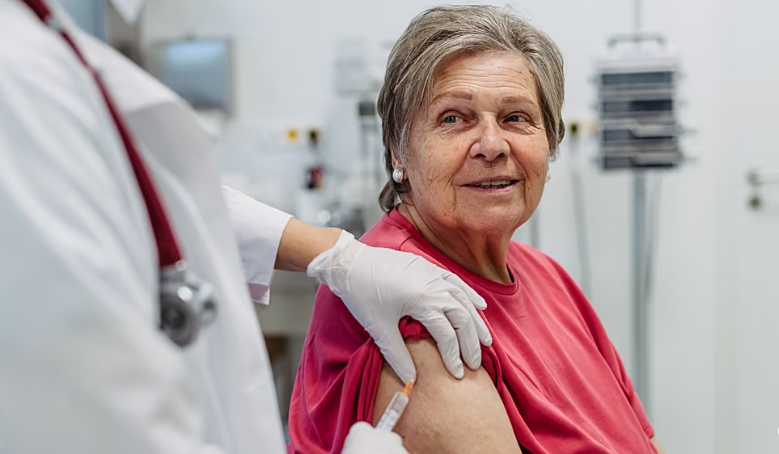
As Europe enters a new flu season, health authorities are warning that vaccination uptake across the region remains far below recommended levels, even as infections are spreading earlier than expected. New data from the European Centre for Disease Prevention and Control (ECDC) shows immunisation rates remain “sub-optimal” in many countries, raising concerns about the months ahead.
The flu season typically runs from mid-November to late May, but officials say cases linked to a new H3N2 variant—known as subclade K—have already been rising abnormally early this year. They caution that this pattern could indicate a longer and more severe season.
Influenza infects up to one in five Europeans every winter and is associated with about 27,600 deaths annually across EU member states. With the added risk of an early surge, health authorities are urging people to get vaccinated, especially older adults, individuals with chronic illnesses or weakened immune systems, pregnant women, young children, and medical workers.
The ECDC’s latest analysis, covering all 27 EU member states along with Iceland, Liechtenstein, and Norway, highlights significant gaps in coverage. The agency said current vaccination policies “still fall short” of achieving adequate uptake, particularly among older adults.
Across that age group, rates varied sharply—from under 15 per cent in Latvia and Poland to 76 per cent in Denmark. The median rate was 47 per cent, well below the EU’s target of 75 per cent. Only Denmark and, to a lesser degree, Ireland, Portugal, and Sweden came close to approaching that benchmark.
The report shows that reaching the 75 per cent target has been an ongoing challenge. The highest median rate in the past five years was recorded during the 2020-2021 flu season, when concerns over COVID-19 helped push coverage to 59 per cent. Since then, no broad improvement has been recorded. “Levels of uptake continue to remain sub-optimal in most EU countries,” the ECDC said.
Vaccination among healthcare workers also varied widely. While 23 countries recommend flu shots for all medical staff, reported uptake ranged from about 14 per cent in Slovenia to 51 per cent in Norway.
Data for pregnant women, available from eight countries, showed particularly low coverage. The median rate was 22 per cent, with Spain standing out at about 61 per cent. Several countries reported rates below 10 per cent.
There have been improvements in guidance for children and teenagers: all 30 countries surveyed now have specific recommendations for these groups, compared with 18 in the previous season. However, actual vaccination uptake remains limited.
With signs pointing to a difficult winter, the ECDC has urged national agencies to strengthen their efforts to promote flu vaccination and not rely solely on updated guidance. “Seasonal influenza vaccination remains a key public health intervention,” the agency said, stressing that higher coverage is essential to reduce severe illness and protect health systems across Europe.













Uzbekistan will begin introducing a nationwide state medical insurance system from 2026, part of a broader overhaul of the country’s healthcare financing and service delivery. The reform will introduce digital referrals, a national health insurance fund, and a guaranteed package of essential medical services funded through the state budget. Officials say the changes aim to improve efficiency, expand access, and reduce informal payments.
“State health insurance is a social protection system designed to guarantee access to quality healthcare services,” said Zokhid Ermatov, executive director of the State Health Insurance Fund.
Discussions about state medical insurance in Uzbekistan began in 2017, but implementing such a system required years of preparation. The State Health Insurance Fund was formally established in December 2020, and pilot programmes launched in the Syrdarya region in 2021 tested new financing mechanisms, regulatory frameworks, and digital health systems. In November 2025, the Cabinet of Ministers approved regulations governing how medical care funded through the state budget will be provided in public and private medical institutions, with the rules set to come into force on January 1, 2026.
At the centre of the new model is stronger primary healthcare. Patients will first visit their assigned family clinic, where doctors provide consultations, prescribe tests, and determine whether specialist care is needed. If necessary, patients will receive an electronic referral to hospitals or specialists. Emergency and urgent care will remain available without referrals.
The reform introduces a patient-centred financing model, where healthcare providers are paid by the State Health Insurance Fund based on services delivered. Primary healthcare will be funded through capitation payments, while hospital treatment will follow case-based payments, a structure designed to improve efficiency and treatment outcomes.
A fully digital referral system will allow patients to choose hospitals from a list of institutions contracted with the State Health Insurance Fund using a government portal or mobile app. Referrals will remain valid for 60 days, and waiting lists and hospitalisations will be managed through a unified electronic health information system.
The insurance system guarantees essential healthcare services, including family doctor consultations, diagnostic tests, outpatient treatment, preventive screening, some medicines, hospital care, and certain rehabilitation services. Patients will not be charged additional fees for services included in the approved package.
Funding for the program will come primarily from the state budget, ensuring citizens do not pay direct insurance contributions. Priority access will be given to socially vulnerable groups, including children with disabilities, orphans, pensioners, pregnant women, unemployed citizens, and low-income families. The State Health Insurance Fund will allocate resources across regions to strengthen medical services and reduce inequalities.
International organisations have praised Uzbekistan’s approach, noting that general tax financing and universal coverage can improve financial protection and ensure predictable healthcare funding. Jessika Yin, Health Policy Adviser at the World Health Organization in Uzbekistan, said the reforms align with global trends toward universal health coverage.
If implemented successfully, Uzbekistan’s state medical insurance system could represent a major step toward universal healthcare, ensuring that people receive care without facing financial hardship.

Genetic Differences May Shape Effectiveness of Popular Weight-Loss Drugs, Study Finds

Seven-Day Meditation Retreat Linked to Measurable Changes in Brain and Body, Study Finds

Fuel Prices Surge Across Europe as Middle East Crisis Pushes Oil Above $100

Oil Prices Surge as Strait of Hormuz Closure Shakes Markets

Britain and Norway Step Up Naval Patrols to Protect Undersea Infrastructure from Russia

Meta Launches Muse Spark, Its First Major AI Model in Nine Months

Fresh Attacks Reported Across Gulf Despite US-Iran Ceasefire Announcement

Sweden Accuses Iran of Using Criminal Gangs to Target Dissidents as Teenagers Face Trial

US-Iran Ceasefire Eases Tensions as Europe Reacts; US Politics Spill Into Hungary Vote

ENI and Egypt Announce Major Gas Discovery Amid Rising Energy Costs

Meta Acquires Tilda Swinton VR Doc ‘Impulse: Playing With Reality’

Saudi Arabia’s Model for Sustainable Aviation Practices

Recent Developments in Small Business Taxes

Effective Drain Cleaning: A Key to a Healthy Plumbing System

Who was Ebrahim Raisi and his status in Iranian Politics?

China’s Historic Olympic Victory Sparks National Pride Amid Controversy

Carrectly: Revolutionizing Car Care in Chicago

Keely Hodgkinson Wins Britain’s First Athletics Gold at Paris Olympics in 800m

Saudi Arabia: Foreign Direct Investment Rises by 5.6% in Q1

Chinese Hackers Infiltrate Major U.S. Telecom Firms in Possible National Security Breach

Sony WF-10XM4: Headphones Are Our Absolute Favorite

10 Places You Can’t Miss If It’s Your First Time in European

New Census Data Will Shake Up Alabama Politics

16 Top of Our Favorite Outdoor Clothing Brands

Fashionable Summer Accessories to Dress Up Your Travel Look

How Sleeping Less than 7 Hours a Night Can Lead to Weight Gain
-
 Entertainment2 years ago
Meta Acquires Tilda Swinton VR Doc ‘Impulse: Playing With Reality’
-
 Business2 years ago
Saudi Arabia’s Model for Sustainable Aviation Practices
-
 Business2 years ago
Recent Developments in Small Business Taxes
-
 Home Improvement1 year ago
Effective Drain Cleaning: A Key to a Healthy Plumbing System
-
 Politics2 years ago
Who was Ebrahim Raisi and his status in Iranian Politics?
-
 Sports2 years ago
China’s Historic Olympic Victory Sparks National Pride Amid Controversy
-
 Business2 years ago
Carrectly: Revolutionizing Car Care in Chicago
-
 Sports2 years ago
Keely Hodgkinson Wins Britain’s First Athletics Gold at Paris Olympics in 800m