
Business
UniCredit Threatens to Abandon €10 Billion Takeover of Banco BPM Amid Escalating Tensions

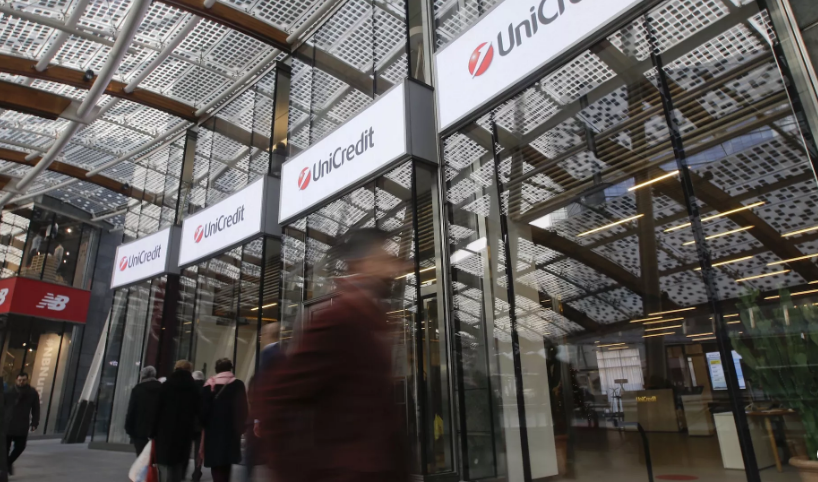
UniCredit, Italy’s largest bank, has warned that it will walk away from its proposed €10 billion acquisition of Banco BPM if the smaller bank proceeds with an increased bid to acquire Anima Holding SpA. The takeover battle, which has intensified in recent weeks, has led to a public war of words between UniCredit CEO Andrea Orcel and Banco BPM CEO Giuseppe Castagna.
UniCredit’s Countermove
UniCredit originally made its €10 billion takeover offer for Banco BPM in November 2024, shortly after Banco BPM made a €1 billion bid to acquire Anima Holding, an asset management firm. Banco BPM sought to boost its asset management fee income as interest rates declined.
However, UniCredit’s bid has complicated Banco BPM’s ability to finalize its offer for Anima, as Italian regulations prevent a bank that is the target of a takeover from pursuing its own acquisitions without shareholder approval.
Banco BPM’s shareholders are set to vote on February 28 to decide whether to increase their offer for Anima from €6.2 per share to €7 per share. If successful, Banco BPM’s market valuation would rise above €13 billion, exceeding UniCredit’s acquisition offer.
Orcel has made it clear that UniCredit will not overpay for Banco BPM and has hinted that he may withdraw the takeover offer altogether if Banco BPM’s bid for Anima moves forward.
Regulatory Hurdles and Financial Risks
To proceed with the Anima acquisition, Banco BPM would need to secure regulatory approval for favorable capital treatment, known as the Danish Compromise. However, this would require a lengthy approval process from the European Central Bank (ECB).
UniCredit has argued that if Banco BPM’s shareholders approve the increased bid for Anima, the bank’s CET1 capital ratio could decline by approximately 268 basis points, adding significant financial strain.
In a strongly worded statement, UniCredit said:
“In case the Offer were 100% successful and the Danish Compromise not granted, BPM’s CET1 ratio would decline by approximately 268bps, adding to the financial burden of an increased consideration.”
Escalating Tensions Between Bank CEOs
Banco BPM’s CEO Giuseppe Castagna has fired back at UniCredit’s claims, calling them “very dangerous” and “fake news.”
In an interview, Castagna accused Orcel of trying to manipulate Banco BPM’s stock price and influence the shareholder vote. He stated:
“The allegations that we are not going to get the Danish Compromise is completely fake news. The guy is trying to play a game. He wants to depress our stock in favor of his own stock. We will respond legally to these kinds of allegations.”
If Banco BPM secures shareholder approval for its increased bid, two major Anima investors—Poste Italiane and private equity fund FSI—have already indicated they will sell their stakes to Banco BPM, according to Reuters.
UniCredit’s Final Warning
Despite the mounting tensions, UniCredit emphasized that it has not yet made a final decision on whether to withdraw its offer.
In its statement, the bank said:
“Notice of the above is given to the public to ensure that BPM shareholders can make their own decisions in full awareness of the risks and uncertainties underlying the proposals that have been made to them and the possible consequences of their decisions.”
With the shareholder vote just weeks away, the fate of both Banco BPM’s bid for Anima and UniCredit’s takeover offer remains uncertain.





Consumer prices in the eurozone jumped at their fastest monthly pace since October 2022, driven largely by the energy shock from the Iran conflict. Economists are divided over whether the European Central Bank will respond with an interest-rate hike.
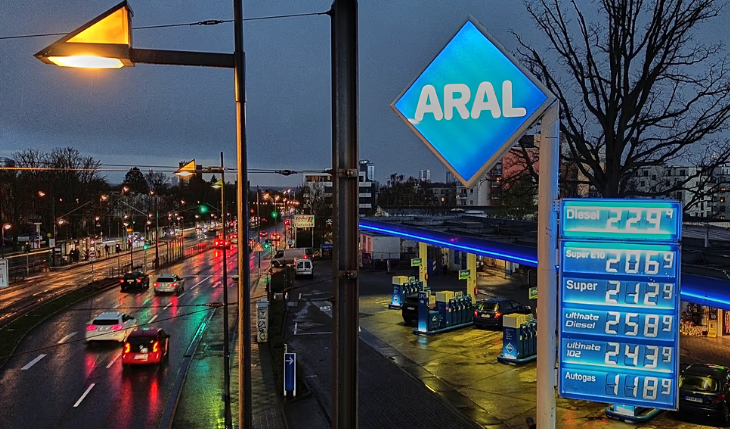
Eurostat’s flash estimate on Tuesday showed annual inflation rose to 2.5 percent in March, up from 1.9 percent in February. Month-on-month, prices increased 1.2 percent, marking the steepest monthly rise since October 2022. Energy prices were the main driver, climbing 4.9 percent year-on-year after falling 3.1 percent in February. Brent crude has surpassed $110 per barrel, while European natural gas prices have surged roughly 80 percent year-to-date.
Core inflation, which excludes energy, food, alcohol, and tobacco, actually eased slightly to 2.3 percent from 2.4 percent. Services inflation fell to 3.2 percent, and non-energy industrial goods dropped to 0.5 percent, suggesting the spike is primarily a first-round energy shock.
The impact of rising prices varies across the bloc. Croatia recorded the highest annual inflation at 4.7 percent, followed by Lithuania at 4.5 percent, Ireland at 3.6 percent, and Spain and Greece at 3.3 percent. Germany saw a rise to 2.8 percent, up 0.8 points from February. Italy and France reported 1.5 percent and 1.9 percent, respectively. Analysts say these differences reflect how energy costs reach consumers, with Italy relying heavily on natural gas, Spain’s short-term tariffs passing wholesale spikes quickly, and France’s nuclear generation and regulated electricity contracts limiting spillover.
The inflation rebound has reignited debate over the ECB’s next move. President Christine Lagarde acknowledged that even a temporary overshoot could warrant action but stressed that the bank would be guided by data, not forecasts.
Market expectations indicate a 36 percent chance of an April rate hike, with June priced at a 76 percent probability for a 25-basis-point increase. Analysts at ABN AMRO expect two “insurance hikes” this year to anchor inflation expectations, while Bank of America sees rate hikes more likely later in the summer, depending on the persistence of the energy shock.
Economists note that households and firms remember the 2022 inflation surge vividly, which may influence consumer behavior and slow spending. BNP Paribas predicts core inflation will remain stable through the second quarter, assuming Brent stays above $100 per barrel and the Strait of Hormuz remains closed without major infrastructure damage.
The ECB faces a difficult balance: act now to prevent inflation expectations from rising or wait for evidence that the energy shock is feeding into the broader economy. March’s data shows that while headline inflation has surged, core pressures have not yet intensified, giving policymakers some room for caution.
If oil prices remain elevated and energy costs continue to feed into the broader economy, the ECB may have little choice but to tighten policy in the coming months, even as it weighs the potential impact on growth.

Global financial markets showed signs of strain on Monday as oil prices surged sharply amid the ongoing conflict involving Iran, raising concerns about inflation and economic stability.
Benchmark Brent crude climbed above $116 a barrel in early trading, marking a rise of more than 50 percent since the conflict began on 28 February, when prices were just over $70. The increase reflects growing fears over supply disruptions, particularly around the Strait of Hormuz, a vital corridor for global oil shipments.
European stock markets opened lower but showed mixed performance by the afternoon. DAX in Germany was slightly down, while the FTSE 100 in United Kingdom recovered earlier losses to trade higher. France’s CAC 40 also edged into positive territory.
The uncertain mood followed declines across Asia, where major indices dropped amid worries over rising energy costs and the possibility of further escalation. Japan’s Nikkei 225 fell sharply, while markets in South Korea, Australia, and Hong Kong also posted losses.
Analysts say the duration of the conflict is becoming a key concern for investors. Richard Hunter of Interactive Investor said that reports of growing US troop deployments in the region have heightened fears of a possible ground operation, despite conflicting signals from Washington and Tehran.
Losses on Wall Street have added to the unease. US equities recorded a fifth consecutive weekly decline, with the S&P 500 and Nasdaq 100 both entering correction territory after falling more than 10 percent from recent peaks. The Dow Jones Industrial Average also posted declines, though to a lesser extent.
The surge in oil prices has been linked to geopolitical developments, including comments by Donald Trump about the possibility of US forces targeting Iran’s Kharg Island, a major oil export terminal. The remarks have fueled speculation about further military escalation and its potential impact on global energy supplies.
Rising crude prices are already feeding into broader economic concerns. Analysts warn that sustained high energy costs could push inflation higher worldwide, complicating efforts by central banks to stabilize growth.
In response to the mounting risks, finance and energy officials from the G7 are scheduled to hold an emergency meeting to assess the situation and coordinate potential responses. It marks the fourth such high-level discussion since the conflict began.
Investors remain cautious as markets attempt to gauge the trajectory of the conflict and its economic fallout. The combination of volatile energy prices, geopolitical uncertainty, and weakening equity markets is expected to keep sentiment fragile in the days ahead.

At Least Five Explosions Hit Dubai in Iranian Missile and Drone Strike

Eurozone Inflation Surges on Energy Shock, ECB Faces Tough Decisions

E-Cigarettes Found More Effective Than Patches and Gum for Quitting Smoking, Study Shows

Economic Anxiety Rises as Iran Conflict Impacts Mental Health, Experts Say

Working From Home Linked to Higher Birth Rates, Study Finds Across 38 Countries

Oil Surge and War Fears Weigh on Global Markets as Investors Brace for Prolonged Conflict

TotalEnergies Expands Oil Trading Amid Middle East Supply Disruptions

Experts Warn Digital Markets Act May Undermine Europe’s Tech Competitiveness

Netanyahu Orders Israeli Army to Crack Down on West Bank Settler Violence

Two Unidentified Drones Crash in Southern Finland, Authorities Investigate

Meta Acquires Tilda Swinton VR Doc ‘Impulse: Playing With Reality’

Saudi Arabia’s Model for Sustainable Aviation Practices

Recent Developments in Small Business Taxes

Effective Drain Cleaning: A Key to a Healthy Plumbing System

Who was Ebrahim Raisi and his status in Iranian Politics?

Carrectly: Revolutionizing Car Care in Chicago

Keely Hodgkinson Wins Britain’s First Athletics Gold at Paris Olympics in 800m

Saudi Arabia: Foreign Direct Investment Rises by 5.6% in Q1

Chinese Hackers Infiltrate Major U.S. Telecom Firms in Possible National Security Breach

Nobel Laureate Muhammad Yunus Proposed as Head of Bangladesh’s Interim Government Following Hasina’s Resignation

Sony WF-10XM4: Headphones Are Our Absolute Favorite

10 Places You Can’t Miss If It’s Your First Time in European

New Census Data Will Shake Up Alabama Politics

16 Top of Our Favorite Outdoor Clothing Brands

Fashionable Summer Accessories to Dress Up Your Travel Look

How Sleeping Less than 7 Hours a Night Can Lead to Weight Gain
-
 Entertainment2 years ago
Meta Acquires Tilda Swinton VR Doc ‘Impulse: Playing With Reality’
-
 Business2 years ago
Saudi Arabia’s Model for Sustainable Aviation Practices
-
 Business2 years ago
Recent Developments in Small Business Taxes
-
 Home Improvement1 year ago
Effective Drain Cleaning: A Key to a Healthy Plumbing System
-
 Politics2 years ago
Who was Ebrahim Raisi and his status in Iranian Politics?
-
 Business2 years ago
Carrectly: Revolutionizing Car Care in Chicago
-
 Sports2 years ago
Keely Hodgkinson Wins Britain’s First Athletics Gold at Paris Olympics in 800m
-
 Business2 years ago
Saudi Arabia: Foreign Direct Investment Rises by 5.6% in Q1