
Business
SpaceX Prepares for Potential Record-Breaking IPO as Filing Looms


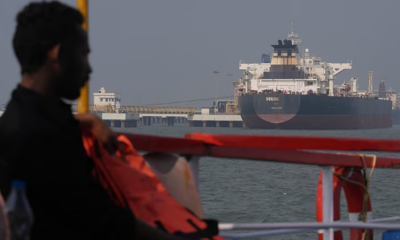


European governments are closely monitoring energy security as tensions in the Middle East raise concerns about supply disruptions and rising fuel prices. The possibility of joint US-Israeli strikes on Iran, and potential retaliation targeting Gulf energy routes, has brought renewed focus on how resilient Europe’s energy mix is to external shocks.
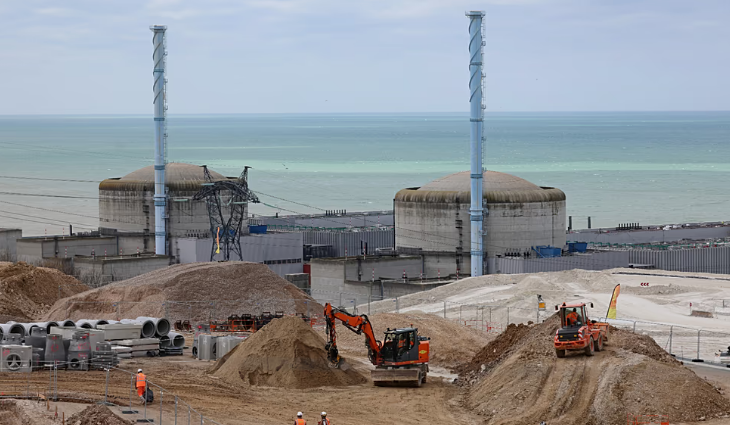
Nuclear power remains a significant component, accounting for around 12% of the European Union’s overall energy mix. Despite recent increases in output, long-term trends show a decline in nuclear production across the bloc. Data from Eurostat indicates that nuclear generation fell by 20% between 2014 and 2024, and by 30% compared with 2004 levels.
In 2024, 12 EU countries produced nuclear energy, generating a combined 649,524 gigawatt-hours of electricity. This marked a 4.8% increase from 2023 and the second consecutive year of growth following a drop in 2022. However, analysts say these gains do not signal a sustained recovery.
The EU’s broader energy mix remains dominated by fossil fuels. Crude oil and petroleum products account for 38%, followed by natural gas at 21% and renewable energy at 20%. Nuclear energy contributes 12%, while solid fuels make up the remaining 10%.
Energy profiles vary widely across member states. France leads by a wide margin, with nuclear energy accounting for 40.3% of its total energy mix. It is followed by Slovakia at 29.7%, Sweden at 25.6%, and Bulgaria at 23.7%. Other countries such as Finland and Slovenia also maintain significant nuclear shares.
When it comes to electricity production, nuclear power plays an even larger role. Across the EU, it accounts for about 23.4% of electricity generation. France and Slovakia rely heavily on nuclear energy for electricity, with shares of 69% and 66.4% respectively. Several other countries, including Czechia, Finland, Hungary, Slovenia, and Bulgaria, generate around 40% of their electricity from nuclear sources.
Not all countries are following this path. Germany has phased out nuclear power entirely, with 2023 marking its final year of production. In contrast, countries like Belgium, Sweden, and Switzerland continue to rely on nuclear energy above the EU average, while others such as the Netherlands maintain only a minimal share.
The European Commission has maintained a neutral stance on energy sources, leaving decisions to individual member states. However, the current geopolitical climate has underscored the importance of diversification. Countries with stronger investments in nuclear and renewable energy are seen as better positioned to absorb shocks, while those heavily dependent on imported natural gas remain more vulnerable.
With the EU still importing 57% of its energy needs, according to the European Commission, the balance between domestic production and external reliance remains a critical issue as global uncertainties persist.
Washington will refund a French energy giant to exit US offshore wind plans, fueling criticism from environmental groups. The Trump administration has agreed to pay $1 billion (€860 million) to TotalEnergies SE to abandon two offshore wind leases off the coasts of North Carolina and New York. The French company will instead redirect the funds toward fossil fuel projects, according to a press statement from TotalEnergies.
“Considering that the development of offshore wind projects is not in the country’s interest, we have decided to renounce offshore wind development in the United States, in exchange for the reimbursement of the lease fees,” said Patrick Pouyanné, chairman and chief executive officer at TotalEnergies. He added that the refunded lease fees will finance a liquefied natural gas plant in Texas and support the company’s oil and gas activities, describing it as a “more efficient use of capital” in the US.
The Interior Department confirmed that after these investments, TotalEnergies will be reimbursed up to the amount initially paid for the offshore wind leases. The company acquired its Carolina Long Bay lease in 2022 for roughly $133 million (€115 million), aiming to generate more than 1 gigawatt of clean energy, enough to power about 300,000 homes. Its New York and New Jersey lease, also purchased in 2022 for $795 million (€685 million), was designed as a larger project capable of producing 3 gigawatts to supply nearly one million homes. TotalEnergies has significant experience in offshore wind projects in Europe and Asia.
The Trump administration has intensified efforts against offshore wind construction. Last year, it halted five major projects, including Denmark’s Ørsted development, citing national security concerns. Developers and states challenged the orders in court, and federal judges allowed all five projects to resume, ruling that the government had not demonstrated an immediate risk. Interior Secretary Doug Burgum described the current deal as “an innovative agreement” that prevents “ideological subsidies that benefited only the unreliable and costly offshore wind industry.” He praised TotalEnergies for committing to projects that deliver “dependable, affordable power” to US households.
Environmental groups, however, denounced the arrangement as a “billion-dollar bribe” to block clean energy. Lena Moffitt, executive director of Evergreen Action, said, “After losing again and again in court on his illegal stop-work orders, Trump has found another way to strangle offshore wind: pay them to walk away.” Ted Kelly, clean energy director at the Environmental Defense Fund, called it “an outrageous misuse of taxpayer dollars to prevent Americans from having clean, affordable power exactly when they need it most.”
East Coast states continue to invest in offshore wind to expand the supply of affordable electricity, even as natural gas prices rise. Critics warn the TotalEnergies deal could undermine these efforts at a critical moment for the transition to renewable energy.
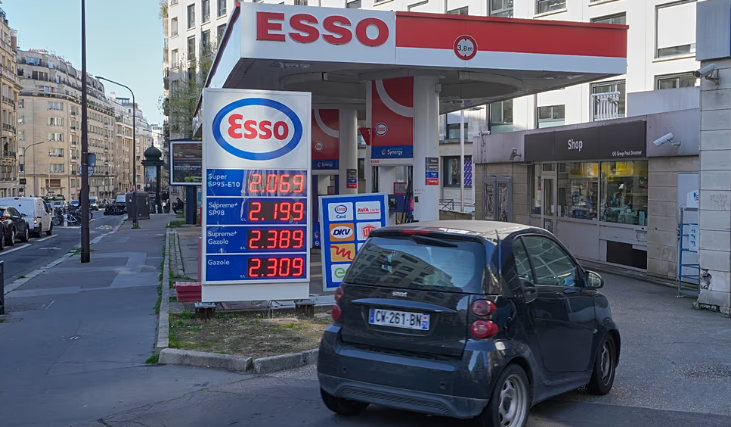
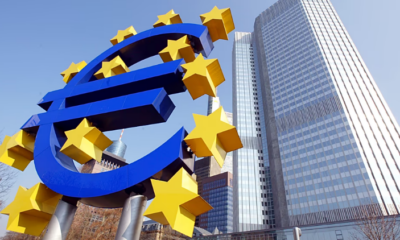
The Iran conflict has handed Europe its most punishing economic combination in years — stagflation. With input costs surging, output stalling and confidence collapsing, the European Central Bank’s window of stability appears to have closed.
The war in Iran, along with the surge in oil prices it has triggered, is already taking a toll on eurozone business activity, supply chains and corporate confidence. Flash Purchasing Managers’ Index (PMI) surveys from S&P Global released Tuesday showed eurozone growth slowed in March as energy costs hit their highest level in more than three years.
The headline eurozone composite PMI fell to 50.5, down from 51.9 in February and below the 51.0 consensus. While the number still indicates minimal growth, economists are concerned about the concurrent spike in input costs. Rising energy prices, fuel expenses and maritime freight disruptions linked to the conflict in the Middle East pushed inflation among manufacturers and service providers to its fastest pace since February 2023.
Supplier delivery times lengthened to the worst level since August 2022, as companies struggled to secure essential inputs. “The flash Eurozone PMI is ringing stagflation alarm bells as the war in the Middle East drives prices sharply higher while stifling growth,” said Chris Williamson, chief business economist at S&P Global Market Intelligence. He added that the drop in future output expectations was the largest since Russia’s invasion of Ukraine in 2022.
The slowdown is particularly pronounced in the services sector, where new orders declined for the first time in eight months. Manufacturing has shown modest resilience as firms frontloaded purchases to mitigate potential disruptions. Inventories fell as businesses tried to buffer against further supply shocks.
Germany remains in expansion territory, with its composite PMI at 51.9, supported by manufacturing, which reached a 45-month high. Analysts say this surge is largely due to companies stockpiling materials to hedge against disruptions rather than genuine demand growth. German services activity weakened, reflecting rising costs and falling new business.
France presents a bleaker picture. The flash France Composite PMI dropped to 48.3, indicating contraction. Both manufacturing and services activity fell, with new orders declining at the fastest pace in 15 months. Input costs in France surged to the highest since November 2023, but limited pricing power prevented companies from passing costs to customers, squeezing margins.
The PMI data highlight a growing dilemma for the ECB. Growth across the eurozone is approaching stagnation while inflation accelerates due to supply-side shocks rather than demand. Policymakers face the risk of stagflation if energy prices remain high and supply-chain disruptions continue. The trajectory of the Iran conflict and its effect on global energy markets will largely determine the eurozone’s economic outlook in the months ahead.

Vivid Dreams May Make Sleep Feel Deeper, Study Suggests

SpaceX Prepares for Potential Record-Breaking IPO as Filing Looms

Europe Weighs Energy Risks as Nuclear Power Plays Key but Declining Role

Europe Struggles to Meet Tuberculosis Targets Amid Rising Drug Resistance

US to Pay $1 Billion to TotalEnergies to Exit Offshore Wind Projects, Sparking Criticism

Eurozone Faces Sharp Stagflation Risk as Iran Conflict Drives Costs Higher

European Journalist Suspended for Using AI-Generated Fake Quotes

London Ambulances Targeted in Suspected Antisemitic Arson Attack

Kent Meningitis B Outbreak Cases Drop to 29, UKHSA Confirms

Airbrush Tanning Solution Sun Labs for Smooth, Even Bronze Color

Meta Acquires Tilda Swinton VR Doc ‘Impulse: Playing With Reality’

Saudi Arabia’s Model for Sustainable Aviation Practices

Recent Developments in Small Business Taxes

Effective Drain Cleaning: A Key to a Healthy Plumbing System

Who was Ebrahim Raisi and his status in Iranian Politics?

Carrectly: Revolutionizing Car Care in Chicago

Keely Hodgkinson Wins Britain’s First Athletics Gold at Paris Olympics in 800m

Saudi Arabia: Foreign Direct Investment Rises by 5.6% in Q1

Chinese Hackers Infiltrate Major U.S. Telecom Firms in Possible National Security Breach

Nobel Laureate Muhammad Yunus Proposed as Head of Bangladesh’s Interim Government Following Hasina’s Resignation

Sony WF-10XM4: Headphones Are Our Absolute Favorite

10 Places You Can’t Miss If It’s Your First Time in European

New Census Data Will Shake Up Alabama Politics

16 Top of Our Favorite Outdoor Clothing Brands

Fashionable Summer Accessories to Dress Up Your Travel Look

How Sleeping Less than 7 Hours a Night Can Lead to Weight Gain
-
 Entertainment2 years ago
Meta Acquires Tilda Swinton VR Doc ‘Impulse: Playing With Reality’
-
 Business2 years ago
Saudi Arabia’s Model for Sustainable Aviation Practices
-
 Business2 years ago
Recent Developments in Small Business Taxes
-
 Home Improvement1 year ago
Effective Drain Cleaning: A Key to a Healthy Plumbing System
-
 Politics2 years ago
Who was Ebrahim Raisi and his status in Iranian Politics?
-
 Business2 years ago
Carrectly: Revolutionizing Car Care in Chicago
-
 Sports2 years ago
Keely Hodgkinson Wins Britain’s First Athletics Gold at Paris Olympics in 800m
-
 Business2 years ago
Saudi Arabia: Foreign Direct Investment Rises by 5.6% in Q1
You must be logged in to post a comment Login