Connect with us

Business

Oil Prices Surge as Iran War Raises Fears Over Global Energy Supplies

Published

on

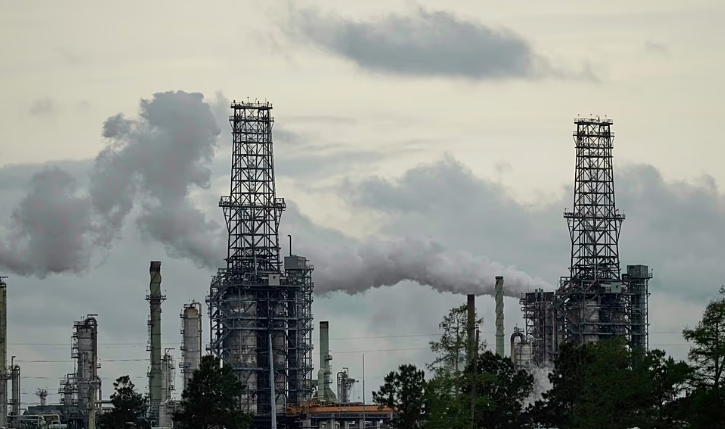
Global oil prices jumped sharply on Monday as investors assessed the growing impact of the war in Iran on energy production and shipping routes across the Middle East.

Crude prices rose above $114 per barrel for the first time since 2022 after trading resumed on the Chicago Mercantile Exchange. The sharp increase reflects rising concerns that the conflict could disrupt key oil supply routes and reduce production in one of the world’s most important energy regions.

Brent crude, the international benchmark for oil prices, climbed past $114 a barrel during early trading. The price represented a rise of about 23 per cent compared with its closing level of $92.69 on Friday.

West Texas Intermediate crude, the main oil benchmark in the United States, also approached $114 per barrel. That marked an increase of roughly 25 per cent from its Friday close of $90.90.

The latest surge follows a week of steep gains. US crude prices rose by 36 per cent last week, while Brent crude climbed by about 28 per cent as the conflict entered its second week and expanded across the region.

Investors are closely watching developments in the Persian Gulf, where several countries play a central role in the global energy market. The war has already drawn attention to locations critical for the production and transport of oil and natural gas.

Tensions intensified early Monday after Bahrain accused Iran of striking a desalination facility that supplies drinking water. At the same time, fires were reported at oil depots in Tehran after overnight Israeli strikes.

See also  Global Markets in Turmoil as U.S. Tariffs Trigger Trade War Fears

Market anxiety has also been fuelled by risks to shipping routes in the Strait of Hormuz, one of the most important energy corridors in the world. According to energy research firm Rystad Energy, roughly 15 million barrels of crude oil pass through the strait each day. That volume represents about 20 per cent of the world’s total oil supply.

The narrow waterway lies between Iran and Oman and serves as a key route for oil and gas shipments from major producers including Saudi Arabia, Kuwait, Iraq, Qatar, Bahrain and the United Arab Emirates.

The possibility of Iranian missile or drone attacks has sharply reduced tanker traffic through the strait. Shipping companies have reportedly become cautious about sending vessels through the area due to security risks.

The rapid rise in prices has sparked discussions among leading economies about possible steps to stabilise energy markets. The Financial Times reported on Monday that finance ministers from the Group of Seven nations plan to discuss the potential release of oil from emergency reserves.

Any coordinated action would likely involve the International Energy Agency, which oversees strategic petroleum reserves held by several major industrialised countries. These reserves can be released during supply disruptions in order to ease pressure on global markets.

The International Energy Agency has not yet commented publicly on the possibility of a coordinated release. Observers say decisions taken in the coming days could influence oil markets as the conflict continues to unfold.

Business

Iran’s Strikes Across Gulf and Azerbaijan Disrupt Global Energy Markets

Published

on

Iran’s apparent erratic strikes all over the Gulf and now Azerbaijan, together with its stranglehold of the vital Strait of Hormuz, have resulted in a growing strain on the world’s global energy supplies with incalculable consequences ahead. During the US-Israeli military buildup preceding the war that erupted one week ago, Iran repeatedly warned it would retaliate if attacked, promising widespread disruption.

Since the conflict began last Saturday, Tehran has expanded its aerial campaign across the Gulf and, on Thursday, extended attacks to Azerbaijan. While Iranian officials claim the strikes target only US and Israeli interests, missiles and drones have also hit the Gulf’s energy infrastructure, essential to global supply chains, and disrupted shipping lanes in the Strait of Hormuz, where roughly 20% of the world’s oil passes. Lloyd’s List reported that more than 200 ships remain stranded due to restricted movement in the strait.

Qatar halted liquefied natural gas (LNG) production at its top facilities in Mesaieed and Ras Laffan Industrial City after drone attacks, sending shockwaves through global energy markets. Qatar’s LNG supplies account for around 20% of the world’s total and play a key role in balancing demand across Asia and Europe. Iranian strikes also forced Saudi Arabia’s largest oil refinery to suspend operations, while Iraqi oil production and Israeli gas fields suffered disruptions. Dubai’s ports, among the world’s busiest, were reportedly impacted as well.

The UK Foreign Office said Friday that while the tempo of Iranian missile and drone strikes has slowed since the war’s early days, their focus is increasingly on economic and energy targets. In an interview with the Financial Times, Qatar’s Energy Minister Saad al-Kaabi warned the conflict “could bring down the economies of the world,” adding that continued hostilities would push energy prices higher and trigger shortages affecting industries worldwide.

See also  Amazon Expands Job Creation in Europe's High-Unemployment Regions, Invests Billions in Cloud and Infrastructure

Experts highlight the potential for a wider economic impact if the Strait of Hormuz remains blocked. Dr. Yousef Alshammari, president of the London College of Energy Economics, told Euronews that such a blockade “could trigger a global recession if it continues,” citing potential political pressure from China, a major consumer of Iranian oil.

Former US ambassador to Azerbaijan Matthew Bryza criticized Iran’s attack on Azerbaijan as lacking strategic logic, noting that Tehran’s actions “don’t make much sense in terms of a coherent, rational military plan.” Bryza suggested that some strikes may reflect decisions by lower-level commanders following directives from Iran’s supreme leader to delegate military authority if senior officials were killed, rather than a coordinated strategy.

The ongoing strikes have caused oil and gas prices to surge, with European gas already up more than 50%, and global markets remain on high alert. Analysts warn that disruptions could escalate further, amplifying the economic toll and keeping international energy markets under pressure as the conflict continues.

Continue Reading

Business

Prolonged Iran Conflict Could Weaken Euro and Trigger Recession, Economists Warn

Published

on

Economists are warning that the ongoing war in Iran could have severe consequences for the euro and the European economy if the conflict continues beyond the “four weeks” projected by former US President Donald Trump. The hostilities, which began at the end of February, have already triggered an energy price shock, affecting oil, petrol, diesel, and gas. Rising energy costs are hitting consumers and energy-intensive industries such as chemicals and steel, putting additional pressure on the German economy, which was already facing modest growth forecasts.

The euro, currently trading around $1.16, is under particular pressure. Economist Daniel Stelter warned that an extended conflict would further weaken a euro already affected by low growth, high debt, and political uncertainty. “Capital would flow into dollar investments considered safe,” he said. Carsten Brzeski, chief economist at ING Bank, added that if the conflict disrupts oil supplies through the Strait of Hormuz for several weeks, oil prices could exceed $100 per barrel, pushing the euro down to $1.10–$1.12 per dollar. This would represent a 5–8 percent drop, the lowest levels since the 2022–23 energy crisis triggered by the Ukraine war.

Such a decline would make holidays in the US more expensive for Europeans and increase the cost of imports such as oil, electronics, and raw materials. Stelter warned of even more severe scenarios, suggesting that the euro could temporarily fall below parity with the dollar, reaching $0.90–$0.95, if the war leads to prolonged regional instability.

Germany could face particularly serious economic consequences. Stelter said higher energy prices act like an additional tax, reducing consumption and investment. In a prolonged blockade scenario, Germany could fall into a deep recession, with the wider eurozone at risk of at least a technical recession. Extended disruptions would also strain bond markets and interest rates, potentially forcing the European Central Bank (ECB) to intervene more aggressively to prevent a debt crisis.

See also  World Economic Forum 2025: Global Leaders Gather in Davos to Shape the Future

The war’s impact on global energy supplies could trigger an “energy black swan,” causing sudden shortages and price spikes that ripple through the global economy. German exports could collapse despite a weaker euro if higher energy prices reduce demand in major markets such as China, India, and the US.

The ECB faces a complex challenge: if the conflict is short-lived, it could lower interest rates to support growth. If the war drags on, inflationary pressures from energy prices would limit the bank’s ability to cut rates, leaving the euro under pressure and economic momentum stalled. Stelter said this scenario could lead to stagflation, with rising inflation and falling growth simultaneously.

A rapid end to hostilities within four to five weeks and minimal damage to critical energy infrastructure in Saudi Arabia and Qatar could help stabilize the euro. However, resistance from Iran’s leadership raises the risk of a prolonged conflict with serious economic implications for Europe.

Continue Reading

Business

European Gas Prices Jump as Middle East Tensions Rattle LNG Markets

Published

on

Gas prices in Europe surged on Tuesday as escalating tensions in the Middle East disrupted global energy flows and raised fears of tighter liquefied natural gas supplies, increasing concerns about the region’s fragile energy recovery.

Europe’s benchmark Dutch TTF gas contract climbed above €60 per megawatt hour around 12:30 CET, a sharp rise from the low €30s recorded at the end of last week. The spike followed US and Israeli strikes on Iran, which unsettled global markets and renewed anxiety about potential supply disruptions.

“This has triggered immediate fears of reduced LNG availability to Europe, prompting a rush in spot markets and heightened risk premiums,” said Yousef M. Alshammari, president of the London College of Energy Economics.

Traders are closely watching LNG shipments from Qatar and maritime traffic through the Strait of Hormuz, a key chokepoint for global energy trade. Any disruption to flows through the strait could tighten supply and intensify competition for cargoes, particularly between Europe and Asian buyers.

Europe has reduced its reliance on Russian pipeline gas since Moscow’s invasion of Ukraine, replacing much of that supply with seaborne LNG. While this shift has improved diversification, it has also increased dependence on global shipping routes and spot market cargoes, both of which can become volatile during geopolitical crises.

Qatar accounts for an estimated 12 to 14 percent of Europe’s LNG imports, making developments in the Gulf region particularly significant. Analysts at Brussels-based think tank Bruegel said that even though Europe is less dependent on Gulf oil and LNG than major Asian economies, it remains exposed to global price swings.

See also  September Slump Looms Over European Stocks as History Points to Losses

Gas storage levels add to the concern. European Union storage facilities are around 30 percent full, lower than at the same point last year. Germany’s inventories stood at about 21.6 percent in late February, with France also reporting levels in the low 20s. Lower reserves could complicate efforts to rebuild stocks ahead of next winter if high prices persist.

Alshammari warned that a prolonged period of elevated wholesale prices could eventually filter through to households and businesses. While many consumers are protected by fixed or regulated tariffs that adjust gradually, sustained prices above €50–60 per megawatt hour could push up electricity and heating bills in the coming months.

Energy-intensive industries such as chemicals, fertilisers, steel, glass and paper manufacturing are likely to face renewed cost pressures. Countries including Germany, Italy and the Netherlands could see competitiveness affected if prices remain high.

Lower-income households in Central and Eastern Europe, as well as parts of southern Europe, may also be vulnerable due to greater reliance on gas for heating and less energy-efficient housing. Governments may need to consider targeted measures if the current disruptions continue and market volatility persists.

Continue Reading

Trending