Connect with us

News

Two Unidentified Drones Crash in Southern Finland, Authorities Investigate

Published

on

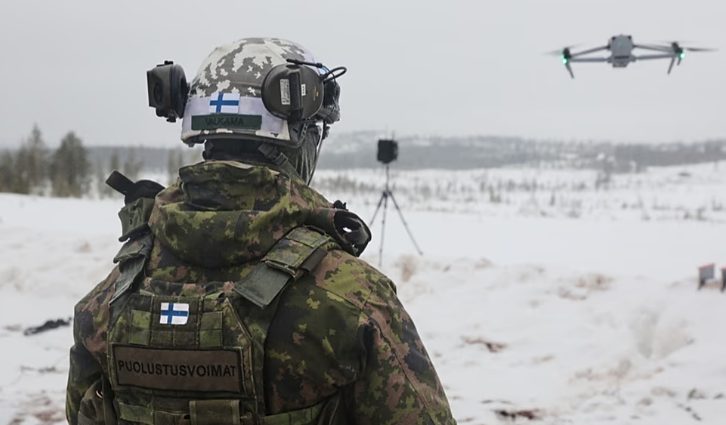
Two unidentified drones crashed near the southern city of Kouvola on Sunday in what Finland’s Defence Ministry described as a “suspected territorial violation.” Authorities are investigating the incident, which has raised concerns over airspace security in the region.

Finland’s Prime Minister Petteri Orpo suggested the drones were likely of Ukrainian origin. He told the Finnish state broadcaster Yle that Kyiv has recently carried out drone attacks on Russian territories along the more than 1,300-kilometre border with Finland. Orpo added that Russian signal jamming may have caused the Ukrainian drones to stray into Finnish airspace.

“Drones have strayed into Finland’s territory. We take this very seriously,” said Defence Minister Antti Hakkanen in a statement. He confirmed that security authorities had been dispatched to the crash sites to carry out a thorough investigation.

The Finnish Defence Ministry reported that several low-flying, slow-moving objects were observed in Finnish airspace over the sea area and southeastern Finland on Sunday morning. An F/A-18 Hornet fighter jet was sent up to identify the objects, according to the ministry.

One drone crashed north of Kouvola, while another fell east of the city. Police have cordoned off both sites to facilitate investigation and evidence collection. Hakkanen said the inquiry is ongoing and that further details would be released once the information has been verified.

Orpo emphasized that while it is likely the drones originated from Ukraine, the situation is being carefully examined before any formal announcement is made. The incident underscores the potential risks posed by stray drones crossing international borders, particularly in a region already experiencing heightened security sensitivities due to ongoing conflicts between Ukraine and Russia.

See also  German Chancellor Merz to Meet President Trump in Washington Amid Global Tensions

Finland shares a long border with Russia, and the country has maintained heightened vigilance in response to regional tensions. Officials are monitoring the situation closely to ensure airspace integrity and to prevent similar incidents in the future.

The crash of the drones has prompted local authorities to review airspace monitoring and response protocols. Law enforcement and defence personnel are coordinating to assess whether the drones caused any damage or posed a direct threat to civilians in the area.

As investigations continue, Finland’s government has reiterated its commitment to national security while maintaining open communication with international partners. The findings from the inquiry will help clarify the circumstances surrounding the drones’ presence and whether the incident was accidental or part of broader regional operations.

The situation remains fluid, with authorities continuing to collect evidence and analyze the drones to understand their origin, trajectory, and potential operational intent.

News

Strait of Hormuz Remains Closed as US-Iran Talks Stall

Published

on

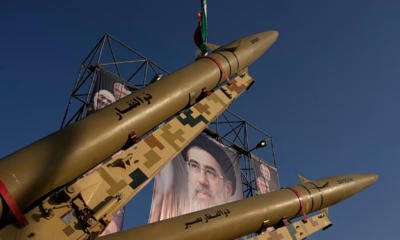
The Strait of Hormuz remained closed on Sunday as tensions between Iran and the United States persisted, with both sides signalling that a final agreement remains distant despite ongoing negotiations.

Iranian officials said the key shipping route would not reopen unless Washington lifts its naval blockade of Iranian ports, a central sticking point in the talks. The waterway, through which roughly a fifth of the world’s oil and liquefied natural gas typically passes, has become a focal point in the broader conflict.

Mohammad Bagher Ghalibaf, speaker of Iran’s parliament, said there had been some progress in discussions but warned that major differences remained. In a televised address, he noted that negotiations were still far from reaching a final stage, with several unresolved issues between the two sides.

The latest developments follow high-level talks hosted in Pakistan that failed to produce a breakthrough. Mediation efforts are continuing, though uncertainty surrounds the future of a two-week ceasefire that is due to expire later this week.

Donald Trump said discussions with Tehran were ongoing and described them as constructive, but cautioned Iran against using the strategic waterway as a bargaining tool. He maintained that the US blockade would stay in place until a broader agreement is secured.

Iran had briefly announced that the strait would reopen after a ceasefire linked to fighting in Lebanon, which had raised hopes in global markets and led to a drop in oil prices. However, Tehran reversed that decision shortly afterward, citing the continuation of US restrictions on its ports.

Iranian leaders have taken a firm stance on the issue. Mojtaba Khamenei said the country’s naval forces were prepared to respond to any escalation, while officials warned that vessels attempting to pass through the strait without approval could face consequences.

See also  Manhunt Underway After Stabbing Attack Outside Bielefeld Bar Leaves Several Injured

Shipping activity in the area has slowed sharply. A small number of tankers were reported to have crossed during the brief reopening, but most vessels have since avoided the route. Maritime security agencies have also reported several incidents, including gunfire directed at a tanker and damage to another vessel from an unidentified projectile.

The situation has drawn international concern. India summoned Iran’s ambassador following reports involving Indian-flagged ships, highlighting the broader risks to global trade and energy supplies.

As negotiations continue, the status of the Strait of Hormuz remains uncertain, with both sides holding firm on key demands and the risk of further disruption to international shipping still present.

Continue Reading

News

Merz Records Lowest Approval Among Global Leaders, Survey Finds

Published

on

German Chancellor Friedrich Merz has emerged as the least popular leader among 24 democratically elected heads of government, according to a new international survey by the Morning Consult.

The poll shows that just 19% of respondents in Germany approve of Merz’s performance, while 76% disapprove, placing him at the bottom of the rankings. The findings underline growing dissatisfaction with his leadership both domestically and in comparison with global counterparts.

Close behind him is French President Emmanuel Macron, who recorded an approval rating of 18% and a disapproval rate of 75%. Analysts say the figures reflect broader challenges facing European leaders amid economic pressures and political divisions.

Polling experts in Germany say Merz’s struggles are not new. According to Manfred Güllner, head of the Forsa polling institute, the chancellor has long faced skepticism among voters. He noted that reservations remain particularly strong among women, younger voters and residents of eastern Germany. Güllner added that Merz has failed to ease concerns since taking office, with public sentiment worsening instead of improving.

Hermann Binkert, who leads another polling firm, Insa, pointed to unfulfilled campaign promises and ongoing economic difficulties as key reasons behind the decline in support. He said many Germans feel the country is heading in the wrong direction, and dissatisfaction extends across both conservative and progressive political camps.

Elsewhere in the rankings, leaders such as Recep Tayyip Erdoğan and Donald Trump sit in the mid-range. Erdoğan received 36% approval and 50% disapproval, while Trump fared slightly better with 38% approval against 57% disapproval. Other leaders with similar ratings include Spain’s Pedro Sánchez and Italy’s Giorgia Meloni.

See also  Russia to Prioritize Military Spending in 2025 Amid Escalating Ukraine War

At the top of the list, Indian Prime Minister Narendra Modi leads with a 70% approval rating. He is followed by South Korea’s Lee Jae-myung at 63% and Czech Prime Minister Andrej Babiš at 55%.

The survey also suggests that dissatisfaction with Merz is not part of a broader pattern of distrust toward leadership in Germany. Previous chancellors, including Konrad Adenauer, Willy Brandt and Gerhard Schröder, all enjoyed significantly higher levels of public support during their time in office.

Even Merz’s predecessor, Olaf Scholz, maintained stronger approval ratings at his lowest point, with 28% backing his leadership.

The Morning Consult tracker is based on rolling seven-day averages of public opinion across multiple countries, offering a snapshot of how political leaders are viewed globally.

Continue Reading

News

France and Portugal Enact Landmark Treaty to Deepen Strategic Ties

Published

on

A new chapter in relations between France and Portugal began on Sunday as a wide-ranging friendship treaty between the two countries officially entered into force, marking a significant step toward closer cooperation across multiple sectors.

The Treaty of Friendship and Cooperation, signed in Porto in February 2025 by Emmanuel Macron and Portuguese Prime Minister Luís Montenegro, is designed to strengthen bilateral ties and reinforce collaboration within Europe.

French officials have described relations with Lisbon as “excellent,” highlighting the agreement as part of a broader effort to build a more self-reliant and competitive Europe. In a message to Portugal’s newly elected president, António José Seguro, Macron pledged to ensure the treaty delivers tangible benefits for both nations.

The agreement covers a wide range of areas, including defence, energy, trade and education. Both countries have committed to enhancing cooperation between their armed forces and defence industries, with a focus on safeguarding critical infrastructure and countering hybrid threats, particularly in cyberspace.

Energy cooperation also features prominently. France and Portugal aim to improve interconnections across the Iberian Peninsula, an issue that gained urgency following a major blackout affecting Spain and Portugal in April 2025. Officials say better integration with European energy networks will help prevent future disruptions and support long-term resilience.

On the economic front, the treaty promotes stronger support for small and medium-sized enterprises and encourages joint efforts in developing a sustainable “blue economy” linked to the Atlantic Ocean. Trade ties between the two countries are already robust, with France ranking as Portugal’s third-largest trading partner in 2025.

Analysts point to growing investment flows in both directions. Portuguese businesses are increasingly establishing a presence in France, while French firms continue to expand operations in Portugal, reflecting deepening economic integration.

See also  Norway Releases Russian-Crewed Ship After Investigation into Baltic Cable Damage

People-to-people links are another key pillar of the agreement. Around 1.7 million Portuguese nationals live in France, making them one of the largest foreign communities in the country. Meanwhile, tens of thousands of French citizens reside in Portugal.

The treaty also aims to boost educational cooperation, including teacher training and student exchanges. However, some observers have raised concerns about practical challenges, particularly a shortage of Portuguese language teachers in France, which could limit progress in this area.

Implementation of the agreement will be overseen through regular high-level meetings between the two governments, ensuring continued coordination and follow-up on agreed initiatives.

The pact forms part of a wider strategy by France to deepen bilateral ties across Europe, following similar agreements with Germany, Italy and Poland, as Paris seeks to strengthen partnerships within the European Union.

Continue Reading

Trending