Connect with us

News

Iran Agrees to Allow Humanitarian Shipments Through Hormuz as Nuclear Sites Hit

Published

on

Iran has agreed to allow the passage of humanitarian and agricultural aid through the Strait of Hormuz, marking a potential breakthrough in a conflict that has disrupted global trade for weeks.

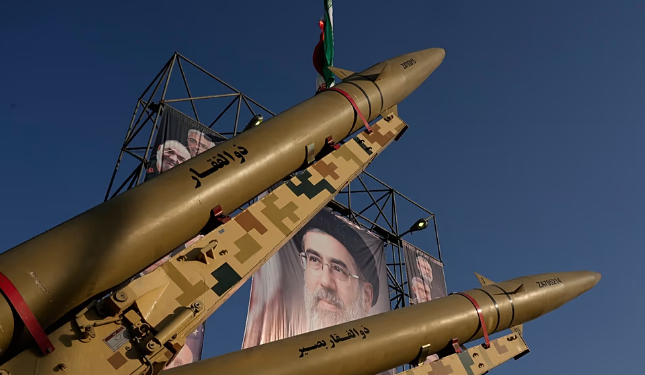
The announcement came just hours after Iranian state media said two nuclear facilities had come under attack in strikes claimed by Israel. Tehran has agreed to “facilitate and expedite” humanitarian aid through the Strait of Hormuz, the Iranian ambassador to the United Nations in Geneva said on Friday.

Ali Bahreini said the decision followed a request from the United Nations and would allow essential goods, including food supplies and fertilisers, to move through the critical shipping route. The move is seen as the first easing of restrictions at the chokepoint since the war began a month ago.

While much of the global focus has been on oil and gas disruptions, officials warn that blocked fertiliser shipments could have serious consequences for agriculture and food security worldwide. The UN recently established a task force to address the wider impact of the conflict on aid delivery.

The humanitarian development came amid renewed military escalation. Iranian authorities reported that two nuclear-related facilities were targeted in air strikes. Israel later confirmed carrying out the attacks, which hit the Shahid Khondab heavy water complex in Arak and a yellowcake production plant in Yazd province.

Iranian officials said there were no casualties and no risk of radiation contamination. However, the strikes prompted sharp warnings from Tehran. Foreign Minister Abbas Araghchi said the attacks undermined diplomatic efforts and warned that Iran would respond.

See also  Merz Records Lowest Approval Among Global Leaders, Survey Finds

The Islamic Revolutionary Guard Corps also signalled retaliation, with senior commanders issuing threats against interests linked to the United States and Israel. The developments add to concerns that the conflict could widen further.

International efforts to de-escalate the situation are ongoing. Diplomats from countries including Pakistan and Turkey are attempting to arrange direct talks between Washington and Tehran. At the same time, foreign ministers from the Group of Seven have called for an immediate halt to attacks on civilian infrastructure.

The International Atomic Energy Agency has urged restraint, warning of the risks associated with strikes on nuclear-related sites. Director General Rafael Grossi said there had been no increase in radiation levels but stressed the need to avoid any actions that could trigger a nuclear incident.

Meanwhile, the United States is increasing its military presence in the region. Additional troops, including Marines and airborne units, have been deployed as a precaution, though Secretary of State Marco Rubio said Washington believes it can meet its objectives without committing ground forces.

As the conflict enters its second month, the agreement to allow humanitarian shipments offers a rare sign of progress, even as military tensions remain high and diplomatic efforts continue.

News

Strait of Hormuz Remains Closed as US-Iran Talks Stall

Published

on

The Strait of Hormuz remained closed on Sunday as tensions between Iran and the United States persisted, with both sides signalling that a final agreement remains distant despite ongoing negotiations.

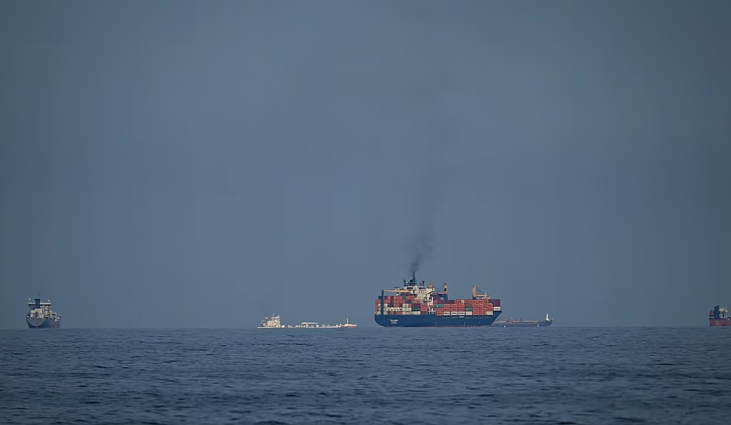
Iranian officials said the key shipping route would not reopen unless Washington lifts its naval blockade of Iranian ports, a central sticking point in the talks. The waterway, through which roughly a fifth of the world’s oil and liquefied natural gas typically passes, has become a focal point in the broader conflict.

Mohammad Bagher Ghalibaf, speaker of Iran’s parliament, said there had been some progress in discussions but warned that major differences remained. In a televised address, he noted that negotiations were still far from reaching a final stage, with several unresolved issues between the two sides.

The latest developments follow high-level talks hosted in Pakistan that failed to produce a breakthrough. Mediation efforts are continuing, though uncertainty surrounds the future of a two-week ceasefire that is due to expire later this week.

Donald Trump said discussions with Tehran were ongoing and described them as constructive, but cautioned Iran against using the strategic waterway as a bargaining tool. He maintained that the US blockade would stay in place until a broader agreement is secured.

Iran had briefly announced that the strait would reopen after a ceasefire linked to fighting in Lebanon, which had raised hopes in global markets and led to a drop in oil prices. However, Tehran reversed that decision shortly afterward, citing the continuation of US restrictions on its ports.

Iranian leaders have taken a firm stance on the issue. Mojtaba Khamenei said the country’s naval forces were prepared to respond to any escalation, while officials warned that vessels attempting to pass through the strait without approval could face consequences.

See also  Man Arrested in Paris for Lighting Cigarette from Tomb of the Unknown Soldier Flame

Shipping activity in the area has slowed sharply. A small number of tankers were reported to have crossed during the brief reopening, but most vessels have since avoided the route. Maritime security agencies have also reported several incidents, including gunfire directed at a tanker and damage to another vessel from an unidentified projectile.

The situation has drawn international concern. India summoned Iran’s ambassador following reports involving Indian-flagged ships, highlighting the broader risks to global trade and energy supplies.

As negotiations continue, the status of the Strait of Hormuz remains uncertain, with both sides holding firm on key demands and the risk of further disruption to international shipping still present.

Continue Reading

News

Merz Records Lowest Approval Among Global Leaders, Survey Finds

Published

on

German Chancellor Friedrich Merz has emerged as the least popular leader among 24 democratically elected heads of government, according to a new international survey by the Morning Consult.

The poll shows that just 19% of respondents in Germany approve of Merz’s performance, while 76% disapprove, placing him at the bottom of the rankings. The findings underline growing dissatisfaction with his leadership both domestically and in comparison with global counterparts.

Close behind him is French President Emmanuel Macron, who recorded an approval rating of 18% and a disapproval rate of 75%. Analysts say the figures reflect broader challenges facing European leaders amid economic pressures and political divisions.

Polling experts in Germany say Merz’s struggles are not new. According to Manfred Güllner, head of the Forsa polling institute, the chancellor has long faced skepticism among voters. He noted that reservations remain particularly strong among women, younger voters and residents of eastern Germany. Güllner added that Merz has failed to ease concerns since taking office, with public sentiment worsening instead of improving.

Hermann Binkert, who leads another polling firm, Insa, pointed to unfulfilled campaign promises and ongoing economic difficulties as key reasons behind the decline in support. He said many Germans feel the country is heading in the wrong direction, and dissatisfaction extends across both conservative and progressive political camps.

Elsewhere in the rankings, leaders such as Recep Tayyip Erdoğan and Donald Trump sit in the mid-range. Erdoğan received 36% approval and 50% disapproval, while Trump fared slightly better with 38% approval against 57% disapproval. Other leaders with similar ratings include Spain’s Pedro Sánchez and Italy’s Giorgia Meloni.

See also  Two Unidentified Drones Crash in Southern Finland, Authorities Investigate

At the top of the list, Indian Prime Minister Narendra Modi leads with a 70% approval rating. He is followed by South Korea’s Lee Jae-myung at 63% and Czech Prime Minister Andrej Babiš at 55%.

The survey also suggests that dissatisfaction with Merz is not part of a broader pattern of distrust toward leadership in Germany. Previous chancellors, including Konrad Adenauer, Willy Brandt and Gerhard Schröder, all enjoyed significantly higher levels of public support during their time in office.

Even Merz’s predecessor, Olaf Scholz, maintained stronger approval ratings at his lowest point, with 28% backing his leadership.

The Morning Consult tracker is based on rolling seven-day averages of public opinion across multiple countries, offering a snapshot of how political leaders are viewed globally.

Continue Reading

News

France and Portugal Enact Landmark Treaty to Deepen Strategic Ties

Published

on

A new chapter in relations between France and Portugal began on Sunday as a wide-ranging friendship treaty between the two countries officially entered into force, marking a significant step toward closer cooperation across multiple sectors.

The Treaty of Friendship and Cooperation, signed in Porto in February 2025 by Emmanuel Macron and Portuguese Prime Minister Luís Montenegro, is designed to strengthen bilateral ties and reinforce collaboration within Europe.

French officials have described relations with Lisbon as “excellent,” highlighting the agreement as part of a broader effort to build a more self-reliant and competitive Europe. In a message to Portugal’s newly elected president, António José Seguro, Macron pledged to ensure the treaty delivers tangible benefits for both nations.

The agreement covers a wide range of areas, including defence, energy, trade and education. Both countries have committed to enhancing cooperation between their armed forces and defence industries, with a focus on safeguarding critical infrastructure and countering hybrid threats, particularly in cyberspace.

Energy cooperation also features prominently. France and Portugal aim to improve interconnections across the Iberian Peninsula, an issue that gained urgency following a major blackout affecting Spain and Portugal in April 2025. Officials say better integration with European energy networks will help prevent future disruptions and support long-term resilience.

On the economic front, the treaty promotes stronger support for small and medium-sized enterprises and encourages joint efforts in developing a sustainable “blue economy” linked to the Atlantic Ocean. Trade ties between the two countries are already robust, with France ranking as Portugal’s third-largest trading partner in 2025.

Analysts point to growing investment flows in both directions. Portuguese businesses are increasingly establishing a presence in France, while French firms continue to expand operations in Portugal, reflecting deepening economic integration.

See also  Two Unidentified Drones Crash in Southern Finland, Authorities Investigate

People-to-people links are another key pillar of the agreement. Around 1.7 million Portuguese nationals live in France, making them one of the largest foreign communities in the country. Meanwhile, tens of thousands of French citizens reside in Portugal.

The treaty also aims to boost educational cooperation, including teacher training and student exchanges. However, some observers have raised concerns about practical challenges, particularly a shortage of Portuguese language teachers in France, which could limit progress in this area.

Implementation of the agreement will be overseen through regular high-level meetings between the two governments, ensuring continued coordination and follow-up on agreed initiatives.

The pact forms part of a wider strategy by France to deepen bilateral ties across Europe, following similar agreements with Germany, Italy and Poland, as Paris seeks to strengthen partnerships within the European Union.

Continue Reading

Trending