
Business
Germany Halts Silver Coin Releases as Rising Metal Prices Undercut Minting Costs


Germany has temporarily suspended the release of two commemorative silver coins after a sharp rise in global silver prices made their production uneconomical, the Federal Ministry of Finance announced this week. The decision, which interrupts a long-standing national tradition of minting collector coins, underscores how volatile commodity markets can disrupt even cultural mainstays.
The Bundesbank confirmed that two highly anticipated issues — a €25 coin featuring the Heilige Drei Könige (Holy Three Kings) and a €20 coin marking “125 Years of the Wuppertal Suspension Railway” — have been postponed indefinitely. The coins were originally scheduled for release in November and January, respectively.
The problem lies in the soaring cost of silver, which has surged around 65 percent since January. The increase means the silver used to mint each coin now costs more than the coin’s face value, making production financially unsustainable.
“While collector coins have always been a source of national pride, the current economics simply don’t add up,” a finance ministry spokesperson said.
Silver, though experiencing a milder rally than gold, has seen demand climb due to its dual role as both an investment and an industrial metal. It is widely used in technologies such as solar panels, semiconductors, and electric vehicles, where its high conductivity makes it indispensable. Geopolitical uncertainty has also pushed investors toward precious metals, driving up prices further.
Germany’s collector coins, while legal tender, are not intended for everyday use. Typically sold slightly above their nominal value, they generate revenue for the government through what economists call seigniorage — the difference between a coin’s face value and its production cost. When the cost of silver spikes, however, that profit quickly vanishes.
Despite the temporary pause, the Finance Ministry has reassured collectors that not all upcoming releases are affected. Future commemorative coins remain on the minting calendar, including a €25 coin honouring Elisabeth Schwarzhaupt, Germany’s first female cabinet minister, and another celebrating 150 years of the Richard Wagner Festival in Bayreuth.
Officials are now exploring options to adjust the metal composition of the coins to reduce losses while maintaining their high-quality finish.
Germany is among the few eurozone nations that still issues pure-silver legal tender coins, which often celebrate the country’s cultural and scientific achievements. Past releases have paid tribute to figures such as Johann Wolfgang von Goethe, Albert Einstein, and Pope Benedict XVI.
The ministry’s move highlights how fluctuations in global commodity prices can ripple through even the most traditional and symbolic aspects of national heritage — leaving a pause in a minting legacy that has spanned decades.





Asian stock markets fell sharply on Thursday as concerns over technology valuations and rising US inflation triggered a broad sell-off, with South Korean and Japanese shares recording heavy losses. European markets opened mixed, while US stock futures pointed to further weakness on Wall Street.
South Korea’s benchmark Kospi index dropped 7.7 per cent to 5,548.78, moving further below the record levels reached during the artificial intelligence investment boom. The index had crossed 9,000 in June as enthusiasm for AI-related companies drove markets higher.
Samsung Electronics shares fell 9.5 per cent, while SK Hynix, one of the world’s leading memory chipmakers, plunged 11.4 per cent.
Japan’s Nikkei 225 declined 4.8 per cent to 64,489.06. SoftBank Group, an investor in OpenAI, lost 9.4 per cent, while chip equipment maker Tokyo Electron dropped 7.3 per cent. Memory chipmaker Kioxia Holdings fell 11.2 per cent.
Other Asian markets also traded lower. Taiwan’s Taiex index dropped 3 per cent, while shares in Taiwan Semiconductor Manufacturing Co. (TSMC) fell 2.2 per cent ahead of the company’s earnings report. Hong Kong’s Hang Seng index declined 1 per cent to 24,071.25, and the Shanghai Composite fell 1.4 per cent to 3,713.22.
Australia’s S&P/ASX 200 edged down 0.1 per cent to 8,715.60.
The declines reflected growing caution among investors over the scale of spending on artificial intelligence and the high valuations of technology companies that have benefited from the rapid expansion of the sector.
Wall Street losses weigh on global markets
The Asian sell-off followed a weaker session on Wall Street on Wednesday, when technology shares led the market lower.
The S&P 500 fell 1.1 per cent, while the technology-heavy Nasdaq Composite dropped 1.9 per cent. The Dow Jones Industrial Average slipped 0.1 per cent.
Nvidia shares declined 3.2 per cent, Broadcom lost 3.1 per cent and Advanced Micro Devices fell 5.7 per cent, reflecting renewed pressure on companies closely linked to the AI boom.
Investor sentiment was also affected by US inflation data released on Wednesday. The consumer price index rose 3.7 per cent year-on-year in September, accelerating from 3.4 per cent in August and exceeding economists’ expectations.
The higher inflation reading raised concerns about the outlook for interest rates and the potential impact on corporate earnings and equity valuations.
European markets open unevenly
European shares showed a mixed response at the start of trading on Thursday.
Germany’s DAX fell 0.13 per cent to 25,272.07 points, while France’s CAC 40 rose 0.42 per cent to 7,905.62. The broader Stoxx 600 slipped 0.11 per cent to 637.02, while London’s FTSE 100 advanced 0.42 per cent to 10,769.21.
US equity futures also declined, signalling that investors remained cautious following the previous session’s losses.
The latest market moves highlight the sensitivity of global equities to inflation figures and changing expectations for technology sector growth. After months of strong gains driven by artificial intelligence, investors are increasingly scrutinising company valuations and the sustainability of spending on AI infrastructure.
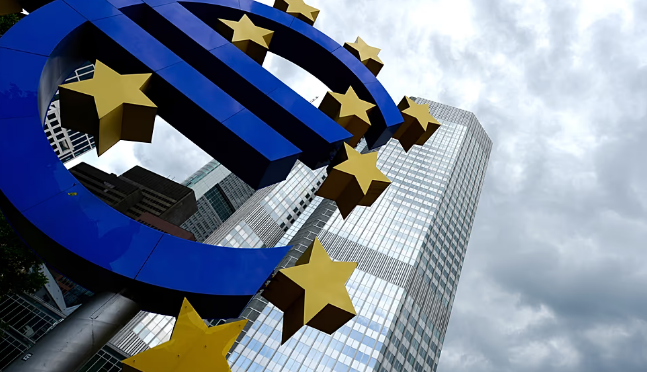
Eurozone governments are preparing to sell record amounts of government bonds in 2027 as rising borrowing costs and growing debt burdens put increasing pressure on public finances, with the International Monetary Fund (IMF) warning that interest rates on government debt have reached their highest levels in nearly two decades.
The changing cost of borrowing has reshaped the eurozone’s traditional divide between financially stronger northern countries and heavily indebted southern economies. Belgium now pays around 4.29 per cent to borrow for 10 years, compared with 4.35 per cent for Greece. Portugal’s borrowing costs are below Spain’s, while Ireland’s are close to those of the Netherlands. France, once considered part of the eurozone’s financial core, has faced higher borrowing costs than Italy.
The shift reflects contrasting fiscal trends over the past decade. Greece has reduced its debt burden and recorded a budget surplus of 1.7 per cent of gross domestic product (GDP) in 2025. Other former crisis-hit countries have improved tax collection, extended debt maturities and strengthened their public finances.
Belgium has moved in the opposite direction. Its budget deficit reached 5.2 per cent of GDP last year, while public debt exceeded 109 per cent of GDP in the first quarter of 2026.
Ken Egan, head of European sovereign credit at rating agency KBRA, told Euronews that improved fiscal management in southern European countries had helped reduce refinancing risks. In other parts of the eurozone, political uncertainty, rising structural spending and higher refinancing costs have weakened investor confidence.
France faces a record borrowing requirement
France plans to raise €340 billion through medium- and long-term bonds in 2027, according to its Treasury, up from €310 billion this year. The record amount will largely refinance existing debt as bonds issued during the pandemic and energy crisis mature.
The government is also facing a rising interest bill. France paid an average rate of 3.55 per cent on medium- and long-term bonds issued so far this year, compared with 3.14 per cent in 2025. Annual interest payments are forecast to increase from €62.6 billion in 2026 to €72.9 billion in 2027.
Germany is also increasing borrowing, planning to issue a record €512 billion in securities this year to finance defence and infrastructure spending. Italy and Spain are expected to refinance hundreds of billions of euros in debt.
Inflation and fiscal risks weigh on markets
The IMF has warned that government borrowing costs are rising as persistent inflation, higher energy prices and geopolitical tensions complicate economic policy. The European Central Bank’s deposit rate has also increased to 2.50 per cent this year as policymakers seek to contain inflation.
Germany’s 10-year bond yield rose from 2.64 per cent in February to 3.45 per cent, while France’s yield climbed more sharply and briefly reached 5 per cent in early October.
The IMF has highlighted another concern: nearly 30 per cent of public debt in the G7 economies and Spain matures within a year, exposing government budgets more quickly to changes in interest rates.
Higher borrowing costs can create a cycle in which governments spend more on interest, leaving less money for public services and investment. Investors may then demand even higher returns to finance additional debt.
Not yet another eurozone debt crisis
Despite the pressure, some analysts believe the current situation does not yet resemble the sovereign debt crisis of 2012.
Swiss bank Lombard Odier has argued that markets are pricing uncertainty rather than anticipating an immediate debt crisis. France’s interest payments remain slightly above 2 per cent of GDP, while its current account deficit is relatively small.
However, Clara Raposo, vice-governor of the Banco de Portugal, has warned that sovereign bond markets are becoming more sensitive to inflation, fiscal uncertainty and geopolitical developments.
The consequences could extend beyond government finances. Research involving German firms found that concerns about the debt positions of France, Italy and Spain could influence expectations for German inflation, particularly among businesses that distrust the European Central Bank.
As governments prepare for record borrowing in 2027, the challenge will be to finance existing obligations while restoring investor confidence and keeping public debt on a sustainable path.
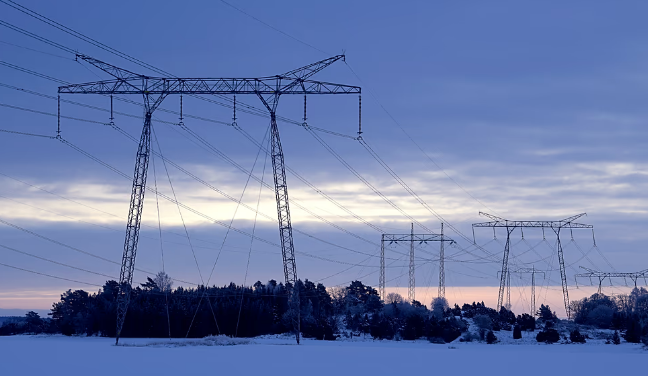
European households are facing higher energy costs ahead of winter as rising wholesale gas prices and disruptions linked to the Iran war put pressure on the market. However, household gas and electricity prices have increased more slowly than petrol and diesel prices, partly because fixed contracts and government support have delayed the impact on consumers.
European benchmark gas futures reached €87.20 per megawatt-hour on Tuesday, their highest level in nearly four years, compared with around €32 before the conflict escalated. Disruptions to shipping through the Strait of Hormuz have raised concerns about supplies, as the waterway normally carries around one-fifth of the world’s liquefied natural gas.
According to the EU Weekly Oil Bulletin, average diesel prices across the European Union increased by 35 per cent between February 23 and October 5, 2026, while petrol prices rose by 23 per cent.
Household energy prices recorded smaller increases. Data from the Household Energy Price Index, compiled by Energie-Control Austria, MEKH and VaasaETT, showed that residential gas prices, including taxes, rose by an average of 12 per cent across European Union capitals between February 2 and September 1. Electricity prices increased by 4.2 per cent over the same period.
Electricity prices vary widely across Europe
In early September, residential electricity prices ranged from 8.4 euro cents per kilowatt-hour in Kyiv to 41.3 cents in Brussels. The average across EU capitals was 27.2 cents.
Berlin recorded the second-highest price at 39.6 cents, followed by Dublin at 38.7 cents, Bern at 38.6 cents and London at 38.3 cents. Rome, Vienna and Prague also ranked among the more expensive capitals.
At the lower end, Budapest recorded 10.3 cents per kilowatt-hour, followed by Podgorica at 11.3 cents, Belgrade at 11.6 cents and Valletta at 12.3 cents.
Adjusting prices for purchasing power, which accounts for differences in living costs between countries, changed the rankings considerably. Bucharest became the most expensive capital for electricity, at 55.1 purchasing power standard units, while Oslo was the cheapest at 11.5.
Among the largest European economies, Rome was the most expensive in purchasing power terms, while Paris was the cheapest.
Stockholm has Europe’s highest household gas prices
Residential gas prices ranged from 1.5 euro cents per kilowatt-hour in Kyiv to 34.8 cents in Stockholm. Amsterdam followed at 21.2 cents, while the average across EU capitals was 11.9 cents.
Among the five largest European economies, Paris recorded the highest gas price at 15.7 cents per kilowatt-hour. Madrid and London were the cheapest, at 10.1 and 10.3 cents respectively.
After adjusting for purchasing power, Stockholm remained the most expensive city for gas, while Budapest ranked as the cheapest. Lisbon, Amsterdam, Rome and Sofia also appeared among the more expensive capitals under this measure.
Some cities record sharp increases
Electricity prices rose most sharply in Lisbon between February and September, increasing by 22 per cent. Amsterdam recorded a 17.3 per cent increase, followed by Madrid at 15.1 per cent and Rome at 14.9 per cent. Luxembourg City experienced the largest decline, at 15.3 per cent.
For gas, Tallinn recorded the biggest increase, with prices rising 59.2 per cent from 7.8 to 12.4 cents per kilowatt-hour. Prices also increased by more than 20 per cent in several capitals, including Brussels, Athens, Bern, London, Paris and Berlin.
Low storage raises winter concerns
Europe’s gas reserves are adding to concerns about the coming winter. Storage facilities across the European Union were 72.4 per cent full on October 3, the lowest level recorded for that time of year since records began in 2011, according to the Institute for Energy Economics and Financial Analysis.
The institute warned that low reserves could leave Europe more vulnerable if temperatures fall sharply later in winter.
September household price figures may not fully reflect the latest increase in wholesale gas costs. The final impact on consumers will depend on their energy contracts, government assistance and how much gas and electricity they use as temperatures drop.

Europe Develops 348-Satellite Network to Reduce Dependence on Starlink

US Military Builds Up Forces in Arabian Sea as Iran Warns of Possible War

OpenAI Donates $5 Million to Mathematics Foundation After Research Dispute

AI Speeds Up Ebola Response in Congo, but Experts Warn of Healthcare Risks

Asian Stocks Plunge as Technology Sell-Off Deepens on Inflation Concerns

Eurozone Faces Record Bond Sales in 2027 as Borrowing Costs Reach Two-Decade High

European Household Energy Costs Rise as Gas Prices Near Four-Year High

Oil and European Gas Prices Rise as Hormuz Attacks Heighten Supply Fears

ASML Reports Record €11.7 Billion Quarterly Sales as AI Chip Demand Outstrips Supply

Young Uzbek Engineers Showcase Medical, Communication and Industrial Innovations

Meta Acquires Tilda Swinton VR Doc ‘Impulse: Playing With Reality’

China’s Historic Olympic Victory Sparks National Pride Amid Controversy

Saudi Arabia’s Model for Sustainable Aviation Practices

Recent Developments in Small Business Taxes

Effective Drain Cleaning: A Key to a Healthy Plumbing System

Who was Ebrahim Raisi and his status in Iranian Politics?

Keely Hodgkinson Wins Britain’s First Athletics Gold at Paris Olympics in 800m

Carrectly: Revolutionizing Car Care in Chicago

Nobel Laureate Muhammad Yunus Proposed as Head of Bangladesh’s Interim Government Following Hasina’s Resignation

Chinese Hackers Infiltrate Major U.S. Telecom Firms in Possible National Security Breach

Sony WF-10XM4: Headphones Are Our Absolute Favorite

10 Places You Can’t Miss If It’s Your First Time in European

New Census Data Will Shake Up Alabama Politics

16 Top of Our Favorite Outdoor Clothing Brands

Fashionable Summer Accessories to Dress Up Your Travel Look

How Sleeping Less than 7 Hours a Night Can Lead to Weight Gain
-
 Entertainment2 years ago
Meta Acquires Tilda Swinton VR Doc ‘Impulse: Playing With Reality’
-
 Sports2 years ago
China’s Historic Olympic Victory Sparks National Pride Amid Controversy
-
 Business2 years ago
Saudi Arabia’s Model for Sustainable Aviation Practices
-
 Business2 years ago
Recent Developments in Small Business Taxes
-
 Home Improvement2 years ago
Effective Drain Cleaning: A Key to a Healthy Plumbing System
-
 Politics2 years ago
Who was Ebrahim Raisi and his status in Iranian Politics?
-
 Sports2 years ago
Keely Hodgkinson Wins Britain’s First Athletics Gold at Paris Olympics in 800m
-
 Business2 years ago
Carrectly: Revolutionizing Car Care in Chicago