Connect with us

News

Senegal Intercepts 201 Migrants as Deadly Atlantic Crossing Claims Thousands of Lives

Published

on

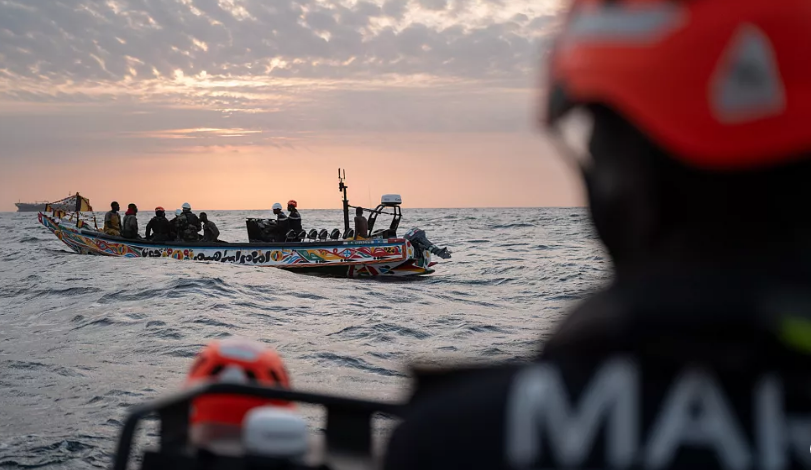
The Senegalese navy has intercepted 201 migrants attempting to cross the Atlantic Ocean toward Europe, as the treacherous maritime route to Spain’s Canary Islands continues to claim thousands of lives and emerge as the deadliest migration corridor from Africa.

The operation, carried out by marines based in Foundiougne in Senegal’s Fatick region, took place on Tuesday evening, according to a statement from the Senegalese army. A total of 132 individuals were rescued at sea from a small wooden boat in the Saloum delta, while 69 others were apprehended on land.

Those intercepted included nationals from several West African countries, among them women and children, the army’s public relations office (DIRPA) confirmed.

The Atlantic route from West Africa to the Canary Islands has surged in use since 2020, despite its reputation as one of the most dangerous migration journeys in the world. While official figures on death tolls remain elusive due to the lack of reliable data on departures, the Spanish migrant advocacy group Walking Borders estimates that thousands have already perished along the route this year alone.

Though overall migration to Europe has declined in recent years, the Atlantic corridor remains a key departure point for migrants fleeing poverty, conflict, and limited opportunities in their home countries. The Saloum delta in Senegal has become an increasingly active hub for migrant departures, particularly during winter months when calmer seas offer slightly safer passage.

Aid workers in the Canary Islands have observed a shift in migration patterns, noting a growing number of women and children among the arrivals. Previously dominated by young men from West Africa, the route is now attracting migrants from further afield, including Pakistan, Bangladesh, Yemen, Syria, and Afghanistan.

See also  President Biden Awards Pope Francis Presidential Medal of Freedom with Distinction

Efforts to curb the flow have had limited success. In 2023, the European Union signed a €210 million agreement with Mauritania aimed at cracking down on human smuggling operations. However, migrant departures from West Africa continue unabated, with many boats never reaching their destination.

Some vessels that lose their way or suffer mechanical failure vanish at sea, only to be discovered months later, sometimes washed up in the Caribbean or Latin America, bearing only the remains of those onboard.

With limited legal pathways for migration and growing instability across multiple regions, the perilous Atlantic crossing remains the only hope for many seeking a better life — despite the growing risks.

News

Cruise Passengers Stranded Amid Escalating Middle East Crisis

Published

on

The Persian Gulf is currently characterised by hostilities. The Strait of Hormuz is closed to shipping, with only vessels connected to China or Russia allowed to pass. The escalating crisis in the region has left thousands of tourists stranded on cruise ships and disrupted air travel.

On Sunday afternoon, a missile struck the water near the Mein Schiff 4, operated by TUI Cruises, while the ship was docked in Abu Dhabi, United Arab Emirates. Clouds of black smoke were reported over the water, according to the Bild newspaper. The vessel carries approximately 2,500 passengers and 1,000 crew members, with many due to return to Germany from Dubai. The situation on board is tense, and it is not yet clear if anyone was injured.

Security measures on the ship remain strict. Passengers are prohibited from entering outside decks, are advised to avoid windows, and receive regular alerts on their smartphones about potential incoming missile threats.

A sister ship, Mein Schiff 5, berthed in Doha, Qatar, is also affected. Passengers attempting to fly home from Doha on Saturday were forced to return to the ship after flights were canceled. Many had already boarded aircraft and had to leave luggage at the airport, waiting around ten hours before being taken back to the ship in the evening.

Other cruise lines are similarly affected. Six vessels are currently docked across ports in Dubai, Abu Dhabi, and Doha. These include the MSC Euribia from MSC Cruises, the Celestyal Discovery and Celestyal Journey from Celestyal Cruises, and the Aroya from the Saudi operator Aroya Cruises.

See also  Ethiopia’s Grand Renaissance Dam Opens Amid Fierce Dispute With Egypt and Sudan

The closure of airspace in multiple countries in the region has compounded the situation, preventing passengers from flying home. Thousands remain stranded, unsure when they will be able to continue their journeys or be evacuated safely.

The crisis follows US and Israeli strikes in the region on Saturday, which prompted retaliatory attacks by Iran targeting military positions in the Persian Gulf. Cruise passengers, many of whom expected a calm holiday, have instead faced a sudden escalation in regional tensions.

Authorities in ports and embassies are coordinating with shipping companies to maintain safety and provide updates, but the rapidly evolving security situation has made evacuation and travel plans uncertain. Tourists are advised to follow official guidance and avoid unnecessary movement on or around their vessels.

The disruption highlights the wider impact of escalating hostilities in the Gulf, affecting not only commercial shipping but also tourism and international travel. Passengers on affected cruise ships and flights face prolonged delays as authorities work to stabilize the situation and ensure safety in the region.

Continue Reading

News

Azerbaijan Commemorates Khojaly Massacre with New Memorial and National Ceremony

Published

on

Azerbaijan held nationwide commemorations on Thursday to mourn the hundreds of civilians killed in February 1992 in the town of Khojaly during the Karabakh conflict with Armenia. President Ilham Aliyev led the ceremonies, inaugurating a new Khojaly Genocide Memorial Complex in Baku to honor the victims of what he described as “the greatest tragedy for the Azerbaijani people.”

Thousands of people gathered at the Khojaly Massacre Memorial in Baku for the National Day of Remembrance. A minute of silence was observed across the country as citizens paid tribute to those who lost their lives over 30 years ago.

Azerbaijani authorities state that 613 civilians, including women and children, were killed when Armenian forces, with the support of the former Soviet Union’s 366th Guards Motor Rifle Regiment, attacked Khojaly. Dozens more were reported missing or injured during the assault, which occurred amid the war between ethnic Armenian forces backed by Armenia and Azerbaijani troops over the Karabakh region and surrounding areas.

Human Rights Watch conducted its own investigation into the incident, attributing direct responsibility for the civilian deaths to Karabakh Armenian forces. Armenia has repeatedly denied the accusations, arguing that the reported death toll was exaggerated and that casualties resulted from fighting between the two sides.

Despite differing accounts, the Khojaly tragedy remains a deeply significant event in Azerbaijan’s collective memory. Commemorations continue to emphasize the human cost of the conflict and the impact on generations of Azerbaijanis.

This year’s ceremonies took place against the backdrop of a peace and reconciliation process between Azerbaijan and Armenia. Both nations have pledged to work toward a more stable and peaceful future following decades of conflict and suffering on both sides.

See also  Russian Drone Strike Kills Nine in Ukraine Hours After Peace Talks

President Aliyev emphasized the importance of remembering the past while looking forward. The newly inaugurated memorial complex aims to provide a permanent site for reflection, ensuring that the victims of Khojaly are remembered by future generations.

The National Day of Remembrance has become a focal point for public reflection and national unity, drawing participants from across Azerbaijan. Observers note that the ceremonies serve both to honor the victims and to reinforce awareness of the historical and ongoing challenges in the Karabakh region.

Over 30 years after the massacre, Khojaly continues to hold a central place in Azerbaijani history. Thursday’s events highlighted the nation’s efforts to commemorate the past while supporting dialogue and cooperation with Armenia to foster lasting peace in the South Caucasus.

Continue Reading

News

Four Killed After Clash Between Cuban Coast Guards and US-Registered Boat

Published

on

Cuban border guards shot and killed four people aboard a Florida-registered speedboat on Wednesday after the vessel allegedly failed to stop in Cuban territorial waters and opened fire on a patrol boat, authorities in Havana said.

In a statement, the Cuban Ministry of Interior said the boat was detected about one nautical mile from Falcones Cay in Villa Clara province. A patrol unit was dispatched to identify the vessel and its occupants. Officials said the speedboat refused to comply with orders and that gunfire broke out during the encounter.

According to the ministry, six other passengers were injured in the exchange. The commander of the Cuban patrol boat, which carried five crew members, was also wounded. Authorities said all injured individuals were taken to safety and received medical treatment.

Cuba’s government later stated that the 10 people on board were armed Cuban nationals residing in the United States who were attempting to enter the island to carry out what it described as terrorist acts. Officials added that most of the passengers had a history of criminal and violent activity.

Two of the passengers were identified as Amijail Sánchez González and Leordan Enrique Cruz Gómez, both of whom Cuban authorities say are wanted in connection with activities linked to terrorism. The government said it obtained details about those on board through questioning of detainees after the confrontation.

The ministry reaffirmed its commitment to defending the country’s sovereignty and territorial integrity against threats by land, sea or air.

In Washington, Marco Rubio said US officials were gathering information to determine whether the victims were American citizens or permanent residents. Speaking at the airport in Basseterre, Saint Kitts, where he was attending a regional summit with Caribbean leaders, Rubio said the United States would independently verify the facts.

See also  EU Nations Urge Brussels to Resume Deportations of Afghans, Including Talks with Taliban

He emphasised that the incident was not a US government operation and declined to speculate about the ownership of the boat or the intentions of those on board. Rubio said US authorities would establish what happened before deciding on any response.

The clash comes at a time of heightened tensions between Washington and Havana. Donald Trump recently imposed an oil blockade on Cuba, citing its support for Venezuela’s former president, Nicolás Maduro. The measures have cut off oil and financial flows from Venezuela to Cuba.

Cuban President Miguel Díaz-Canel has rejected US pressure, insisting that any dialogue must respect Cuba’s sovereignty. Cuban officials have criticised the oil restrictions, saying they are harming the island’s economy and public services.

The investigation into Wednesday’s shooting remains ongoing.

Continue Reading

Trending