Connect with us

News

Hezbollah Official Reportedly Killed in Israeli Airstrike Amid Escalating Tensions

Published

on

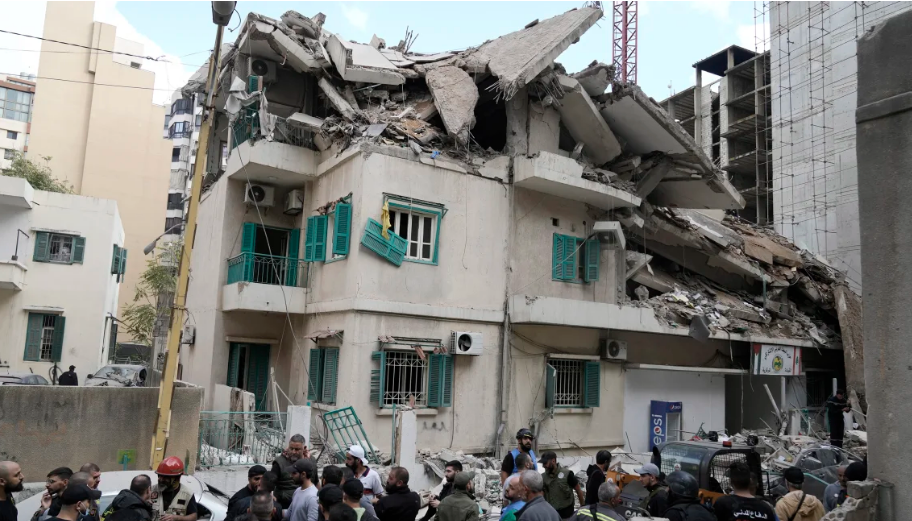
Hezbollah spokesperson Mohammed Afif was reportedly killed in an Israeli airstrike on Beirut on Sunday, according to Lebanese security sources cited by Reuters. The strike targeted the Ras al-Nebaa area of Lebanon’s capital in broad daylight, marking a rare Israeli operation within Beirut’s city limits.

While the Israel Defense Forces (IDF) declined to comment, Hezbollah’s media office has reportedly been receiving condolences, suggesting confirmation of Afif’s death. The incident represents only the fourth Israeli strike on Beirut since the 2006 conflict between Hezbollah and Israel.

Afif had served as the head of media relations for Hezbollah and recently emerged as a prominent figure following the assassination of Hezbollah leader Hassan Nasrallah in September. His death comes amid an intensified Israeli military campaign against Hezbollah in Lebanon and ongoing diplomatic efforts to broker a ceasefire.

Escalation in Lebanon

Israel’s military operations have expanded deeper into Lebanese territory, with ground forces reaching the village of Chama, 61 miles south of Beirut, over the weekend. Israeli troops withdrew after clashes with Hezbollah fighters, according to Lebanese state media.

In Beirut, Israeli airstrikes targeted southern suburbs for the sixth consecutive day, with renewed evacuation warnings issued for residents of Haret Hreik, a known Hezbollah stronghold.

Simultaneously, discussions regarding a U.S.-led ceasefire initiative are underway in Beirut. Lebanese officials and Hezbollah are reportedly evaluating the proposal, which aims to prevent further escalation of Israel’s military actions in Lebanon.

Rising Casualties in Gaza

The reported killing of Afif coincides with ongoing Israeli military operations in Gaza. Strikes on Beit Lahiya in northern Gaza killed at least 50 people on Sunday morning, according to Gaza’s health ministry. The victims included displaced Palestinians sheltering in residential areas, local journalists reported.

See also  Israel Delays Palestinian Prisoner Release, Putting Ceasefire at Risk

Another strike on al-Bureij in central Gaza claimed 23 lives, according to Al Aqsa Martyrs Hospital. Residents described scenes of devastation and panic, with children crying for their parents amid the rubble.

The IDF has maintained that its offensive is focused on dismantling Hamas’ infrastructure, particularly in areas like Jabalya, where intelligence suggests attempts to rebuild militant capabilities. However, the military campaign has also resulted in significant civilian casualties and mass displacements.

Regional Implications

The escalating conflict in both Lebanon and Gaza underscores the growing regional tensions as Israel intensifies its operations on multiple fronts. With diplomatic efforts ongoing, the outcome of ceasefire negotiations could shape the trajectory of the conflict in the coming weeks.

News

New Tool Reveals Hidden Environmental Cost of Internet Use

Published

on

Scientists have developed a tool that shows how everyday internet activity impacts nature, revealing surprising environmental costs behind routine website visits. The internet is responsible for 3.7 percent of global carbon emissions, surpassing air travel. If the internet were a country, it would rank as the fourth-largest polluter in the world.

The tool, called Digital Impact for Species, was created by climate experts at the University of Exeter in partnership with Madeby.studio. It allows users to enter any website URL and see its hidden environmental footprint, including CO2 emissions, energy use, and water consumption.

“When we visit a website, we rarely think about the environmental impact,” said Dr. Marcos Oliveira Jr, project lead for Exeter’s nature and climate impact team. “But there is a high cost, from the energy consumed as the information travels from the data centre to your device, to the water used to cool servers.”

The tool translates environmental metrics into relatable natural comparisons. For example, YouTube.com, which processes billions of searches each month, is rated C, indicating room for improvement. Each page view generates 0.249 grams of CO2, consumes 0.0011 litres of water, and uses 0.62 watt-hours of energy. For every 9,000 monthly visits, the site requires 10 litres of water—enough to sustain a capuchin monkey for 77 days. CO2 emissions from that traffic would take a single Amazon rainforest tree 41 days to absorb, while the energy used is equivalent to 1,000 Anna’s hummingbirds’ daily energy consumption for 332 days.

The tool calculates these impacts using Google PageSpeed Insights to measure the size of resources loaded on a page, such as images, text, and video. It also checks whether the site is hosted on servers powered by renewable energy or fossil fuels, and applies the Sustainable Web Design Model to convert technical data into ecological terms.

See also  Colombian Senator and Presidential Hopeful Miguel Uribe Turbay in Critical Condition After Assassination Attempt

Researchers said the tool is intended to raise awareness rather than criticize specific websites. Dr. Oliveira Jr explained that it encourages discussion on how to create a more sustainable internet.

Experts suggest that website operators can reduce environmental impacts by simplifying pages, using fewer images, limiting fonts, avoiding unnecessary videos, and optimizing code. Hosting sites on renewable-energy servers also lowers the ecological footprint.

Consumers can contribute by minimizing unnecessary searches, but the responsibility largely lies with website hosts and developers. By making these changes, experts say it is possible to lower the internet’s environmental impact while maintaining accessibility and usability.

Digital Impact for Species is available online, offering a way for users to better understand the hidden cost of their digital habits and prompting both individuals and organizations to consider sustainability in online activity.

Continue Reading

News

European Police Dismantle 24 Labs, Seize 1,000 Tonnes of Chemicals in Major Synthetic Drug Bust

Published

on

European authorities have dismantled 24 industrial-scale laboratories and seized around 1,000 tonnes of chemicals used to produce synthetic drugs, dealing what officials called a “massive blow” to organized crime in the region. The drugs involved include MDMA, amphetamines, and methamphetamine.

Europol described the operation as the largest of its kind to date. “I’ve been in this business for a while. This is by far the largest-ever operation we did against synthetic drug production and distribution,” said Andy Kraag, head of Europol’s European Serious Organised Crime Centre. He added that the crackdown targeted groups responsible for the production and trafficking of synthetic drugs across multiple countries.

The year-long investigation involved law enforcement agencies from Belgium, the Czech Republic, Germany, the Netherlands, Poland, and Spain. Authorities arrested more than 85 individuals, including two suspected ringleaders from Poland. While most of those arrested were Polish nationals, Belgian and Dutch citizens are also believed to have participated in the criminal operations.

The investigation began in 2024 after Polish police identified a network importing large quantities of legal chemicals from China and India. Authorities later discovered that the chemicals were being repackaged, mislabelled, and distributed across the European Union to laboratories manufacturing synthetic drugs.

Kraag said the operation was part of a broader “supply-chain strategy” aimed at cutting off synthetic drug production at its source. “These criminal groups, they don’t have their supply anymore,” he said, noting that disrupting the flow of chemicals is key to dismantling the industry.

The operation also highlighted the wider risks associated with synthetic drug production. Beyond public health dangers, synthetic drug labs contribute to violence, corruption, and money laundering. Authorities seized more than 120,000 litres of toxic chemical waste, which criminals often dump on land or into waterways, creating serious environmental hazards. “Today, it’s profit for criminals. Tomorrow, it’s pollution,” Kraag said.

See also  Haitian Police Vow Crackdown as Gang Violence Displaces Over 1 Million

Europol stressed that while this operation targeted one of Europe’s largest synthetic drug distributors, other networks remain active. “This is one of the biggest distributors. But it’s not the only one. So we’re still looking,” Kraag warned.

Officials said the crackdown would disrupt supply chains across multiple countries and reduce the availability of synthetic drugs in European markets. The operation reflects growing international cooperation in tackling organized crime and the dangers posed by large-scale drug production, both to public health and the environment.

Continue Reading

News

Climate Concerns Rise Over Sponsorships at 2026 Winter Olympics

Published

on

The 2026 Winter Olympics in northern Italy are facing mounting criticism over the environmental impact of their sponsorship deals, with scientists and athletes warning that the Games’ carbon footprint could threaten the future of winter sports.

A report by Scientists for Global Responsibility and the New Weather Institute, titled Olympics Torched, estimates that the Games themselves will produce around 930,000 tonnes of CO2 emissions. However, just three sponsorship agreements with major corporations could add 1.3 million tonnes more, more than doubling the total impact. The sponsors identified are oil and gas company Eni, car manufacturer Stellantis, and Italy’s national airline, ITA Airways, with Eni responsible for over half of the added emissions.

The report warns that the combined emissions could result in the loss of 5.5 square kilometres of snow cover in the Dolomites, equivalent to more than 3,000 Olympic-sized ice hockey rinks. Organisers have already announced plans to produce 2.4 million cubic metres of artificial snow for the Games, requiring 948,000 cubic metres of water, as warming temperatures continue to reduce natural snow and glaciers in the region.

“Even without the growing mountain of scientific evidence on the impact of global heating on winter sports, it is plain enough to anyone visiting actual mountains that snow cover is being lost and glaciers are melting,” said Stuart Parkinson, director of Scientists for Global Responsibility. He added that winter sports contribute directly to climate change through emissions and indirectly by promoting major polluters through sponsorship.

The report calls for urgent action, urging the Winter Olympics to end partnerships with high-carbon corporations, avoid new venue construction, and reduce spectator travel by air. Swedish cross-country skier Björn Sandström said the Games’ greatest influence is the signal they send to the world. “When that signal is driven by fossil-fuel sponsorship, it directly contradicts climate science and threatens the future of winter sport,” he said.

See also  India and China Agree on Military Disengagement Along Disputed Border

Greenlandic biathlete Ukalew Slettermark echoed the concern, arguing that giving oil companies a platform at the Games is unjustifiable. “It’s a complete contradiction when the fossil fuel industry, the biggest contributor to climate change, is allowed to sponsor winter sports, which they are simultaneously threatening,” she said.

The report also highlights broader environmental challenges in the Alps. Italy has lost 265 ski resorts in the past five years due to rising temperatures, and recent studies show mountain regions are warming faster than lowland areas, putting winter sports at risk.

The Milan-Cortina Olympics, spread across the Dolomites, have become a focal point for debates about climate responsibility in global sporting events. Critics say sponsorship deals with polluting corporations undermine efforts to promote sustainability and could damage the credibility of winter sports in a warming world.

Euronews Green has reached out to the International Olympic Committee for comment.

Continue Reading

Trending