Connect with us

News

EU Prepares for ‘Tough Negotiations’ as Trump Threatens Tariffs

Published

on

European Commission President Ursula von der Leyen has vowed that the European Union will defend its economic interests as it prepares for difficult trade talks with U.S. President Donald Trump, who has warned that tariffs against the EU will be imposed “pretty soon.”

Speaking at the annual gathering of EU ambassadors in Brussels, von der Leyen said the bloc remains open to dialogue but will not hesitate to protect itself if necessary.

“We will be ready for tough negotiations where needed and to find solutions where possible,” she said. “But we will make it equally clear that we will always protect our own interests – however and whenever that is needed.”

Her comments came a day after Canada and Mexico reached last-minute agreements with the White House to delay 25% tariffs, a move seen as a strategic maneuver by Trump to extract concessions from allies rather than simply rebalance trade relations.

EU Braces for Potential Tariffs

Trump’s remarks have heightened concerns in Brussels, as the EU could be next in line for punitive tariffs.

“The European Union has abused the United States for years, and they can’t do that,” Trump told reporters, repeating claims that the EU blocks U.S. cars and farm products while enjoying a trade surplus in goods worth €155.8 billion in 2023. However, the U.S. maintains a €104 billion surplus in services, a factor Trump has largely ignored in his criticisms.

Impact on Global Trade and Economy

The potential trade conflict comes at a time when EU-U.S. trade represents nearly 30% of global commerce and accounts for 40% of the world’s GDP.

See also  Trump to Join Gaza Peace Deal Signing in Egypt Amid Hopes of Ending Two-Year War

Von der Leyen highlighted the deep economic ties between the two economies, emphasizing that European companies employ 3.5 million Americans and another one million U.S. jobs depend on transatlantic trade.

“There are jobs, businesses, industries here and in the United States that rely on the transatlantic partnership. So we want to make it work,” she said.

EU Strategy Moving Forward

The European Commission has exclusive authority over trade policy, meaning Brussels will take the lead in responding to Trump’s tariffs if they are enacted. However, von der Leyen did not specify which U.S. industries could be targeted in potential retaliation.

Canada, for instance, had prepared to impose counter-tariffs on key American exports from Republican-leaning states before reaching a temporary deal. The EU may adopt a similar approach.

At the same time, von der Leyen urged European diplomats to diversify trade relationships, calling on them to build ties with new partners, including China, while reducing reliance on traditional alliances.

“Europe must deal with the world as we find it,” she said, warning that wars, economic sanctions, disruptive technologies, and climate change are shaping a new era of “hyper-competitive and hyper-transactional geopolitics.”

What’s Next?

While talks with the U.S. remain the EU’s “first priority”, von der Leyen stressed the need for “level-headed” diplomacy, rather than reacting out of “emotion or nostalgia.”

With Trump’s tariff threats looming and economic uncertainty rising, the EU is preparing for a new chapter in transatlantic trade—one that could redefine global commerce for years to come.

News

US Conducts Strike on Alleged Drug-Smuggling Facility, Marks Escalation in Operations

Published

on

US President Donald Trump said Monday that the United States conducted a strike on a shore facility used for loading boats with drugs, marking an escalation beyond previous operations targeting vessels in international waters. The president declined to specify the location or which agency carried out the strike.

“There was a major explosion in the dock area where they load the boats up with drugs,” Trump said while meeting Israeli Prime Minister Benjamin Netanyahu in Florida. “They load the boats up with drugs, so we hit all the boats and now we hit the area. It’s the implementation area. There’s where they implement. And that is no longer around.”

Trump offered few details about the strike, including whether it was conducted by the US military or the CIA. “I know exactly who it was, but I don’t want to say who it was. But you know it was along the shore,” he added.

The operation represents a shift in Trump administration tactics, which have previously focused on striking suspected drug-smuggling boats in international waters of the Caribbean and eastern Pacific. According to administration figures, at least 107 people have been killed across 30 strikes since early September. On Monday, the US conducted another strike against an alleged narcoboat in the eastern Pacific, resulting in two fatalities.

Trump initially referenced the strike during a call with WABC radio host John Catsimatidis on Friday. “I don’t know if you read or saw, they have a big plant or a big facility where they send the, you know, where the ships come from,” he said. “Two nights ago, we knocked that out. So, we hit them very hard.”

See also  Around 860,000 Extremadurans Head to the Polls in Unprecedented Regional Election

Unlike previous maritime operations, which were often announced by US Defence Secretary Pete Hegseth or military social media accounts, no formal announcement was made regarding the facility strike. The Pentagon referred questions to the White House, which did not immediately provide additional information. Venezuela’s government also declined to comment.

Trump has long indicated that US operations could move beyond boat strikes to land-based missions in South America, including Venezuela. Recent weeks have seen the deployment of US warships to the region, increased military presence, and the seizure of two oil tankers, with a third vessel pursued. The administration has characterized the campaign as part of an “armed conflict” against drug cartels to stop narcotics flowing into the United States.

Venezuelan President Nicolás Maduro has dismissed the US actions, insisting that the real aim of American operations is to pressure him from office rather than target drug trafficking.

The facility strike signals a new phase in US operations in the region, demonstrating a willingness to extend military actions onto land, raising questions about potential further escalation in South America.

Continue Reading

News

One Dead, Three Missing After Migrant Boat Sinks Off Samos

Published

on

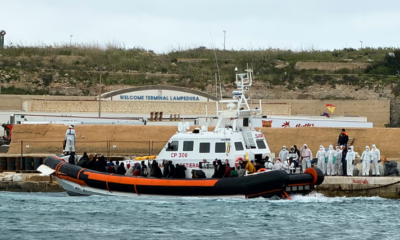
One person has died and three remain missing after a migrant boat sank near the Greek island of Samos early Monday, Greek coast guard authorities reported. Twenty-six migrants reached the shore in the Petalides area and alerted authorities that others were still at sea.

The incident occurred during the early morning hours, prompting an immediate search and rescue operation. Coast guard vessels, a helicopter, a private boat, and ground teams joined the efforts. During the operation, the body of a woman was recovered, while crews continued searching for the three missing migrants. The nationalities of those involved have not been disclosed.

Greece has served as a major entry point for migrants and refugees into the European Union since 2015. Over one million arrivals have been recorded through Greek territory, though hundreds have died attempting the often perilous sea crossing.

Data from Frontex, the European Border and Coast Guard Agency, shows that irregular migration flows through the eastern Mediterranean fell by 30 percent in the first 11 months of 2025 compared with the same period in 2024. Around 46,200 migrants arrived in Greek waters this year. However, Frontex noted a sharp increase in activity along the Libya-Crete route, with detections rising by 272 percent year-on-year.

The sinking off Samos is part of a series of recent migrant tragedies in Greek waters. On 6 December, Greek authorities recovered 17 bodies and rescued two migrants from a vessel off Crete. Two days later, a 12-year-old boy died after being struck by a boat propeller when smugglers forced migrants to jump from a speedboat near Samos.

See also  UN General Assembly Backs Two-State Solution Despite Israeli Opposition

A week later, another vessel carrying 31 migrants crashed into rocks off Samos. Twenty-eight people were rescued, while three remained unaccounted for.

The Eastern Mediterranean continues to be a dangerous route for migrants seeking entry into Europe. Authorities have repeatedly warned of the risks posed by overcrowded and unseaworthy vessels operated by smugglers. Local coast guard officials have emphasized the need for vigilance, particularly in areas near islands like Samos and Crete, which lie close to key migrant corridors from Turkey and Libya.

Search and rescue teams remain on alert, patrolling the waters around Samos to locate the three missing migrants and prevent further casualties.

Continue Reading

News

Flood Alert Issued in Elbląg as River Levels Surge

Published

on

Polish authorities issued a flood alert in the northeastern city of Elbląg on Saturday night after water levels in the Elbląg River surpassed the warning threshold of 590 centimetres, Mayor Michał Missan said. The rise was driven by strong northwesterly winds that pushed water from the Vistula Lagoon upstream, creating a backwater effect that increased the risk of flooding along the river.

Emergency services responded by deploying flood barriers in vulnerable areas, while hydrological gauges throughout the region continued to register levels above the warning mark. Mayor Missan said that all relevant services remained on standby and that authorities were closely monitoring the situation. Residents were urged via social media to exercise caution, though no evacuation orders were issued.

The Polish Institute of Meteorology and Water Management also issued warnings for strong winds across the region, with icy conditions expected to persist and potentially complicate emergency operations. Authorities cautioned that the situation could change rapidly, and further interventions may become necessary if weather conditions worsen.

Elbląg sits along the eponymous river between Druzno Lake and the Vistula Lagoon and is part of Żuławy Wiślane, a Vistula River delta plain. Large sections of the area are below sea level, making it particularly vulnerable to flooding. Local officials have noted that the combination of wind-driven water movement and the city’s low-lying geography can quickly elevate flood risks.

Despite the heightened alert, no major flooding was reported overnight, and residents largely remained in their homes. Authorities emphasized that continuous monitoring and the deployment of temporary barriers were crucial to managing the rising waters and preventing damage to infrastructure.

See also  EU Budget Talks Heat Up as Political Groups Draw Battle Lines Ahead of Commission Proposal

Mayor Missan said the city’s preparedness measures were in place to respond quickly to any escalation, and he urged citizens to stay informed through official channels. Local emergency services maintained a visible presence throughout the night, checking critical points along the river and readying additional resources if needed.

The situation highlights the challenges faced by cities like Elbląg, where riverine and lagoon systems intersect, and weather patterns can rapidly influence water levels. Officials said the alert would remain in effect as long as the river levels remained high and wind conditions persisted.

Residents were reminded to avoid walking or driving near the riverbanks and to follow any guidance from municipal authorities. Authorities confirmed that contingency plans for potential evacuations were prepared, but at present, no large-scale displacement was necessary.

The flood alert serves as a precautionary measure aimed at safeguarding lives and property in an area historically prone to water-related hazards.

Continue Reading

Trending