Connect with us

News

EU Ministers to Discuss Expanding Naval Mission to Strait of Hormuz as Oil Prices Surge

Published

on

Foreign ministers from the European Union are scheduled to meet in Brussels on Monday to discuss whether the bloc’s naval mission should be extended to the Strait of Hormuz amid rising tensions in the Middle East and soaring global oil prices.

The discussions come as the conflict involving the United States and Israel against Iran continues to disrupt global energy markets. The narrow maritime passage handles roughly 20 percent of the world’s oil shipments, making it one of the most critical trade routes for energy supplies.

According to a person familiar with the matter, EU ministers will consider expanding the bloc’s naval mission Operation Aspides to include patrols in the Strait of Hormuz.

Operation Aspides was launched in early 2024 to protect international shipping in the Red Sea after attacks by Yemen’s Houthi forces on commercial vessels traveling through the region.

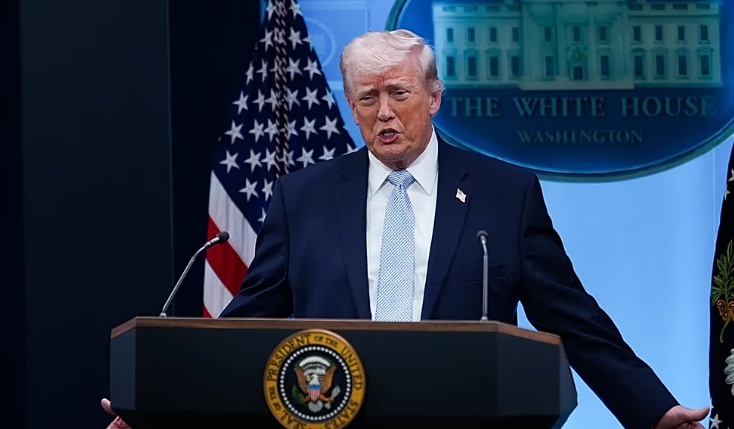
Pressure from Washington has been increasing in recent days. Donald Trump urged several major powers, including the United Kingdom, France, China and Japan, to deploy naval vessels to the area to safeguard oil shipments passing through the Strait of Hormuz.

Tehran announced last week that it would block the waterway in response to US-Israeli strikes on its territory. Since then, several vessels have reportedly come under attack in the region, increasing fears about disruptions to global energy supplies.

Despite the pressure from Washington, some European officials remain cautious about expanding the mission. Johann Wadephul confirmed that the issue would be discussed at the meeting in Brussels but expressed skepticism about the need for such an operation.

See also  M23 Rebels Enter Bukavu as Conflict in Eastern DR Congo Intensifies

In an interview with German public broadcaster ARD, Wadephul said he did not see an immediate requirement for extending the naval mission and ruled out Germany’s participation for now. He also called on the United States and Israel to provide clearer information about their objectives and strategy in the war against Iran.

His remarks reflect broader concerns among European officials who say Washington has not fully explained the timeline or long-term goals of the military campaign.

Meanwhile, global oil markets remain under pressure as the conflict continues. Chris Wright said on Sunday that the war with Iran could end within a few weeks. He added that energy prices would likely fall once stability returns to the region and shipping lanes reopen.

Despite those reassurances, crude oil prices have climbed above $100 per barrel, raising concerns among governments and economists about the potential impact on inflation and economic growth worldwide.

The meeting in Brussels is expected to focus on whether European countries should play a larger role in protecting maritime traffic in the Gulf as tensions continue to escalate.

News

Fresh Attacks Reported Across Gulf Despite US-Iran Ceasefire Announcement

Published

on

Reports of new attacks across the الخليج on Wednesday have shaken early optimism following the announcement of a two-week ceasefire between the United States and Iran, raising doubts about how quickly the agreement can take hold.

The ceasefire, announced late الثلاثاء, had been welcomed across the region as tensions between واشنطن and طهران escalated. However, neither side specified when the truce would come into effect, and events on Wednesday suggested hostilities had not fully subsided.

In the United Arab Emirates, authorities reported a fresh Iranian attack targeting the Habshan gas complex. The strike disrupted operations and prompted officials to suspend production at the facility after falling debris from intercepted projectiles caused multiple fires. According to the Abu Dhabi media office, two Emirati nationals and one Indian worker suffered minor injuries.

Journalists in Dubai reported receiving air raid alerts early in the morning and observed continued air defence activity, including fighter jets operating overhead. The developments marked a sharp end to the brief sense of relief that had followed the ceasefire announcement.

In Qatar, residents in Doha also received early morning alerts after a night of heightened tension. Reports indicated a prolonged Iranian raid on Tuesday evening, with at least eight interception blasts heard across the city. The incident disrupted air traffic, with inbound flights diverted for about an hour before normal operations resumed.

Bahrain experienced similar unrest. Sirens sounded again on Wednesday morning, warning residents to seek shelter as new explosions were heard. The renewed activity followed overnight strikes that damaged homes in the Sitra area and left two people injured by falling debris after an Iranian drone was intercepted.

See also  London Ambulances Targeted in Suspected Antisemitic Arson Attack

Meanwhile, in Tehran, residents reported hearing air defence systems in operation late Wednesday morning. Initial reports suggested the activity may have been part of a drill, though details remained limited.

The renewed attacks come despite an agreement announced by US President Donald Trump and Iranian officials for a two-week ceasefire that includes reopening the Strait of Hormuz, a critical route for global energy supplies. Trump had earlier described a 10-point proposal from Iran as a possible basis for negotiations, though he later questioned its credibility.

Israel signalled support for the temporary pause in strikes against Iran but clarified that it would continue its military operations against Hezbollah in Lebanon, highlighting ongoing tensions beyond the immediate US-Iran conflict.

The situation underscores the fragile nature of the ceasefire, with continued military activity casting uncertainty over its implementation. As diplomatic efforts continue, the coming days are likely to determine whether the agreement can hold or whether the region will see further escalation.

Continue Reading

News

Sweden Accuses Iran of Using Criminal Gangs to Target Dissidents as Teenagers Face Trial

Published

on

Sweden’s security service, Sapo, has accused Iran of increasing its targeting of dissidents since the start of the Iran war, alleging that it has recruited organised crime networks to carry out acts of violence داخل the country. The warning comes as five teenagers are due to appear in court on Wednesday over the alleged attempted murder of an Iranian dissident researcher in southern Sweden.

Prosecutors say the group targeted Arvin Khoshnood, a researcher and commentator on Iranian affairs, at his home in the city of Malmö on September 2 last year. According to the charge sheet, one of the suspects, aged 16 at the time, rang the doorbell armed with a knife and asked Khoshnood’s wife if he was at home. Khoshnood, who was present, remained out of sight and contacted police immediately.

Authorities allege the teenager had been recruited through encrypted messaging apps and promised payment to carry out the attack. Prosecutors say three of the accused, along with a fourth individual believed to be the mastermind, provided instructions, supplied the weapon, and negotiated the terms before the attempt was made. Three of the teenagers face charges of attempted murder, while the others are accused of complicity.

“These are acts that fall under so-called crime as a service, where young perpetrators in Sweden take on assignments from individuals connected to organised crime,” prosecutor Per-Erik Rinsell said in a statement.

Khoshnood has suggested the plot may be linked to the Foxtrot network, one of Sweden’s most prominent criminal gangs. Its leader, Rawa Majid, has been reported to have connections to Iran, although such claims remain contested. The group has been associated with a series of shootings, bombings, and other violent incidents in recent years, often recruiting young people through online platforms.

See also  Russia Intensifies Drone Assaults as Ukraine Faces New Threats Amidst Trump’s Reelection

The case has drawn attention to what Swedish authorities describe as a growing security threat. Sapo has identified Iran as one of the main risks to national security, accusing it of using criminal gangs to target Israeli interests and Iranian opposition figures within Sweden. Tehran has denied these allegations.

Khoshnood, who frequently appears in Swedish media as an expert on Iran, has openly expressed support for exiled opposition figure Reza Pahlavi, the son of Iran’s last shah. Investigators believe his public stance may have made him a target.

Several of the accused teenagers are also facing charges related to a separate attempted murder in Uddevalla, which occurred a week after the incident in Malmö. Authorities have not confirmed whether that case involved another Iranian dissident.

The trial is expected to shed light on the alleged links between foreign actors and domestic criminal networks, as Sweden grapples with rising concerns over organised crime and national security.

Continue Reading

News

US-Iran Ceasefire Eases Tensions as Europe Reacts; US Politics Spill Into Hungary Vote

Published

on

The United States and Iran agreed to a two-week ceasefire overnight, narrowly avoiding a major military escalation just hours before a deadline set by US President Donald Trump was due to expire. The agreement, announced on Trump’s Truth Social platform and confirmed by Iran’s Supreme National Security Council, includes provisions to reopen the Strait of Hormuz, a vital global shipping route.

“I agree to suspend the bombing and attack of Iran for a period of two weeks. This will be a double-sided CEASEFIRE,” Trump said, adding that US forces had already met their military objectives. The deal came shortly after warnings from Trump that failure to comply could lead to widespread destruction.

Iran described the agreement as a “massive victory” and said negotiations toward a final peace settlement would begin on Friday in Pakistan. However, details of the arrangement remain unclear, including the exact timing of when the ceasefire will fully take effect. Reports indicated that attacks continued across Israel, Iran, and parts of the Gulf region early Wednesday, highlighting the fragile nature of the truce.

There were also conflicting accounts regarding the scope of the ceasefire. Israel confirmed it would suspend strikes against Iran for two weeks but said the arrangement does not extend to its conflict with Hezbollah in Lebanon. This contrasts with statements from Pakistan’s Prime Minister Shehbaz Sharif, who had been mediating talks and suggested the ceasefire would apply across all fronts, including Lebanon.

The agreement follows a diplomatic push led by Pakistan, which had urged Washington to extend its deadline and encouraged Iran to reopen the Strait of Hormuz as a goodwill gesture. Iran responded with a 10-point proposal that Trump later described as a workable basis for negotiations, though some elements remain disputed, including references to its nuclear programme.

See also  London Ambulances Targeted in Suspected Antisemitic Arson Attack

Markets reacted quickly to the development. Oil prices fell sharply, dropping more than 17%, while stock markets in Asia rose in early trading, reflecting cautious optimism among investors. Analysts noted that uncertainty remains over the durability of the ceasefire and the terms of any longer-term settlement.

European leaders welcomed the pause in fighting but also expressed concern about the events leading up to it. The United Nations Secretary-General António Guterres called on all sides to respect international law, while German Chancellor Friedrich Merz thanked Pakistan for its mediation efforts and stressed the need for a lasting resolution.

Meanwhile, US Vice President JD Vance sparked controversy during a visit to Budapest, where he accused the European Union of interfering in Hungary’s election campaign and endorsed Prime Minister Viktor Orbán’s Fidesz party ahead of a closely watched vote. Opposition leader Péter Magyar criticised the move, warning against foreign involvement in Hungary’s domestic politics.

In a separate development, Russia issued warnings to Estonia, Latvia, and Lithuania, accusing them of assisting Ukraine in strikes on Russian oil infrastructure. The Baltic states rejected the claims as false.

The ceasefire between the US and Iran offers a brief window for diplomacy, though tensions across multiple regions continue to shape a volatile global landscape.

Continue Reading

Trending