Connect with us

News

At Least Five Explosions Hit Dubai in Iranian Missile and Drone Strike

Published

on

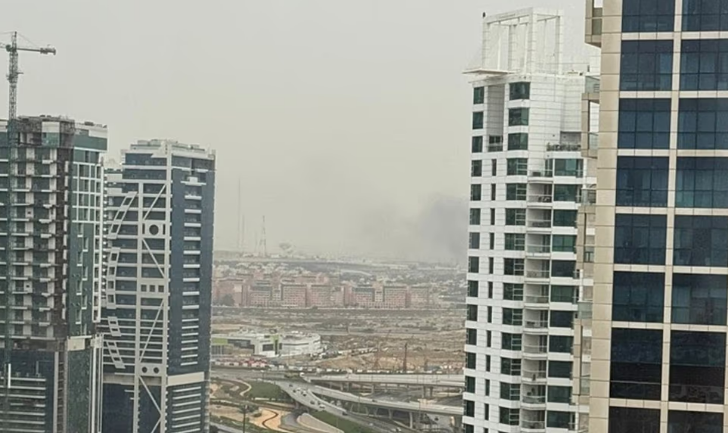
Dubai was shaken by at least five explosions on Tuesday morning as residents rushed to underground shelters, Euronews journalists reported. The attacks, carried out using missiles and drones, were confirmed by Iran’s IRGC-affiliated Tasnim news agency.

The UAE’s Defence Ministry said in a statement on X that the country’s air defences were “actively engaging with missiles and UAV threats.” Four people were injured by debris from an interception that fell on residential areas in southern Dubai, authorities said.

The Dubai Media Office added that the incidents caused property damage and minor injuries to four Asian nationals. Authorities confirmed that firefighters had extinguished a blaze on a Kuwaiti oil tanker at Dubai Port, which was also targeted in the strike. No oil spill was reported, and all 24 crew members on board were reported safe.

Reports first emerged of residents rushing to shelters as the blasts were distinct from previous air defence intercepts, sonic booms, or prior Iranian strikes on the city. The scale and intensity of the explosions prompted emergency services to respond quickly to secure affected areas.

The attack comes amid escalating tensions between Iran and the UAE. On Monday, Iran’s judiciary announced the revocation of residency permits for 1,200 Emirati nationals living in Iran, citing a “hostile action” by the UAE and giving those affected one week to leave the country.

Tehran’s Tasnim news agency confirmed the missile and drone strikes, signaling a direct escalation in the ongoing dispute. The UAE authorities emphasized their readiness to respond to the threat and continue assessing the situation.

See also  Ten Years On: European Sites to Remember David Bowie

Security experts say the incident highlights the growing risk of regional spillover from the Iran conflict. Dubai, a key financial and commercial hub, has previously avoided direct military attacks, but this strike marks a significant escalation. The UAE government and emergency services have been coordinating to contain any additional risks and ensure civilian safety.

The blasts disrupted morning routines across southern Dubai, with residents seeking immediate shelter and local authorities deploying emergency personnel to manage the aftermath. Initial reports indicate the damage was limited to residential buildings and the targeted tanker, with no large-scale casualties reported.

Analysts note that the UAE’s air defence systems successfully intercepted most of the incoming missiles and drones, but falling debris remains a hazard in densely populated areas. The government has urged residents to stay vigilant and follow instructions from emergency services as investigations into the attacks continue.

The strike underscores heightened tensions in the Gulf region and raises concerns about the security of critical infrastructure in major urban centers like Dubai.
News

Netanyahu Orders Israeli Army to Crack Down on West Bank Settler Violence

Published

on

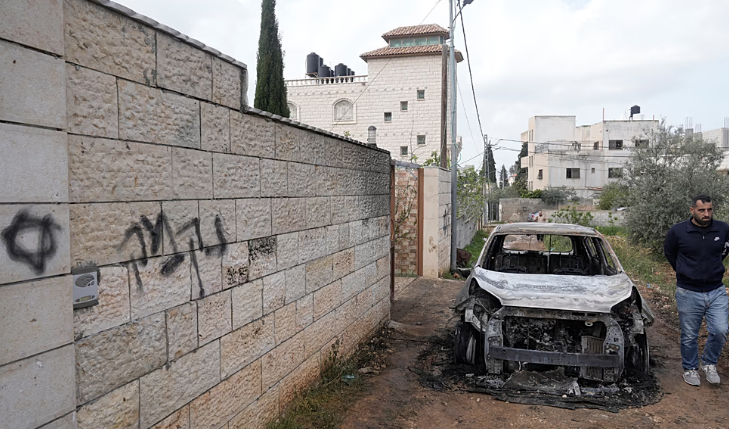
Israel is taking unprecedented steps to curb violence by Jewish settlers in the West Bank, with the army set to divert troops from its operations in Lebanon to reinforce security in the occupied territories. A document from the office of Prime Minister Benjamin Netanyahu, seen exclusively by Euronews, outlines a series of measures aimed at combating extremist settler activity.

The directive, titled “Prime Minister’s Directive on Combating Nationalist Crimes in Judea and Samaria,” instructs the Israel Defense Forces (IDF) and police to strengthen their presence in areas prone to settler violence. The move marks a rare policy shift for Netanyahu, who has previously characterized settler attacks as the actions of a small number of extremists rather than a widespread problem.

IDF Chief of Staff Lieutenant General Eyal Zamir has warned that the army is stretched thin, operating across Gaza, Lebanon, Syria, and the West Bank, and is facing severe manpower shortages. Despite these challenges, the army announced last week that it would pull troops away from its ongoing offensive in Lebanon to address the growing issue of settler violence in the West Bank.

The West Bank and East Jerusalem are home to roughly 700,000 Israeli settlers and 3.8 million Palestinians seeking a future state. Settlement expansion has accelerated under Netanyahu, particularly since the election of former US President Donald Trump, who refrained from condemning the construction of new settlements. Data from Israeli advocacy group Peace Now shows that Israel approved more settlement housing in the first three months of 2025 than in all of 2024.

The document instructs that no new settlement outposts be established in Area B, which is under joint Israeli-Palestinian control. It also includes economic sanctions against settlers who illegally set up new outposts, citing the cost incurred by the IDF to dismantle them. Government ministers are called on to support the crackdown, signaling a clear message to hardline officials such as Finance Minister Bezalel Smotrich and National Security Minister Itamar Ben-Gvir, both strong proponents of settlement expansion and targets of European sanctions.

See also  At Least 68 Dead, Dozens Missing After Migrant Boat Capsizes off Yemen

The directive also establishes a new administration within the Ministry of Defence to address the “Hilltop Youth,” extremist religious-nationalist Jewish youth responsible for attacks on Palestinians and illegal outpost construction. The administration aims to steer at-risk youth away from violent activity through educational and therapeutic interventions.

The United Nations Office for the Coordination of Humanitarian Affairs reported a sharp increase in settler attacks in 2025, with over 1,800 incidents and the displacement of 1,600 Palestinians. The violence has resulted in 240 Palestinian deaths, while 17 Israelis were killed by Palestinians in the same period.

The policy change represents a significant shift in Israel’s handling of settler violence, highlighting rising tensions in the West Bank and the government’s effort to reassert control amid mounting domestic and international scrutiny.

Continue Reading

News

Two Unidentified Drones Crash in Southern Finland, Authorities Investigate

Published

on

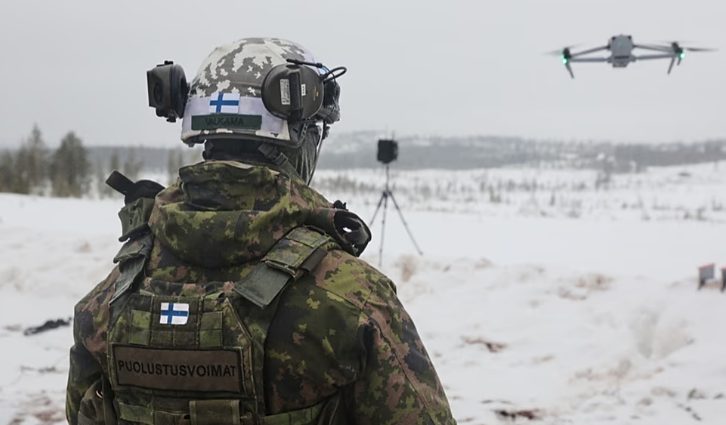
Two unidentified drones crashed near the southern city of Kouvola on Sunday in what Finland’s Defence Ministry described as a “suspected territorial violation.” Authorities are investigating the incident, which has raised concerns over airspace security in the region.

Finland’s Prime Minister Petteri Orpo suggested the drones were likely of Ukrainian origin. He told the Finnish state broadcaster Yle that Kyiv has recently carried out drone attacks on Russian territories along the more than 1,300-kilometre border with Finland. Orpo added that Russian signal jamming may have caused the Ukrainian drones to stray into Finnish airspace.

“Drones have strayed into Finland’s territory. We take this very seriously,” said Defence Minister Antti Hakkanen in a statement. He confirmed that security authorities had been dispatched to the crash sites to carry out a thorough investigation.

The Finnish Defence Ministry reported that several low-flying, slow-moving objects were observed in Finnish airspace over the sea area and southeastern Finland on Sunday morning. An F/A-18 Hornet fighter jet was sent up to identify the objects, according to the ministry.

One drone crashed north of Kouvola, while another fell east of the city. Police have cordoned off both sites to facilitate investigation and evidence collection. Hakkanen said the inquiry is ongoing and that further details would be released once the information has been verified.

Orpo emphasized that while it is likely the drones originated from Ukraine, the situation is being carefully examined before any formal announcement is made. The incident underscores the potential risks posed by stray drones crossing international borders, particularly in a region already experiencing heightened security sensitivities due to ongoing conflicts between Ukraine and Russia.

See also  Iranian Operatives Escalate Efforts to Influence 2024 U.S. Presidential Election, Microsoft Reports

Finland shares a long border with Russia, and the country has maintained heightened vigilance in response to regional tensions. Officials are monitoring the situation closely to ensure airspace integrity and to prevent similar incidents in the future.

The crash of the drones has prompted local authorities to review airspace monitoring and response protocols. Law enforcement and defence personnel are coordinating to assess whether the drones caused any damage or posed a direct threat to civilians in the area.

As investigations continue, Finland’s government has reiterated its commitment to national security while maintaining open communication with international partners. The findings from the inquiry will help clarify the circumstances surrounding the drones’ presence and whether the incident was accidental or part of broader regional operations.

The situation remains fluid, with authorities continuing to collect evidence and analyze the drones to understand their origin, trajectory, and potential operational intent.

Continue Reading

News

Iran Agrees to Allow Humanitarian Shipments Through Hormuz as Nuclear Sites Hit

Published

on

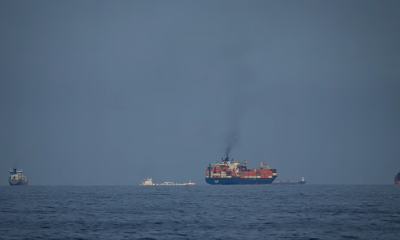
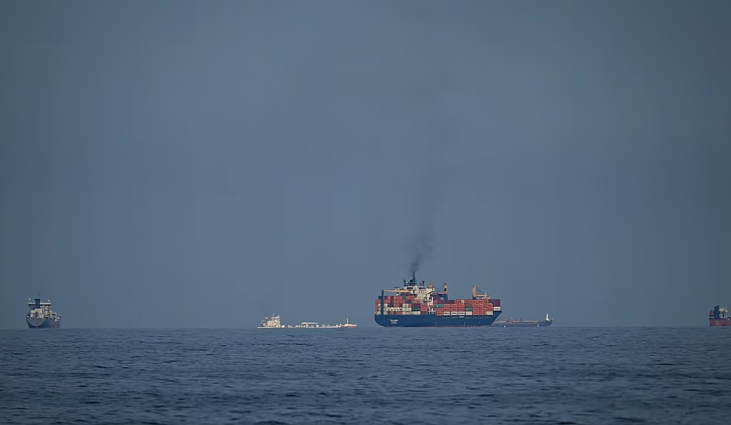
Iran has agreed to allow the passage of humanitarian and agricultural aid through the Strait of Hormuz, marking a potential breakthrough in a conflict that has disrupted global trade for weeks.

The announcement came just hours after Iranian state media said two nuclear facilities had come under attack in strikes claimed by Israel. Tehran has agreed to “facilitate and expedite” humanitarian aid through the Strait of Hormuz, the Iranian ambassador to the United Nations in Geneva said on Friday.

Ali Bahreini said the decision followed a request from the United Nations and would allow essential goods, including food supplies and fertilisers, to move through the critical shipping route. The move is seen as the first easing of restrictions at the chokepoint since the war began a month ago.

While much of the global focus has been on oil and gas disruptions, officials warn that blocked fertiliser shipments could have serious consequences for agriculture and food security worldwide. The UN recently established a task force to address the wider impact of the conflict on aid delivery.

The humanitarian development came amid renewed military escalation. Iranian authorities reported that two nuclear-related facilities were targeted in air strikes. Israel later confirmed carrying out the attacks, which hit the Shahid Khondab heavy water complex in Arak and a yellowcake production plant in Yazd province.

Iranian officials said there were no casualties and no risk of radiation contamination. However, the strikes prompted sharp warnings from Tehran. Foreign Minister Abbas Araghchi said the attacks undermined diplomatic efforts and warned that Iran would respond.

See also  Two Unidentified Drones Crash in Southern Finland, Authorities Investigate

The Islamic Revolutionary Guard Corps also signalled retaliation, with senior commanders issuing threats against interests linked to the United States and Israel. The developments add to concerns that the conflict could widen further.

International efforts to de-escalate the situation are ongoing. Diplomats from countries including Pakistan and Turkey are attempting to arrange direct talks between Washington and Tehran. At the same time, foreign ministers from the Group of Seven have called for an immediate halt to attacks on civilian infrastructure.

The International Atomic Energy Agency has urged restraint, warning of the risks associated with strikes on nuclear-related sites. Director General Rafael Grossi said there had been no increase in radiation levels but stressed the need to avoid any actions that could trigger a nuclear incident.

Meanwhile, the United States is increasing its military presence in the region. Additional troops, including Marines and airborne units, have been deployed as a precaution, though Secretary of State Marco Rubio said Washington believes it can meet its objectives without committing ground forces.

As the conflict enters its second month, the agreement to allow humanitarian shipments offers a rare sign of progress, even as military tensions remain high and diplomatic efforts continue.

Continue Reading

Trending