
Health
Over 100 Researchers Urge Safeguards on High-Risk Biological Data Amid AI Concerns


More than 100 scientists from leading institutions have called for stronger safeguards on sensitive biological datasets to prevent artificial intelligence (AI) from being misused to create dangerous pathogens. The open letter, signed by researchers from Johns Hopkins University, the University of Oxford, Fordham University, and Stanford University, highlights the potential biosecurity risks posed by unrestricted access to certain genetic and pathogen data.
AI models for biology rely heavily on large volumes of data, including genetic sequences and characteristics of viruses and other pathogens. While open access to such information has accelerated scientific discovery, the researchers warn that certain datasets could allow AI systems to design or enhance deadly viruses.
“The stakes of biological data governance are high, as AI models could help create severe biological threats,” the authors wrote. They describe the ability of AI to predict mutations, identify patterns, and generate more transmissible pathogen variants as a “capability of concern” that could speed up the development of biological threats affecting humans, animals, plants, or the environment.
The scientists stress that while most biological data should remain openly accessible, “concerning pathogen data” requires stricter security checks. The letter proposes a framework to define and govern high-risk datasets before they are generally available to AI developers. “Limiting access to sensitive pathogen data to legitimate researchers might be one of the most promising avenues for risk reduction,” said Moritz Hanke, co-author from Johns Hopkins University.
Currently, no universal rules govern access to these datasets. Some AI developers voluntarily exclude high-risk data from training, but approaches vary. Developers of AI models such as Evo, created by the Arc Institute, Stanford, and TogetherAI, and ESM3, from EvolutionaryScale, have withheld certain viral sequences to prevent potential misuse. In February 2025, the EVO 2 team announced that it had excluded pathogens infecting humans and complex organisms to reduce ethical and safety risks and prevent its use in bioweapon development.
The proposed framework introduces a five-tier system, called Biosecurity Data Levels (BDL), to classify pathogen data based on risk:
-
BDL-0: Everyday biology data with no restrictions.
-
BDL-1: Basic viral building blocks; monitored access recommended.
-
BDL-2: Animal virus traits, such as species-jumping ability.
-
BDL-3: Human virus characteristics, including transmissibility and vaccine resistance.
-
BDL-4: Enhanced human viruses with potentially higher contagion, subject to the strictest controls.
To ensure safe access, the letter recommends technical tools including watermarking datasets to track leaks, audit logs with tamper-proof signatures, data provenance tracking, and behavioural biometrics to verify legitimate users.
The authors emphasize that balancing openness with security will be essential as AI systems grow more powerful. Without clear rules, frontier developers are left to make subjective decisions about what constitutes risky data, creating potential gaps in biosecurity.









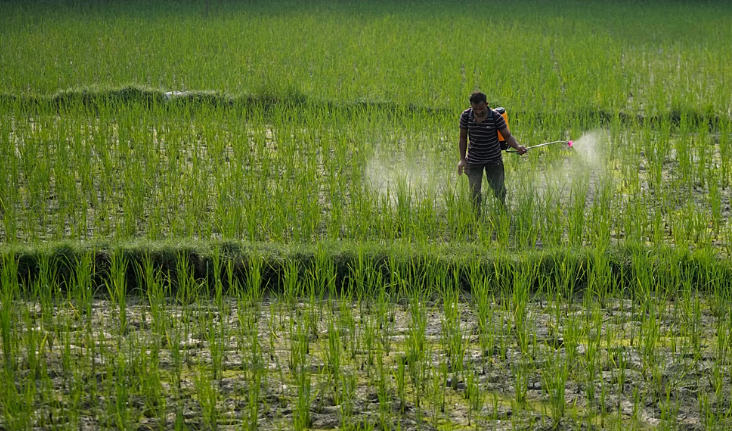
Living in areas with high agricultural pesticide exposure is associated with higher cancer risks, according to a new study that highlights potential health impacts in vulnerable communities. Researchers found that widespread exposure to pesticides in food, water and the environment may increase the likelihood of developing certain cancers.
The study, published in Nature Health, analysed environmental data, cancer registries and biological samples across Peru. It found a strong association between pesticide exposure and cancer risk, marking one of the first large-scale efforts to connect environmental contamination with biological changes linked to the disease.
“This is the first time we have been able to link pesticide exposure, on a national scale, to biological changes suggesting an increased risk of cancer,” said Stéphane Bertani, a molecular biology researcher at the French National Research Institute for Sustainable Development.
The research was conducted in collaboration with several institutions, including the Institut Pasteur, the University of Toulouse and Peru’s National Institute of Neoplastic Diseases. Scientists mapped pesticide dispersion across the country over a six-year period from 2014 to 2019, identifying regions with the highest exposure levels.
The findings showed that people living in these high-risk zones were about 150% more likely to develop cancer. Areas of moderate to high exposure covered more than one-third of Peru’s territory, with contamination spreading up to 30 to 50 kilometres beyond agricultural land due to environmental factors such as wind and terrain.
The study examined data from more than 150,000 cancer patients diagnosed between 2007 and 2020. The highest exposure levels were found in the Andean highlands, where limited rainfall can intensify the accumulation of chemicals. Researchers noted that even pesticides not classified as carcinogenic by the World Health Organization may still contribute to harmful biological changes over time.
Laboratory analysis revealed that pesticide exposure can disrupt cellular processes that help maintain normal function. These disruptions may occur long before cancer develops, potentially increasing vulnerability to other risks such as infections or inflammation.
The study also found that certain cancers were more closely linked to pesticide exposure, particularly epithelial cancers affecting the digestive system, lungs and skin. In Peru, cases of liver cancer were found to overlap with regions of heavy pesticide use, raising questions about environmental factors contributing to the disease.
Researchers said the findings highlight the challenges of tracking pesticide exposure, given its widespread presence in ecosystems. They also warned that communities with limited healthcare access and intensive agricultural activity may face greater risks.
The study calls for stronger regulatory policies and improved monitoring to address environmental health risks. Experts say understanding how pesticide exposure affects human biology could play a key role in preventing cancer and protecting at-risk populations.

E-cigarettes may help smokers quit more effectively than traditional methods such as patches and gum, according to a new study led by researchers at the University of Oxford. The study, published in the journal Addiction, also highlights ongoing health concerns associated with vaping.
The researchers analyzed 14 systematic reviews conducted between 2014 and 2023 to evaluate the effectiveness of nicotine e-cigarettes for smoking cessation. Their findings suggest that e-cigarettes outperform conventional nicotine replacement therapies. One 2024 Cochrane review cited in the study found that for every 100 users, an additional two to five people quit smoking when using nicotine e-cigarettes compared to using patches or gum.
Angela Difeng Wu, senior researcher and lecturer at the Nuffield Department of Primary Care Health Sciences at Oxford, said the evidence is “clear and consistent across all of the meta-analyses we consulted: e-cigarettes are effective at helping people stop smoking.” The team also developed an “Evidence and Gap Map” to highlight areas where further research is needed.
While e-cigarettes appear effective, the researchers noted that evidence on serious adverse events remains inconclusive. Most other side effects showed little or no difference between nicotine e-cigarettes and other cessation treatments. Experts caution that while vaping is less harmful than smoking combustible tobacco, it is not risk-free.
A February 2026 study found that e-cigarette users are exposed to carcinogenic chemicals, though at lower levels than smokers of traditional tobacco products. The long-term health impacts of e-cigarettes remain uncertain, partly because the products are relatively new and continue to evolve.
Despite their potential to reduce smoking, e-cigarettes have raised public health concerns, particularly among young people. The World Health Organization estimated in 2025 that over 100 million people worldwide use e-cigarettes, including at least 15 million children aged 13 to 15. In countries with available data, children are on average nine times more likely than adults to vape.
“E-cigarettes are fuelling a new wave of nicotine addiction,” said WHO’s Etienne Krug. “They are marketed as harm reduction but, in reality, are hooking kids on nicotine earlier and risk undermining decades of progress.”
The Oxford study emphasizes that uncertainties about e-cigarettes’ long-term effects and their role in smoking cessation continue to influence policy and clinical decision-making. Researchers stress that e-cigarettes should be considered as tools for current smokers attempting to quit, rather than products for non-smokers or young people.
The study contributes to the growing body of evidence supporting nicotine e-cigarettes as an alternative to traditional cessation methods, while underscoring the need for ongoing monitoring and regulation to prevent uptake among children and non-smokers.


Study Links Agricultural Pesticide Exposure to Higher Cancer Risk in Peru

Oil Prices Jump as Stocks Slide After Trump Signals Continued Strikes on Iran

Stellantis Recalls Thousands of Vehicles in Spain Over Potential Fire Risk

Jet Fuel Prices Surge Amid Iran War, Airlines Hike Fares and Cut Flights

Global Markets Rally on Hopes of Iran War De-escalation After Trump Comments

Europe Urged to Rethink Air Defence Strategy as Drone Warfare Shifts Cost Balance

At Least Five Explosions Hit Dubai in Iranian Missile and Drone Strike

Eurozone Inflation Surges on Energy Shock, ECB Faces Tough Decisions

E-Cigarettes Found More Effective Than Patches and Gum for Quitting Smoking, Study Shows

Economic Anxiety Rises as Iran Conflict Impacts Mental Health, Experts Say

Meta Acquires Tilda Swinton VR Doc ‘Impulse: Playing With Reality’

Saudi Arabia’s Model for Sustainable Aviation Practices

Recent Developments in Small Business Taxes

Effective Drain Cleaning: A Key to a Healthy Plumbing System

Who was Ebrahim Raisi and his status in Iranian Politics?

Carrectly: Revolutionizing Car Care in Chicago

Keely Hodgkinson Wins Britain’s First Athletics Gold at Paris Olympics in 800m

Saudi Arabia: Foreign Direct Investment Rises by 5.6% in Q1

Chinese Hackers Infiltrate Major U.S. Telecom Firms in Possible National Security Breach

Nobel Laureate Muhammad Yunus Proposed as Head of Bangladesh’s Interim Government Following Hasina’s Resignation

Sony WF-10XM4: Headphones Are Our Absolute Favorite

10 Places You Can’t Miss If It’s Your First Time in European

New Census Data Will Shake Up Alabama Politics

16 Top of Our Favorite Outdoor Clothing Brands

Fashionable Summer Accessories to Dress Up Your Travel Look

How Sleeping Less than 7 Hours a Night Can Lead to Weight Gain
-
 Entertainment2 years ago
Meta Acquires Tilda Swinton VR Doc ‘Impulse: Playing With Reality’
-
 Business2 years ago
Saudi Arabia’s Model for Sustainable Aviation Practices
-
 Business2 years ago
Recent Developments in Small Business Taxes
-
 Home Improvement1 year ago
Effective Drain Cleaning: A Key to a Healthy Plumbing System
-
 Politics2 years ago
Who was Ebrahim Raisi and his status in Iranian Politics?
-
 Business2 years ago
Carrectly: Revolutionizing Car Care in Chicago
-
 Sports2 years ago
Keely Hodgkinson Wins Britain’s First Athletics Gold at Paris Olympics in 800m
-
 Business2 years ago
Saudi Arabia: Foreign Direct Investment Rises by 5.6% in Q1