Connect with us

Business

Stellantis Appoints Antonio Filosa as CEO Amid Profit Slump and Strategic Challenges

Published

on

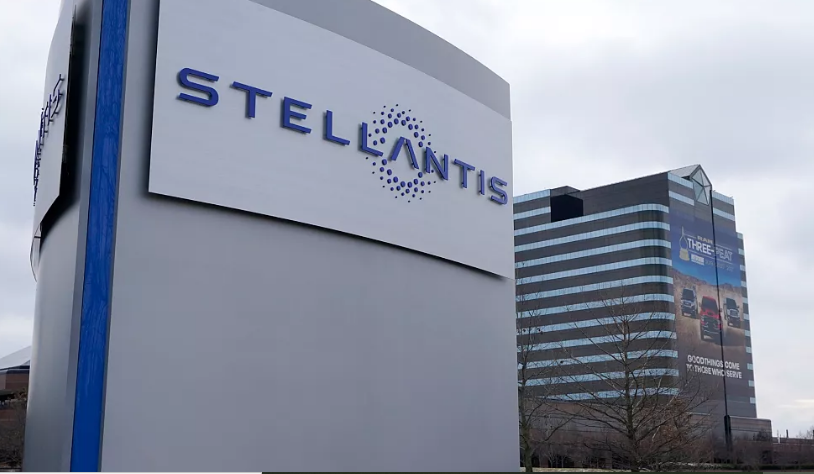
Stellantis has named Antonio Filosa, its Chief Operating Officer for North America, as the company’s new Chief Executive Officer, following the unexpected resignation of former CEO Carlos Tavares in December. Filosa, 51, will formally assume the role on June 23, pending approval at an upcoming shareholder meeting.

The announcement, made on Monday, comes at a turbulent time for the world’s fourth-largest carmaker, which has been grappling with slowing sales in key markets and internal disagreements over the pace of electrification.

Stellantis, the multinational automotive group behind 14 brands including Peugeot, Fiat, Chrysler, Citroën, and Jeep, issued a profit warning last September due to slumping demand in the United States and Europe. The warning preceded the abrupt exit of Tavares, who reportedly clashed with the board over his aggressive push for a full transition to battery electric vehicles (BEVs) in Europe by 2030. The board had advocated for a more gradual approach.

Filosa’s appointment signals a strategic reset for the group, which is under pressure from weak North American performance, rising global competition, and trade policy uncertainties, particularly from the United States. Former President Donald Trump’s tariff stance on foreign automakers continues to cast a shadow over multinational manufacturers like Stellantis.

In its official statement, the company praised Filosa for his “proven track record of hands-on success during his more than 25 years in the automotive industry,” as well as his “unrivalled knowledge of the company and recognised leadership qualities.” The Naples-born executive has held various leadership roles across Stellantis’ global operations and was promoted to head of North America shortly after Tavares’ departure.

See also  Trump Highlights McDonald’s in Economic Message as Beef Prices Rise

During his tenure in North America, Filosa has worked to reduce bloated inventories and restore dealer confidence following months of sluggish sales. As CEO, he will now oversee a vast portfolio of brands and be tasked with balancing profitability, innovation, and sustainability across diverse markets.

Filosa’s leadership will be closely watched as Stellantis navigates regulatory shifts, intensifying competition in electric vehicles, and a volatile geopolitical landscape. The shareholder meeting to confirm his appointment is expected to be announced in the coming days.
Business

Oil Market Faces Near-Term Oversupply but Long-Term Supply Risks, Forecasts Show

Published

on

The global oil market is set to enter 2026 with a comfortable surplus that is expected to weigh on prices, even as analysts warn of deeper structural challenges looming later in the decade. New projections from Oxford Economics indicate Brent crude could finish 2026 at around $58 per barrel and ease to roughly $55 in 2027, well below prevailing market expectations. The forecasts are anchored in a sustained supply surplus projected to exceed 2 million barrels per day.

Global production is expected to rise by about 1.6 million barrels per day next year, bringing total output to around 106 million barrels per day. Demand is forecast to increase at a slower pace, climbing to 104 million barrels per day in 2026. The supply outlook has been lifted by stronger US shale performance and faster progress on major developments in Brazil. Despite lower rig numbers and expectations of West Texas Intermediate trading below $55, improvements in drilling efficiency are allowing US production to grow by approximately 400,000 barrels per day.

Latin America continues to play an important role in the supply picture. Brazil and Guyana are set to add a combined 1.6 million barrels per day across 2025 and 2026. OPEC is projected to restore nearly 1 million barrels per day in the second half of 2026 as key members, including Saudi Arabia and the UAE, start trimming back voluntary cuts.

On the demand side, growth is expected to slow to around 600,000 barrels per day next year, led mainly by emerging markets and OPEC economies. Consumption in advanced economies is forecast to level off due to efficiency improvements and rising electrification. China remains a central driver, supported by manufacturing and petrochemical activity, while demand in the United States is expected to decline structurally.

See also  Commerzbank Delivers Strongest Quarterly Results in Over a Decade Amid Takeover Tensions

Against this backdrop of near-term abundance, some analysts are drawing attention to risks that could arise in the next decade. Ole Hansen, Head of Commodity Strategy at Saxo Bank, said current prices may not support the level of upstream investment needed to offset natural declines in existing fields. He noted global fields lose between 6 million and 8 million barrels per day each year, requiring roughly $500 billion in annual investment just to maintain today’s output levels.

Hansen warned that the industry may face a supply shortfall early in the 2030s if investment continues to lag. He pointed out that Saudi Arabia and the UAE remain the only major producers with meaningful spare capacity, while US shale growth is showing signs of slowing.

The International Energy Agency recently revised its long-term outlook, now projecting oil demand to grow well beyond 2040. The shift heightens concerns that delays in investment could lead to sharper price increases later.

Analysts say risks to the 2026 outlook cut both ways. A faster slowdown in US shale, renewed OPEC restraint or geopolitical disruptions could push prices higher, while a larger-than-expected surplus early next year could trigger steeper price drops.

Despite the near-term softness, the debate over long-term supply needs is intensifying. Some analysts warn that postponing investment today could set the stage for tighter markets later in the decade.

Continue Reading

Business

UAE Mobile Sector Set for Solid Growth as 5G Adoption Accelerates

Published

on

The UAE’s mobile services industry is on track for steady expansion through the end of the decade, driven by surging data consumption and rapid uptake of 5G technology, according to new projections from analytics firm GlobalData.

The company’s latest “UAE Mobile Broadband Forecast (Q3 2025)” shows mobile service revenue is expected to rise at a compound annual growth rate of 4 per cent between 2025 and 2030. The report points to a sharp split between declining voice services and fast-growing data usage. Mobile voice revenue is set to fall at a CAGR of 4.1 per cent during the period as more customers shift to app-based calling, while mobile data revenue is projected to expand at 7.4 per cent annually.

Srikanth Vaidya, telecom analyst at GlobalData, said monthly data usage per customer is likely to jump from around 12.9GB in 2025 to about 35GB by 2030. He cited rising consumption of video streaming, social media, gaming and other data-heavy applications as key drivers of this shift.

The forecast also shows a strong push toward 5G across the country. By 2030, 5G subscriptions are expected to account for about 80 per cent of all mobile connections in the UAE. The outlook aligns with other regional projections, including the Ericsson Mobility Report, which estimates 5G penetration in GCC states could reach 93 per cent by the end of the decade.

Growth in machine-to-machine (M2M) and Internet-of-Things (IoT) connections is also shaping the sector. GlobalData expects M2M and IoT subscriptions in the UAE to rise from 4 million in 2025 to 6.7 million in 2030, driven by increased adoption of automation, predictive maintenance tools and edge-computing solutions across manufacturing, logistics and supply-chain operations.

See also  U.S. Economy Contracts for First Time in Three Years Amid Tariff Turmoil

Recent market data illustrates the momentum. A September 2025 industry snapshot recorded total mobile subscriptions at 22.9 million, up 8.5 per cent from the previous year. e& UAE, the country’s largest operator, reported a 6.9 per cent year-on-year increase in its subscriber base in the third quarter of 2025, bringing total customers to 15.7 million. The company attributed the rise to strong demand for its 5G services, digital products and enterprise offerings.

Analysts view the current landscape as a critical transition period for telecom operators. Vaidya said the market is entering a “high-value phase” characterised by intense data usage, widespread 5G adoption and the rapid expansion of IoT-based services. Companies investing in advanced network upgrades, enterprise technologies and data-centric solutions are expected to outperform those relying on traditional voice revenues.

Regional trends support this shift. A Nokia report published earlier this year predicts that across the Middle East and Africa, 82 per cent of mobile connections will migrate to 4G or 5G by 2030, with 5G carrying most of the region’s mobile traffic.

Analysts say the UAE’s telecom sector is undergoing a structural change as the market pivots from voice-led services to a future shaped by high-speed data, digital platforms and connected devices. They expect the coming years to bring faster networks, expanded 5G coverage and a new wave of data-driven services for both consumers and businesses.

Continue Reading

Business

Italy and Saudi Arabia Push Trade Ties Forward at First Joint Business Forum

Published

on

Italy and Saudi Arabia have taken a major step toward deepening economic cooperation with the launch of the first Italy–Saudi Arabia Business Forum in Riyadh, an event aimed at strengthening commercial partnerships and supporting Italy’s ambition to reach €700 billion in exports under its national Export Action Plan.

Held at the Mandarin Oriental Al Faisaliah in the Saudi capital, the forum was organised by the Italian Trade Agency (ITA) and the Italian Embassy, in collaboration with Saudi institutional partners. The gathering brought together senior officials from both countries, including Saudi Minister of Investment Khalid bin Abdulaziz Al-Falih and Italy’s Deputy Prime Minister and Foreign Minister Antonio Tajani. Leading representatives from Italian institutions such as SACE, Confindustria and Simest also attended.

The event was structured around five key sectors: infrastructure and mobility; construction and furniture; pharmaceuticals and life sciences; advanced technology; agritech and agro-industry; and cultural and sports-related industries. More than 430 Italian companies and over 600 Saudi companies took part, marking the highest level of bilateral business engagement between the two nations.

Matteo Zoppas, President of the Italian Trade Agency, said the forum builds on strengthened political ties following Prime Minister Giorgia Meloni’s recent visit to Saudi Arabia. He highlighted the alignment of Italian industrial capabilities with opportunities emerging from Saudi Arabia’s Vision 2030 agenda, which is opening pathways for foreign investment and raising demand for high-quality global expertise.

According to Zoppas, the B2B platform activated for the forum generated significant activity, receiving more than 337 meeting requests and facilitating nearly 4,300 exchanges between participating companies. He noted that 20 agreements were signed across sectors such as sustainable mobility, medical technology, digital innovation, agribusiness, and cultural industries—areas that Saudi policymakers have prioritised for expansion.

See also  EU Warns Italy Over Golden Power Use in UniCredit-Banco BPM Merger

Trade data reflects the momentum behind the relationship. Italian exports to Saudi Arabia reached €4.4 billion in the first nine months of 2025, a 4.3% increase compared to the same period last year. Total exports for 2024 stood at €6.2 billion, up 27.8% from 2023. Italy has now moved from eighth to seventh place among the Kingdom’s top suppliers.

The Italian Trade Agency has played a central role in nurturing these ties. In 2024, its Riyadh office delivered 43 promotional initiatives, ranging from supporting Saudi delegations at Italian trade fairs to organising events across multiple sectors. For 2025, 50 initiatives are planned, including participation in Agrilevante, Marmomac, Euroflora and Italian Design Days, as well as a visit to Jeddah by the training ship Amerigo Vespucci.

With a total of 93 initiatives scheduled across 2024 and 2025, Italian officials say the expanding programme reflects a sustained commitment to developing long-term commercial ties with Saudi Arabia amid rapid economic transformation in the region.

Continue Reading

Trending