Connect with us

Business

Oil Prices Surge, Global Markets Slide Amid U.S. Strikes on Iran

Published

on

Global financial markets responded nervously on Monday after the United States launched a series of airstrikes on Iranian nuclear and military facilities over the weekend, sparking fears of broader regional instability and a potential disruption to global oil supplies.

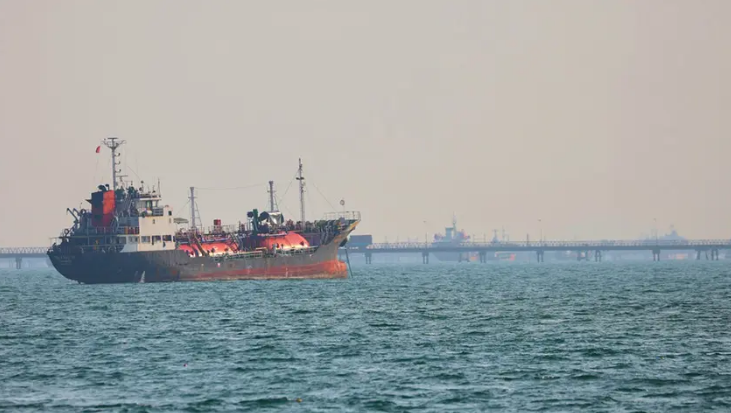
Brent crude rose 1.53% to $78.19 a barrel, while West Texas Intermediate (WTI) climbed 1.48% to $74.93 as of early Monday morning in Europe. The price surge came as tensions between Washington and Tehran intensified, raising concerns over the security of energy supplies through the Strait of Hormuz—a vital oil transit chokepoint.

The strikes marked a significant escalation in the ongoing conflict, which began with Israeli attacks on Iran earlier this month. U.S. President Donald Trump defended the action, stating that Iran must never be allowed to acquire a nuclear weapon. In response, Iranian President Masoud Pezeshkian vowed, “Iran will never surrender to bullying and oppression.” Meanwhile, Iranian Foreign Minister Abbas Araghchi arrived in Moscow for talks with Russian President Vladimir Putin, as diplomatic efforts ramped up.

European markets opened in negative territory. London’s FTSE 100 slipped 0.28% to 8,749.98, while France’s CAC 40 fell 0.66% and Germany’s DAX dropped 0.55%. Italy’s FTSE MIB posted the sharpest fall among major European indices, down 0.97%.

Broader indices across Europe also felt the impact. The pan-European STOXX 600 declined 0.28% and the EURO STOXX 50 dipped 0.26%.

U.S. futures mirrored the cautious sentiment. The S&P 500 was down 0.13%, while the Dow Jones Industrial Average futures dropped 0.2%. Nasdaq futures declined 0.18%, reflecting investor unease as markets opened for the week.

See also  Global Markets in Turmoil as U.S. Tariffs Trigger Trade War Fears

Asian markets were mixed. Japan’s Nikkei 225 lost 0.19%, South Korea’s Kospi fell 0.3%, and Australia’s ASX 200 dipped 0.37%. However, Hong Kong’s Hang Seng rose 0.35% and Shanghai’s Composite Index edged up 0.13%.

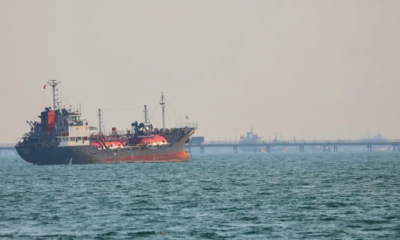
With Iran being a major oil producer and located along the critical Strait of Hormuz—through which roughly one-fifth of the world’s oil passes—investors are bracing for possible retaliatory actions. While shipping giant Maersk confirmed continued operations through the strait, vessel tracking showed that two supertankers made abrupt U-turns there on Sunday, suggesting growing operational risks.

Analysts say Iran is unlikely to close the Strait of Hormuz entirely, as it remains essential for its own oil exports, primarily to China. However, any interference in shipping lanes or attacks on regional oil infrastructure could trigger further price spikes and fuel market volatility.

In a post on Truth Social, President Trump hinted at possible political changes in Tehran, writing: “If the current Iranian regime is unable to make Iran great again, why wouldn’t there be regime change?” His comment appeared to contradict earlier assurances from Vice President J.D. Vance, who said regime change was not the administration’s goal.

For now, markets remain on edge as the world watches for Iran’s next move.

Business

Millions Across EU Struggle to Heat Their Homes as Fuel Poverty Rises

Published

on

New data shows a growing number of Europeans are unable to keep their homes adequately warm, signalling a deepening social challenge that has persisted since the energy shock triggered by Russia’s invasion of Ukraine. Despite housing being recognised as a basic social right, the crisis now affects tens of millions of residents across the continent.

Eurostat figures reveal that more than 41 million people in the European Union — equal to 9.2% of the population — could not afford sufficient heating in 2024. Nearly two-thirds of those affected live in the EU’s four largest economies, underscoring the widespread nature of the problem even in wealthier member states.

Living in a cold home carries well-documented health risks. Research links low indoor temperatures to higher rates of respiratory infections, strokes and accidents caused by reduced physical dexterity. While the percentages vary significantly from country to country, the scale becomes stark when converted into actual population numbers.

Euronews Business used the EU’s January 2024 population data to estimate the number of people affected. Finland records the lowest share at 2.7%, while Bulgaria and Greece sit at the top with around 19% of residents unable to heat their homes properly.

When candidate countries and EFTA states are included, the range becomes wider. Switzerland reports the lowest share at 0.7%, while Albania stands out at 33.8%. North Macedonia also reports high levels, with more than 30% of its population struggling to maintain adequate indoor warmth. In EU and neighbouring states, the rate exceeds 10% in Lithuania, Spain, Portugal, Turkey, Cyprus, Montenegro, France and Romania.

See also  Wall Street Rises Ahead of Tariff Deadline as Investors Eye Global Trade Developments

Turkey records the largest number of people affected among the 36 countries monitored. Around 12.9 million residents were unable to heat their homes in 2024, even though the country has some of the lowest gas and electricity prices across Europe based on Eurostat measurements. Spain follows with an estimated 8.5 million people, and France records roughly 8.1 million. Germany has around 5.3 million residents in this category, while Italy has 5.1 million.

Experts describe fuel poverty as a condition in which households limit energy use to the point that health and wellbeing are compromised. The European Commission identifies three central drivers: high energy expenditure as a share of income, low household income and poorly insulated buildings.

The Commission says the strain on households intensified after the COVID-19 pandemic and the surge in energy prices following the outbreak of war in Ukraine in 2022. While the share of people unable to heat their homes had been falling for much of the past decade, it rose again after the crisis. A slight improvement was recorded last year.

Officials attribute the recent progress to falling retail prices for electricity and gas, along with national investments in energy efficiency and stronger policymaking around energy poverty.

Euronews Business recently analysed energy costs across Europe, outlining which countries face the highest and lowest electricity and gas prices when measured in both euro terms and purchasing power standards.

Continue Reading

Business

Oil Market Faces Near-Term Oversupply but Long-Term Supply Risks, Forecasts Show

Published

on

The global oil market is set to enter 2026 with a comfortable surplus that is expected to weigh on prices, even as analysts warn of deeper structural challenges looming later in the decade. New projections from Oxford Economics indicate Brent crude could finish 2026 at around $58 per barrel and ease to roughly $55 in 2027, well below prevailing market expectations. The forecasts are anchored in a sustained supply surplus projected to exceed 2 million barrels per day.

Global production is expected to rise by about 1.6 million barrels per day next year, bringing total output to around 106 million barrels per day. Demand is forecast to increase at a slower pace, climbing to 104 million barrels per day in 2026. The supply outlook has been lifted by stronger US shale performance and faster progress on major developments in Brazil. Despite lower rig numbers and expectations of West Texas Intermediate trading below $55, improvements in drilling efficiency are allowing US production to grow by approximately 400,000 barrels per day.

Latin America continues to play an important role in the supply picture. Brazil and Guyana are set to add a combined 1.6 million barrels per day across 2025 and 2026. OPEC is projected to restore nearly 1 million barrels per day in the second half of 2026 as key members, including Saudi Arabia and the UAE, start trimming back voluntary cuts.

On the demand side, growth is expected to slow to around 600,000 barrels per day next year, led mainly by emerging markets and OPEC economies. Consumption in advanced economies is forecast to level off due to efficiency improvements and rising electrification. China remains a central driver, supported by manufacturing and petrochemical activity, while demand in the United States is expected to decline structurally.

See also  Disparities in Material Welfare Highlighted Across Europe: A Closer Look at Actual Individual Consumption

Against this backdrop of near-term abundance, some analysts are drawing attention to risks that could arise in the next decade. Ole Hansen, Head of Commodity Strategy at Saxo Bank, said current prices may not support the level of upstream investment needed to offset natural declines in existing fields. He noted global fields lose between 6 million and 8 million barrels per day each year, requiring roughly $500 billion in annual investment just to maintain today’s output levels.

Hansen warned that the industry may face a supply shortfall early in the 2030s if investment continues to lag. He pointed out that Saudi Arabia and the UAE remain the only major producers with meaningful spare capacity, while US shale growth is showing signs of slowing.

The International Energy Agency recently revised its long-term outlook, now projecting oil demand to grow well beyond 2040. The shift heightens concerns that delays in investment could lead to sharper price increases later.

Analysts say risks to the 2026 outlook cut both ways. A faster slowdown in US shale, renewed OPEC restraint or geopolitical disruptions could push prices higher, while a larger-than-expected surplus early next year could trigger steeper price drops.

Despite the near-term softness, the debate over long-term supply needs is intensifying. Some analysts warn that postponing investment today could set the stage for tighter markets later in the decade.

Continue Reading

Business

UAE Mobile Sector Set for Solid Growth as 5G Adoption Accelerates

Published

on

The UAE’s mobile services industry is on track for steady expansion through the end of the decade, driven by surging data consumption and rapid uptake of 5G technology, according to new projections from analytics firm GlobalData.

The company’s latest “UAE Mobile Broadband Forecast (Q3 2025)” shows mobile service revenue is expected to rise at a compound annual growth rate of 4 per cent between 2025 and 2030. The report points to a sharp split between declining voice services and fast-growing data usage. Mobile voice revenue is set to fall at a CAGR of 4.1 per cent during the period as more customers shift to app-based calling, while mobile data revenue is projected to expand at 7.4 per cent annually.

Srikanth Vaidya, telecom analyst at GlobalData, said monthly data usage per customer is likely to jump from around 12.9GB in 2025 to about 35GB by 2030. He cited rising consumption of video streaming, social media, gaming and other data-heavy applications as key drivers of this shift.

The forecast also shows a strong push toward 5G across the country. By 2030, 5G subscriptions are expected to account for about 80 per cent of all mobile connections in the UAE. The outlook aligns with other regional projections, including the Ericsson Mobility Report, which estimates 5G penetration in GCC states could reach 93 per cent by the end of the decade.

Growth in machine-to-machine (M2M) and Internet-of-Things (IoT) connections is also shaping the sector. GlobalData expects M2M and IoT subscriptions in the UAE to rise from 4 million in 2025 to 6.7 million in 2030, driven by increased adoption of automation, predictive maintenance tools and edge-computing solutions across manufacturing, logistics and supply-chain operations.

See also  Small Business Trends and Developments in 2024

Recent market data illustrates the momentum. A September 2025 industry snapshot recorded total mobile subscriptions at 22.9 million, up 8.5 per cent from the previous year. e& UAE, the country’s largest operator, reported a 6.9 per cent year-on-year increase in its subscriber base in the third quarter of 2025, bringing total customers to 15.7 million. The company attributed the rise to strong demand for its 5G services, digital products and enterprise offerings.

Analysts view the current landscape as a critical transition period for telecom operators. Vaidya said the market is entering a “high-value phase” characterised by intense data usage, widespread 5G adoption and the rapid expansion of IoT-based services. Companies investing in advanced network upgrades, enterprise technologies and data-centric solutions are expected to outperform those relying on traditional voice revenues.

Regional trends support this shift. A Nokia report published earlier this year predicts that across the Middle East and Africa, 82 per cent of mobile connections will migrate to 4G or 5G by 2030, with 5G carrying most of the region’s mobile traffic.

Analysts say the UAE’s telecom sector is undergoing a structural change as the market pivots from voice-led services to a future shaped by high-speed data, digital platforms and connected devices. They expect the coming years to bring faster networks, expanded 5G coverage and a new wave of data-driven services for both consumers and businesses.

Continue Reading

Trending