Business
Meta Wins Landmark Antitrust Case as Judge Rules Instagram and WhatsApp Purchases Legal
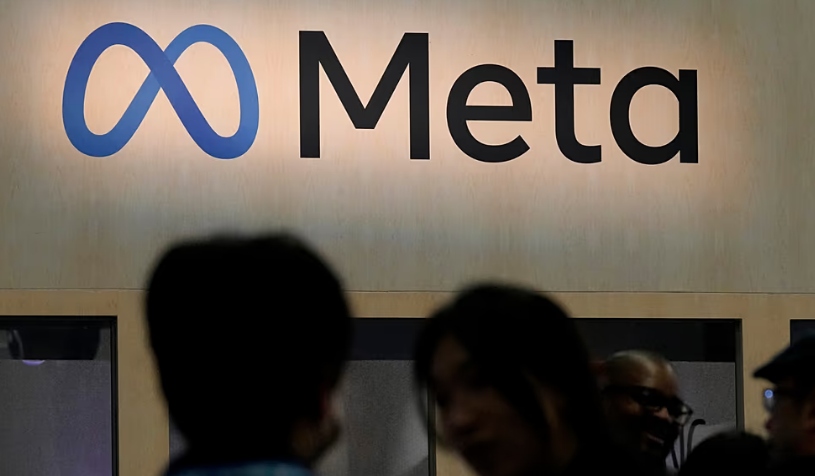
Meta secured a major legal victory on Tuesday after a US federal judge ruled that the company’s acquisitions of Instagram and WhatsApp do not violate antitrust law, ending a high-stakes challenge that aimed to break up one of the world’s largest technology firms.
US District Judge James Boasberg issued the ruling months after the trial concluded in late May. The decision rejects the Federal Trade Commission’s attempt to prove that Meta holds a monopoly in social networking and maintained that position through unlawful tactics. The outcome contrasts sharply with recent rulings against Google, which was found to hold illegal monopolies in online search and digital advertising.
In a detailed opinion, Boasberg wrote that the FTC failed to demonstrate that Meta currently dominates the market to the extent required to justify federal intervention. “Whether or not Meta enjoyed monopoly power in the past, the agency must show that it continues to hold such power now. The Court’s verdict today determines that the FTC has not done so,” he stated.
The FTC argued that Meta followed a strategy expressed by CEO Mark Zuckerberg in 2008: “It is better to buy than compete.” The agency said Meta monitored rising rivals and acquired promising companies to avoid competitive threats. Prosecutors pointed to internal emails from the period surrounding the Instagram purchase as evidence that the company acted to shut down competition.
Zuckerberg, testifying in April, disputed claims that Instagram was bought to neutralise a challenger. He acknowledged the authenticity of the emails but said they did not reflect the full reasoning behind the acquisition. Boasberg stressed that the case hinged not on events from a decade ago — including the acquisitions the FTC previously approved — but on whether Meta now violates antitrust law. To win, prosecutors were required to prove a current or imminent breach.
The agency also accused Meta of adopting policies that made it harder for new entrants to build scale as the industry shifted from desktop computers to mobile devices. The judge noted that the tech landscape has transformed significantly since the FTC filed the lawsuit in 2020. Platforms such as TikTok, absent from early rulings in the case, now play a central role in global social media competition.
Meta welcomed the ruling. Chief legal officer Jennifer Newstead said it “recognises that Meta faces fierce competition” and added that the company will continue working with US authorities while investing domestically.
Analysts said the decision aligns with recent industry trends as Meta races to keep pace with newer rivals. Still, they noted that major social platforms face upcoming US trials next year tied to concerns about young users’ mental health.
Meta’s acquisitions of Instagram in 2012 for about $1 billion and WhatsApp in 2014 for $22 billion helped the company shift from desktop to mobile and retain younger audiences. Despite the significance of Tuesday’s ruling, shares of Meta closed slightly lower, matching movements across broader markets.
Business
PayPal Seeks Utah Bank Charter to Expand Small Business Lending
PayPal has applied to establish a Utah-chartered bank, a move that would allow the company to hold deposits and increase lending capacity to small businesses. The San Jose-based online payments giant aims to strengthen its banking operations and offer more direct financial services, reducing its reliance on third-party partners.
While PayPal already provides small-business loans through products like PayPal Working Capital, it does so mainly in partnership with traditional banks, using external balance sheets. Creating PayPal Bank would allow the company to fund loans more directly, operate with greater efficiency, and maintain increased control over deposit and lending activities.
“Securing capital remains a significant hurdle for small businesses striving to grow and scale,” said Alex Chriss, PayPal president and CEO. “Establishing PayPal Bank will strengthen our business and improve our efficiency, enabling us to better support small business growth and economic opportunities across the US.”
In addition to lending, PayPal expects to offer interest-bearing savings accounts to customers, expanding its financial product offerings beyond payments and credit services. The company already holds a banking licence in Luxembourg, allowing it to provide certain banking services in Europe.
PayPal is pursuing a state-chartered industrial loan company (ILC) licence in Utah. ILCs are a special category of banks allowed in only a few US states, including Utah, and can be owned by non-bank parent companies such as fintech firms or retailers. Unlike traditional banks, ILCs are not required to register as a bank holding company under the Bank Holding Company Act, which subjects the entire corporate group to Federal Reserve oversight.
Utah has long been a hub for ILCs due to its established regulatory framework and experience overseeing banks owned by non-banking corporations. Major companies with Utah-based ILCs include Ally Bank, originating from General Motors’ financing arm, and Toyota Financial Savings Bank, which supports Toyota’s auto-financing business.
If PayPal’s application is approved, Mara McNeill will serve as President of PayPal Bank. McNeill brings over 25 years of experience in banking, commercial lending, and private equity. Before joining PayPal, she oversaw a similar transition to an ILC as President and CEO of Toyota Financial Savings Bank.
PayPal’s move signals a growing trend of fintech companies seeking more control over financial services. By establishing its own bank, the company hopes to streamline operations, offer more flexible products to small businesses, and strengthen its foothold in the US financial services market.
The application is now under review by Utah regulators, who will assess the company’s suitability to operate a state-chartered bank. Approval would mark a significant expansion for PayPal, combining its payments expertise with a broader banking role in the domestic market.
Business
European Bank Stocks Post Record Gains in 2025, Eyes Turn to Growth in 2026
European bank stocks recorded their strongest year on record in 2025, driven by resilient economic growth, high profit margins, and robust capital returns. Investors are now focusing on earnings growth, efficiency improvements, and sustained shareholder payouts as the sector enters 2026.
The EURO STOXX Banks Index surged 76 percent year-to-date as of December 12, surpassing the previous record gain of 74 percent in 1997. Every constituent of the index posted positive returns, with several banks achieving triple-digit gains. Notable performers include Société Générale and Commerzbank, which rose 139 percent and 136 percent respectively. Spain’s Banco Santander climbed 110 percent, while ABN Amro increased 102 percent. Other strong performers included BBVA (+101%), CaixaBank (+96%), Deutsche Bank (+92%), Bankinter (+86%), and Bank of Ireland (+84%).
Analysts attribute the rally to a combination of favourable macroeconomic conditions. Interest rates remained high enough to support net interest margins, economic growth stayed strong enough to protect asset quality, and banks maintained capital buffers that allowed generous shareholder distributions. The European Central Bank paused its rate-cutting cycle in June 2025, keeping the deposit facility rate at 2 percent. While below the peaks of 2023–24, these levels were above pre-pandemic norms, helping lenders preserve elevated margins.
Economic performance across the eurozone exceeded expectations. Germany avoided a deep industrial recession, southern Europe benefited from strong tourism and EU investment flows, and fiscal policy remained mildly supportive. Credit conditions held steady, loan losses stayed contained, and investor confidence in bank balance sheets strengthened. Strong capital levels allowed banks to increase dividends, share buybacks, and other forms of shareholder returns.
Valuations also contributed to the rally. European banks began 2025 trading at substantial discounts to book value and global peers, reflecting years of negative interest rates, heavy regulation, and subdued profitability. Global portfolio flows further supported the sector, with international investors rotating into European value stocks and financials, aided by a stronger euro.
Looking ahead to 2026, analysts remain broadly optimistic. Goldman Sachs analyst Chris Hallam said investor attention is likely to shift from interest rates and credit to growth and efficiency. He expects ongoing deposit inflows, deposit-focused strategies, and gradual loan growth to drive earnings. Returns are projected to remain in the mid-teens over the medium term, supported by well-capitalised banks capable of deploying capital through organic growth, selective mergers and acquisitions, and shareholder distributions.
Goldman Sachs highlighted high-conviction European bank stocks with potential upside, including UBS Group (34%), UniCredit (29%), Banco BPM (29%), Julius Baer (25%), Alpha Bank (21%), and KBC Group (21%). Analysts suggest that, even after a historic 2025, the sector’s rally may not yet be complete.
After a record-breaking year, European banks are entering 2026 not just as a recovery story but as a sector increasingly evaluated on growth execution, efficiency gains, and disciplined capital management.
Business
Millions Across EU Struggle to Heat Their Homes as Fuel Poverty Rises
New data shows a growing number of Europeans are unable to keep their homes adequately warm, signalling a deepening social challenge that has persisted since the energy shock triggered by Russia’s invasion of Ukraine. Despite housing being recognised as a basic social right, the crisis now affects tens of millions of residents across the continent.
Eurostat figures reveal that more than 41 million people in the European Union — equal to 9.2% of the population — could not afford sufficient heating in 2024. Nearly two-thirds of those affected live in the EU’s four largest economies, underscoring the widespread nature of the problem even in wealthier member states.
Living in a cold home carries well-documented health risks. Research links low indoor temperatures to higher rates of respiratory infections, strokes and accidents caused by reduced physical dexterity. While the percentages vary significantly from country to country, the scale becomes stark when converted into actual population numbers.
Euronews Business used the EU’s January 2024 population data to estimate the number of people affected. Finland records the lowest share at 2.7%, while Bulgaria and Greece sit at the top with around 19% of residents unable to heat their homes properly.
When candidate countries and EFTA states are included, the range becomes wider. Switzerland reports the lowest share at 0.7%, while Albania stands out at 33.8%. North Macedonia also reports high levels, with more than 30% of its population struggling to maintain adequate indoor warmth. In EU and neighbouring states, the rate exceeds 10% in Lithuania, Spain, Portugal, Turkey, Cyprus, Montenegro, France and Romania.
Turkey records the largest number of people affected among the 36 countries monitored. Around 12.9 million residents were unable to heat their homes in 2024, even though the country has some of the lowest gas and electricity prices across Europe based on Eurostat measurements. Spain follows with an estimated 8.5 million people, and France records roughly 8.1 million. Germany has around 5.3 million residents in this category, while Italy has 5.1 million.
Experts describe fuel poverty as a condition in which households limit energy use to the point that health and wellbeing are compromised. The European Commission identifies three central drivers: high energy expenditure as a share of income, low household income and poorly insulated buildings.
The Commission says the strain on households intensified after the COVID-19 pandemic and the surge in energy prices following the outbreak of war in Ukraine in 2022. While the share of people unable to heat their homes had been falling for much of the past decade, it rose again after the crisis. A slight improvement was recorded last year.
Officials attribute the recent progress to falling retail prices for electricity and gas, along with national investments in energy efficiency and stronger policymaking around energy poverty.
Euronews Business recently analysed energy costs across Europe, outlining which countries face the highest and lowest electricity and gas prices when measured in both euro terms and purchasing power standards.
-
Entertainment1 year agoMeta Acquires Tilda Swinton VR Doc ‘Impulse: Playing With Reality’
-
Business2 years agoSaudi Arabia’s Model for Sustainable Aviation Practices
-
Business2 years agoRecent Developments in Small Business Taxes
-
Home Improvement1 year agoEffective Drain Cleaning: A Key to a Healthy Plumbing System
-
Politics2 years agoWho was Ebrahim Raisi and his status in Iranian Politics?
-
Business1 year agoCarrectly: Revolutionizing Car Care in Chicago
-
Sports1 year agoKeely Hodgkinson Wins Britain’s First Athletics Gold at Paris Olympics in 800m
-
Business1 year agoSaudi Arabia: Foreign Direct Investment Rises by 5.6% in Q1