
Business
German Economy Contracts in Second Quarter as Tariffs and Weak Industrial Output Take Toll


Germany’s economy slipped back into contraction in the second quarter of the year, raising fresh concerns about the country’s ability to weather mounting trade pressures and structural challenges.
Figures released by the Federal Statistical Office on Friday showed gross domestic product (GDP) fell by 0.3 percent from April to June compared with the previous quarter. The decline was steeper than the initial estimate of a 0.1 percent contraction and followed modest growth at the start of the year, when businesses ramped up exports to the United States ahead of new tariffs.
The statistics office noted that industrial production had performed “worse than initially assumed,” dragging down overall output. Household spending was also weaker than first estimated, revised to growth of just 0.1 percent after incorporating June data on accommodation and food services.
While government consumption rose by 0.8 percent, investments, construction activity, and net exports all posted declines. The result marked a return to recessionary conditions for Europe’s largest economy, which has faced persistent headwinds from global trade disputes and shifting industrial demands.
Despite the gloomy GDP data, there are signs of resilience. A separate report released Thursday by S&P Global showed business activity in Germany’s private sector expanded for the third consecutive month in August. The survey of purchasing managers pointed to the fastest pace of growth since March, although the improvement was described as “modest.”
Some analysts link the cautious optimism to Berlin’s recent policy moves. Earlier this year, lawmakers amended Germany’s constitution to relax its strict “debt brake” rule for defense spending above 1 percent of GDP. In addition, the government established a €500 billion extrabudgetary fund to finance infrastructure projects, providing potential stimulus to offset external shocks.
Nevertheless, uncertainty over trade relations with the United States remains a significant risk. Tariffs imposed by Washington have already squeezed key export sectors, and the outlook remains clouded by the possibility of further duties.
“Recent corporate results were already a painful reminder that US tariffs, but also structural transitions, were in full swing in the second quarter, weighing on company results,” said ING economist Carsten Brzeski. He cautioned that the trend would likely persist in the coming months, with 15 percent tariffs on most European goods still in place and uncertainty over whether the current 27.5 percent duty on automobiles would be reduced.
With around 10 percent of German exports destined for the US, analysts warn that the impact of trade measures could further constrain growth in the third quarter. Annual GDP growth stood at 0.2 percent in the second quarter, down slightly from 0.3 percent in the first quarter, underscoring the fragile state of the economy.












Genetic Differences May Shape Effectiveness of Popular Weight-Loss Drugs, Study Finds

Seven-Day Meditation Retreat Linked to Measurable Changes in Brain and Body, Study Finds

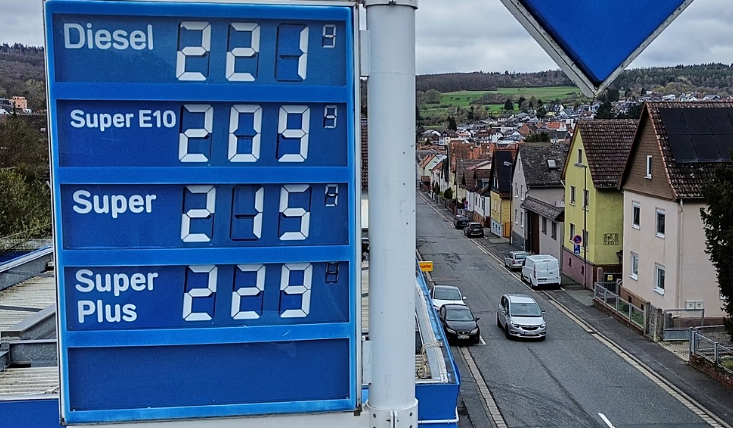
Fuel Prices Surge Across Europe as Middle East Crisis Pushes Oil Above $100

Oil Prices Surge as Strait of Hormuz Closure Shakes Markets

Britain and Norway Step Up Naval Patrols to Protect Undersea Infrastructure from Russia

Meta Launches Muse Spark, Its First Major AI Model in Nine Months

Fresh Attacks Reported Across Gulf Despite US-Iran Ceasefire Announcement

Sweden Accuses Iran of Using Criminal Gangs to Target Dissidents as Teenagers Face Trial

US-Iran Ceasefire Eases Tensions as Europe Reacts; US Politics Spill Into Hungary Vote

ENI and Egypt Announce Major Gas Discovery Amid Rising Energy Costs

Meta Acquires Tilda Swinton VR Doc ‘Impulse: Playing With Reality’

Saudi Arabia’s Model for Sustainable Aviation Practices

Recent Developments in Small Business Taxes

Effective Drain Cleaning: A Key to a Healthy Plumbing System

Who was Ebrahim Raisi and his status in Iranian Politics?

China’s Historic Olympic Victory Sparks National Pride Amid Controversy

Carrectly: Revolutionizing Car Care in Chicago

Keely Hodgkinson Wins Britain’s First Athletics Gold at Paris Olympics in 800m

Saudi Arabia: Foreign Direct Investment Rises by 5.6% in Q1

Chinese Hackers Infiltrate Major U.S. Telecom Firms in Possible National Security Breach

Sony WF-10XM4: Headphones Are Our Absolute Favorite

10 Places You Can’t Miss If It’s Your First Time in European

New Census Data Will Shake Up Alabama Politics

16 Top of Our Favorite Outdoor Clothing Brands

Fashionable Summer Accessories to Dress Up Your Travel Look

How Sleeping Less than 7 Hours a Night Can Lead to Weight Gain
-
 Entertainment2 years ago
Meta Acquires Tilda Swinton VR Doc ‘Impulse: Playing With Reality’
-
 Business2 years ago
Saudi Arabia’s Model for Sustainable Aviation Practices
-
 Business2 years ago
Recent Developments in Small Business Taxes
-
 Home Improvement1 year ago
Effective Drain Cleaning: A Key to a Healthy Plumbing System
-
 Politics2 years ago
Who was Ebrahim Raisi and his status in Iranian Politics?
-
 Sports2 years ago
China’s Historic Olympic Victory Sparks National Pride Amid Controversy
-
 Business2 years ago
Carrectly: Revolutionizing Car Care in Chicago
-
 Sports2 years ago
Keely Hodgkinson Wins Britain’s First Athletics Gold at Paris Olympics in 800m