
Business
Crédit Agricole Raises Stake in Banco BPM Amid UniCredit’s Takeover Bid

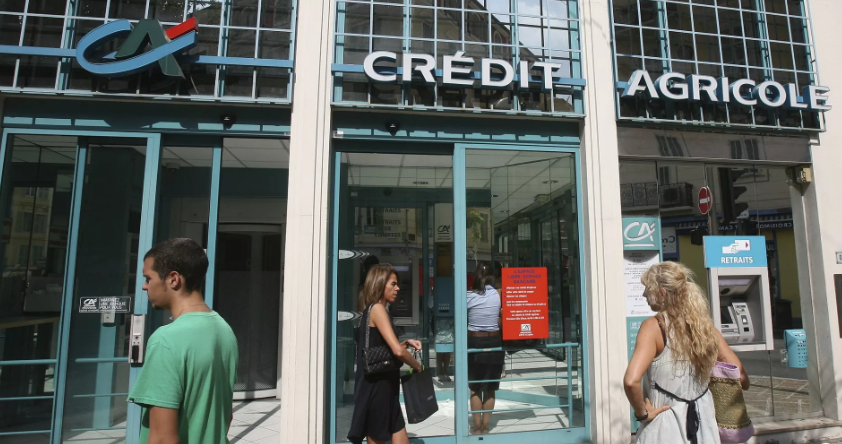
French banking giant Crédit Agricole has announced plans to increase its stake in Italian lender Banco BPM, complicating UniCredit’s recent bid to acquire the smaller Italian bank.
Banco BPM shares surged over 2% on Monday, reaching their highest levels since January 2016, following Crédit Agricole’s announcement last week. The French lender confirmed its intent to raise its ownership in Banco BPM from 9.9% to 15.1%, pending approval from Italian regulators.
Despite this move, Crédit Agricole clarified it would not launch a tender offer for Banco BPM shares, signaling that a full-scale takeover is not currently on its agenda.
“This transaction aligns with Crédit Agricole’s strategy as a long-term investor and partner of Banco BPM,” the bank stated. It highlighted its focus on strengthening industrial partnerships in consumer finance and insurance, underscoring Banco BPM’s “solid business franchise with positive financial prospects.”
Challenges to UniCredit’s Bid
The announcement comes as UniCredit, one of Italy’s largest banks, faces resistance in its €10.1 billion unsolicited bid for Banco BPM.
Banco BPM rejected the offer, arguing that it undervalued the company and expressing concerns about potential job losses, reduced competition in the Italian banking sector, and risks tied to UniCredit’s recent expansion in Germany.
UniCredit has been increasing its stake in Germany’s Commerzbank, a move that has drawn criticism from Berlin. Banco BPM contends that any takeover by UniCredit could expose stakeholders to risks associated with this German expansion.
The Italian government has also weighed in, with officials indicating they may block a UniCredit takeover if deemed contrary to national interests. However, sources suggest the Meloni administration has informally approved Crédit Agricole’s plan to boost its stake in Banco BPM.
Banco BPM’s Strategic Moves
Banco BPM has been exploring its own growth strategies. Last month, it launched a takeover bid for asset manager Anima Holding, aiming to diversify its revenue amid falling interest rates.
There have also been rumors of a potential merger between Banco BPM and Monte dei Paschi di Siena (MPS), following Banco BPM’s acquisition of a 5% stake in MPS. Such a merger could create a stronger competitor to Italy’s dominant banks, UniCredit and Intesa Sanpaolo.
Market Reactions
As of midday trading on Monday, UniCredit shares were down 0.83%, while Crédit Agricole shares rose 0.77%. A UniCredit spokesperson stated that Crédit Agricole’s stake increase “changes nothing” regarding its plans for Banco BPM.
The developments underscore a shifting landscape in European banking, with strategic maneuvers reshaping the competitive dynamics in Italy’s financial sector.






Business
US States Outpace EU Economies in Wealth Per Capita While Europe Remains Competitive in Total GDP

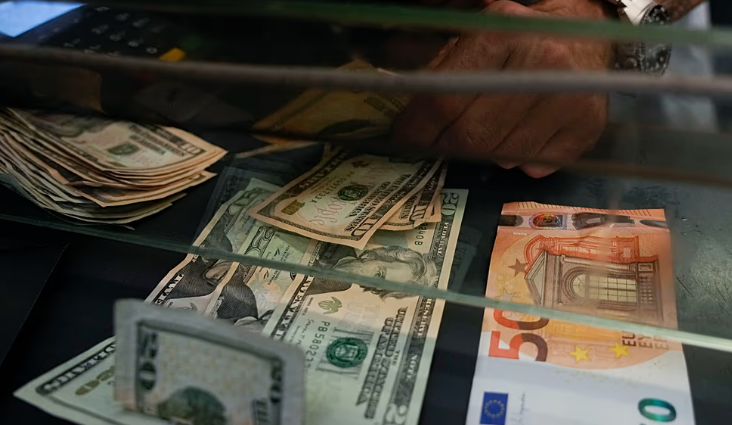
A fresh comparison of economic performance between Europe and the United States highlights a widening divide in wealth creation and living standards, with US states consistently outperforming major European economies in GDP per capita, even as Europe remains competitive in overall output.
Data drawn from Eurostat, the US Bureau of Economic Analysis and the International Monetary Fund show that Germany leads all selected economies with a GDP of €4.47 trillion in 2025. California follows closely at €3.76 trillion, reinforcing its position as the largest US state economy and one of the biggest economic units globally.
France ranks third with €2.98 trillion, ahead of Texas at €2.57 trillion. Italy records €2.26 trillion, while New York stands at €2.18 trillion. Spain comes next with €1.69 trillion, followed by Florida at €1.62 trillion. The Netherlands posts €1.18 trillion, and Illinois closes the list at €1.06 trillion.
The ranking shows a striking pattern: European countries and US states alternate throughout the table rather than clustering by region, underscoring how closely matched the two economic systems are in total output.
The picture shifts sharply when measured by GDP per capita. New York leads at €108,444, followed by California at €96,887. Illinois records €83,490, while Texas stands at €82,058, all above the US national average of €79,587. Florida ranks lowest among the US group at €69,706.
By comparison, the Netherlands tops the European group at €62,537. Germany follows at €51,817, then France at €42,671, Italy at €37,162, and Spain at €32,475. The EU average stands at €39,970, significantly below all major US states in the comparison.
When adjusted for purchasing power standards, the gap remains visible. New York again leads at 108,500 international dollars, followed by California at 90,300. Illinois and Texas remain strong at 89,300 and 87,600 respectively, while the US average stands at 89,599.
In Europe, the Netherlands posts 84,035, Germany 73,553, France 66,061, and Spain again ranks lowest among the group. Italy also falls below the EU average of 64,870.
However, the comparison is not one-sided. Research also shows that severe poverty is more pronounced in the United States than in Western Europe. A University of Oxford researcher noted that it takes about 63 minutes of work in the US to earn the equivalent of one international dollar, roughly double the time required in Germany, France and the United Kingdom.
The findings underline a dual reality: while US states generate higher income per person, European economies maintain stronger relative outcomes in certain measures of social welfare and income distribution.


Title: From Private Jets to Spaceflights: Ultra-Luxury Travel Redefines Exclusive Exploration

US States Outpace EU Economies in Wealth Per Capita While Europe Remains Competitive in Total GDP

Record Turnout Reported as Hungary’s Parliamentary Election Draws Millions to the Polls

Hungary Votes in High-Stakes Election as Orbán Faces Strongest Challenge in Years

Genetic Differences May Shape Effectiveness of Popular Weight-Loss Drugs, Study Finds

Seven-Day Meditation Retreat Linked to Measurable Changes in Brain and Body, Study Finds

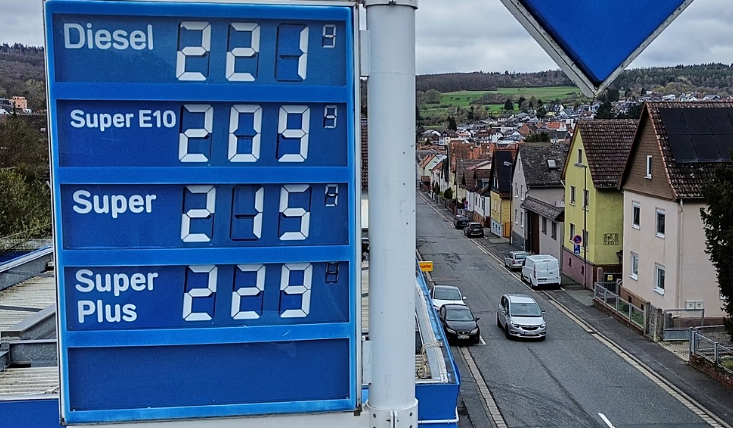
Fuel Prices Surge Across Europe as Middle East Crisis Pushes Oil Above $100

Oil Prices Surge as Strait of Hormuz Closure Shakes Markets

Britain and Norway Step Up Naval Patrols to Protect Undersea Infrastructure from Russia

Meta Launches Muse Spark, Its First Major AI Model in Nine Months

Meta Acquires Tilda Swinton VR Doc ‘Impulse: Playing With Reality’

Saudi Arabia’s Model for Sustainable Aviation Practices

Recent Developments in Small Business Taxes

Effective Drain Cleaning: A Key to a Healthy Plumbing System

Who was Ebrahim Raisi and his status in Iranian Politics?

China’s Historic Olympic Victory Sparks National Pride Amid Controversy

Carrectly: Revolutionizing Car Care in Chicago

Keely Hodgkinson Wins Britain’s First Athletics Gold at Paris Olympics in 800m

Saudi Arabia: Foreign Direct Investment Rises by 5.6% in Q1

Chinese Hackers Infiltrate Major U.S. Telecom Firms in Possible National Security Breach

Sony WF-10XM4: Headphones Are Our Absolute Favorite

10 Places You Can’t Miss If It’s Your First Time in European

New Census Data Will Shake Up Alabama Politics

16 Top of Our Favorite Outdoor Clothing Brands

Fashionable Summer Accessories to Dress Up Your Travel Look

How Sleeping Less than 7 Hours a Night Can Lead to Weight Gain
-
 Entertainment2 years ago
Meta Acquires Tilda Swinton VR Doc ‘Impulse: Playing With Reality’
-
 Business2 years ago
Saudi Arabia’s Model for Sustainable Aviation Practices
-
 Business2 years ago
Recent Developments in Small Business Taxes
-
 Home Improvement1 year ago
Effective Drain Cleaning: A Key to a Healthy Plumbing System
-
 Politics2 years ago
Who was Ebrahim Raisi and his status in Iranian Politics?
-
 Sports2 years ago
China’s Historic Olympic Victory Sparks National Pride Amid Controversy
-
 Business2 years ago
Carrectly: Revolutionizing Car Care in Chicago
-
 Sports2 years ago
Keely Hodgkinson Wins Britain’s First Athletics Gold at Paris Olympics in 800m