Connect with us

News

Hungary Votes in High-Stakes Election as Orbán Faces Strongest Challenge in Years

Published

on

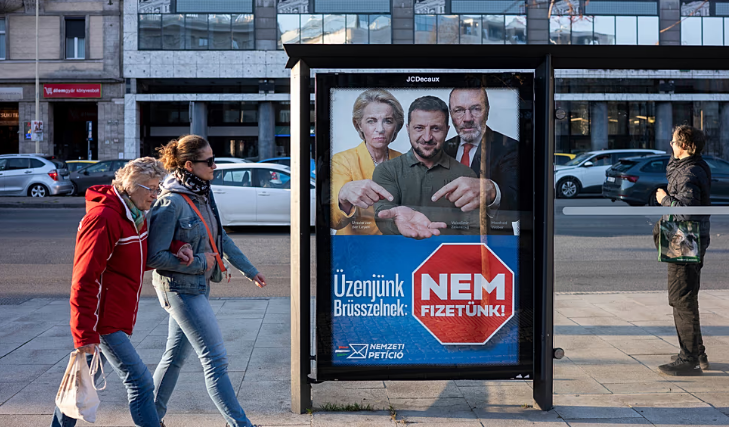
Hungary opened polling stations on Sunday in what is widely regarded as the most consequential election in decades, with veteran Prime Minister Viktor Orbán facing a serious challenge from opposition leader Péter Magyar after a campaign marked by political tension, allegations of foreign influence and deep national division.

Voting began at 6 a.m. across the country as millions of citizens headed to the polls in a contest many analysts describe as a referendum on Orbán’s 16-year rule. The prime minister, who has governed with a parliamentary supermajority since 2010, is confronting his most unified and competitive opposition to date.

Magyar, a former government insider who broke away in 2024 following a political scandal linked to a presidential pardon case, has rapidly emerged as Orbán’s primary challenger. His newly formed Tisza Party secured around 30% of the vote in last year’s European Parliament elections and has since expanded its support base, particularly in smaller towns and rural regions.

Political analysts say the election marks a break from previous contests in which opposition parties were fragmented. With Magyar consolidating anti-government support, surveys suggest a much tighter race than in previous cycles. Some polling data even projects a potential parliamentary majority shift, although figures from Orbán’s governing camp dispute these estimates and argue their support base is undercounted.

Orbán remains one of Europe’s most influential and polarising leaders. Rising to prominence after the end of communism in 1989, he returned to power in 2010 and has since reshaped Hungary’s constitutional and media framework. On the European stage, he has frequently clashed with EU institutions over migration policy, judicial reforms and Hungary’s close relationship with Russia.

See also  Israel-Hamas Truce on the Brink as Humanitarian Aid Halted

The campaign has also been shaped by foreign policy divisions. Orbán has taken a hardline stance against Ukraine’s EU accession and has maintained ties with Russian President Vladimir Putin, positioning his platform around what he calls “national sovereignty” and “patriotic politics.”

Magyar, by contrast, has pledged to restore closer ties with the European Union and NATO, aligning his movement with the European People’s Party. His supporters include several senior European political figures, though no formal foreign endorsements have been made.

The election has drawn attention across Europe, the United States and Russia, with observers viewing the outcome as significant for both EU unity and broader geopolitical alignment. Allegations of intimidation, leaked recordings and claims of attempted foreign interference have further intensified the campaign atmosphere.

Polling stations are set to close at 7 p.m., with Hungary’s mixed electoral system allocating 199 parliamentary seats through both constituency and party-list votes. Early results are expected later in the evening, with official outcomes due around midnight.

News

Pakistan Signals Near-Completion of US-Iran Peace Deal as Negotiations Intensify

Published

on

Pakistan’s Prime Minister Shehbaz Sharif said on Saturday that a proposed peace agreement between the United States and Iran was closer than ever to being finalised, with expectations that it could be completed within 24 hours. His remarks came amid heightened diplomatic activity involving multiple regional and international actors working to bridge long-standing differences between Washington and Tehran.

Iranian state media reported on Sunday that Tehran had not yet reached a final decision on the draft agreement aimed at ending tensions between the two countries. The uncertainty followed a series of statements suggesting that progress had accelerated significantly in recent days.

US President Donald Trump also indicated on Saturday that a deal was within reach, echoing optimism from mediators involved in the process, including Pakistan. In a post on his Truth Social account, Trump stated that the agreement was scheduled for signing the following day. He added that once completed, the Strait of Hormuz would be opened for unrestricted passage.

“Hopefully, this process will all work out quickly, easily, and smoothly. If it doesn’t, we have the ultimate alternative, hopefully never to be used again,” Trump said, while also emphasizing that the arrangement would prevent nuclear escalation.

Prime Minister Shehbaz Sharif, speaking earlier on Saturday, described the situation as being at its closest point to resolution. He said Pakistan was preparing for an electronic signing ceremony once final agreement was reached. According to his statement on X, technical-level discussions would continue in the days following the signing to ensure implementation of the deal’s provisions.

Diplomatic engagement continued on Sunday when a Qatari delegation arrived in Tehran. According to Iran’s Tasnim news agency, the delegation’s purpose was to review the latest developments related to the ongoing diplomatic process and maintain momentum in negotiations.

See also  IAEA Raises Alarm Over Deteriorating Safety at Europe's Largest Nuclear Plant Amid Drone Strike

Central to the proposed agreement is Iran’s commitment to fully reopen the Strait of Hormuz, a critical maritime passage for global oil and gas shipments. Another key condition involves curbing Tehran’s nuclear program, which has been a longstanding point of contention in its relations with Western powers.

While optimism has grown among mediators, Iranian authorities have not confirmed final approval, leaving the outcome uncertain. Negotiations are expected to continue as involved parties attempt to resolve outstanding issues and move toward formal agreement.

Continue Reading

News

US Orders Anthropic to Restrict Foreign Access to Advanced AI Models Amid Security Concerns

Published

on

The United States government has ordered artificial intelligence company Anthropic to suspend access to some of its most advanced AI models for foreign nationals, a move the company says it will comply with while strongly disagreeing with the reasoning behind the directive.

In a statement published on its blog late Friday, Anthropic said it received an official letter from the US government at 5:21 p.m. ET instructing it to halt access to its Fable 5 and Mythos 5 models. The decision was based on national security concerns, according to the company.

The restriction applies broadly to foreign nationals, including those located inside the United States as well as overseas, and even extends to foreign employees working at Anthropic. The company confirmed that access to other AI systems it operates will remain unaffected.

“The net effect of this order is that we must abruptly disable Fable 5 and Mythos 5 for all our customers to ensure compliance,” Anthropic said, adding that it has apologized to users and is working to restore access as quickly as possible.

The company said US authorities had raised concerns after identifying a potential “jailbreak” vulnerability in Fable 5. In AI systems, jailbreaks refer to attempts to bypass built-in safeguards and ethical restrictions, allowing users to manipulate models into performing prohibited tasks.

Anthropic described the issue as relatively limited in scope, noting that publicly available models were already able to detect similar weaknesses. The company argued that while it was complying with the directive, it did not agree that a “narrow potential jailbreak” justified withdrawing a commercial product used by hundreds of millions of users.

See also  Russian Missile Strike Kills 14 in Central Ukraine as Fighting Intensifies

It also stressed that Fable 5 had been designed with enhanced safeguards intended to reduce misuse, particularly in areas linked to cybersecurity threats.

The decision has sparked wider debate over the geopolitical implications of artificial intelligence. Jordan Bardella, a Member of the European Parliament and leader of France’s National Rally party, said the move underscores how AI has become central to questions of national sovereignty, warning that countries without domestic AI capabilities risk increasing dependence on foreign powers.

British MP and former security minister Tom Tugendhat echoed similar concerns, saying the case highlights how technological systems are now deeply tied to national security and strategic independence.

The dispute follows earlier tensions between the US government and Anthropic. In February, President Donald Trump ordered federal agencies to stop using certain Anthropic technologies after disagreements over defense applications. At the time, Trump wrote on social media that the US would “not do business with them again,” initiating a phased withdrawal period.

Anthropic has also previously announced legal action after being labeled a “supply chain risk” by US authorities, further escalating its dispute with regulators over national security policy and AI governance.

The latest directive adds to growing global friction over how advanced AI systems should be regulated, controlled, and shared across borders.

Continue Reading

News

US Sanctions Cuban Oil Company Escalate Tensions Amid Deepening Energy Crisis

Published

on

The United States has imposed new sanctions on Cuba’s state-owned oil and gas company Cupet, a move that is expected to further strain already fragile relations between Washington and Havana and deepen the island’s ongoing energy crisis.

The announcement was made on Thursday by US Secretary of State Marco Rubio, who said the measures target key assets of Cupet that he claimed were “unlawfully expropriated from American owners years ago.” The decision comes as Cuba continues to grapple with severe fuel shortages, rolling blackouts, and a strained national grid that has struggled for years under limited investment and reduced oil imports.

Rubio accused Cuban authorities of “weaponising energy” and using fuel distribution as a tool of political control. He alleged, without providing evidence, that government officials divert scarce energy supplies for military and security use while rationing fuel for the general population. He also said Cuban officials were reselling fuel on secondary markets, further worsening shortages on the island.

The Cuban government has not issued an immediate response to the latest sanctions. In previous statements, it has consistently argued that US restrictions are designed to cripple the economy and place pressure on ordinary citizens rather than the political leadership.

Cupet, which oversees Cuba’s fuel imports, refining, and distribution, operates in a heavily restricted environment. Fuel sales to the public have been severely limited in recent months, with rationing becoming widespread as the country faces one of its worst energy shortages in years.

The sanctions follow earlier US measures targeting Cuban President Miguel Díaz-Canel and other senior officials, further expanding Washington’s pressure campaign on the island’s leadership. US officials have framed the actions as part of a broader effort to push for political and economic change in Cuba.

See also  IAEA Raises Alarm Over Deteriorating Safety at Europe's Largest Nuclear Plant Amid Drone Strike

Energy shortages in Cuba have worsened over the past five years, driven by aging infrastructure, reduced foreign oil supplies, and tighter international financial constraints. The situation has resulted in frequent power outages, disruptions to public transport, and shortages of essential goods.

Some analysts say the new sanctions could intensify humanitarian challenges on the island. Critics also argue that restricting access to energy infrastructure may complicate efforts by private operators and humanitarian suppliers who rely on state-controlled systems to distribute fuel.

US officials, however, maintain that the measures are aimed at limiting what they describe as the Cuban government’s misuse of resources and its control over strategic sectors of the economy.

With tensions rising and diplomatic engagement limited, the latest sanctions mark another escalation in a long-running standoff between the two countries, with no immediate sign of de-escalation.

Continue Reading

Trending