
Tech
Merz and Meloni Double Down on Legislative Self-Restraint in Updated Italo-German Plan

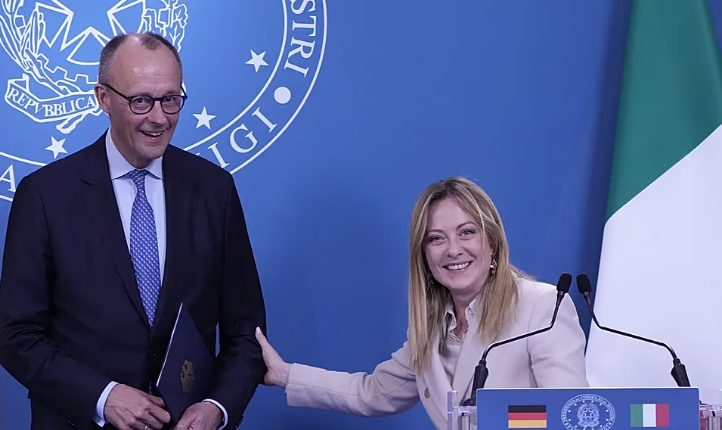
Merz and Meloni’s updated Italo-German Plan of Action doubles down on legislative self-restraint, simplification, and better regulation. The real test now is the Omnibus push and the Better Regulation reform.
Last week, German Chancellor Friedrich Merz met Italian Prime Minister Giorgia Meloni in Rome, where the two leaders signed an updated Italian-German Plan of Action aimed at strategic bilateral and European Union cooperation. The agreement spans multiple areas of both Italy-Germany collaboration and EU-wide initiatives, aligning closely with the European Commission’s strategic plans through 2029.
The plan emphasizes a continued push for “legislative self-restraint,” the simplification of existing rules, a shift in regulatory mindset, and reforms in public administration. While such goals are not new among EU leadership, the document underscores that achieving them requires not only a change in approach but also careful evaluation of both current legislation and new proposals.
Italy and Germany call for an “unbureaucratic, business- and SME-friendly implementation of EU initiatives,” advocating a “consequent simplification agenda.” The plan also stresses that proposals creating excessive administrative burdens should either be withdrawn or never tabled. Experts say these measures could significantly reduce the complexity of EU legislation if followed through, but note that successful implementation will depend on coordinated action at the Council of the EU and influence over the Commission’s agenda.
The two governments have committed to sharing positions on Omnibus proposals and jointly pursuing “meaningful simplification” and “tangible burden reduction” for startups, SMEs, and industry at large. This effort could encourage smaller EU member states to take similar stances. However, some left-leaning politicians and organisations have expressed skepticism about the Omnibus proposals, raising the possibility of resistance or delays in adoption.
The upcoming Better Regulation reform will serve as the first real test of the updated plan. The European Commission is currently running a Call for Evidence on the reform until February 4th, though only 23 responses have been submitted so far. Supporters argue that EU decision-making processes are too slow and resource-intensive, and reforms could allow for faster, more efficient legislative action.
Critics caution that if the guidelines are relaxed excessively, the consultation and evaluation processes could be weakened, allowing the Commission to select which stakeholders provide input and limiting member states’ ability to fully assess the necessity and impact of proposed legislation. This could reduce Italy and Germany’s influence in shaping EU laws during trilogue negotiations, undermining the very goal of smarter, more restrained legislative action.
The updated Italo-German Plan of Action represents a high-profile effort to streamline EU regulation and support business competitiveness. Its success will depend on both the political will to adhere to self-restraint principles and the practical implementation of simplification and regulatory reforms across the EU.











Artificial intelligence agents that can perform tasks on behalf of users were a major focus at the Google Cloud Summit in Doha, as Qatar expands its efforts to train workers and test new AI applications.
The technology is moving beyond generative AI, which produces text, images and answers in response to prompts. AI agents are designed to take additional steps independently to complete specific tasks, creating new opportunities for businesses while raising questions about oversight and the future of work.
Alex Rutter, managing director of Google Cloud’s artificial intelligence business across Europe, the Middle East and Africa, said generative AI is primarily used to create new content through large language models. Agentic AI, by contrast, can be used to carry out processes after receiving instructions.
Rutter cited invoice reconciliation as an example. An AI agent could check information on an invoice against payment and supplier records before a payment is approved. Such repetitive work involving multiple databases could be suitable for automation, he said.
Greater autonomy also increases the need for safeguards. Rutter said Google currently recommends keeping a person involved in reviewing the results produced by AI agents. Instead of checking every piece of data, employees could focus on exceptions identified by the systems.
The level of human oversight would depend on the nature of the task and the risks an organisation is prepared to accept. In fields such as medicine, Rutter said AI should assist clinicians rather than replace their decisions.
The Doha summit also marked three years since Google Cloud opened its cloud region in Qatar. The company announced a new national training programme with Qatar Digital Academy that is expected to provide more than 50,000 learning opportunities in the country by 2030.
The programme will target several groups, including workers, executives and software developers, as Qatar seeks to expand its pool of people with skills needed to use and manage AI technologies.
Ghassan Kosta, Google Cloud’s regional general manager for Qatar, Oman, Bahrain and Iraq, said the company was expanding its services to support the growing demands of agentic AI. He said data centre infrastructure would need to develop alongside advances in AI.
Qatar’s Ministry of Communications and Information Technology also announced an innovation lab developed with Google Cloud. The facility will allow AI projects to be tested before they are deployed more widely.
Amna Al-Kaabi, head of emerging technologies at the ministry, said the partnership was intended to connect technology experiments with practical needs in different sectors and help projects progress from early testing to real-world applications.
The increasing ability of AI systems to perform tasks is also prompting questions about employment. Rutter said it was difficult to predict the pace of change, but suggested that managing AI agents could become a responsibility for some workers.
He said future workplaces could include employees managing people, AI agents or both, although businesses are still determining which tasks can safely and effectively be assigned to autonomous systems.

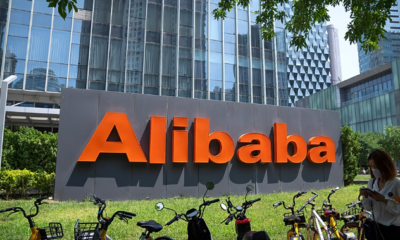
Alibaba is expanding its global cloud infrastructure with plans to establish new data centre regions in Europe, while also developing larger artificial intelligence models and a new AI chip aimed at strengthening its position in the fast-growing technology market.
The Chinese technology group announced on Wednesday that Alibaba Cloud will establish its first cloud regions in Finland, the Netherlands and Turkey. The company also plans to expand its data centre presence in Germany, France, the UAE, Malaysia and Hong Kong over the next 12 months.
Eddie Wu, CEO of Alibaba Group, said machine-based reasoning currently represents less than 3 per cent of total human thinking capacity but could eventually reach levels far beyond current capabilities.
“With this in mind, our target is that by 2032, the global data centre capacity operated by Alibaba Cloud will surpass 20GW, fueling the industry’s exponentially rising demand for AI,” Wu said.
The planned expansion is expected to increase Alibaba Cloud’s computing capacity as businesses and governments accelerate investment in AI systems that require greater processing power and data storage.
Alibaba is also expanding the capabilities of its Qwen family of AI models. Wu said on Tuesday that future versions could contain between five trillion and 10 trillion parameters, potentially making them several times larger than the biggest Chinese models currently available.
The Qwen models have become prominent in China’s AI sector and are among the most widely downloaded Chinese-developed AI models globally.
The company also introduced a new AI chip at its annual conference. Wu described the Zhenwu V900 as “the most powerful AI chip in China today”.
The chip is being developed as China faces continued restrictions on access to advanced semiconductors from the United States. The Zhenwu V900 is widely reported to offer roughly twice the performance of Nvidia’s H20 chip, which was designed for the Chinese market.
US export controls have restricted Chinese companies’ access to some advanced AI processors, encouraging Beijing and domestic technology firms to accelerate development of locally produced alternatives.
Alibaba’s announcement comes as China seeks to expand its domestic AI infrastructure while competing with technology companies in the United States and other major markets.
The company said the overseas data centre expansion would help provide additional computing resources for customers in several regions and support growing demand for cloud and AI services.
The announcement also comes ahead of an expected meeting between US President Donald Trump and Chinese President Xi Jinping in Washington this week. Trade, semiconductor restrictions and concerns over the national security implications of artificial intelligence are expected to be among the issues discussed.
Alibaba’s investment plans highlight the growing connection between cloud infrastructure, advanced chips and AI model development as technology companies compete to build increasingly powerful systems.

Growing concern over the impact of artificial intelligence on employment is being reported across the world, with more people expecting AI to reduce the number of available jobs than create new opportunities, according to a global survey by the Pew Research Center.
The study, based on interviews conducted between February and June 2026, surveyed more than 50,000 people across 37 countries. It examined attitudes toward AI, including expectations about its effect on employment, economic inequality and its growing role in everyday life.
Moira Fagan, a senior researcher at the Pew Research Center and one of the study’s authors, said public views of individual countries and confidence in their ability to regulate AI appear to be closely connected.
In Bangladesh, Malaysia, Pakistan, Sri Lanka, the West Bank and East Jerusalem, respondents were more likely to trust China than the United States or the European Union to regulate artificial intelligence.
Across the 11 middle-income countries included in the question, a median of 43% said they trusted China to regulate AI, compared with 35% for the United States and 34% for the European Union.
Fagan said favourable views of China were relatively strong in many middle-income countries and had increased in several places compared with the previous year. She said this may help explain the higher levels of confidence in China’s approach to AI regulation.
The survey also found that concerns about job losses were particularly widespread in wealthier countries. In Australia, South Korea and the United States, around seven in 10 adults or more expected AI to result in job losses over the next 20 years.
People in richer countries were also more likely to worry that AI could widen economic inequality. Fagan said this could partly reflect greater familiarity with the technology.
People who said they had heard or read a lot about AI were more likely to expect it to reduce employment opportunities, according to the research.
Age was another factor in public attitudes. In several countries, including Canada, France, Singapore, Sweden, Indonesia, India and Malaysia, adults aged 18 to 34 were more concerned about AI-related job losses than older respondents.
Views were less divided over the broader presence of AI in daily life. Across the 37 countries surveyed, a median of 37% said they were more concerned than excited about AI, while 41% said they felt equally concerned and excited.
The findings come as debate grows over the pace of AI development and its potential risks. AI company leaders, including Sam Altman, Elon Musk and Dario Amodei, have raised concerns about the risks associated with increasingly advanced systems.
European Commission President Ursula von der Leyen has also called for greater caution over the development of frontier AI models and closer international cooperation on safety.

Italy Inflation Hits Three-Year High as Energy and Food Prices Rise

Oil Prices Rise as Trump Rejects Iran Sanctions Relief Reports

France and Britain Discuss Ending One-in, One-out Migration Deal

Explosions Rock Kyiv as Ukraine Reports Fresh Ballistic Missile Attack

Oil Prices Rise as Middle East Supply Risks Persist

Oman Islamic Banking Assets Rise 10.5% to OMR10.1 Billion

Birdwatching Offers New Approach to Stroke Recovery for People With Aphasia

AI Agents Take Centre Stage as Qatar Expands Training and Testing

Oil Rises as Markets React to Trump Rejection of Iran Truce Proposal

Chinese Car Brands Gain Ground in Norway Despite Rising Consumer Concerns

Meta Acquires Tilda Swinton VR Doc ‘Impulse: Playing With Reality’

China’s Historic Olympic Victory Sparks National Pride Amid Controversy

Saudi Arabia’s Model for Sustainable Aviation Practices

Recent Developments in Small Business Taxes

Effective Drain Cleaning: A Key to a Healthy Plumbing System

Who was Ebrahim Raisi and his status in Iranian Politics?

Keely Hodgkinson Wins Britain’s First Athletics Gold at Paris Olympics in 800m

Carrectly: Revolutionizing Car Care in Chicago

Nobel Laureate Muhammad Yunus Proposed as Head of Bangladesh’s Interim Government Following Hasina’s Resignation

Chinese Hackers Infiltrate Major U.S. Telecom Firms in Possible National Security Breach

Sony WF-10XM4: Headphones Are Our Absolute Favorite

10 Places You Can’t Miss If It’s Your First Time in European

New Census Data Will Shake Up Alabama Politics

16 Top of Our Favorite Outdoor Clothing Brands

Fashionable Summer Accessories to Dress Up Your Travel Look

How Sleeping Less than 7 Hours a Night Can Lead to Weight Gain
-
 Entertainment2 years ago
Meta Acquires Tilda Swinton VR Doc ‘Impulse: Playing With Reality’
-
 Sports2 years ago
China’s Historic Olympic Victory Sparks National Pride Amid Controversy
-
 Business2 years ago
Saudi Arabia’s Model for Sustainable Aviation Practices
-
 Business2 years ago
Recent Developments in Small Business Taxes
-
 Home Improvement2 years ago
Effective Drain Cleaning: A Key to a Healthy Plumbing System
-
 Politics2 years ago
Who was Ebrahim Raisi and his status in Iranian Politics?
-
 Sports2 years ago
Keely Hodgkinson Wins Britain’s First Athletics Gold at Paris Olympics in 800m
-
 Business2 years ago
Carrectly: Revolutionizing Car Care in Chicago