
News
France and Britain Discuss Ending One-in, One-out Migration Deal

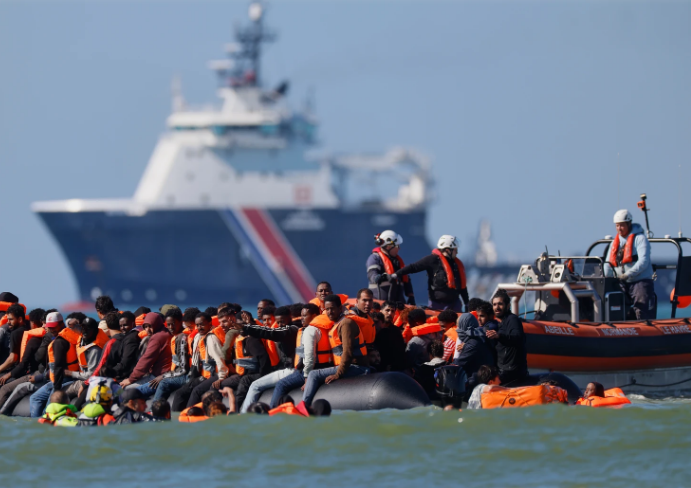
France and Britain are discussing the possible termination of their “one in, one out” migration agreement, a French interior ministry source said on Wednesday, raising questions over a key arrangement aimed at reducing small-boat crossings across the English Channel.
“We are discussing the terms of withdrawal from the agreement with the British,” the source said, without providing a reason for France’s decision to seek an end to the arrangement. Neither France’s interior ministry nor Britain’s Home Office immediately provided further details.
The agreement came into force in August 2025 as a pilot scheme designed to deter people from making dangerous journeys across the Channel in small boats. Under the arrangement, Britain could return eligible people who had arrived by small boat to France. In return, France would transfer an equivalent number of eligible people to Britain through a legal route, subject to identity, security and eligibility checks.
The arrangement was extended in 2026 through an exchange of letters between the two governments.
The scheme established time limits for returns. Britain was expected to return an eligible person within 14 days of their arrival, while transfers into Britain were subject to the necessary checks and documentation. Unaccompanied minors and people considered to present certain security risks were excluded from the French return arrangements.
Official British figures show that 1,087 people had been returned to France under the agreement by June 30, 2026, while 1,117 people had been transferred from France to Britain.
The arrangement has formed part of wider cooperation between the two countries on Channel migration. In April, Britain and France also announced measures to increase patrols, intelligence sharing and other operations intended to disrupt people-smuggling networks and reduce crossings.
The possible withdrawal comes as both governments continue to face pressure over migration across the Channel. Thousands of people have attempted the crossing in small boats, prompting increased cooperation between French and British authorities.
A French interior ministry source did not explain whether the discussions reflected concerns over the operation of the agreement, its results or wider migration policy.
The British government has not confirmed whether it is seeking changes to the arrangement or whether negotiations are focused on a possible replacement.
Any decision to end the agreement would affect one of the mechanisms created by the two governments to manage small-boat arrivals and provide an alternative legal route for some people with connections to Britain.
For now, discussions between the two governments are continuing, with the terms and timing of any possible withdrawal yet to be announced.






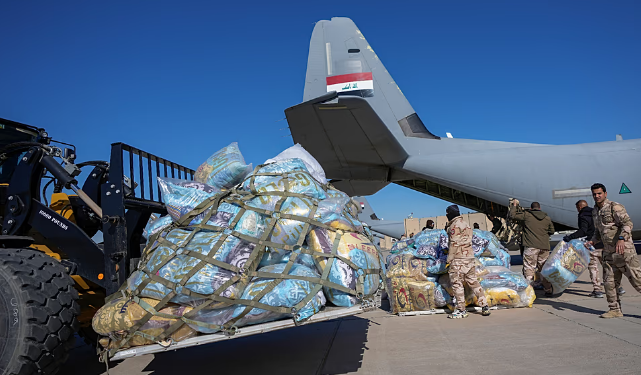
Around 87% of residents in the United Arab Emirates believe their government is well prepared to deal with disasters, compared with just 14% of respondents in Lebanon, highlighting a significant divide in public confidence across the Middle East and North Africa, according to a new international survey.
The worldwide risk poll, conducted by Gallup for the Lloyd’s Register Foundation, is based on more than 143,000 interviews across 140 countries and territories in 2025. It examines how individuals, households and communities prepare for major emergencies, withstand disruption and recover from disasters.
Among the countries covered in the regional data, Kuwait recorded a resilience score of 74 points, followed by Bahrain at 72. Oman and the UAE each scored 70, well above the global average of 57.
Confidence in government preparedness was particularly high in the Gulf. The UAE ranked second among 133 countries included in the resilience index, with 87% of respondents saying their government was prepared for disasters. Bahrain recorded 82%.
The findings were markedly different in parts of the Levant. Lebanon scored 48 on the resilience index, while Iraq recorded 49 and Palestine 52. In Lebanon, only 39% of people affected by a disaster said they had received an advance warning, compared with 80% globally.
Public perceptions of government support were also low. Around 59% of Iraqi respondents and 56% of Lebanese respondents said their governments did not care about them at all, against a global average of 29%.
Financial insecurity emerged as another concern. More than half of households in Iraq, Jordan and Palestine said they would be unable to meet basic needs for a month if they lost their income.
Lebanon also recorded high levels of concern about personal safety and health. Some 71% of respondents worried that drinking water could seriously harm their health, placing the country fifth globally on this measure. Around 90% expressed concern about violent crime, the sixth-highest proportion worldwide.
North Africa Shows Improvement
North Africa recorded the largest regional improvement in disaster resilience, with its index score rising by five points since 2023. The report linked progress in Algeria and Egypt to wider internet access, improved household preparedness and stronger financial capacity to cope with emergencies.
Despite high temperatures across the region, Oman, Saudi Arabia, Bahrain and the UAE were among the countries whose residents expressed relatively low concern about heatwaves and drought. In Israel, fewer than 1% of the population had been affected by a disaster during the period covered by the survey.
Globally, approximately 1.1 billion adults experienced a disaster in the five years preceding the poll. Nearly 220 million received no advance warning.
The survey found a substantial gap between income groups. About one-third of adults in low-income countries reported experiencing a disaster, compared with 16% in high-income countries. Among those affected, 64% in low-income countries received advance warnings, against 84% in wealthier nations.
Warnings were more effective when delivered through multiple channels. Some 37% of people alerted through one channel took preventive action, rising to 51% when two channels were used and 64% when three were used.
Of those who experienced disasters without advance warning, 77% owned a mobile phone, representing more than 170 million people worldwide. The findings point to the potential role of mobile technology in improving emergency alerts and helping communities prepare for future disasters.
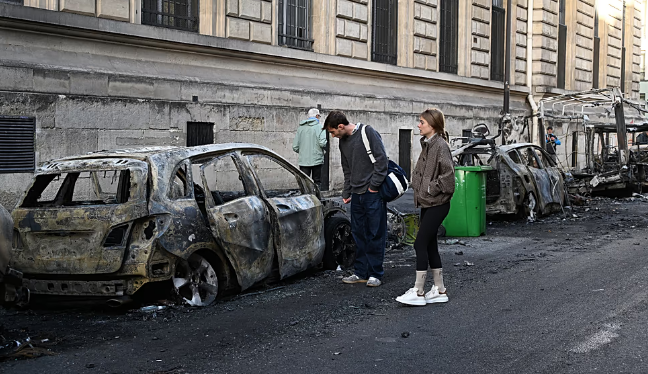
European stock markets opened lower on Monday as France assessed the damage from a weekend of violent protests and looting, with business leaders criticising the government over security failures and warning of substantial financial losses.
The pan-European Stoxx 600 fell more than 0.6% at the start of trading, while the Euro Stoxx 50 slipped 0.1%. France’s CAC 40 dropped 0.5%, with supermarket group Carrefour losing more than 2% after reporting that 50 of its stores had been targeted by looters.
Germany’s DAX recorded the steepest decline among major European indexes, falling more than 0.8%. The UK’s FTSE 100, Italy’s FTSE MIB and Spain’s IBEX 35 each traded between 0.4% and 0.6% lower. The Netherlands’ AEX bucked the trend, rising more than 0.4%.
French government borrowing costs also remained under pressure as lawmakers debated the 2027 budget in a divided parliament. The yield on France’s 10-year government bonds stood at 4.86%, following a rise to its highest level since 2002 earlier this month.
The spread between French and German 10-year bond yields, a measure of investor concern about French finances, was 143.5 basis points. It exceeded 150 basis points in early October, reaching its widest level since the eurozone debt crisis.
Moody’s is scheduled to review France’s Aa3 credit rating, which carries a negative outlook, on Friday.
The euro fell 0.2% against the US dollar to around $1.121 and lost 0.2% against the British pound, trading at approximately £0.841. The currency had reached its lowest level against the dollar since May 2025 and against sterling since June 2025 last week, amid concerns about French debt and a stronger dollar.
Businesses Count Cost of Weekend Violence
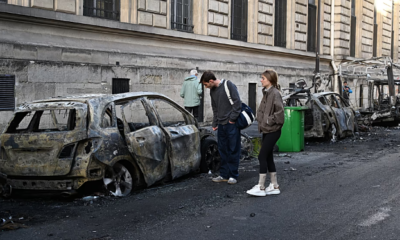
The market reaction followed nationwide demonstrations on Saturday against rising living costs and conditions in French schools. The marches attracted around 550,000 people, according to authorities, but deteriorated into rioting and looting in Paris, Lyon, Marseille, Bordeaux and other cities.
Interior Minister Laurent Nuñez said about 2,400 people had been arrested. Reports put the number of injured police officers, gendarmes and firefighters at between 500 and nearly 1,000.
Nuñez acknowledged that authorities had failed to anticipate the scale of the unrest and had lost control in some cities. He offered to resign, but President Emmanuel Macron rejected the offer, saying security forces needed continuity in their command.
Carrefour chief executive Alexandre Bompard, who also heads the French retail federation FCD, said around 1,500 shops had been affected, with total losses running into hundreds of millions of euros. Repairs at Carrefour alone were expected to cost well over €10 million.
Lacoste chief executive Thierry Guibert called on the state to act quickly to protect businesses and employees after stores belonging to Lacoste and Aigle were looted. Intermarché chief Thierry Cotillard expressed anger over the damage, while employers’ group Medef described the looting as unacceptable.
Smaller retailers also criticised the response. The head of outdoor retailer Snowleader said police had advised him to follow up on Tuesday after he reported looters breaking into his Lyon store. A representative of Marseille’s city-centre traders said businesses had been left without adequate protection.
Prime Minister Sébastien Lecornu was due to chair a crisis meeting on Monday, while Commerce Minister Serge Papin planned talks with trade federations, banks and insurers. Trade unions have also called a nationwide strike for November 5, adding to concerns over further disruption.
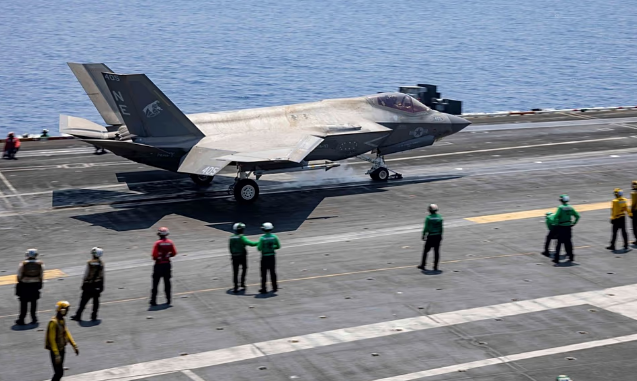
Tensions between the United States and Iran are rising as two US aircraft carriers operate in the Arabian Sea, military aviation activity increases and Tehran warns it is prepared for renewed hostilities.
Iran targeted at least 24 commercial vessels near the Strait of Hormuz over a two-week period, according to the Washington-based Institute for the Study of War (ISW). The United Kingdom Maritime Trade Operations (UKMTO), a Royal Navy organisation that monitors shipping safety, reported at least seven additional incidents between Monday and Wednesday.
The ISW said the incidents indicated that Iran retained the ability to threaten commercial shipping despite US strikes on its military infrastructure. Citing a US military official, the think tank said Iranian naval forces had adapted by using small boats and spotters to identify vessels after damage to their radar systems.
Iranian military leaders have issued increasingly forceful warnings. Major General Mostafa Izadi, deputy commander of the Islamic Revolutionary Guard Corps (IRGC), said on Thursday that Iran was advancing with strength and was ready to conduct its most powerful operations.
IRGC spokesman Hossein Mohibi said a new war would be irrational for Washington but acknowledged that the possibility of conflict remained. Army commander-in-chief Amir Hatami warned that any attack on Iranian infrastructure would prompt proportional strikes against Israeli and allied targets.
Mohsen Rezaei, secretary of Iran’s Supreme National Security Council, also warned that US targets, including data centres and artificial intelligence infrastructure, could be within range if fighting resumed.
Washington reinforces its military presence
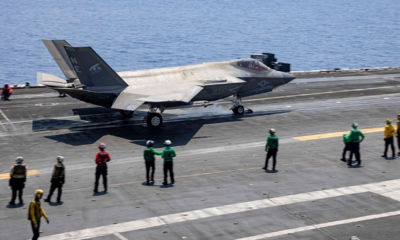
The US Naval Institute confirmed on Tuesday that the aircraft carriers USS George Washington and USS George H.W. Bush were operating in the Arabian Sea. The Bush returned to the region after a port visit to Phuket, Thailand, while the George Washington had previously replaced the USS Abraham Lincoln.
The simultaneous presence of the carriers increases US naval strength in the region, although carrier deployments can reflect routine rotations and do not necessarily indicate an imminent attack.
US Central Command (CENTCOM) has released images showing F-15E fighter jets receiving aerial refuelling, flight operations from the George Washington and an F-35B taking off from the amphibious assault ship USS Boxer.
CENTCOM said US forces had redirected 130 commercial vessels under the naval blockade of Iran as of October 5. The figure was provided by the US military and has not been independently verified.
US President Donald Trump has not ruled out intensifying air strikes against Iran after the November 3 midterm elections. Asked about reports that his administration was considering the GBU-43/B Massive Ordnance Air Blast bomb, commonly known as the “mother of all bombs”, Trump said it was a very large conventional bomb, not a nuclear weapon.
Specialist flight-tracking account IntelSky reported that US Air Force tanker sorties over the region during the first 14 days of October were running about 50% above September’s daily rate. Transport aircraft activity had also increased, although the figures have not been independently verified and public tracking systems do not capture all military flights.
Reports earlier this month also indicated that around 9,000 additional US troops and sailors could be sent to the region. The USS Theodore Roosevelt had not yet reached the Arabian Sea as of Wednesday, according to the Naval Institute.
Meanwhile, Israel’s Channel 12 reported on Thursday that Western countries had detected unusual military movements inside Iran. The report said the developments did not necessarily require immediate military action. It also reported that Israeli Prime Minister Benjamin Netanyahu had discussed the situation with US Secretary of State Marco Rubio.
The military build-up and increasingly direct warnings from both sides have heightened concerns that the fragile situation could deteriorate into another round of large-scale fighting.

Musk Backs Possible SpaceX-Tesla Merger as SpaceX Posts $4.4bn Quarterly Profit

Netflix Shares Fall More Than 5% as Investors Question Growth and Job Cuts Loom

Lufthansa’s €1.2bn TAP Air Portugal Deal Could Take Years to Deliver Benefits

AI Model Identifies 18 Genetic Variants Linked to Stroke Risk

Oil Holds Near Five-Month High as Iran War Disrupts Energy Markets and Stocks Slide

German Mortgage Rates Reach Highest Level Since 2009 as Iran War Fuels Inflation Fears

UAE Residents Express Strong Confidence in Disaster Preparedness, Survey Finds

European Stocks Fall as French Riots and Political Uncertainty Rattle Markets

Oil Prices Fall From Five-Month High as US Eases Russia Sanctions

Around 46 Million EU Residents Cannot Afford Regular Leisure Activities

Meta Acquires Tilda Swinton VR Doc ‘Impulse: Playing With Reality’

China’s Historic Olympic Victory Sparks National Pride Amid Controversy

Saudi Arabia’s Model for Sustainable Aviation Practices

Recent Developments in Small Business Taxes

Effective Drain Cleaning: A Key to a Healthy Plumbing System

Who was Ebrahim Raisi and his status in Iranian Politics?

Keely Hodgkinson Wins Britain’s First Athletics Gold at Paris Olympics in 800m

Carrectly: Revolutionizing Car Care in Chicago

Nobel Laureate Muhammad Yunus Proposed as Head of Bangladesh’s Interim Government Following Hasina’s Resignation

Chinese Hackers Infiltrate Major U.S. Telecom Firms in Possible National Security Breach

Sony WF-10XM4: Headphones Are Our Absolute Favorite

10 Places You Can’t Miss If It’s Your First Time in European

New Census Data Will Shake Up Alabama Politics

16 Top of Our Favorite Outdoor Clothing Brands

Fashionable Summer Accessories to Dress Up Your Travel Look

How Sleeping Less than 7 Hours a Night Can Lead to Weight Gain
-
 Entertainment2 years ago
Meta Acquires Tilda Swinton VR Doc ‘Impulse: Playing With Reality’
-
 Sports2 years ago
China’s Historic Olympic Victory Sparks National Pride Amid Controversy
-
 Business2 years ago
Saudi Arabia’s Model for Sustainable Aviation Practices
-
 Business2 years ago
Recent Developments in Small Business Taxes
-
 Home Improvement2 years ago
Effective Drain Cleaning: A Key to a Healthy Plumbing System
-
 Politics2 years ago
Who was Ebrahim Raisi and his status in Iranian Politics?
-
 Sports2 years ago
Keely Hodgkinson Wins Britain’s First Athletics Gold at Paris Olympics in 800m
-
 Business2 years ago
Carrectly: Revolutionizing Car Care in Chicago