
News
US Military Strikes Drug-Smuggling Boats, Raising Death Toll to 115 Since September


The US military carried out strikes on five alleged drug-smuggling boats over two days, killing at least eight people while others jumped overboard, US Southern Command said on Thursday. The attacks bring the total number of known boat strikes since early September to 35, with at least 115 people killed, according to official figures.
The strikes took place on Tuesday and Wednesday, though Southern Command did not disclose the locations of the operations in the Caribbean Sea or the eastern Pacific Ocean. Videos released by the command show boats traveling in close formation, described as unusual, along known trafficking routes. Southern Command said the vessels had transferred narcotics between them before the strikes, although the military did not provide evidence to support this claim.
In the first attack, three people were killed when one boat was struck, while occupants of two other vessels jumped into the water to escape. Southern Command said it immediately contacted the US Coast Guard to begin search and rescue efforts, but did not confirm whether those who jumped were rescued.
The Coast Guard’s involvement is significant given earlier scrutiny over US military operations targeting drug-smuggling boats. In September, survivors of an attack on a disabled boat were killed in a follow-up strike, sparking criticism from some Democratic lawmakers and legal experts who said the action may have violated international law. The Trump administration and some Republican lawmakers defended the strike as legal.
On Wednesday, US forces attacked two more vessels, reportedly killing five people engaged in drug trafficking. Videos released by Southern Command showed explosions hitting boats, but no further details were provided on the waters where the attacks took place or evidence of the alleged smuggling.
President Donald Trump has defended the military operations, describing them as part of a necessary escalation to reduce the flow of drugs into the United States. He characterized the campaign against drug cartels as an “armed conflict” and has bolstered US forces in the region to increase pressure on Venezuelan President Nicolás Maduro, who faces charges of narco-terrorism in the United States.
In a separate development, the CIA carried out a drone strike last week at a docking area believed to be used by Venezuelan drug cartels, according to two sources familiar with the classified operation. The strike marked the first known direct US action on Venezuelan soil since the military began targeting suspected cartel vessels in September, highlighting a further escalation in Washington’s campaign against Maduro’s government.
The US operations have intensified regional tensions and raised questions about the legal and humanitarian implications of military strikes on suspected drug-smuggling boats, as well as the fate of those who escape into the water during such attacks.





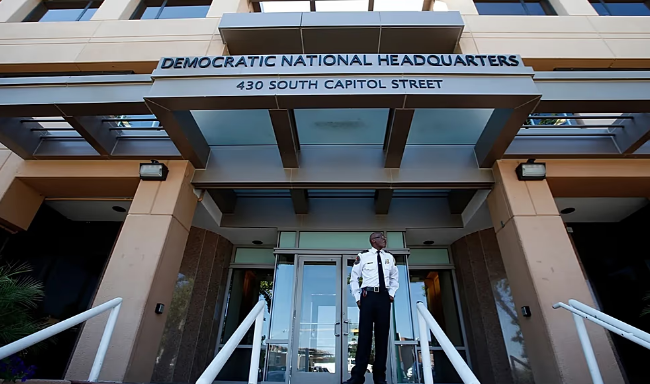
With just over two months remaining before the US midterm elections, Democrats are facing a political challenge that extends beyond their efforts to oppose President Donald Trump. The party is divided over its policy direction, with progressives and moderates offering competing ideas about how Democrats can regain support.
The divide has become increasingly visible during this year’s primary elections. Progressive candidates have secured several notable victories, raising hopes among the party’s left wing. Moderates, however, are warning that candidates associated with the progressive movement could struggle in competitive districts and Republican-leaning states.
Both factions say the 2024 election defeat exposed weaknesses in the party, but they draw different lessons from it.
Progressives argue Democrats were too cautious and failed to offer voters a strong economic alternative. They want the party to focus on issues such as lower healthcare costs, higher wages, stronger unions and greater restrictions on corporate power.
Moderates say Democrats need to avoid positions that Republicans can portray as extreme. They believe candidates must appeal to independent and conservative-leaning voters, particularly in closely contested states.
Recent primary results have intensified the debate. In Florida, democratic socialist Angie Nixon defeated moderate Alex Vindman in the Democratic Senate primary. In Michigan, progressive Abdul El-Sayed defeated establishment-backed Haley Stevens, while in California, Aisha Wahab won a special congressional election after facing substantial spending from outside groups.
Progressives view the results as evidence that Democratic voters are becoming less interested in traditional party leadership.
However, winning a primary does not guarantee success in November. Florida presents a major test for Nixon because the state has shifted strongly toward Republicans in recent elections. Her nomination has already prompted debate among Democrats over whether the party should embrace the democratic socialist label.
At the same time, Democrats in Florida selected former Republican David Jolly as their candidate for governor, highlighting the ideological range within the party.
Polling suggests many voters support economic policies associated with progressives, including higher taxes on corporations and wealthy individuals, government-supported healthcare, paid family leave and a higher federal minimum wage. Yet support for these policies does not necessarily mean voters will choose candidates who identify as progressive.
Democratic voters can hold moderate political identities while supporting populist economic measures. Some cultural issues associated with the left have attracted less support among swing voters.
This creates an opportunity for Democrats to build an economic message centred on affordability and corporate power while avoiding divisive cultural battles.
Trump remains another major factor. Republicans are using progressive primary victories to argue that Democrats are moving toward socialism, while Democrats have an incentive to keep attention on Trump’s record and economic concerns.
The November results could shape the party’s direction well beyond the midterms. A strong Democratic performance could strengthen either moderates or progressives, depending on which candidates succeed.
The outcome may also influence the 2028 presidential race. For now, Democrats face a shared objective: defeating Republicans in November while managing a growing dispute over what the party should become.

Two people were killed and several others injured after a car was deliberately driven into a group of pedestrians outside a railway station in Caen, Normandy, French authorities said.
The incident happened near Caen railway station, where a vehicle struck people in a street opposite the station. Calvados prefect David Claviere said the driver had deliberately driven into pedestrians.
Seven people were reported to be in critical condition, while three others suffered less serious injuries. Emergency services and security personnel quickly responded to the scene, which was later sealed off as investigators began examining what happened.
According to French media reports, the vehicle was a black German-made car that struck people waiting near a tram stop. The incident reportedly followed an altercation, although authorities have not established a clear motive.
The suspect, a 26-year-old man born in Russia, fled the scene after the crash. Police arrested him later in the evening in Ouistreham, about 20 kilometres from Caen.
Authorities said the suspect was not previously known to France’s intelligence services. He was known to police only in connection with traffic offences.
Senior Caen security official Bruno Coutanceau said the victims were believed to be men between the ages of 17 and 40. Most of those injured were thought to be foreign nationals.
French authorities have opened an investigation into murder and aggravated intentional assault. Investigators are expected to examine witness statements, surveillance footage and other evidence to establish the circumstances leading to the incident and determine whether it was linked to the reported altercation.
The attack caused significant disruption around the railway station as emergency workers treated the injured and police secured the area.
Caen Mayor Aristide Olivier described the incident as an “absolute tragedy” and praised emergency and security services for their rapid response.
The authorities have not indicated that the suspect was linked to any extremist organisation, and his motive remains under investigation.
The incident has prompted heightened security around the station while investigators continue their work. Officials are expected to provide further details as the investigation progresses and the condition of those critically injured becomes clearer.

Elon Musk’s SpaceX has announced plans to build its largest launch facility yet in Louisiana, a $100 billion project designed to support thousands of Starship missions each year and significantly expand the company’s presence beyond Texas and Florida.
The new facility, named Starbase, Louisiana, will cover about 125,000 acres, or 50,585 hectares, in the southern US state. Construction is expected to begin next year, with SpaceX targeting its first Starship launch from the site in 2029.
SpaceX said the facility would support missions to Earth orbit, the Moon, Mars and beyond. The project forms part of the company’s broader plans to increase launch capacity as it pursues ambitious goals in space exploration, satellite services and artificial intelligence.
The company said the Louisiana base would create more than 3,000 direct jobs. Louisiana Economic Development estimates that a further 8,100 indirect jobs could also be created through related economic activity.
According to the agency, workers at the facility are expected to earn average wages nearly three times higher than the current regional average. Officials said the project could establish Louisiana as a major centre for next-generation aerospace operations.
“The historic project will establish Louisiana as a global hub for next-generation aerospace, with the capacity and infrastructure needed to dramatically increase launch frequency and expand access to space,” the Louisiana Economic Development agency said.
The Louisiana site will share its name with SpaceX’s existing Starbase operations in Texas. In 2025, residents in part of Cameron County, where the company carries out testing and development work, voted to incorporate the area as a city called Starbase.
The announcement comes as SpaceX pursues an aggressive expansion strategy. Musk has outlined plans for missions to Mars, expanded Starship operations and major investments in artificial intelligence and computing infrastructure.
Earlier this month, SpaceX and Musk’s electric vehicle and robotics company Tesla announced plans to build a $16.8 billion AI chip manufacturing complex in Texas known as Terafab. The proposed facility is intended to support growing demand for computing power for AI, robotics and related technologies.
SpaceX is also facing increasing scrutiny from investors following its public market debut in June, when its shares began trading on the technology-focused Nasdaq in what was described as the largest stock market debut in history.
The company’s stock has fallen more than 30% from the highs reached shortly after trading began, although it remains above its initial offer price of $135.
Investors are now watching whether SpaceX can balance the enormous cost of its expansion with the need to deliver sustained profits. The planned Louisiana Starbase represents one of the company’s biggest commitments yet, with construction expected to begin in 2027 and launch operations scheduled to follow two years later.

Democrats Face Internal Battle Over Party Direction Ahead of US Midterms

Two Killed After Car Deliberately Hits Pedestrians in Caen

West Nile Virus Cases Surge in Greece as Death Toll Reaches 19

Europe Faces Tough Winter as Low Gas Stocks and Rising Prices Raise Household Bill Risks

SpaceX Announces $100 Billion Louisiana Starbase to Expand Starship Launches

Iran and Oman Discuss Temporary Shipping Corridor Through Strait of Hormuz

US Expands Iran Sanctions, Putting Global Companies on Notice

Study Finds Eating Disorders Have Complex Genetic Links Beyond Body Weight

Spanish workers spend equivalent of 231 days paying taxes

Amnesty Accuses Indian Police of Excessive Force Against Medical Exam Protesters

Meta Acquires Tilda Swinton VR Doc ‘Impulse: Playing With Reality’

China’s Historic Olympic Victory Sparks National Pride Amid Controversy

Saudi Arabia’s Model for Sustainable Aviation Practices

Recent Developments in Small Business Taxes

Effective Drain Cleaning: A Key to a Healthy Plumbing System

Who was Ebrahim Raisi and his status in Iranian Politics?

Keely Hodgkinson Wins Britain’s First Athletics Gold at Paris Olympics in 800m

Carrectly: Revolutionizing Car Care in Chicago

Nobel Laureate Muhammad Yunus Proposed as Head of Bangladesh’s Interim Government Following Hasina’s Resignation

Chinese Hackers Infiltrate Major U.S. Telecom Firms in Possible National Security Breach

Sony WF-10XM4: Headphones Are Our Absolute Favorite

10 Places You Can’t Miss If It’s Your First Time in European

New Census Data Will Shake Up Alabama Politics

16 Top of Our Favorite Outdoor Clothing Brands

Fashionable Summer Accessories to Dress Up Your Travel Look

How Sleeping Less than 7 Hours a Night Can Lead to Weight Gain
-
 Entertainment2 years ago
Meta Acquires Tilda Swinton VR Doc ‘Impulse: Playing With Reality’
-
 Sports2 years ago
China’s Historic Olympic Victory Sparks National Pride Amid Controversy
-
 Business2 years ago
Saudi Arabia’s Model for Sustainable Aviation Practices
-
 Business2 years ago
Recent Developments in Small Business Taxes
-
 Home Improvement2 years ago
Effective Drain Cleaning: A Key to a Healthy Plumbing System
-
 Politics2 years ago
Who was Ebrahim Raisi and his status in Iranian Politics?
-
 Sports2 years ago
Keely Hodgkinson Wins Britain’s First Athletics Gold at Paris Olympics in 800m
-
 Business2 years ago
Carrectly: Revolutionizing Car Care in Chicago