Connect with us

Business

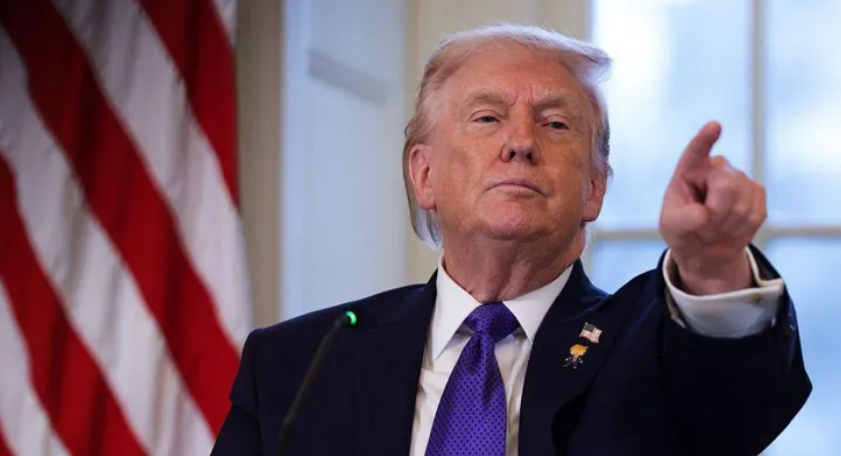
Trump Warns Cuba Over Venezuelan Oil After US Raid in Caracas

Published

on

US President Donald Trump has issued a stern warning to Cuba, saying the flow of Venezuelan oil and financial support to the island will stop unless Havana “makes a deal.” The statement comes after US forces carried out a raid in Caracas on 3 January, capturing Venezuelan President Nicolás Maduro and his wife, Cilia Flores, on drug trafficking and other charges.

Venezuela, a long-standing ally of Cuba, has reportedly sent around 35,000 barrels of oil daily to the island. The Trump administration has seized multiple Venezuelan oil tankers in recent weeks for carrying sanctioned fuel, worsening Cuba’s ongoing fuel and electricity shortages. On Friday, US authorities seized a fifth vessel linked to Venezuelan oil.

Trump highlighted the raid in Caracas on social media, writing that Cuba had relied on Venezuelan oil and money in exchange for providing security services to past Venezuelan leaders, “BUT NOT ANYMORE!” He warned that there would be “ZERO” oil or financial support unless Cuba reaches an unspecified deal.

Cuba’s leadership responded firmly. Foreign Minister Bruno Rodriguez said the nation retained the right to import fuel “without interference or subordination to the unilateral coercive measures of the United States.” President Miguel Diaz-Canel added that no foreign power dictates Cuba’s actions. Rodriguez also noted that Cuba has never received monetary or material compensation for the security services it provided abroad.

The US raid in Caracas reportedly killed 32 Cuban nationals who were part of Maduro’s security detail. Trump said the operation demonstrated that Venezuela no longer needed protection from what he described as “thugs and extortionists,” asserting that the US military would now provide security.

See also  European Bank Stocks Post Record Gains in 2025, Eyes Turn to Growth in 2026

While Trump has not outlined specific plans for Cuba, his administration has signaled ongoing pressure. Secretary of State Marco Rubio, a Cuban-American, suggested that Cuban leaders should be concerned about US actions. On social media, Trump shared a post suggesting Rubio could become president of Cuba, commenting: “Sounds good to me!”

Trump’s policy toward Latin America has intensified in recent months, with a focus on left-wing governments and combating drug trafficking. Following the Caracas raid, he mentioned a potential operation in Colombia and has criticized its president, Gustavo Petro, for allowing drug cartels to operate. He has also highlighted drug flows from Mexico, offering US military assistance despite Mexican authorities rejecting foreign troops on their soil.

US-Cuba relations have been tense since Fidel Castro’s 1959 revolution. While diplomatic ties improved during Barack Obama’s presidency, Trump reversed many of these measures, including reinstating Cuba’s designation as a state sponsor of terrorism, which had been lifted by President Joe Biden.

Diaz-Canel dismissed Trump’s remarks, accusing the US of trying to interfere in Cuba’s domestic affairs and defending the island’s political model.

The situation underscores rising tensions in the Caribbean following the US raid in Caracas, highlighting the complex dynamics between Washington, Havana, and allied governments in the region.


Business

FTSE 100 Surpasses 10,000 Points as UK Pushes for More Investing

Published

on

The FTSE 100 crossed the 10,000-point mark for the first time since its creation in 1984, marking a milestone that has delighted investors and drawn attention from policymakers encouraging more UK residents to move money from cash into investments. The index, which tracks the 100 largest companies listed on the London Stock Exchange, rose by more than 20% in 2025.

While the milestone reflects long-term growth in the UK equity market, some experts warn that rising stock prices and high valuations mean first-time investors should approach with caution. Investing offers the potential for higher returns than cash savings, but it carries risks, and the value of investments can fluctuate significantly over time.

“People starting out should have a cash buffer in case of emergency before going into investing,” said Jema Arnold, a voluntary non-executive director at the UK Individual Shareholders Society. Experts agree that savings remain crucial for immediate needs such as emergencies, holidays, weddings, or major purchases, providing security without risk of loss. Anna Bowes, savings expert at financial advisers The Private Office, noted that savings allow investors to avoid cashing out investments at an inopportune time.

Cash savings, however, are not without drawbacks. Inflation can erode the purchasing power of money held in savings accounts, particularly if interest rates fall. The Financial Conduct Authority (FCA) reports that one in ten UK adults has no cash savings, while 21% have less than £1,000 set aside. For those with larger cash holdings, investment could offer better long-term growth. The FCA estimates that seven million adults with £10,000 or more in cash savings could see higher returns through investing.

See also  Pharmaceutical Firms Scale Back UK Investments Amid Drug Pricing Disputes

Chancellor Rachel Reeves has advocated for greater consumer participation in investments, highlighting the potential benefits for individuals and the broader economy. Planned changes to tax-free Individual Savings Accounts (ISAs) aim to encourage more investing. An upcoming advertising campaign funded by the investment industry will promote the idea, echoing the “Tell Sid” campaign of the 1980s that encouraged investment in privatised British Gas.

Despite the optimism, some commentators warn of overvaluation in certain sectors, especially technology and AI companies. The Bank of England has cautioned about a possible sharp correction, and figures including JP Morgan CEO Jamie Dimon and Google CEO Sundar Pichai have raised concerns about irrationality in the current tech boom.

To help first-time investors navigate the market, the FCA plans to allow banks and other registered financial firms to offer targeted guidance starting in April. While this support will stop short of fully personalised advice, it will allow recommendations based on the actions of similar groups of investors, potentially bridging a gap for those unable to afford traditional financial advisers.

For UK savers and potential investors, the FTSE milestone represents both opportunity and caution. While long-term investment can grow wealth beyond what savings accounts offer, experts stress the importance of a balanced approach that includes accessible cash reserves and awareness of market risks.

Continue Reading

Business

Almost Half of Europeans Eye Career Changes in 2026 Amid Growing Job Market Uncertainty

Published

on

A new year brings new career ambitions for Europeans, with nearly half planning to seek a new job in 2026, according to recent research by LinkedIn. However, the survey also highlights widespread uncertainty, as almost four in five workers across major European economies feel unprepared to pursue a new role.

The study, conducted by Censuswide with 10,400 respondents aged 18 to 79, covers full-time and part-time employees as well as those currently unemployed but seeking work. It shows that 47% of Europeans are planning to look for a new role in 2026. Among the seven countries surveyed, the United Kingdom has the highest proportion, with more than half of respondents expressing intentions to change jobs. The UK is also above the global average of 52% recorded across 14 countries.

Other nations with high levels of job-seeking include Sweden and Spain, where more than half of workers are considering new opportunities. France, by contrast, has the lowest share at 37%. Germany and Italy fall below the European average, while the Netherlands aligns with it.

Despite these ambitions, confidence is low. Across Europe, 77% of workers report feeling unprepared for a career move. This figure peaks in Sweden at 83% and remains high in France, the UK, and Germany. Spain shows the lowest level of unpreparedness at 67%, while Italy and the Netherlands sit near the European average.

Recruiters are also feeling the pressure. The LinkedIn research indicates that 66% of recruiters say it has become more difficult to find qualified talent over the past year, reflecting increased competition in the job market. Data from hiring platform Indeed shows that UK job postings remain below pre-pandemic levels, highlighting the challenging environment for job seekers.

See also  Schaeffler to Cut 4,700 Jobs in Europe Amid Slowing Auto Demand

The study also examined emerging job trends in Europe, showing the growing influence of artificial intelligence (AI) on the labour market. Analysis of millions of jobs started on LinkedIn between January 2023 and July 2025 found that AI-related positions dominate growth across Europe’s top five economies. AI Engineer and Head of AI were among the fastest-growing roles in every country, while the third fastest-growing role varied, including lecturers in the UK, logistics analysts in Spain, and environmental health specialists elsewhere.

Charlotte Davies, LinkedIn career expert, said AI is increasingly shaping how organisations hire and how individuals plan their career moves. “The job market is evolving quickly, and competition remains strong,” she said, highlighting the dual challenge of opportunity and preparedness faced by workers in 2026.

The research underscores a cautious optimism in Europe: while many are ready to explore new career paths, a significant portion feel under-equipped to navigate an increasingly competitive and technology-driven job market.

Continue Reading

Business

Warner Bros Rejects Paramount’s $78 Billion Bid, Sticks with Netflix Deal

Published

on

Warner Bros Discovery has rejected Paramount Skydance’s latest $77.9 billion (€66.7 billion) takeover offer, calling it “inadequate” and risky, and urged shareholders to support a rival bid from Netflix. The announcement on Wednesday comes as the two media giants compete for control of Warner’s studio and streaming assets.

The company’s board said Paramount’s hostile bid is heavily dependent on debt financing and provides limited protection for shareholders if the deal fails to close. “Paramount’s offer continues to provide insufficient value, including terms such as an extraordinary amount of debt financing that create risks to close and lack of protections for our shareholders if a transaction is not completed,” Warner Bros Discovery chairman Samuel Di Piazza Jr. said. “Our binding agreement with Netflix will offer superior value at greater levels of certainty, without the significant risks and costs Paramount’s offer would impose.”

Warner Bros has consistently rejected Paramount’s advances in recent weeks, emphasizing its $72 billion (€61.6 billion) deal with Netflix to acquire Warner’s studio and streaming business, including HBO Max, Warner Bros Pictures, and legacy television and film production arms. Paramount, in contrast, seeks to acquire the entire company, including Warner’s cable and news networks, such as CNN and Discovery.

Paramount recently sought to strengthen its position by offering an “irrevocable personal guarantee” from Oracle co-founder Larry Ellison, father of Paramount CEO David Ellison, to back $40.4 billion (€34.6 billion) in equity financing. The company also increased its proposed regulatory break-up fee to $5.8 billion (€5 billion), matching the terms Netflix already offered.

See also  Germany’s Economic Sentiment Hits 2-Year High as Eurozone Trade Surplus Shrinks

Warner Bros raised concerns that a Paramount deal would essentially function as a leveraged buyout, requiring extensive debt and potentially taking 12 to 18 months to complete. The board warned that the structure and scale of Paramount’s offer could expose shareholders to significant financial risk.

The strategic differences between the two bids have added complexity to the sale. Netflix’s acquisition would involve only Warner’s studio and streaming units, leaving cable and news networks as a separate entity under a previously announced spin-off. Paramount, by contrast, is pursuing a full-scale merger that would combine studio, streaming, and cable operations under one company.

Regulatory scrutiny is expected to be intense. Any merger of this size is likely to trigger a review by the US Justice Department, which could challenge or demand modifications to the transaction. International regulators may also examine the deal given the global reach of Warner’s media properties.

Paramount did not immediately respond to a request for comment. Analysts say the battle for Warner Bros highlights the shifting dynamics in Hollywood as traditional studios and streaming platforms vie for market dominance amid growing competition and regulatory pressure.

Continue Reading

Trending