Connect with us

Business

Oil Prices Tumble to Multi-Year Low as OPEC+ Accelerates Output Hikes Amid Trade Tensions

Published

on

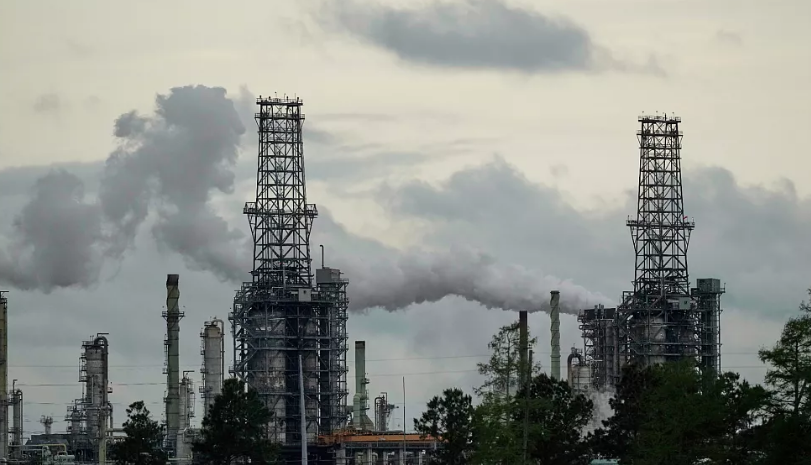
Global oil prices fell sharply on Monday, hitting their lowest levels in over four years, after the OPEC+ alliance confirmed it would speed up the unwinding of production cuts by boosting output in June. The move, aimed in part at penalizing members that exceeded quota limits, comes as global demand softens under the weight of escalating U.S.-China trade tensions.

Brent crude futures dropped as much as 4.6% during Asian trading hours to $58.50 per barrel, while West Texas Intermediate (WTI) crude fell nearly 5% to $55.53. Both benchmarks are at their lowest levels since February 2021.

The latest decision by OPEC+ — which includes the Organization of the Petroleum Exporting Countries and allies such as Russia — will see eight member nations raise production by 411,000 barrels per day (bpd) in June. This follows increases of 135,000 bpd in April and 411,000 bpd in May, bringing the total planned increase to nearly 1 million bpd over three months.

OPEC+ had initially implemented significant output cuts to stabilize prices during the COVID-19 pandemic. However, it began unwinding those cuts earlier this year, citing the need to discipline non-compliant producers such as Iraq and Kazakhstan.

In a statement released over the weekend, OPEC+ noted the changes could be paused or reversed depending on market conditions. “This flexibility will allow the group to continue to support oil market stability,” it said, adding that the decision gives countries a chance to compensate for previous overproduction.

The timing of the move has added to already mounting pressure on oil prices. Global demand has weakened as trade tensions between the United States and China continue to escalate. U.S. President Donald Trump’s tariff-driven trade policy has raised concerns over slowing economic growth, with recent data showing a contraction in the U.S. economy and declining manufacturing activity in China — the world’s largest oil importer.

See also  European Firms Cut Costs and Investments in China Amid Economic Slowdown, EU Chamber Says

Oil prices dropped more than 7% last week, their steepest weekly loss in a month. Analysts now say the market is increasingly driven by demand-side concerns. “The Saudis have taken their hands off the wheel when it comes to supply,” said Kyle Rodda, a senior analyst at Capital.com. “Any recovery in prices now depends entirely on whether the trade outlook improves.”

Markets are closely watching developments between Washington and Beijing. Trump said Sunday he may ease tariffs to reopen trade talks, while China confirmed it is reviewing recent diplomatic overtures from the U.S.

With rising supply and uncertain demand, oil markets remain volatile heading into the summer.

Business

IMF Warns of Trade Tensions and AI Market Risks as Global Growth Remains Resilient

Published

on

The International Monetary Fund (IMF) has highlighted trade tensions and a potential slowdown in the artificial intelligence (AI) sector as major risks to the global economy, even as it described growth prospects for 2026 as “resilient.”

In its latest World Economic Outlook, the IMF projected global growth at 3.3% this year, up from its previous forecast of 3.1%, before easing slightly to 3.2% in 2027. IMF chief economist Pierre Olivier Gourinchas said the world economy has been “shaking off the trade disruptions of 2025” and emerging stronger than expected, despite recent threats from US President Donald Trump to impose tariffs on eight European countries opposed to his Greenland proposal.

While AI-driven investment has supported growth, the IMF warned that overly optimistic expectations could trigger a market correction, with even a mild downturn affecting household wealth and corporate investment. “It doesn’t take as much of a market reaction to have an impact on people’s wealth relative to their income, so they start cutting consumption and businesses change their investment plans,” Gourinchas said.

Trade tensions remain another concern. The IMF cautioned that political or geopolitical conflicts could disrupt supply chains, commodity prices, and financial markets, weighing on global activity.

The report also stressed the importance of central bank independence for macroeconomic stability and long-term growth. Maintaining legal and operational independence allows central banks to anchor inflation expectations and avoid fiscal pressures. Gourinchas noted that pressures on central banks, particularly in countries with high borrowing needs, can lead to higher inflation and borrowing costs over time.

The IMF’s forecast for the United Kingdom showed slightly stronger growth than previously expected. The UK economy grew by 1.4% in 2025, up from a prior estimate of 1.3%, and is expected to expand 1.3% this year, making it the third-fastest growing G7 economy after the US and Canada. Growth is projected to rise to 1.5% in 2027. Chancellor Rachel Reeves described the figures as evidence that the UK is “on course to be the fastest growing European G7 economy this year and next,” while shadow chancellor Sir Mel Stride dismissed the increase as modest.

See also  Novo Nordisk Shares Rise Despite 2025 Outlook Downgrade Amid Weight-Loss Drug Market Pressures

Inflation is expected to ease globally, falling from 4.1% in 2025 to 3.8% in 2026 and 3.4% in 2027. In the UK, inflation is projected to return to the 2% target by the end of the year as a weakening labour market keeps wage growth subdued.

Gourinchas said challenges to central bank independence, such as political pressure to keep interest rates low, have emerged in several countries. He warned that undermining central banks tends to produce inflation and higher borrowing costs, calling it “self-defeating.”

The IMF report comes amid heightened scrutiny of global central banks, including the US Federal Reserve, following recent legal investigations and political disputes, underscoring the fund’s emphasis on safeguarding institutional independence as a cornerstone of economic stability.

Continue Reading

Business

China Reports 5% Economic Growth Amid Record Trade Surplus and Domestic Challenges

Published

on

China said its economy grew by 5% in 2025, meeting the government’s official target despite a slowdown to 4.5% in the final quarter of the year, driven in part by a record trade surplus.

The world’s second-largest economy faced a year of weak domestic spending, a prolonged property market downturn, and ongoing uncertainty from US tariff policies. Analysts describe the figures as reflecting a “two-speed economy,” with manufacturing and exports supporting growth while consumer spending remains cautious and the housing sector continues to weigh on overall activity.

Some economists question the official numbers. Zichun Huang, a China economist at Capital Economics, said the figures “overstate the pace of economic expansion” by at least 1.5 percentage points, citing weak investment and subdued household consumption.

Data released on Monday also highlighted China’s deepening demographic challenges. The number of births fell to 7.9 million in 2025, the lowest since records began in 1949. The country’s population declined for the fourth consecutive year, dropping 3.4 million to 1.4 billion. Experts warn that falling birth rates could reduce demand for housing and consumer goods, adding pressure to an already struggling property market.

The property sector remains a key concern. House prices continued to fall in December, dropping 2.7% year-on-year, marking the sharpest decline in five months. Property investment fell 17.2% for the year. The prolonged slump affects construction activity, household wealth, and local government finances, leaving millions of homeowners with unfinished or devalued properties.

Retail sales rose only 0.9% in December, the slowest pace in three years, while factory output increased 5.2%, slightly up from November’s 4.8%. Analysts say export growth and manufacturing output are currently propping up the economy, while domestic consumption remains weak.

See also  CVC Capital Partners Reportedly Seeking Buyer for Majority Stake in Genetic Group

China recorded a record trade surplus of $1.19 trillion in 2025, driven by strong exports outside the United States. Alicia Garcia-Herrero, chief economist for Asia Pacific at Natixis, warned that “China is effectively pushing growth through exports at a loss,” a strategy that may not be sustainable as it can undermine profits and long-term expansion.

Speaking on Monday, Kang Yi, head of China’s National Bureau of Statistics, acknowledged the economy “faces problems and challenges, including strong supply and weak demand,” but said China can “maintain stable, sound growth momentum this year.”

Analysts say China faces a delicate balancing act. Policymakers aim to support growth through targeted stimulus and boost consumer confidence while avoiding excessive debt and reducing reliance on exports amid ongoing global trade tensions, including uncertainty over US tariff policies.

While China officially met its growth target, the underlying economic picture suggests caution. Weak domestic demand, a fragile property market, and demographic shifts indicate that sustaining long-term growth will require careful management of both fiscal and monetary policy.

Continue Reading

Business

Stablecoins Hit Record Transaction Volumes as Governments and Firms Embrace Digital Payments

Published

on

Stablecoins recorded a historic year in 2025, as both governments and private companies encouraged their adoption across financial systems worldwide. Total transaction volumes surged 72 percent over the year, reaching $33 trillion (€28 trillion), according to Artemis Analytics.

Unlike traditional cryptocurrencies, stablecoins are designed to maintain a stable value by pegging themselves to real-world assets, most commonly the US dollar. They are fully backed by reserves such as treasury bills or cash, allowing holders to redeem them on a 1:1 basis. More than 90 percent of stablecoins in circulation are dollar-pegged, with Tether’s USDT holding a market cap of $186 billion (€160 billion) and Circle’s USDC at $75 billion (€65 billion). In 2025, Circle processed $18.3 trillion (€15.7 trillion) in transactions, while USDT handled $13.3 trillion (€11.4 trillion).

A report by venture capital firm a16z highlighted that stablecoins facilitated at least $9 trillion (€7.7 trillion) in “real” user payments last year, an 87 percent increase from 2024. Analysts noted that this volume is more than five times that of PayPal and over half of Visa’s annual transaction throughput.

Central banks have also taken notice of the growing adoption of digital currencies. In addition to private stablecoins, several governments are developing central bank digital currencies (CBDCs). China’s digital yuan has been in pilot phases since 2019, while the European Central Bank is preparing to issue a digital euro, targeting 2029 for the first launch. McKinsey data shows that cash still accounts for 46 percent of global payments, but non-digital transactions are declining, particularly in developed countries with strong digital infrastructure.

See also  European Firms Cut Costs and Investments in China Amid Economic Slowdown, EU Chamber Says

The United States has taken a different approach. In January 2025, President Donald Trump signed an executive order blocking any government action to issue CBDCs, clearing the way for private stablecoins to dominate. Trump later approved the GENIUS Act, which established a comprehensive regulatory framework requiring stablecoin issuers to maintain full 1:1 reserve backing with liquid assets. The framework aims to ensure stability and encourage confidence in the use of digital dollars.

In Europe, stablecoin adoption continues under the EU’s Markets in Crypto-Assets (MiCA) regulation. By July 2026, firms must secure a Crypto-Asset Service Provider (CASP) licence to operate legally. Payments company Ingenico recently partnered with WalletConnect to allow merchants to accept stablecoins, including USDC and EURC, using existing terminals. WalletConnect’s CEO, Jess Houlgrave, said that while MiCA is not perfect, “some regulatory clarity is better than none,” and called for uniform enforcement to prevent regulatory shopping.

Crossmint, a stablecoin infrastructure provider, also secured a MiCA licence in Spain this week. General counsel Miguel Zapatero noted that obtaining the licence is costly but increases credibility, with other regulators often fast-tracking approvals for licensed firms.

As private stablecoins gain traction and CBDCs slowly roll out, 2025 marked a turning point in the integration of digital currencies into mainstream financial systems, showing strong institutional and corporate adoption while highlighting the global push for regulatory clarity.

Continue Reading

Trending