
Business
Oil Prices Fall From Five-Month High as US Eases Russia Sanctions

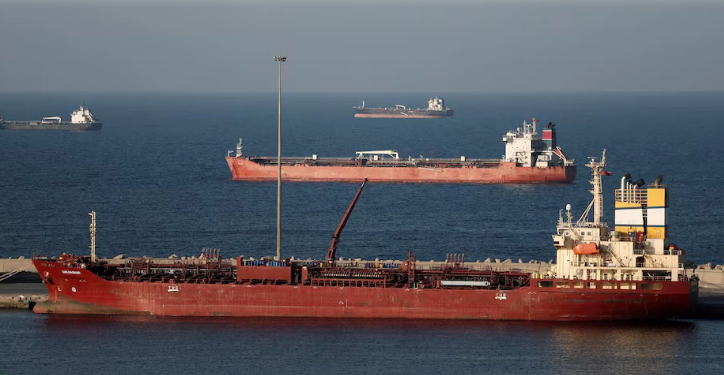
Oil prices fell by more than 2% on Monday after reaching a five-month high in the previous session, as investors took profits following US President Donald Trump’s decision to waive key sanctions and tariffs on Russia, raising the prospect of increased fuel supplies.
Brent crude futures dropped $2.29, or 2.08%, to $107.57 a barrel by 9:19 a.m. Saudi time. The benchmark had settled at its highest level since May 19 on Friday.
US West Texas Intermediate crude fell $1.95, or 1.92%, to $99.46 a barrel after closing at its highest level since September 17 in the previous session.
Trump signed an executive order on Friday waiving key sanctions and tariffs under the Graham Act, which he signed into law last month following pressure from lawmakers seeking to increase pressure on Moscow over its war in Ukraine.
However, US Secretary of State Marco Rubio said Trump would take up to 60 days to assess the measures’ impact on the global economy, adding uncertainty over how long the waivers would remain in effect.
“Trump’s move looks like another desperate attempt to keep oil prices in check ahead of the US midterm elections,” said Priyanka Sachdeva, head of market insight at Phillip Nova. She added that the decision did little to address physical supply disruptions in the Strait of Hormuz, where attacks on oil tankers continue.
Tim Waterer, chief analyst at KCM Trade, said the waiver could lead to higher Russian fuel exports, but mixed signals from Washington had left traders uncertain.
“Until the details and duration are clearer, the market is unlikely to fully price in a sustained increase in supply,” Waterer said.
The move follows a deal between Trump and Russian President Vladimir Putin to export diesel to the United States and other countries. Shipments are expected to start at around 2.3 million barrels this month before rising to approximately 7.6 million barrels a month. Ukrainian President Volodymyr Zelenskiy has warned that US actions would harm Ukraine.
Middle East Disruptions Tighten Oil Supplies
Brent briefly reached $110 a barrel on Friday for the first time since May, as escalating tensions and attacks on commercial vessels in the Middle East raised concerns about shipping security and global energy supplies.
According to analytics firm Kpler, Gulf crude flows fell to around 8.5 million barrels per day on a seven-day average last week, down from more than 20 million barrels per day the previous week. The firm reported at least 10 confirmed incidents involving commercial vessels during the week.
Egypt also said it was ready to provide Saudi Arabia with the support needed to defend its security and stability against Yemen’s Iran-aligned Houthis.
DBS expects oil prices to remain between $100 and $110 a barrel ahead of the US midterm elections, with regional tensions likely to keep fuel costs a concern for American voters.
Suvro Sarkar, DBS’s head of energy research, said Trump’s measures, including the Russian sanctions waivers, were short-term responses that would have little lasting impact on the underlying supply situation.
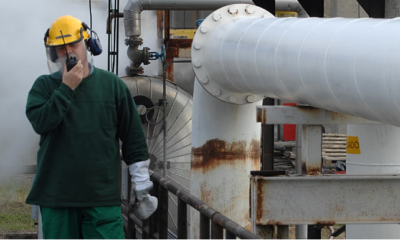

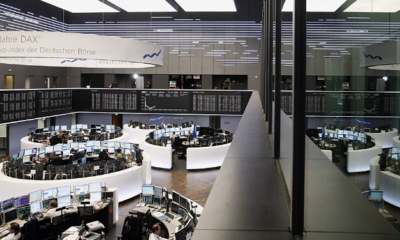


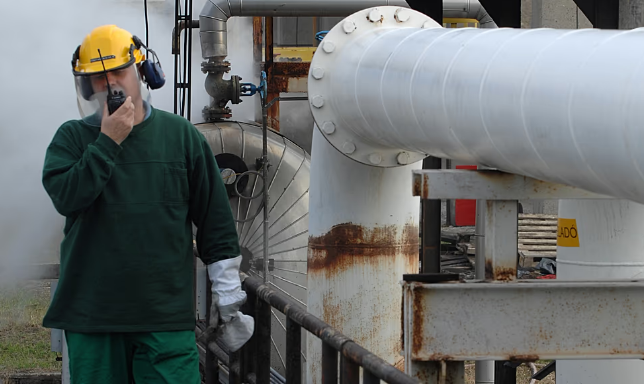
Hungarian oil and gas company MOL says it expects to be technically ready to phase out Russian crude imports by the end of 2027, while urging the European Union to provide funding for alternative supply routes.
MOL Hungary chief executive György Bacsa told Euronews that the transition would require significant investment in energy infrastructure. He warned that reducing dependence on Russian oil could increase energy costs and place additional pressure on households and businesses in Hungary and Slovakia, both of which remain heavily reliant on Russian crude.
Bacsa said higher costs could lead to social unrest and political instability, making financial support from Brussels important to ensure the transition does not create further economic difficulties.
The company is preparing to seek EU funding for energy diversification for the first time, following a change of government in Budapest. The move marks a shift from the approach taken under former prime minister Viktor Orbán, whose government maintained close energy ties with Russia and opted out of some EU initiatives aimed at reducing reliance on Russian supplies.
MOL’s plans depend partly on expanding access to non-Russian crude through alternative pipeline routes. The company is calling for EU support to develop the infrastructure needed to transport oil from other suppliers and strengthen the region’s energy security.
The European Union has maintained its focus on ending imports of Russian energy following Moscow’s invasion of Ukraine. However, the transition has been more complicated for landlocked countries in central Europe, where existing infrastructure and limited access to alternative routes have contributed to continued dependence on Russian supplies.
A 2025 study by the International Monetary Fund estimated that a complete interruption of Russian energy supplies could increase Hungary’s energy spending by around 15% by 2030. Such an increase could put additional pressure on the country’s economy and make the shift to alternative sources more difficult.
For MOL, being technically prepared to stop buying Russian oil by the end of 2027 does not remove the financial and logistical challenges involved. The company says investment in pipelines and other supply infrastructure will be necessary to secure reliable alternatives.
Bacsa’s warning highlights the challenge facing EU policymakers as they seek to reduce Russian energy imports while limiting the economic and political consequences for member states that remain dependent on them.
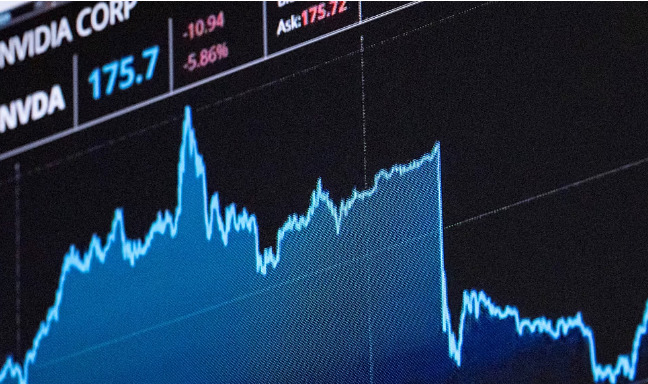
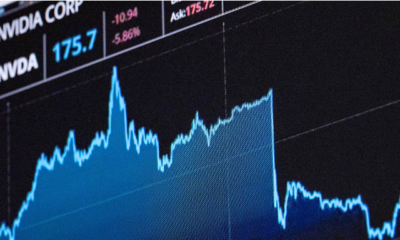
Global stock markets mostly fell on Friday as investors assessed the potential impact of Jensen Huang’s departure from Nvidia on the artificial intelligence industry, while rising oil prices added to concerns over the prolonged conflict involving Iran.
European shares opened lower, with London’s FTSE 100 down 0.2% and benchmark indices in Paris and Frankfurt each losing 0.3%. US stock futures also edged down, including contracts linked to the technology-heavy Nasdaq 100.
The selling followed losses on Wall Street on Thursday. Nvidia shares fell 4.3%, while the S&P 500, Nasdaq Composite and Dow Jones Industrial Average each declined by around 0.4%. The Dow closed at 52,297.09. Some rival chipmakers moved higher, with Advanced Micro Devices gaining 5.9%.
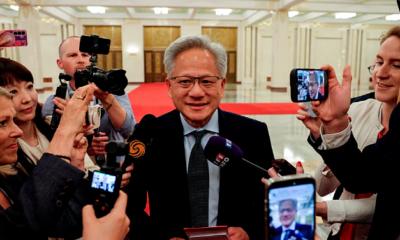
Nvidia announced that Huang had stepped down immediately as president, chief executive and board member. The company’s long-serving chief financial officer, Colette Kress, took over as interim chief executive.
Huang co-founded Nvidia and became one of the most influential figures in the development of AI technology. His departure has raised questions about the company’s future direction and the wider industry, particularly given Nvidia’s central role in supplying chips and financing AI infrastructure.
The announcement followed reports alleging two affairs, including one involving a woman suspected of spying for China. The reports have raised national security concerns, although the allegations have not been independently established.
Ben Barringer, head of technology research at Quilter Cheviot, said he did not expect an immediate effect on Nvidia if its order book remained strong and it continued meeting performance targets.
However, he warned that Huang’s absence could weaken Nvidia’s influence over longer-term debates about AI regulation and investment, potentially affecting the wider technology sector.
Asian markets were mixed. Japan’s Nikkei 225 gained 0.5% to close at 61,142.35, while South Korea’s Kospi fell 1% to 5,290.53. Shanghai’s Composite declined 0.6% to 3,634.35, and Hong Kong’s Hang Seng was down more than 1.5% at 23,637.60.
Taiwan’s Taiex rose 1.35% to 43,675.12, supported by a 0.43% gain in TSMC. Australia’s S&P/ASX 200 fell 0.7% to 9,082.20. Chip stocks were mixed, with Tokyo Electron rising 1.7%, while Kioxia fell 2.2%. Samsung Electronics lost 1% and SK Hynix declined 3.2%.
Oil prices advanced after US President Donald Trump said Washington did not need an agreement with Iran, despite the continuing conflict in the Middle East.
At around 07:00 GMT, Brent crude rose 0.7% to $96.48 a barrel, while US West Texas Intermediate gained 0.2% to $88.91. Brent had traded near $72 before the war began in late February.
Gold futures for December delivery edged up to $3,899 an ounce. In currency markets, the euro strengthened to $1.1061, while sterling slipped to $1.3229. The dollar eased to 159.79 yen.
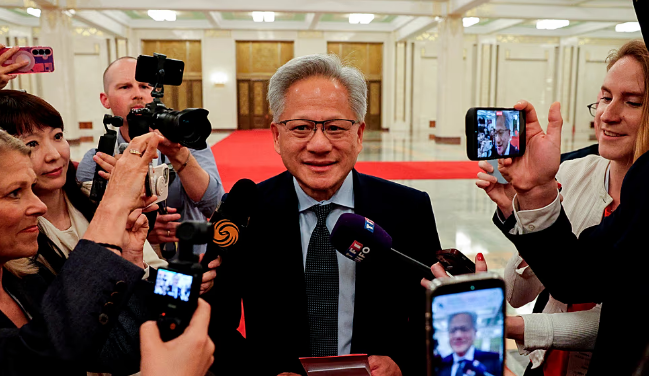
Nvidia chief executive Jensen Huang is facing renewed scrutiny following reports of a second alleged extramarital relationship, as the company’s board prepares to consider allegations involving the technology executive and a woman linked to a suspected Chinese intelligence operation.
The Wall Street Journal, citing people familiar with the matter, reported on Wednesday that Nvidia’s board was preparing to meet to discuss the situation. The report did not establish that the board had decided to remove Huang from his position.
The New York Times separately reported that video evidence showed the 63-year-old executive behaving affectionately with Kimberly Powell, Nvidia’s 48-year-old vice president of healthcare. The newspaper said bystanders had reportedly seen the pair being affectionate at a hotel during a conference in San Jose, California.
Powell has played a prominent role in Nvidia’s efforts to expand the use of its chip technology in higher education and healthcare. The reports have not established whether the alleged relationship has affected her position at the company.
The latest claims follow Huang’s admission that he had a relationship with Alice Huang, a senior executive at Singapore-based data centre company Megaspeed.
The Wall Street Journal reported that Jensen Huang and Alice Huang had been photographed together in Taipei in 2024 and 2025. US intelligence officials reportedly circulated a memo last spring alleging that Alice Huang was an operative for China’s Ministry of State Security. The allegation has not been independently established.
In a message to Nvidia employees on Sunday, the chief executive acknowledged the relationship, writing: “I was unfaithful to my wife.”
On the same day, Nvidia’s board announced that it had launched an independent investigation following reports that its founder and chief executive had been the target of a foreign intelligence effort.
“I support the investigation and will cooperate fully. I love our country and our company,” Huang said in his statement.
Members of Congress have also reportedly asked Huang to provide a closed-door briefing about his interactions with Alice Huang, according to The New York Times.
Political and business scrutiny
The controversy comes as Nvidia remains at the centre of the global artificial intelligence boom, which has driven its shares to record levels and made Huang one of the technology industry’s most influential executives.
He has appeared alongside US President Donald Trump at several White House events and received the National Medal of Science from the president last month.
Huang has also joined other prominent technology leaders, including Elon Musk, Jeff Bezos and Mark Zuckerberg, in supporting industry-led efforts to regulate artificial intelligence.
The debate over AI oversight has intensified as concerns grow about the technology’s potential risks. Trump has opposed calls for greater government intervention and dismissed warnings that artificial intelligence could pose an existential threat.

MOL Targets End to Russian Oil Imports by 2027, Seeks EU Funding for Energy Shift

Smoking Linked to Higher Dementia Risk, with Heavy Smokers Facing Greater Threat

Global Markets Slide as Nvidia Leadership Shake-Up and Iran Tensions Weigh on Investors

Regular Park Visits Linked to Better Mental Health and Social Skills in Children

Reports of Second Alleged Affair Add to Pressure on Nvidia CEO Jensen Huang

Zelenskyy to Meet Trump Envoys in Dublin as Europe Seeks Role in Ukraine Peace Talks

Anthropic Targets Up to $64 Billion in IPO at Valuation of $1.4 Trillion

Web Summit Cancels Second Day in Lisbon as Storm Charles Disrupts Portugal

Cyberattacks on Critical Infrastructure Expose Human Errors as a Major Security Risk

Global Markets Rally as AI Stocks Recover and Oil Prices Fall on Iran Peace Hopes

Meta Acquires Tilda Swinton VR Doc ‘Impulse: Playing With Reality’

China’s Historic Olympic Victory Sparks National Pride Amid Controversy

Saudi Arabia’s Model for Sustainable Aviation Practices

Recent Developments in Small Business Taxes

Effective Drain Cleaning: A Key to a Healthy Plumbing System

Who was Ebrahim Raisi and his status in Iranian Politics?

Keely Hodgkinson Wins Britain’s First Athletics Gold at Paris Olympics in 800m

Carrectly: Revolutionizing Car Care in Chicago

Nobel Laureate Muhammad Yunus Proposed as Head of Bangladesh’s Interim Government Following Hasina’s Resignation

Chinese Hackers Infiltrate Major U.S. Telecom Firms in Possible National Security Breach

Sony WF-10XM4: Headphones Are Our Absolute Favorite

10 Places You Can’t Miss If It’s Your First Time in European

New Census Data Will Shake Up Alabama Politics

16 Top of Our Favorite Outdoor Clothing Brands

Fashionable Summer Accessories to Dress Up Your Travel Look

How Sleeping Less than 7 Hours a Night Can Lead to Weight Gain
-
 Entertainment2 years ago
Meta Acquires Tilda Swinton VR Doc ‘Impulse: Playing With Reality’
-
 Sports2 years ago
China’s Historic Olympic Victory Sparks National Pride Amid Controversy
-
 Business2 years ago
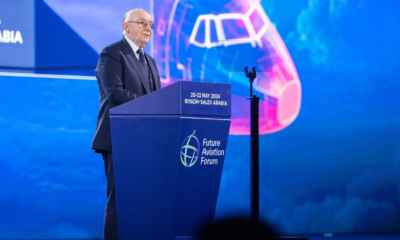
Saudi Arabia’s Model for Sustainable Aviation Practices
-
 Business2 years ago
Recent Developments in Small Business Taxes
-
 Home Improvement2 years ago
Effective Drain Cleaning: A Key to a Healthy Plumbing System
-
 Politics2 years ago
Who was Ebrahim Raisi and his status in Iranian Politics?
-
 Sports2 years ago
Keely Hodgkinson Wins Britain’s First Athletics Gold at Paris Olympics in 800m
-
 Business2 years ago
Carrectly: Revolutionizing Car Care in Chicago