
Business
Global Markets React to Trade Tensions as Investors Weigh Trump’s Tariff Moves

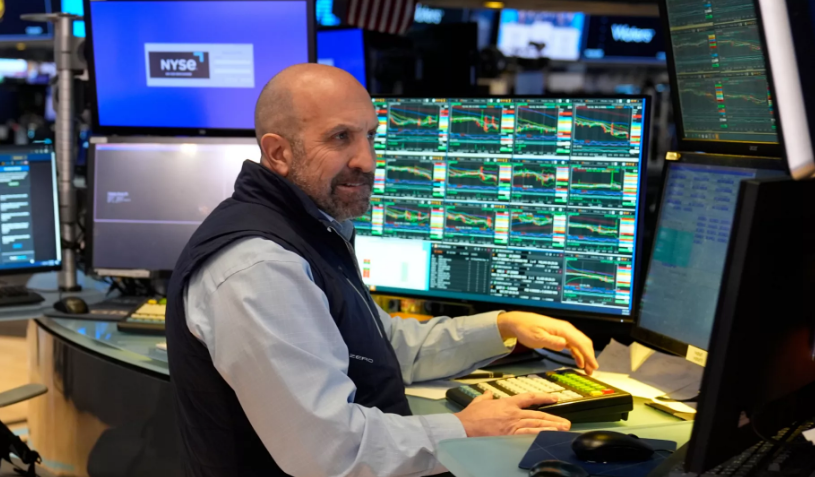
Global stock markets remained volatile on Tuesday as investors responded to escalating trade tensions and economic uncertainty following recent remarks by US President Donald Trump. Concerns over potential tariffs and economic slowdown have sent Asian, European, and US markets into a downturn, with tech stocks and major indices experiencing sharp losses.
European Markets Open Mixed Amid Tariff Concerns
European markets opened with mixed performances on Tuesday, as investors assessed the potential impact of Trump’s tariff policies on global trade and company earnings.
- FTSE 100 (UK) dipped 0.10% in early trading.
- DAX (Germany) rose 0.6%, while CAC 40 (France) gained 0.4%.
- The pan-European STOXX 600 fell 0.2%, reflecting broader market unease.
Market analysts suggest that Trump’s comments about a “period of transition” have raised fears of an economic slowdown, leading investors to adjust their expectations and pricing strategies.
“Trump’s willingness to endure short-term economic pain for long-term structural gains is being priced into the markets. Investors can no longer assume his policies will always favor stock market performance,” said Kyle Chapman, an FX analyst at Ballinger Group.
Asian Markets See Extended Sell-Off
Asian markets followed Wall Street’s lead, with stock indices experiencing losses overnight amid growing fears of a prolonged US-China trade war.
- Nikkei 225 (Japan) dropped 0.6% to its lowest level in six months, though it recovered from an earlier 2% decline.
- Shanghai Composite (China) rose 0.4%, buoyed by government measures aimed at stabilizing the slowing economy.
- Hang Seng (Hong Kong) remained flat at 23,782.14.
- S&P/ASX 200 (Australia) declined 0.9%, while Kospi (South Korea) fell 1.2%.
According to IG analysts, the global market sell-off is being exacerbated by recession fears linked to Trump’s tariff rhetoric.
Wall Street Suffers Steep Decline
The US markets closed sharply lower on Monday, with tech stocks leading the downturn.
- Nasdaq Composite plummeted 4%, marking its biggest single-day loss since 2022 and wiping out $1.1 trillion (€710 billion) in market value.
- S&P 500 declined 2.7%.
- Dow Jones Industrial Average fell 2.1%.
Goldman Sachs also cut its US growth forecast for 2025, revising expectations from 2.4% to 1.7%, adding to investor concerns.
The “Magnificent Seven” tech stocks—including Apple, Microsoft, and Tesla—were among the hardest hit, as analysts warned that higher tariffs could erode profit margins and slow earnings growth.
“Markets are now facing weaker earnings prospects, alongside the added cost burden created by tariffs,” said Kyle Rodd, a senior analyst at Compital.com Australia.
Commodities and Currency Markets React
- Oil Prices:
- US crude oil rose 0.42% to $66.31 per barrel.
- Brent crude climbed 0.3% to $69.50 per barrel.
- Gold Prices:
- Gold increased 0.5% to $2,900.4 (€2,661.6) per ounce, hovering near record highs.
- Currency Markets:
- EUR/USD pair rose 0.6%.
- EUR/GBP edged up 0.2%.
Corporate Earnings Updates
Volkswagen shares gained 1.6% on Tuesday morning after the company released its full-year 2024 earnings, despite reporting a 15% drop in annual profits. The German automaker remains optimistic about revenue growth in 2025.
Other major earnings reports expected today include Lego, Persimmon, and Leonardo.
Outlook: Volatility Expected to Continue
With global trade uncertainty, inflation concerns, and weaker growth forecasts, analysts anticipate that market volatility will persist in the coming weeks. Investors will closely watch further developments in US trade policy, corporate earnings reports, and central bank moves for clues on economic stability.












Genetic Differences May Shape Effectiveness of Popular Weight-Loss Drugs, Study Finds

Seven-Day Meditation Retreat Linked to Measurable Changes in Brain and Body, Study Finds

Fuel Prices Surge Across Europe as Middle East Crisis Pushes Oil Above $100

Oil Prices Surge as Strait of Hormuz Closure Shakes Markets

Britain and Norway Step Up Naval Patrols to Protect Undersea Infrastructure from Russia

Meta Launches Muse Spark, Its First Major AI Model in Nine Months

Fresh Attacks Reported Across Gulf Despite US-Iran Ceasefire Announcement

Sweden Accuses Iran of Using Criminal Gangs to Target Dissidents as Teenagers Face Trial

US-Iran Ceasefire Eases Tensions as Europe Reacts; US Politics Spill Into Hungary Vote

ENI and Egypt Announce Major Gas Discovery Amid Rising Energy Costs

Meta Acquires Tilda Swinton VR Doc ‘Impulse: Playing With Reality’

Saudi Arabia’s Model for Sustainable Aviation Practices

Recent Developments in Small Business Taxes

Effective Drain Cleaning: A Key to a Healthy Plumbing System

Who was Ebrahim Raisi and his status in Iranian Politics?

China’s Historic Olympic Victory Sparks National Pride Amid Controversy

Carrectly: Revolutionizing Car Care in Chicago

Keely Hodgkinson Wins Britain’s First Athletics Gold at Paris Olympics in 800m

Saudi Arabia: Foreign Direct Investment Rises by 5.6% in Q1

Chinese Hackers Infiltrate Major U.S. Telecom Firms in Possible National Security Breach

Sony WF-10XM4: Headphones Are Our Absolute Favorite

10 Places You Can’t Miss If It’s Your First Time in European

New Census Data Will Shake Up Alabama Politics

16 Top of Our Favorite Outdoor Clothing Brands

Fashionable Summer Accessories to Dress Up Your Travel Look

How Sleeping Less than 7 Hours a Night Can Lead to Weight Gain
-
 Entertainment2 years ago
Meta Acquires Tilda Swinton VR Doc ‘Impulse: Playing With Reality’
-
 Business2 years ago
Saudi Arabia’s Model for Sustainable Aviation Practices
-
 Business2 years ago
Recent Developments in Small Business Taxes
-
 Home Improvement1 year ago
Effective Drain Cleaning: A Key to a Healthy Plumbing System
-
 Politics2 years ago
Who was Ebrahim Raisi and his status in Iranian Politics?
-
 Sports2 years ago
China’s Historic Olympic Victory Sparks National Pride Amid Controversy
-
 Business2 years ago
Carrectly: Revolutionizing Car Care in Chicago
-
 Sports2 years ago
Keely Hodgkinson Wins Britain’s First Athletics Gold at Paris Olympics in 800m