Business
German Business Confidence Rises in March Amid Manufacturing Rebound
Confidence among German businesses improved in March, driven by a strong rebound in the manufacturing sector and optimism surrounding major government spending plans. The ifo Business Climate Index climbed to 86.7 in March, its highest level in seven months, from 85.3 in February, signaling renewed economic momentum.
The improvement was reflected in both current assessments and future expectations. The ifo Expectations Index, a key measure of sentiment, rose to 87.7, reaching an eight-month high. The ifo Current Condition gauge also increased to 87.7 from 85.6 in February, in line with market forecasts.
“Sentiment among companies in Germany has brightened,” said Clemens Fuest, president of the ifo Institute. “Companies were more satisfied with their current business situation, and their expectations rose noticeably. German businesses are hoping for a recovery.”
Manufacturing Drives Growth
The manufacturing sector saw a significant boost in confidence, with firms showing greater optimism about future prospects. While order books showed a slight decline, companies viewed their current situation more favorably. The service sector also experienced a rise in confidence, particularly among architectural and engineering firms, which reported a clearer sense of optimism.
In the trade sector, sentiment strengthened as traders became less pessimistic about the future and assessed their current business conditions more positively. The construction sector showed a modest improvement in mood, with firms slightly more optimistic about conditions. However, a persistent shortage of orders continues to challenge the industry.
On Monday, S&P Global’s flash Purchasing Managers’ Index (PMI) provided further signs of recovery. The Germany Composite PMI Output Index increased to 50.9 in March from 50.4 in February, marking its highest level since May 2024. The improvement was led by a sharp expansion in manufacturing output, which rose at its strongest rate in three years, with the output sub-index reaching 52.1.
New manufacturing orders increased for the first time in two years, supported by stronger domestic demand and inventory rebuilding efforts. “Manufacturers have ramped up production for the first time in nearly two years,” said Dr. Cyrus de la Rubia, Chief Economist at Hamburg Commercial Bank. He attributed the improvement to Germany’s recently approved €500 billion infrastructure and defense investment plan, which has helped restore business confidence.
Challenges in the Services Sector
Despite gains in manufacturing, the services sector struggled, with the services PMI slipping to 50.2, indicating near-stagnant activity. New business declined sharply, and service providers faced difficulties in passing on higher costs through price increases. Nonetheless, sentiment remained positive across both sectors, with firms expressing optimism about future output.
Market Reactions and Global Trade Developments
Financial markets responded positively to the improving sentiment. The DAX index rose 0.8% in morning trading on Tuesday, supported by global optimism following U.S. President Donald Trump’s softened stance on upcoming tariffs. At a White House briefing, Trump hinted that “a lot of countries” might receive exemptions and that not all tariffs would take effect as planned on April 2.
Bayer AG shares led gains on the DAX, rising 4%, followed by BMW AG (+1.6%) and Deutsche Börse (+1.5%). Meanwhile, Sartorius AG and Siemens AG underperformed, falling 2.4% and 1.7%, respectively.
Across European markets, the Euro STOXX 50 climbed 0.4%, Italy’s FTSE MIB rose 0.8%, and Spain’s IBEX 35 gained 0.9%. The Euro STOXX Bank Index added 0.5%, driven by a 2.3% rise in Crédit Agricole and a 1.8% increase in ABN Amro.
Business
Oil Market Faces Near-Term Oversupply but Long-Term Supply Risks, Forecasts Show
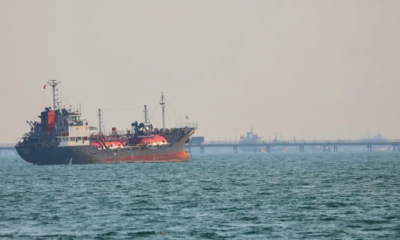
The global oil market is set to enter 2026 with a comfortable surplus that is expected to weigh on prices, even as analysts warn of deeper structural challenges looming later in the decade. New projections from Oxford Economics indicate Brent crude could finish 2026 at around $58 per barrel and ease to roughly $55 in 2027, well below prevailing market expectations. The forecasts are anchored in a sustained supply surplus projected to exceed 2 million barrels per day.
Global production is expected to rise by about 1.6 million barrels per day next year, bringing total output to around 106 million barrels per day. Demand is forecast to increase at a slower pace, climbing to 104 million barrels per day in 2026. The supply outlook has been lifted by stronger US shale performance and faster progress on major developments in Brazil. Despite lower rig numbers and expectations of West Texas Intermediate trading below $55, improvements in drilling efficiency are allowing US production to grow by approximately 400,000 barrels per day.
Latin America continues to play an important role in the supply picture. Brazil and Guyana are set to add a combined 1.6 million barrels per day across 2025 and 2026. OPEC is projected to restore nearly 1 million barrels per day in the second half of 2026 as key members, including Saudi Arabia and the UAE, start trimming back voluntary cuts.
On the demand side, growth is expected to slow to around 600,000 barrels per day next year, led mainly by emerging markets and OPEC economies. Consumption in advanced economies is forecast to level off due to efficiency improvements and rising electrification. China remains a central driver, supported by manufacturing and petrochemical activity, while demand in the United States is expected to decline structurally.
Against this backdrop of near-term abundance, some analysts are drawing attention to risks that could arise in the next decade. Ole Hansen, Head of Commodity Strategy at Saxo Bank, said current prices may not support the level of upstream investment needed to offset natural declines in existing fields. He noted global fields lose between 6 million and 8 million barrels per day each year, requiring roughly $500 billion in annual investment just to maintain today’s output levels.
Hansen warned that the industry may face a supply shortfall early in the 2030s if investment continues to lag. He pointed out that Saudi Arabia and the UAE remain the only major producers with meaningful spare capacity, while US shale growth is showing signs of slowing.
The International Energy Agency recently revised its long-term outlook, now projecting oil demand to grow well beyond 2040. The shift heightens concerns that delays in investment could lead to sharper price increases later.
Analysts say risks to the 2026 outlook cut both ways. A faster slowdown in US shale, renewed OPEC restraint or geopolitical disruptions could push prices higher, while a larger-than-expected surplus early next year could trigger steeper price drops.
Despite the near-term softness, the debate over long-term supply needs is intensifying. Some analysts warn that postponing investment today could set the stage for tighter markets later in the decade.
Business
UAE Mobile Sector Set for Solid Growth as 5G Adoption Accelerates
The UAE’s mobile services industry is on track for steady expansion through the end of the decade, driven by surging data consumption and rapid uptake of 5G technology, according to new projections from analytics firm GlobalData.
The company’s latest “UAE Mobile Broadband Forecast (Q3 2025)” shows mobile service revenue is expected to rise at a compound annual growth rate of 4 per cent between 2025 and 2030. The report points to a sharp split between declining voice services and fast-growing data usage. Mobile voice revenue is set to fall at a CAGR of 4.1 per cent during the period as more customers shift to app-based calling, while mobile data revenue is projected to expand at 7.4 per cent annually.
Srikanth Vaidya, telecom analyst at GlobalData, said monthly data usage per customer is likely to jump from around 12.9GB in 2025 to about 35GB by 2030. He cited rising consumption of video streaming, social media, gaming and other data-heavy applications as key drivers of this shift.
The forecast also shows a strong push toward 5G across the country. By 2030, 5G subscriptions are expected to account for about 80 per cent of all mobile connections in the UAE. The outlook aligns with other regional projections, including the Ericsson Mobility Report, which estimates 5G penetration in GCC states could reach 93 per cent by the end of the decade.
Growth in machine-to-machine (M2M) and Internet-of-Things (IoT) connections is also shaping the sector. GlobalData expects M2M and IoT subscriptions in the UAE to rise from 4 million in 2025 to 6.7 million in 2030, driven by increased adoption of automation, predictive maintenance tools and edge-computing solutions across manufacturing, logistics and supply-chain operations.
Recent market data illustrates the momentum. A September 2025 industry snapshot recorded total mobile subscriptions at 22.9 million, up 8.5 per cent from the previous year. e& UAE, the country’s largest operator, reported a 6.9 per cent year-on-year increase in its subscriber base in the third quarter of 2025, bringing total customers to 15.7 million. The company attributed the rise to strong demand for its 5G services, digital products and enterprise offerings.
Analysts view the current landscape as a critical transition period for telecom operators. Vaidya said the market is entering a “high-value phase” characterised by intense data usage, widespread 5G adoption and the rapid expansion of IoT-based services. Companies investing in advanced network upgrades, enterprise technologies and data-centric solutions are expected to outperform those relying on traditional voice revenues.
Regional trends support this shift. A Nokia report published earlier this year predicts that across the Middle East and Africa, 82 per cent of mobile connections will migrate to 4G or 5G by 2030, with 5G carrying most of the region’s mobile traffic.
Analysts say the UAE’s telecom sector is undergoing a structural change as the market pivots from voice-led services to a future shaped by high-speed data, digital platforms and connected devices. They expect the coming years to bring faster networks, expanded 5G coverage and a new wave of data-driven services for both consumers and businesses.
Business
Italy and Saudi Arabia Push Trade Ties Forward at First Joint Business Forum
Italy and Saudi Arabia have taken a major step toward deepening economic cooperation with the launch of the first Italy–Saudi Arabia Business Forum in Riyadh, an event aimed at strengthening commercial partnerships and supporting Italy’s ambition to reach €700 billion in exports under its national Export Action Plan.
Held at the Mandarin Oriental Al Faisaliah in the Saudi capital, the forum was organised by the Italian Trade Agency (ITA) and the Italian Embassy, in collaboration with Saudi institutional partners. The gathering brought together senior officials from both countries, including Saudi Minister of Investment Khalid bin Abdulaziz Al-Falih and Italy’s Deputy Prime Minister and Foreign Minister Antonio Tajani. Leading representatives from Italian institutions such as SACE, Confindustria and Simest also attended.
The event was structured around five key sectors: infrastructure and mobility; construction and furniture; pharmaceuticals and life sciences; advanced technology; agritech and agro-industry; and cultural and sports-related industries. More than 430 Italian companies and over 600 Saudi companies took part, marking the highest level of bilateral business engagement between the two nations.
Matteo Zoppas, President of the Italian Trade Agency, said the forum builds on strengthened political ties following Prime Minister Giorgia Meloni’s recent visit to Saudi Arabia. He highlighted the alignment of Italian industrial capabilities with opportunities emerging from Saudi Arabia’s Vision 2030 agenda, which is opening pathways for foreign investment and raising demand for high-quality global expertise.
According to Zoppas, the B2B platform activated for the forum generated significant activity, receiving more than 337 meeting requests and facilitating nearly 4,300 exchanges between participating companies. He noted that 20 agreements were signed across sectors such as sustainable mobility, medical technology, digital innovation, agribusiness, and cultural industries—areas that Saudi policymakers have prioritised for expansion.
Trade data reflects the momentum behind the relationship. Italian exports to Saudi Arabia reached €4.4 billion in the first nine months of 2025, a 4.3% increase compared to the same period last year. Total exports for 2024 stood at €6.2 billion, up 27.8% from 2023. Italy has now moved from eighth to seventh place among the Kingdom’s top suppliers.
The Italian Trade Agency has played a central role in nurturing these ties. In 2024, its Riyadh office delivered 43 promotional initiatives, ranging from supporting Saudi delegations at Italian trade fairs to organising events across multiple sectors. For 2025, 50 initiatives are planned, including participation in Agrilevante, Marmomac, Euroflora and Italian Design Days, as well as a visit to Jeddah by the training ship Amerigo Vespucci.
With a total of 93 initiatives scheduled across 2024 and 2025, Italian officials say the expanding programme reflects a sustained commitment to developing long-term commercial ties with Saudi Arabia amid rapid economic transformation in the region.
-
Entertainment1 year agoMeta Acquires Tilda Swinton VR Doc ‘Impulse: Playing With Reality’
-
Business2 years agoSaudi Arabia’s Model for Sustainable Aviation Practices
-
Business2 years agoRecent Developments in Small Business Taxes
-
Home Improvement1 year agoEffective Drain Cleaning: A Key to a Healthy Plumbing System
-
Politics2 years agoWho was Ebrahim Raisi and his status in Iranian Politics?
-
Business1 year agoCarrectly: Revolutionizing Car Care in Chicago
-
Sports1 year agoKeely Hodgkinson Wins Britain’s First Athletics Gold at Paris Olympics in 800m
-
Business1 year agoSaudi Arabia: Foreign Direct Investment Rises by 5.6% in Q1