Business
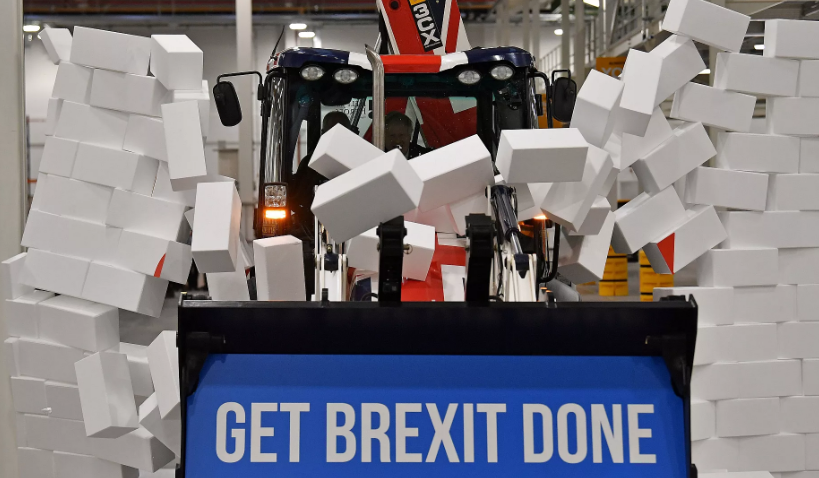
EU Trade Chief Suggests UK Joining PEM Amid Post-Brexit Reset
Davos, Switzerland – The European Union’s new trade commissioner, Maros Sefcovic, has suggested Britain could join the Pan-Euro-Mediterranean Convention (PEM) as part of efforts to reset post-Brexit relations. Speaking at the World Economic Forum in Davos on Wednesday, Sefcovic told the BBC he was open to the idea, framing it as a step toward closer economic collaboration.
However, the UK government appeared to downplay the proposal. Nick Thomas-Symonds, the UK Minister for the Constitution and European Union Relations, told Parliament the government currently has no plans to join PEM.
UK Response
Thomas-Symonds welcomed the “positive, constructive tone” from the EU but emphasized that the UK’s approach remains guided by its national interest and manifesto commitments.
“We are always looking for ways to reduce trade barriers within our manifesto red lines,” Thomas-Symonds said. “We don’t currently have plans to join PEM and won’t provide a running commentary on every comment made.”
The Labour government, led by Prime Minister Keir Starmer, has ruled out returning to the EU’s single market or customs union. However, Starmer has expressed a desire to “reset” UK-EU relations, aiming for a more pragmatic partnership.
Potential Benefits of PEM Membership
Joining PEM could simplify trade for the UK by harmonizing rules of origin regulations, which determine the origin of materials used in manufacturing. This alignment could reduce red tape, smooth supply chains disrupted by Brexit, and facilitate trade with non-EU countries also part of the convention.
The UK already enjoys tariff-free trade with the EU, but PEM membership could provide additional benefits by easing Brexit’s impact on industries like automotive and manufacturing, which depend on complex, cross-border supply chains.
The BBC reported that the UK government is holding discussions with businesses about PEM’s potential benefits, though no decision has been reached.
Concerns and Criticism
Not all stakeholders support the idea. Former senior Conservative Michael Gove, now editor of The Spectator magazine, expressed skepticism about the cost of improving trade terms with the EU.
Speaking to LBC radio, Gove said, “Every time this has been tried, the EU has exacted a very high price tag. While it’s worth examining ways to improve our trading relationship, we must proceed with caution.”
Looking Ahead
As discussions around PEM continue, the UK government is balancing business interests, political red lines, and its goal of fostering a “sensible” partnership with the EU. With no official plans confirmed, any move toward PEM membership is likely to spark further debate about the future of UK-EU trade relations.
Business
Crypto Ownership Rises Across Europe Despite Volatile 2025
Crypto assets faced a turbulent year in 2025, with a sharp market sell-off in October triggered by US President Donald Trump’s threat of new tariffs on China. Despite volatility, European interest in cryptocurrencies continues to grow, with ownership rates rising across the continent.
According to the ‘Web3 Industry in France and Europe’ report by Adan, more than 90 percent of adults in major European economies are aware of crypto assets. Data from the European Central Bank shows that nine percent of eurozone adults held crypto in 2024, up from four percent in 2022. Ownership varies across countries, ranging from six percent in the Netherlands and Germany to 15 percent in Slovenia. Greece, Ireland, Croatia, Cyprus, Lithuania, and Austria follow closely, reflecting modest differences among nations.
James Sullivan, chief risk and compliance officer at BCB Group, said ownership patterns are shaped by digital adoption, investor risk appetite, and local market conditions. “Countries with strong financial innovation and a younger, predominantly male investor base tend to lead,” he told Euronews Business. Regulatory and economic factors also play a role. In markets with limited traditional investment options, crypto is often used speculatively, while awareness campaigns, like those in Italy, can boost adoption.
The UK, though not part of the eurozone, shows strong crypto activity, ranking third globally in transaction volumes behind the US and India as of 2024.
Across the eurozone, ownership more than doubled between 2022 and 2024. Greece and Lithuania recorded the largest increases, rising by ten percentage points, while Cyprus, Belgium, Ireland, Austria, Slovakia, Slovenia, Portugal, and Italy also saw gains of seven points or more. The Netherlands remained stable, while data for Croatia in 2022 is unavailable. Sullivan said this trend reflects growing consumer confidence, supported by global market momentum and the European Union’s Markets in Crypto-Assets (MiCA) regulation.
MiCA establishes uniform rules for crypto assets, providing regulatory clarity and consumer protection. Sullivan said the framework signals mainstream recognition of crypto, encouraging cautious investors to enter the market.
Investment remains the primary use for crypto. In the eurozone, 64 percent of holders use it for investment, while 16 percent use it for payments, and 19 percent for both. The Netherlands and Germany show the highest focus on investment despite lower overall ownership, while France has the largest share of users leveraging crypto for payments at 25 percent.
Sullivan noted that most European consumers still use crypto primarily for speculation rather than daily transactions. While stablecoins could offer practical payment solutions, their adoption remains limited compared with traditional methods such as cards and cash. He added that the long-term success of crypto as a transactional tool will depend on MiCA’s effectiveness in regulating euro-denominated stablecoins and integrating them into existing payment systems.
Despite 2025’s volatility, the rise in ownership indicates that European retail interest in crypto remains strong, with regulation and market momentum supporting continued growth.
Business
Crypto Ownership Rising Across Europe Despite Market Volatility
Cryptocurrencies have experienced a turbulent 2025, including a sharp sell-off in October following US President Donald Trump’s threat of new tariffs on China. Despite these fluctuations, crypto ownership continues to grow across Europe, according to recent reports.
The ‘Web3 Industry in France and Europe’ report by Adan, using data from early 2025, found that more than 90 percent of adults in major European economies are aware of crypto-assets. Ownership of these digital assets, though still limited, has been steadily increasing.
Data from a European Central Bank survey shows that in 2024, nine percent of adults in the eurozone held crypto-assets. Ownership varies across countries, ranging from six percent in the Netherlands and Germany to 15 percent in Slovenia. Other nations with above-average adoption include Greece, Ireland, Croatia, Cyprus, Lithuania, and Austria.
Experts attribute these differences to factors such as digital adoption, risk appetite, and local market conditions. James Sullivan, chief risk and compliance officer at BCB Group, told Euronews Business that countries with younger, more digitally-savvy investors and higher levels of financial innovation tend to have higher ownership rates. Local regulatory frameworks and economic conditions also play a role. In markets with limited traditional investment options, crypto may be used more speculatively, while awareness campaigns, like those conducted in Italy, boost adoption.
The UK, though not part of the eurozone, ranks third globally in transaction volumes behind the US and India, reflecting continued strong consumer activity.
Ownership of crypto-assets across the eurozone more than doubled between 2022 and 2024, rising from four percent to nine percent. Greece and Lithuania saw the largest increases, each climbing by ten percentage points, while Cyprus, Belgium, Ireland, Austria, Slovakia, Slovenia, Portugal, and Italy saw gains of seven points or more. The Netherlands was the only country where the rate remained unchanged.
Sullivan highlighted that growing European interest in crypto reflects renewed confidence following previous market downturns. The introduction of the Markets in Crypto-Assets (MiCA) regulation, which sets uniform EU rules for previously unregulated crypto assets, has contributed to trust and encouraged new investors.
The majority of crypto holders use these assets primarily as an investment. In the eurozone, 64 percent of users cited investment as their main purpose, 16 percent for payments, and 19 percent for both. The Netherlands and Germany, despite relatively low ownership rates, had the highest shares of investment-focused users at 90 and 82 percent, respectively. France reported the highest use for payments at 25 percent.
Sullivan noted that while cryptocurrencies, particularly stablecoins, have transactional potential, day-to-day use remains limited. He said broader adoption for payments will depend on MiCA’s success in regulating stablecoins and integrating them into existing payment systems, a key focus for the European Central Bank.
Business
Motherhood Can Narrow Career Opportunities Through Subtle Task Shifts, Study Finds
Gender inequality in the workplace goes beyond measurable gaps in pay and representation, a recent study suggests, showing that subtle changes in women’s job tasks after having children can significantly hinder long-term career growth.
While disparities in earnings, employment, and leadership roles are well documented, women who take primary responsibility for childcare often face additional, less visible barriers just when their careers would otherwise accelerate. Research from Germany highlights that after childbirth, women are frequently assigned fewer analytical, complex, and interactive tasks, especially when they reduce working hours, quietly limiting opportunities for advancement.
The study, published in the Journal of Marriage and Family and titled The Job Task Penalty for Motherhood, was conducted by Wiebke Schulz of Bremen University and Gundula Zoch of Carl von Ossietzky University Oldenburg. Using data from the German National Educational Panel Study, the researchers tracked 1,978 women from 2011 to 2020, analyzing changes in five key dimensions of job tasks: analytical, complex, autonomous, interactive, and manual.
Schulz explained that interactive tasks, which often involve coordination and being “on call” for colleagues or clients, are easiest to reassign when caregiving responsibilities arise. Analytical or complex tasks, requiring sustained focus or ownership of long-term projects, also decline, sometimes because managers pre-emptively steer mothers away from high-responsibility work regardless of their actual capacity.
“After childbirth, many women see a shift from high-cognitive, high-interaction tasks to a narrower set of duties,” Schulz told Euronews Business. “Even small short-term downgrades can accumulate. Analytical and interactive tasks are where skills grow, performance is visible, and leadership pipelines are built. Losing access to them can slow wage growth, reduce promotion chances, and lock people into flatter career trajectories—even if job titles remain unchanged.”
While the research focuses on Germany, Schulz noted that similar patterns appear across Europe, though the magnitude varies depending on cultural norms and institutional support.
The study recommends that employers make task allocation more transparent, tracking who receives high-growth assignments before and after parental leave or part-time transitions. Part-time roles can also be redesigned, with complex work broken into modular tasks and team-based ownership to maintain access to analytical and high-responsibility projects.
Training managers to recognize expectation-based bias is crucial, the study adds, as anticipatory reassignment can be just as damaging as performance-related reassignment. Policymakers are encouraged to expand full-day childcare and school coverage, strengthen flexible work rights with career protections, and incentivize fathers’ leave to reduce the assumption that mothers must adjust their roles.
The findings underline that gender inequality in the workplace is not only about who is hired or promoted, but also about the subtle ways work is allocated, shaping the long-term career paths of women across industries.
-
Entertainment1 year agoMeta Acquires Tilda Swinton VR Doc ‘Impulse: Playing With Reality’
-
Business2 years agoSaudi Arabia’s Model for Sustainable Aviation Practices
-
Business2 years agoRecent Developments in Small Business Taxes
-
Home Improvement1 year agoEffective Drain Cleaning: A Key to a Healthy Plumbing System
-
Politics2 years agoWho was Ebrahim Raisi and his status in Iranian Politics?
-
Business1 year agoCarrectly: Revolutionizing Car Care in Chicago
-
Sports1 year agoKeely Hodgkinson Wins Britain’s First Athletics Gold at Paris Olympics in 800m
-
Business2 years agoSaudi Arabia: Foreign Direct Investment Rises by 5.6% in Q1