
Business
Austrian Chipmaker AT&S Drives Vienna Stock Market to One of Europe’s Best Performances


Austria’s stock market has emerged as one of Europe’s strongest performers in 2026, driven by a sharp rally in a little-known semiconductor supplier that has transformed the outlook for Vienna’s bank-heavy equity market.
The benchmark ATX index has risen 21.3% since the start of the year, according to Trading Economics, outperforming major eurozone markets. Italy’s FTSE MIB has gained 16.1%, the Netherlands’ AEX has climbed 15.5% and Spain’s IBEX 35 is up 11.5%. Germany’s DAX has advanced just 1.6%, while France’s CAC 40 has increased 2.3%.
The Euro Stoxx 50 has gained 8.2% over the same period.
Much of Austria’s strong performance can be traced to AT&S, or Austria Technologie & Systemtechnik AG, a semiconductor supplier based in Leoben, Styria. Its shares have jumped 459% since the beginning of the year, rising from €32.20 at the end of December to around €174.
The company’s market value has increased from roughly €1.25 billion to about €7 billion in just over six months.
AT&S specialises in integrated circuit substrates, highly advanced components used in semiconductor packaging. These substrates provide mechanical support for processors while enabling the thousands of tiny electrical connections needed to transfer data and supply power.
The technology has become increasingly important as demand for advanced processors grows alongside artificial intelligence applications.
AT&S is one of only a limited number of companies capable of producing sophisticated substrates and is the only major European manufacturer in the sector. Its main competitors include Japanese and Taiwanese producers such as Ibiden and Shinko Electric.
The company’s financial results have also strengthened investor confidence. During its 2025/26 financial year, AT&S reported revenue of €1.8 billion, an increase of 21% at constant exchange rates. Excluding proceeds from the sale of its South Korean plant in Ansan, EBITDA rose about 50% to €418 million, while free cash flow turned positive at €236 million.
Chief Executive Michael Mertin described the year as a “strong and pivotal financial year” when the results were announced in May.
Investor interest increased further after AT&S announced agreements with AMD and another major technology customer, reported by Reuters to be Intel, to expand manufacturing capacity in Malaysia and China. The planned investment is estimated at between €1.5 billion and €2 billion.
Austria’s market remains heavily weighted toward banks and other traditional industries. Financial companies account for roughly half of the iShares MSCI Austria ETF, with Erste Group and BAWAG among its largest holdings.
AT&S, however, has rapidly risen to become the fund’s fourth-largest holding.
The company has not turned Austria into a technology-focused market, but its dramatic rise shows how a single semiconductor business positioned within the AI supply chain can have an outsized impact on an entire country’s stock market.



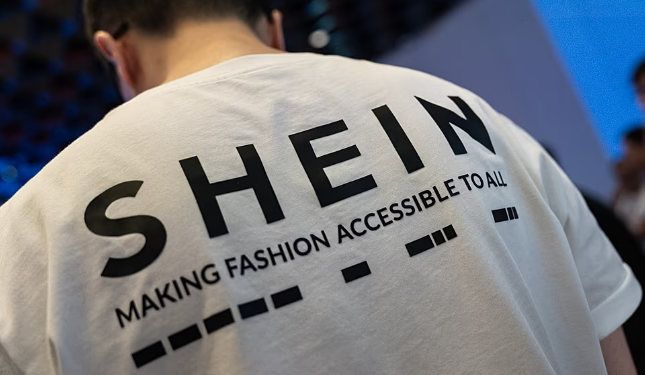
Shein shares fell sharply on their Hong Kong trading debut on Tuesday, dropping as much as 10% before recovering some of the losses, as the fast-fashion company faces rising tariffs and shipping costs that have put pressure on its profits.
The listing marks the end of a lengthy effort by Shein to enter public markets. The company had previously considered listings in New York and London but faced regulatory scrutiny over its Chinese supply chain and business practices. It eventually turned to Hong Kong for its initial public offering.
Shein priced its shares at HK$48.56 each and raised about $1.7 billion (€1.46 billion), making the offering one of Hong Kong’s largest share sales of the year. The company opened its IPO for investors on August 24 before setting the final share price on August 31. Trading began on Tuesday after the exchange completed its approval process.
Shares initially dropped below HK$44 before narrowing their losses.
“Shein’s Hong Kong listing marks a new starting point,” Chief Financial Officer Leigh Gui said during the company’s listing ceremony.
The company has built its global business around producing inexpensive clothing quickly and shipping orders from China to customers in Western markets. That model is now facing higher costs as the US and European Union reduce or end tariff exemptions for low-value parcels from China.
Shein’s profits have been hit by the changing trade environment. The company reported a $99 million (€85 million) loss in the first quarter of the year, compared with a profit of $395 million (€340 million) a year earlier.
Higher shipping expenses have added to the pressure, making it harder for the company to maintain its low-price strategy. Tariff costs have also forced Shein to increase prices, potentially weakening one of its biggest attractions to consumers.
Shein was founded in China in 2012 and later moved its corporate headquarters to Singapore in 2021. Despite that move, its manufacturing network remains closely connected to Guangdong province, where the company developed its small-batch production system.
Founder Sky Xu has described Guangdong as the company’s roots and the starting point of its growth.
The company has also faced regulatory challenges in Europe. In February, the EU opened an investigation into Shein over concerns involving allegedly illegal products, including accusations related to child sexual abuse material.
Shein’s Hong Kong debut values the company at roughly $27 billion (€23.2 billion), far below its peak private-market valuation.
The listing nevertheless gives Hong Kong’s stock market a major boost. The exchange has attracted more than $40 billion (€34.4 billion) through IPOs so far this year, as companies continue to seek access to international investors through the city’s financial markets.
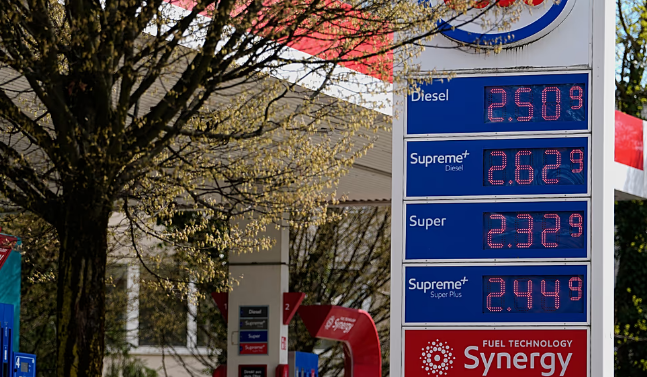
Eurozone inflation rose sharply in August, reaching 3.3 percent as energy prices climbed at their fastest pace in months amid higher oil and gas costs and disruption to shipping through the Strait of Hormuz.
The annual inflation rate increased from 2.9 percent in July, according to a flash estimate from Eurostat, the European Union’s statistical office. The rise puts inflation well above the European Central Bank’s 2 percent target and could strengthen expectations of another interest rate increase.
Energy prices were the main driver behind the acceleration. They rose 14.3 percent in the year to August, up from an annual increase of 10.3 percent in July. On a monthly basis, energy prices increased 2.9 percent, contributing significantly to the overall rise in consumer prices.
Services inflation, which is closely monitored by the ECB because it tends to be more persistent, eased to 3 percent in August from 3.3 percent in July.
Core inflation also slowed slightly. The measure, which excludes energy, food, alcohol and tobacco, fell from 2.5 percent to 2.4 percent. Food, alcohol and tobacco prices increased 1.2 percent from a year earlier, unchanged from July.
The figures indicate that higher energy costs have not yet translated into a broad increase in underlying price pressures. However, economists expect elevated gas and food prices to continue affecting inflation in the months ahead.
Leo Barincou, senior economist at Oxford Economics, said the increase was driven by a rebound in fuel prices following the renewed closure of the Strait of Hormuz. He said underlying price pressures remained contained because services inflation had eased, but inflation was likely to stay above the ECB’s target into next year.
Inflation varied considerably across the eurozone. Lithuania recorded the highest rate among countries included in the flash estimate, at 5.8 percent, while Estonia had the lowest at 1.3 percent.
Among the bloc’s largest economies, inflation stood at 2.7 percent in France and 2.9 percent in Germany, both below the eurozone average. France nevertheless saw a notable increase from 2.4 percent in July. Spain recorded inflation of 4.5 percent, while Italy reached 3.2 percent.
Markets are expecting the ECB to raise interest rates by 0.25 percentage points at its September 10 meeting as policymakers respond to renewed price pressures.
Barincou said inflation was accelerating and the ECB was highly likely to raise rates next week, but warned against assuming that another increase would immediately follow, given that underlying inflation pressures remain relatively contained.
The latest figures leave policymakers facing a difficult balance between controlling inflation and avoiding excessive pressure on economic activity.

The White House has released details of a major agreement involving Venezuela’s oil industry, identifying the private company at the centre of the deal and outlining Washington’s financial and operational interests in more than 65 billion barrels of crude reserves.
The Trump administration described the arrangement as the largest oil deal in history. A fact sheet released Monday night named North American Blue Energy Partners, or NABEP, as the operator and provided details of the ownership structure and commitments involved.
Venezuela’s interim authorities have granted NABEP 100-year concessions covering 17 oil fields. The agreement was signed by US Secretary of State Marco Rubio and US Secretary of War Pete Hegseth.
The reserves covered by the agreement are significantly larger than America’s domestic oil reserves. The 65 billion barrels under the concessions compare with about 46 billion barrels across US territory.
Speaking in the Oval Office on Monday, President Donald Trump described the Venezuelan reserves as an enormous resource that had remained unused. He said the US would take the oil out and again claimed major American oil companies were interested in participating.
“We have Exxon going in, we have Chevron going in, we have our big oil companies going in,” Trump said.
Under the agreement, NABEP will provide the US Department of War’s Office of Strategic Capital with a 35 percent equity stake in its parent company. The White House said the stake could eventually be worth hundreds of billions of dollars without requiring money from US taxpayers.
The US State Department will also have the right to purchase 20 percent of production from all current and future NABEP fields at production cost. The oil is intended in part to replenish the US Strategic Petroleum Reserve. Washington will also have a right of first refusal on the remaining 80 percent of production.
The agreement gives the US a veto over board appointments, while a majority of directors must be US citizens. The contracts will also operate under US law and be subject to US courts.
NABEP has committed to investing as much as $100 billion in Venezuela’s oil infrastructure and is expected to pay about $200 billion in royalties and taxes over 25 years.
Many of the fields involved were previously operated by Russian or Chinese companies, a development the White House has presented as a renewed assertion of US influence in the region.
Questions remain over the deal, particularly among major oil companies. NABEP is controlled by Venezuelan businessman Alejandro Betancourt, who has faced investigations by US and European authorities over previous dealings with Venezuela’s government. He has never been charged and denies wrongdoing.
ExxonMobil and ConocoPhillips, which left Venezuela after assets were nationalised in 2007, have continued to call for strong legal protections before returning.
US lawmakers have also requested more information about the agreement, which was negotiated without congressional involvement.
Additional energy contracts are expected to be signed this week, potentially providing a clearer indication of whether major international oil companies are prepared to join the plan.

John Ternus Takes Over as Apple CEO After 15-Year Tim Cook Era

Taiwan’s AI Stock Boom Fuels Borrowing Frenzy as Investors Chase Big Gains

Wegovy Weight-Loss Pill Hits German Pharmacies at Up to €280

Shein Shares Slide on Hong Kong Debut as Tariffs Hit Fast-Fashion Business

Eurozone Inflation Jumps to 3.3% as Energy Costs Surge

White House Details Major Venezuela Oil Deal as US Secures Stake in Reserves

Google Maps Renames Lake Ontario ‘Lake America’ for US Users Amid Canada Trade Tensions

Trump Hails Major Venezuela Oil Deal as Questions Grow Over Terms

Oil Prices Rise as US-Iran Tensions Return and Rate Hike Bets Grow

Zurich Leads Europe as City-Centre Home Prices Soar Above €22,000 per Square Metre

Meta Acquires Tilda Swinton VR Doc ‘Impulse: Playing With Reality’

China’s Historic Olympic Victory Sparks National Pride Amid Controversy

Saudi Arabia’s Model for Sustainable Aviation Practices

Recent Developments in Small Business Taxes

Effective Drain Cleaning: A Key to a Healthy Plumbing System

Who was Ebrahim Raisi and his status in Iranian Politics?

Keely Hodgkinson Wins Britain’s First Athletics Gold at Paris Olympics in 800m

Carrectly: Revolutionizing Car Care in Chicago

Nobel Laureate Muhammad Yunus Proposed as Head of Bangladesh’s Interim Government Following Hasina’s Resignation

Chinese Hackers Infiltrate Major U.S. Telecom Firms in Possible National Security Breach

Sony WF-10XM4: Headphones Are Our Absolute Favorite

10 Places You Can’t Miss If It’s Your First Time in European

New Census Data Will Shake Up Alabama Politics

16 Top of Our Favorite Outdoor Clothing Brands

Fashionable Summer Accessories to Dress Up Your Travel Look

How Sleeping Less than 7 Hours a Night Can Lead to Weight Gain
-
 Entertainment2 years ago
Meta Acquires Tilda Swinton VR Doc ‘Impulse: Playing With Reality’
-
 Sports2 years ago
China’s Historic Olympic Victory Sparks National Pride Amid Controversy
-
 Business2 years ago
Saudi Arabia’s Model for Sustainable Aviation Practices
-
 Business2 years ago
Recent Developments in Small Business Taxes
-
 Home Improvement2 years ago
Effective Drain Cleaning: A Key to a Healthy Plumbing System
-
 Politics2 years ago
Who was Ebrahim Raisi and his status in Iranian Politics?
-
 Sports2 years ago
Keely Hodgkinson Wins Britain’s First Athletics Gold at Paris Olympics in 800m
-
 Business2 years ago
Carrectly: Revolutionizing Car Care in Chicago