
News
Iran Claims Strikes on US Bases as Hormuz Tensions Escalate

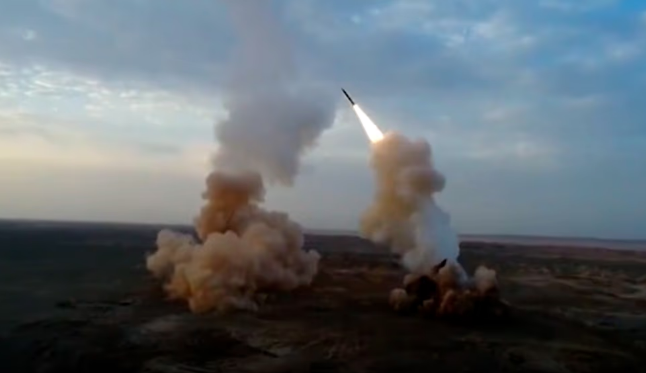
Iran’s Revolutionary Guards Corps (IRGC) said early Wednesday it had launched attacks against US military facilities in Bahrain and Kuwait, marking another escalation in the conflict as the United States continued military operations against Iran and renewed restrictions on Iranian shipping in the Strait of Hormuz.
The IRGC said it targeted the US Fifth Fleet’s command-and-control facilities, logistical centres, petroleum installations and military equipment in Bahrain, along with a US base in Kuwait. Iranian state media described the strikes as retaliation for recent American military operations and efforts to control maritime traffic through the Strait of Hormuz.
In a statement carried by local media, the IRGC warned that if Washington continued trying to restrict regional oil and gas exports by controlling key shipping routes, Iran would seek to disrupt other energy corridors serving US and allied interests. The statement declared that regional energy exports would be “for everyone or for no one,” although it did not specify which routes could be targeted.
Missile warning systems were activated in Bahrain and Kuwait as Iranian projectiles approached. Jordanian authorities said their air defence systems intercepted three incoming Iranian missiles, while Kuwait’s military reported repelling Iranian drone attacks. Iran also claimed it had targeted US military facilities at Jordan’s Azraq Air Base for a second time.
US Navy Admiral Brad Cooper, commander of US Central Command, confirmed that Iran had launched dozens of missiles and drones toward neighbouring Gulf countries.
The latest exchange came after the US military carried out a fourth consecutive night of operations against Iranian targets. According to US Central Command, fighter aircraft, drones and naval vessels conducted a seven-hour mission targeting Iranian missile and drone sites, naval assets and coastal defence systems.
CENTCOM said the strikes were intended to reduce Iran’s ability to threaten commercial shipping and civilian vessels operating in and around the Strait of Hormuz, a waterway that normally handles around one-fifth of the world’s oil and liquefied natural gas trade.
President Donald Trump also renewed warnings that the United States could expand its campaign if diplomatic efforts fail. In a televised interview with Fox News on Tuesday night, Trump said Washington would eventually target Iran’s energy infrastructure unless Tehran agreed to return to negotiations.
“We’re going to knock out all their power plants. We’re gonna knock out their bridges unless they get to the table and negotiate,” Trump said, adding that energy facilities remained potential targets.
The latest hostilities have cast further doubt over a temporary agreement reached in June after the United States lifted an earlier blockade of Iranian shipping to allow negotiations over Tehran’s nuclear programme. Talks have since stalled as military confrontations around the Strait of Hormuz intensified, raising concerns about regional security and the stability of global energy supplies.



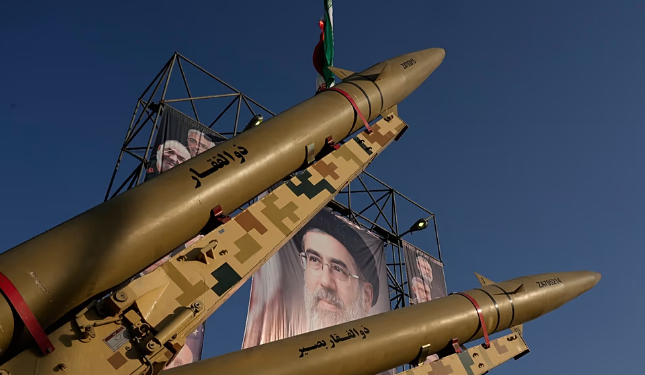
Iran’s military said it retained full control of the Strait of Hormuz on Monday, while Foreign Minister Abbas Araghchi said the strategic waterway could be fully reopened within seven days if Tehran’s conditions were met and hostile measures against the country were lifted.
The statements came as Iran faced growing economic pressure, with the rial falling to record lows, Oil Minister Mohsen Paknejad resigning and the United States claiming that Tehran had not loaded any crude onto tankers during September.
Brigadier General Aziz Jafari, commander of Iran’s Khatam al-Anbiya Joint Air Defence Headquarters, said all movements through the Strait remained under the control of the Iranian armed forces despite changes in US tactics.
“All movements (in Hormuz) are under the control of the armed forces of the Islamic Republic,” Jafari said.
US Treasury Secretary Scott Bessent said on Thursday that Iran had not loaded crude oil onto tankers during September, arguing that the Trump administration was targeting Tehran’s main source of revenue.
Iranian President Masoud Pezeshkian acknowledged in August that restrictions were disrupting oil exports, saying the country had previously been able to sell oil but was now unable to do so at the same level.
Paknejad’s resignation was officially attributed to family and personal matters. However, his departure came amid speculation about the impact of reduced oil exports on government finances. Before his resignation was announced, Paknejad said in a video carried by Iranian media that revenue from oil already sold would be collected and that the process would continue.
The acting oil minister has pledged to maximise production and maintain exports through new strategies.
Despite pressure on Iranian exports, oil shipments from other parts of the region remained high. Ship-tracking company Kpler estimated crude exports from the region excluding Iran at between 19.5 million and 22.5 million barrels per day during the final week of September, compared with a pre-war regional average of about 18 million barrels per day.
Iran’s currency has also come under severe pressure. The euro rose above 300,000 tomans on the informal market, while the US dollar reached 270,000 tomans, more than double its level of about 135,000 tomans at the beginning of the year. One toman is equal to 10 rials.
The UK Maritime Trade Operations agency reported at least one attack each day in the Strait of Hormuz or the Gulf of Aden since October 2.
Araghchi told foreign ambassadors in Tehran that the conflict could not be resolved militarily and called for negotiations based on fairness. He warned that any renewed military confrontation would trigger a stronger Iranian response.
Parliament Speaker Mohammad Bagher Ghalibaf said Tehran had received US proposals through intermediaries but rejected what he described as one-sided demands.
He said the Strait would remain closed until Iran’s seven conditions, based on the Islamabad memorandum, were met.

Moonshot AI Targets 2027 Hong Kong IPO as DeepSeek Funding Race Intensifies

Saudi Aramco Chief Warns Global Oil Supply Cushion Is Running Thin

Trump Defers Diesel Taxes as US Fuel Prices Near Record Highs

Investors Face Limited Choices as Robotics Boom Stays Locked in Private Markets

Optogenetics Pioneers Win 2026 Nobel Prize in Medicine

Iran Says Hormuz Can Reopen Within Seven Days as Oil Exports Come Under Pressure

Uruguay Tops Global Retirement Ranking as Europe Dominates Top 10

SpaceX crew reaches International Space Station in record US transit

Guirassy scores as Guinea edge Kenya in AFCON 2027 qualifier

Trump, Vance begin midterm campaign push as Republicans confront economic concerns

Meta Acquires Tilda Swinton VR Doc ‘Impulse: Playing With Reality’

China’s Historic Olympic Victory Sparks National Pride Amid Controversy

Saudi Arabia’s Model for Sustainable Aviation Practices

Recent Developments in Small Business Taxes

Effective Drain Cleaning: A Key to a Healthy Plumbing System

Who was Ebrahim Raisi and his status in Iranian Politics?

Keely Hodgkinson Wins Britain’s First Athletics Gold at Paris Olympics in 800m

Carrectly: Revolutionizing Car Care in Chicago

Nobel Laureate Muhammad Yunus Proposed as Head of Bangladesh’s Interim Government Following Hasina’s Resignation

Chinese Hackers Infiltrate Major U.S. Telecom Firms in Possible National Security Breach

Sony WF-10XM4: Headphones Are Our Absolute Favorite

10 Places You Can’t Miss If It’s Your First Time in European

New Census Data Will Shake Up Alabama Politics

16 Top of Our Favorite Outdoor Clothing Brands

Fashionable Summer Accessories to Dress Up Your Travel Look

How Sleeping Less than 7 Hours a Night Can Lead to Weight Gain
-
 Entertainment2 years ago
Meta Acquires Tilda Swinton VR Doc ‘Impulse: Playing With Reality’
-
 Sports2 years ago
China’s Historic Olympic Victory Sparks National Pride Amid Controversy
-
 Business2 years ago
Saudi Arabia’s Model for Sustainable Aviation Practices
-
 Business2 years ago
Recent Developments in Small Business Taxes
-
 Home Improvement2 years ago
Effective Drain Cleaning: A Key to a Healthy Plumbing System
-
 Politics2 years ago
Who was Ebrahim Raisi and his status in Iranian Politics?
-
 Sports2 years ago
Keely Hodgkinson Wins Britain’s First Athletics Gold at Paris Olympics in 800m
-
 Business2 years ago
Carrectly: Revolutionizing Car Care in Chicago