
Tech
European Nations Accelerate Military AI Integration Amid Rising Security Demands







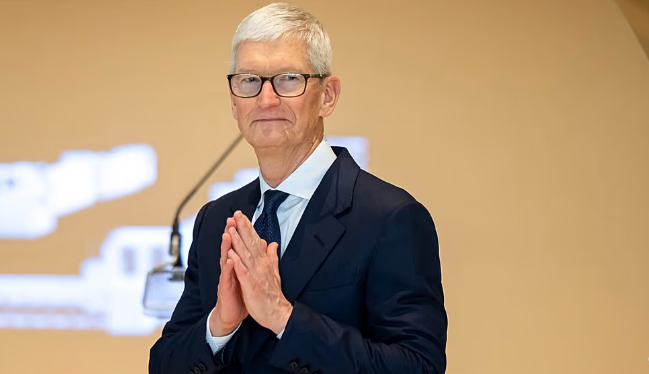
Apple has appointed John Ternus as its new chief executive, ending Tim Cook’s 15-year tenure at the top of the technology company and beginning a new chapter as Apple faces mounting competition in artificial intelligence.
Ternus formally took over from Cook on Tuesday, inheriting a company valued at about $4.6 trillion. When Cook became CEO in 2011, Apple was worth less than $350 billion. Under his leadership, the company expanded its product portfolio, grew its services business and became one of the world’s most valuable companies.
Cook will remain with Apple as executive chairman, allowing the company to retain his experience and relationships during the leadership transition.
The change comes at a crucial moment for Apple. Artificial intelligence is reshaping the technology industry, creating pressure on major companies to develop powerful AI systems and integrate them into consumer products.
Apple has faced criticism over the pace of its AI development. The company began promoting a new generation of AI features nearly two years ago, but several promised improvements were delayed as Apple worked to develop the technology.
The company has since announced further AI upgrades, including improvements to its Siri voice assistant. Apple has stressed privacy and practical uses as it seeks to narrow the gap with competitors that have moved more aggressively into generative AI.
Ternus, a hardware engineering specialist, will now have to address challenges that extend well beyond product design. His responsibilities will include strengthening Apple’s position in AI while managing supply chain risks and complex international relationships.
Relations with US President Donald Trump are expected to be another important issue. Trump publicly praised Cook on Tuesday, highlighting the relationship the former CEO developed with the administration.
Cook spent years managing the impact of US trade policies and tariffs on Apple, particularly measures affecting Asian countries where many components are produced and assembled.
His continued role as executive chairman is expected to help Apple maintain important contacts as the company deals with trade policy and other political pressures.
Ternus is not new to Apple’s most important products. During Cook’s tenure, he worked on major devices and technologies including the Apple Watch, AirPods and Apple Vision Pro.
His background in hardware has made him a central figure in Apple’s product development and positioned him as one of the company’s most prominent engineering leaders.
The new CEO will make his first major public appearance in the role next week when Apple unveils its latest iPhone at the company’s headquarters in Cupertino, California.
The launch will offer an early test of how Ternus presents himself to consumers and investors while taking responsibility for a company entering a period of significant technological and competitive change.
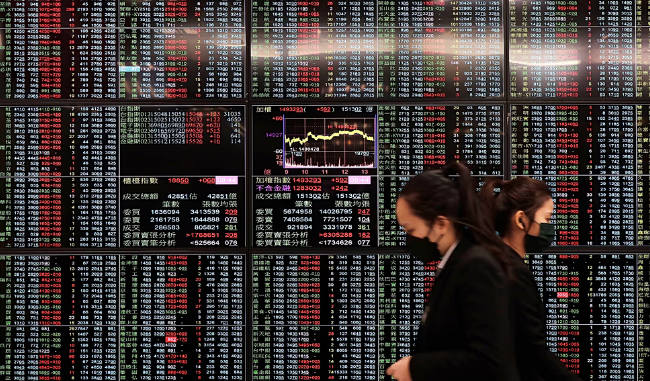
Taiwan’s booming stock market has encouraged a growing number of investors to borrow heavily to buy shares, with some taking out bank loans or remortgaging their homes in hopes of profiting from the island’s AI-driven technology rally.
The Taiwan stock market surged 59 per cent during the first half of the year, driven largely by strong demand for artificial intelligence hardware produced by companies including Taiwan Semiconductor Manufacturing Co. The sharp rise has attracted investors who believe technology stocks still have room to climb.
Real-estate worker Lucas Chen, 34, borrowed NT$5 million, about €136,000, to increase his stock investments. Within six months, his technology holdings had risen by almost 70 per cent, increasing the value of his portfolio by roughly NT$20 million, or €544,000, by late June.
About half of Chen’s investments were in TSMC, which represented around 45 per cent of the Taiwan Stock Exchange at the end of 2025. He used his Tesla as collateral for two of three bank loans.
Chen, who has traded stocks for a decade, said he believed borrowing could be manageable if investors carefully calculated the risks.
However, the rapid expansion of debt-funded trading has also brought significant losses. Financial influencer Yeh Yu-shuo, whose Facebook investment group has hundreds of thousands of members, said some users had reported severe emotional distress after losing money.
One anonymous investor said he had put NT$10 million into the market, including NT$6 million borrowed through a mortgage, and had lost almost half of the amount. The investor described waking during the night in panic and said he had sought professional help.
The risks have grown as the technology rally became more volatile. Global markets reached record levels earlier this year as companies increased spending on AI data centres, hardware and software. The rally weakened in July as investors questioned whether the huge investments would generate sufficient returns and worried that technology stocks had become too expensive.
Taiwanese investors have increasingly turned to banks and brokers to finance their purchases. Margin trading, which allows investors to buy securities with borrowed money, rose nearly 20 per cent during the first half of the year compared with the previous six months, according to Taiwan Stock Exchange data.
Norman Yin, a money and banking professor at National Chengchi University, said younger investors had been buying stocks at an unusually rapid pace. He said banks were willing to lend as deposits remained high and property prices had been relatively stagnant.
Authorities have warned investors about the dangers of taking on excessive debt. Taiwan’s Financial Supervisory Commission said overall credit risk remained under control, while the stock exchange has published social media videos warning younger investors about the consequences of failing to repay loans.
The market has also shown how quickly gains can disappear. Taiwan’s benchmark index fell about 16 per cent between its June 22 record and July 30 before recovering most of the losses.
Despite the volatility, many investors remain optimistic. Chen said the market represented a major opportunity for his generation, while Yeh said he remained confident as long as TSMC continued to perform strongly.


John Ternus Takes Over as Apple CEO After 15-Year Tim Cook Era

Taiwan’s AI Stock Boom Fuels Borrowing Frenzy as Investors Chase Big Gains

Wegovy Weight-Loss Pill Hits German Pharmacies at Up to €280

Shein Shares Slide on Hong Kong Debut as Tariffs Hit Fast-Fashion Business

Eurozone Inflation Jumps to 3.3% as Energy Costs Surge

White House Details Major Venezuela Oil Deal as US Secures Stake in Reserves

Google Maps Renames Lake Ontario ‘Lake America’ for US Users Amid Canada Trade Tensions

Trump Hails Major Venezuela Oil Deal as Questions Grow Over Terms

Oil Prices Rise as US-Iran Tensions Return and Rate Hike Bets Grow

Zurich Leads Europe as City-Centre Home Prices Soar Above €22,000 per Square Metre

Meta Acquires Tilda Swinton VR Doc ‘Impulse: Playing With Reality’

China’s Historic Olympic Victory Sparks National Pride Amid Controversy

Saudi Arabia’s Model for Sustainable Aviation Practices

Recent Developments in Small Business Taxes

Effective Drain Cleaning: A Key to a Healthy Plumbing System

Who was Ebrahim Raisi and his status in Iranian Politics?

Keely Hodgkinson Wins Britain’s First Athletics Gold at Paris Olympics in 800m

Carrectly: Revolutionizing Car Care in Chicago

Nobel Laureate Muhammad Yunus Proposed as Head of Bangladesh’s Interim Government Following Hasina’s Resignation

Chinese Hackers Infiltrate Major U.S. Telecom Firms in Possible National Security Breach

Sony WF-10XM4: Headphones Are Our Absolute Favorite

10 Places You Can’t Miss If It’s Your First Time in European

New Census Data Will Shake Up Alabama Politics

16 Top of Our Favorite Outdoor Clothing Brands

Fashionable Summer Accessories to Dress Up Your Travel Look

How Sleeping Less than 7 Hours a Night Can Lead to Weight Gain
-
 Entertainment2 years ago
Meta Acquires Tilda Swinton VR Doc ‘Impulse: Playing With Reality’
-
 Sports2 years ago
China’s Historic Olympic Victory Sparks National Pride Amid Controversy
-
 Business2 years ago
Saudi Arabia’s Model for Sustainable Aviation Practices
-
 Business2 years ago
Recent Developments in Small Business Taxes
-
 Home Improvement2 years ago
Effective Drain Cleaning: A Key to a Healthy Plumbing System
-
 Politics2 years ago
Who was Ebrahim Raisi and his status in Iranian Politics?
-
 Sports2 years ago
Keely Hodgkinson Wins Britain’s First Athletics Gold at Paris Olympics in 800m
-
 Business2 years ago
Carrectly: Revolutionizing Car Care in Chicago